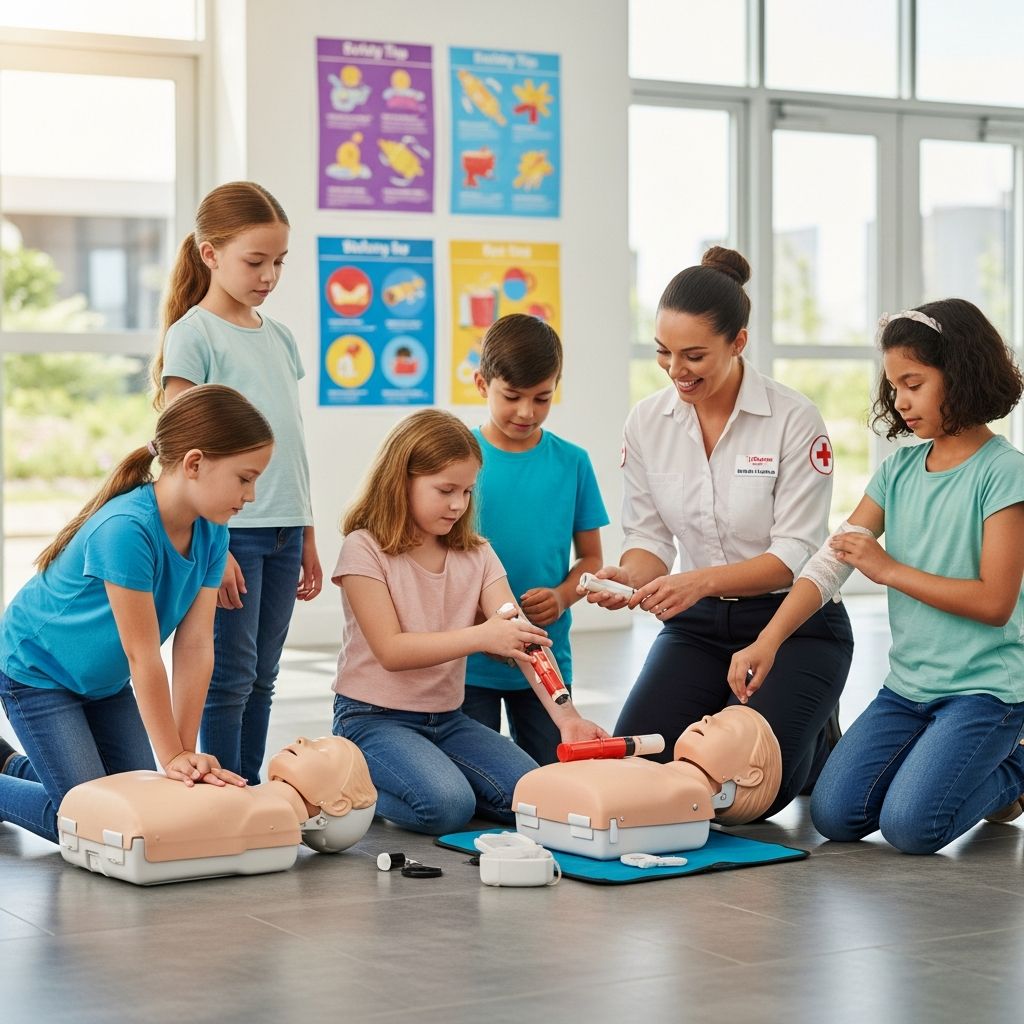
Young children possess remarkable curiosity and adaptability, making them ideal candidates for learning essential skills that could one day save a life. Introducing age-appropriate training in basic emergency responses not only boosts their confidence but also prepares them for unexpected situations at home, school, or play. From mastering CPR to recognizing choking hazards, these abilities foster independence and responsibility. Parents and educators can start with simple, hands-on activities that turn complex procedures into fun, memorable lessons. This guide explores proven methods to instill these critical competencies, drawing on expert recommendations and research findings.
Why Children Need Early Training in Emergencies
Emergencies strike without warning, and children are often first on the scene. A study published in a peer-reviewed journal demonstrated that a single basic life support (BLS) session significantly enhances children’s CPR performance, with skills retained even six months later. Organizations like the American Heart Association advocate for widespread BLS education emphasizing compression-only CPR to improve survival rates. Teaching kids these skills reduces panic, encourages quick action, and can bridge the gap until professional help arrives. Moreover, 86% of children aged 9-18 can effectively administer CPR post-training, highlighting their capability. Early education also promotes hazard awareness, preventing accidents through proactive behaviors.
Building a Foundation: Familiarizing Kids with First Aid Essentials
Start by demystifying first aid kits. Involve children in assembling or reviewing one, explaining each item’s purpose—from bandages for cuts to antiseptics for scrapes. Store it in an accessible spot and quiz them on contents to build familiarity. Discuss common household risks like burns, falls, heavy bleeding, or drowning, brainstorming responses together. This dialogue empowers kids, making them active participants in safety planning.
- Bandages and Dressings: Teach wrapping wounds to stop bleeding and protect skin.
- Antiseptics: Demonstrate cleaning cuts to prevent infection.
- Scissors and Tweezers: Show safe removal of splinters or cutting tape.
- Pain Relievers: Explain adult supervision rules for minor aches.
Practice elevates understanding. Use dolls for simulations, reinforcing calm under pressure.
Mastering the Call for Help: Dialing Emergency Services
Every child should know how to contact 911 (or local equivalent). Role-play scenarios: a fall, choking, or unconscious person. Teach them to stay calm, provide clear details like location and what’s happening, and follow dispatcher instructions. Practice with fake phones or apps mimicking real calls. Emphasize shouting for nearby adults first if possible. This foundational step ensures help is summoned swiftly, often the difference between life and death.
Choking Relief: Quick Actions That Clear Airways
Choking affects all ages and demands immediate response. Train kids to spot signs: clutching throat, weak cough, no speech, blue lips. For others, guide them in back blows—firm slaps between shoulder blades while supporting the chest—and abdominal thrusts if arms fit around the torso. Self-choking? Demonstrate fist-under-ribcage thrusts against a firm object. A real-life example: a 5-year-old saved his brother using back blows on a meatball obstruction. Keep lessons interactive with videos or props like balloons simulating blockage.
| Age Group | Recognition Signs | Response Steps |
|---|---|---|
| Under 5 | Hands at throat, silent cough | Back blows only; call adult |
| 5-12 | Coughing weakly, distress | 5 back blows, 5 thrusts; call 911 |
| Over 12 | Universal choke signal | Full Heimlich; CPR if unconscious |
CPR Fundamentals: Restarting the Heartbeat
Cardiopulmonary resuscitation (CPR) restores blood flow when breathing and pulse stop. For kids, focus on hands-only compressions: call 911, check responsiveness by shaking and shouting, position hands center-chest, push hard/fast (2 inches deep, 100-120/min to ‘Staying Alive’ beat). Skip breaths initially for simplicity. A 10-year-old saved his drowning brother with compressions alone.
- Check: Tap shoulders, yell “Are you okay?” No response? Yell for help.
- Call: Dial emergency number.
- Compress: Kneel beside, hands stacked on breastbone lower half, elbows locked, rhythmic pushes.
Use mannequins, dolls, or apps for practice. Games awarding points for correct depth/rate make it engaging. Research shows school-based BLS by medical students yields lasting gains.
Hands-On Practice Methods for Skill Retention
Theory alone falls short; simulation cements memory. Enroll in certified child first aid classes for expert demos. At home:
- Role-play full scenarios: pool fall leading to CPR.
- Doll drills for bleeding control, bandaging.
- Weekly refreshers with timers for compression speed.
- Rewards for mastery, like stickers.
Low-cost, instructor-led sessions prove effective, with intervention groups outperforming controls in responsiveness checks, calls, and compressions. Reinforce overlooked steps like airway assessment.
Age-Appropriate Adaptations for Effective Learning
Tailor training to developmental stages. Toddlers (3-7): Evacuation following adults, basic danger spotting. School-age (8-12): Hazard ID (e.g., unexploded devices), first aid basics, notify adults. Teens: Full BLS including breaths. Progress stepwise: recognition before action.
Overcoming Common Hurdles in Kid Training
Fear or boredom? Gamify with songs, competitions. Short sessions prevent overload. Parental modeling builds trust—practice together. Address myths: CPR isn’t just for adults; kids save lives.
School and Community Programs for Broader Impact
Advocate for school integration. Programs like Red Cross offer kid-friendly classes. Community workshops scale lifesaving learning, averting losses in disasters or daily mishaps.
Frequently Asked Questions (FAQs)
What is the right age to start teaching CPR to children?
Around 5-9 years for basics like compressions; full training by 12. Adapt to maturity.
Can young kids really perform the Heimlich maneuver?
Yes, with back blows for smaller arms. Practice ensures confidence.
How often should we review these skills?
Monthly at home, annually certified. Retention lasts 6+ months.
Is compression-only CPR enough for kids to learn?
Absolutely; it’s recommended for untrained rescuers, effective for cardiac arrest.
What if my child gets scared during practice?
Use fun props, positive reinforcement. Start slow, celebrate efforts.
Instilling these skills transforms children into capable responders, enhancing family safety. Consistent practice ensures readiness.
References
- Teaching Children the Basic Lifesaving Skills — The First Aid Course Sydney. 2023. https://thefirstaidcoursesydney.com.au/blog/teaching-children-the-basic-lifesaving-skills/
- First Aid Safety for Kids – Tips on How to Teach Your Children Life-Saving Skills — First Edition First Aid. 2018-06-11. https://firsteditionfirstaid.ca/blog/2018/06/11/first-aid-safety-for-kids-tips-on-how-to-teach-your-children-life-saving-skills/
- Developing lifesaving skills in children: a simulation-based randomized clinical trial — NIH/PMC (Peer-reviewed). 2024. https://pmc.ncbi.nlm.nih.gov/articles/PMC12639452/
- CPR for Kids: Teaching Children the Basics of Life-Saving Skills — CPR Classes New Haven. 2023. https://www.cprclassesnewhaven.com/cpr-for-children-the-basics-of-life-saving-skills/
- Lifesaving learning: What it is and why it urgently needs scaling — INEE. 2023. https://inee.org/blog/lifesaving-learning-what-it-and-why-does-it-urgently-need-scaling
- 7 Basic Life Saving Skills That Will Help You Save a Life — American Red Cross. 2023. https://www.redcross.org/take-a-class/lp/7-lifesaving-skills-everyone-should-know