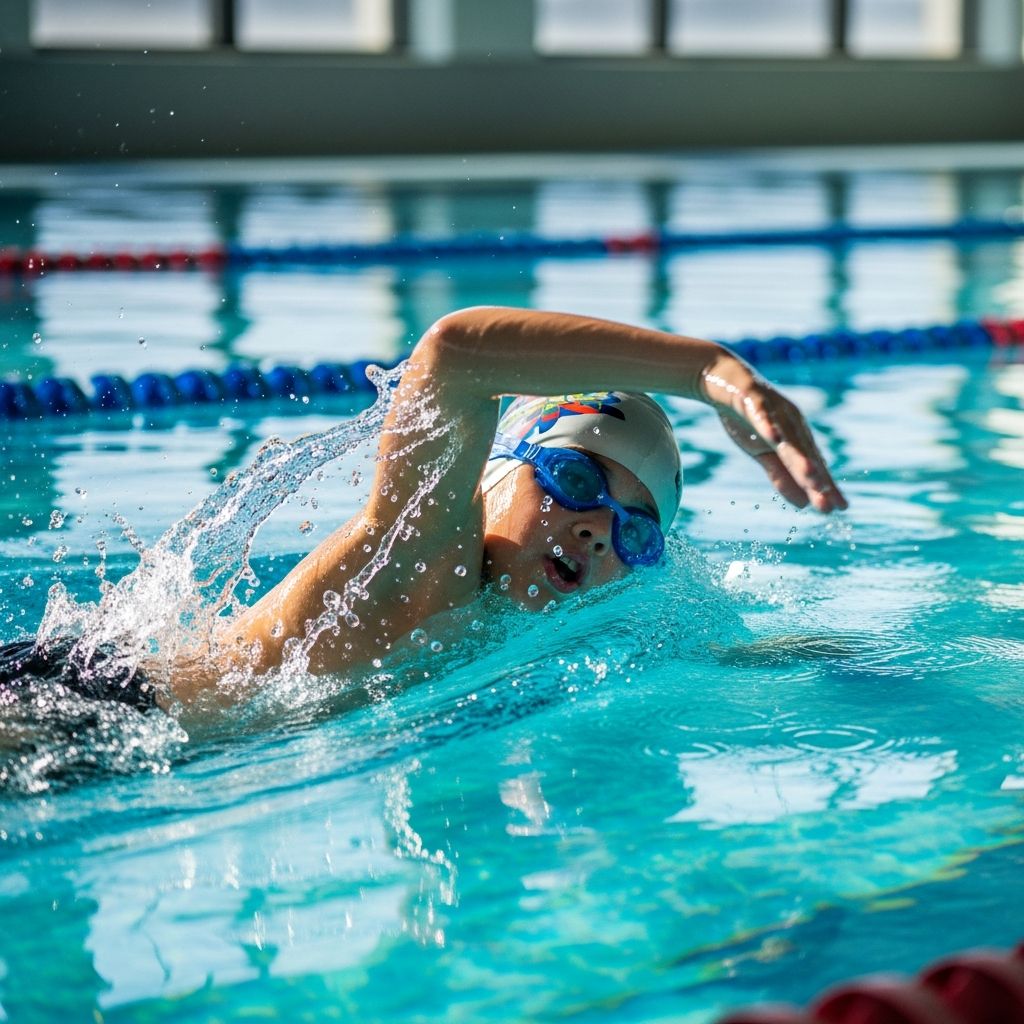
Freestyle swimming, often called the front crawl, stands as one of the most efficient and natural strokes for children to learn. It combines rhythmic leg kicks, alternating arm pulls, and synchronized breathing to propel a swimmer forward with minimal effort. Teaching this skill early fosters water confidence, physical fitness, and essential safety awareness. Parents can guide their kids through structured progressions in any pool setting, starting from shallow areas. This approach not only makes learning enjoyable but also ensures proper technique from the outset, reducing bad habits later.
Building a Strong Foundation with Basic Water Comfort
Before diving into freestyle specifics, ensure your child feels secure in the water. Begin in the shallowest pool section where they can stand comfortably. Encourage splashing, floating, and gentle movements to associate water with play. Use games like ‘superman glide,’ where kids push off the wall arms extended, face down, to experience streamlined body position. This phase typically lasts several sessions, depending on age—toddlers may need more time than school-aged kids.
- Practice submersion: Have them dip faces in water and blow bubbles to get accustomed to exhaling underwater.
- Introduce floating: Support their tummy for front floats, emphasizing relaxed body and straight legs.
- Build trust: Hold hands during walks across the pool to promote balance and reduce fear.
These preliminaries set the stage for propulsion skills, making transitions smoother.
Developing Powerful Leg Kicks
The freestyle kick originates from the hips, with legs straight and toes pointed, creating a whip-like motion for steady forward drive. Start on dry land or pool steps to isolate this movement. Sit your child on the edge, legs dangling, and demonstrate fluttering kicks like a mermaid tail—quick, small, and continuous without bending knees excessively.
Progress to water practice:
- Step-sitting kicks: Hold ankles lightly, guide legs up-down in scissor fashion. Release for independent tries.
- Prone position: Child lies face-down, arms on steps or ledge, practicing kicks while you support hips.
- Forward propulsion: Hold hands underwater; walk backward as they kick toward you, keeping legs submerged.
Aim for 10-20 kicks per set. Common pitfalls include bicycle kicks (knees bending too much) or splashing—gently correct by saying ‘point and flutter.’ Use a kickboard for longer distances once mastered, promoting endurance.
Perfecting Arm Recovery and Pull
Arms in freestyle alternate in a windmill pattern: entry high, pull deep, recovery relaxed. Begin seated on steps, arms extended forward. Teach ‘reach high, scoop water to hip’ motion, fingers together like a paddle.
| Phase | Drill Description | Focus |
|---|---|---|
| 1. Isolation | Sit on step, alternate arm circles underwater to hip, then lift out. | Straight arm, high elbow. |
| 2. Supported float | Face-down hold, one arm at a time from step to hip. | Full extension, no splashing. |
| 3. Hands-free | Hold hands ahead; release one-by-one for circling pulls while kicking. | Coordination start. |
Emphasize ‘scoop and pull’ to engage water resistance. For fun, pretend arms are helicopter blades. Practice 5-10 pulls per arm before combining with kicks.
Coordinating Arms, Legs, and Body Rotation
Freestyle demands harmony: arms pull as opposite leg kicks strongest, with slight body roll for efficiency. Once kicks and arms are solid, integrate in short bursts. Support waist, have child swim toward you with full motion—3-5 arm cycles before rest.
- Streamline pushes: Off wall or step, glide with kicks and one arm pull.
- Multitasking drills: ‘Kick-arm-breathe’ sequence with your verbal cues.
- Distance challenges: Gradually increase strokes before touching bottom.
Watch for sinking hips—remind ‘head down, bottom up.’ Use noodles under arms for temporary buoyancy during practice.
Mastering Breathing Techniques
Breathing rhythm separates beginners from proficient swimmers. Initial method: Lift head forward every few strokes. Hold waist, say ‘breathe’ to tilt upward, then ‘swim’ for face-down return.
Advance to side breathing:
- Static practice: Standing, face in water, roll head to side—one eye in, mouth out—blow bubbles, inhale.
- Supported swims: Hand under belly every 3 strokes; time breath with arm recovery on breathing side.
- Bilateral breathing: Alternate sides to balance strength and prevent fatigue.
Key tip: Exhale steadily underwater via nose/mouth; quick inhale above. Practice in bathtub first for bubble control. Persistent reminders ensure habit formation.
Common Challenges and Solutions
Children often struggle with consistency. Address these proactively:
| Issue | Symptom | Solution |
|---|---|---|
| Stopping to breathe | Lifts head too high, stalls. | Practice side-roll; shorter breaths. |
| Uneven kicks | One leg dominates. | Mirror drills, alternate focus. |
| Sinking body | Hips drop, head lifts. | Core engagement games, kickboard use. |
| Fear of face submersion | Avoids water entry. | Bubble games, goggles if needed. |
Patience is crucial; celebrate small wins with high-fives.
Progression Timeline and Milestones
Expect 4-8 sessions (20-30 mins each) for basics, longer for fluency. Milestones:
- Week 1: Comfortable kicks, 10m with board.
- Week 2: Arm pulls integrated, head lifts for air.
- Week 3: 5-10m unassisted swims with breaths.
- Week 4+: 25m freestyle, bilateral breathing.
Age matters: 3-5 year-olds progress slower; 6+ grasp faster.
Safety Essentials for Home Lessons
Always supervise closely, use life vests if unsure. Choose pools with lifeguards initially. Teach ‘reach, throw, don’t go’ rescue basics. Avoid overcrowding; lesson in 1:1 ratio. Consult pediatricians for health concerns.
Per USA Swimming guidelines, drowning risks drop 88% with formal lessons; consistent practice amplifies this.
Fun Games to Reinforce Skills
Keep engagement high:
- Shark tag: Kick fast to evade ‘shark’ parent.
- Treasure hunt: Arm pulls to retrieve toys.
- Red light kicks: Freeze on command for control.
- Breath races: Count strokes per breath.
These gamify technique, boosting retention.
Frequently Asked Questions
What age is best to start freestyle lessons?
Around 3-4 years, post-water comfort. Adjust per child’s readiness; no rush.
How often should we practice?
2-3 times weekly, 20-30 mins. Consistency over intensity.
What if my child fears putting face in water?
Start with play submersion, progress slowly with praise. Goggles help some.
Do I need equipment?
Kickboard, goggles, noodles optional but useful. Focus on body skills first.
Can one-sided breathing suffice?
Start there, but teach bilateral for balance and endurance.
Advanced Tips for Polished Technique
Once basic freestyle clicks, refine:
- High elbow catch: Visualize ‘skipping rope’ entry.
- Rhythmic 6-kick cycle: Sync breaths every 3-6 kicks.
- Body roll: 30-45 degrees per side for power.
Record swims for visual feedback; compare to pros.
Teaching freestyle empowers kids with independence and joy in water. Persistent, positive practice yields swimmers for life.
References
- Swim Lessons for Life: Drowning Prevention Research — USA Swimming. 2023-05-15. https://www.usaswimming.org/news/2023/05/15/swim-lessons-reduce-drowning-risk-by-88-for-children-ages-1-4
- Learn-to-Swim Progressions for Youth — American Red Cross. 2024-01-10. https://www.redcross.org/take-a-class/swimming/swim-lessons/learn-to-swim
- Pediatric Guidelines on Aquatic Safety — American Academy of Pediatrics. 2022-11-28. https://publications.aap.org/pediatrics/article/150/6/e2022057997/191050
- Freestyle Technique Fundamentals — USA Swimming Technique Manual. 2021-03-01. https://www.usaswimming.org/coaches-leaders/coaches-stroke-school/technique-manuals
- Child Swim Instruction Best Practices — World Health Organization (via CDC partnership). 2023-07-20. https://www.cdc.gov/drowning/facts/index.html