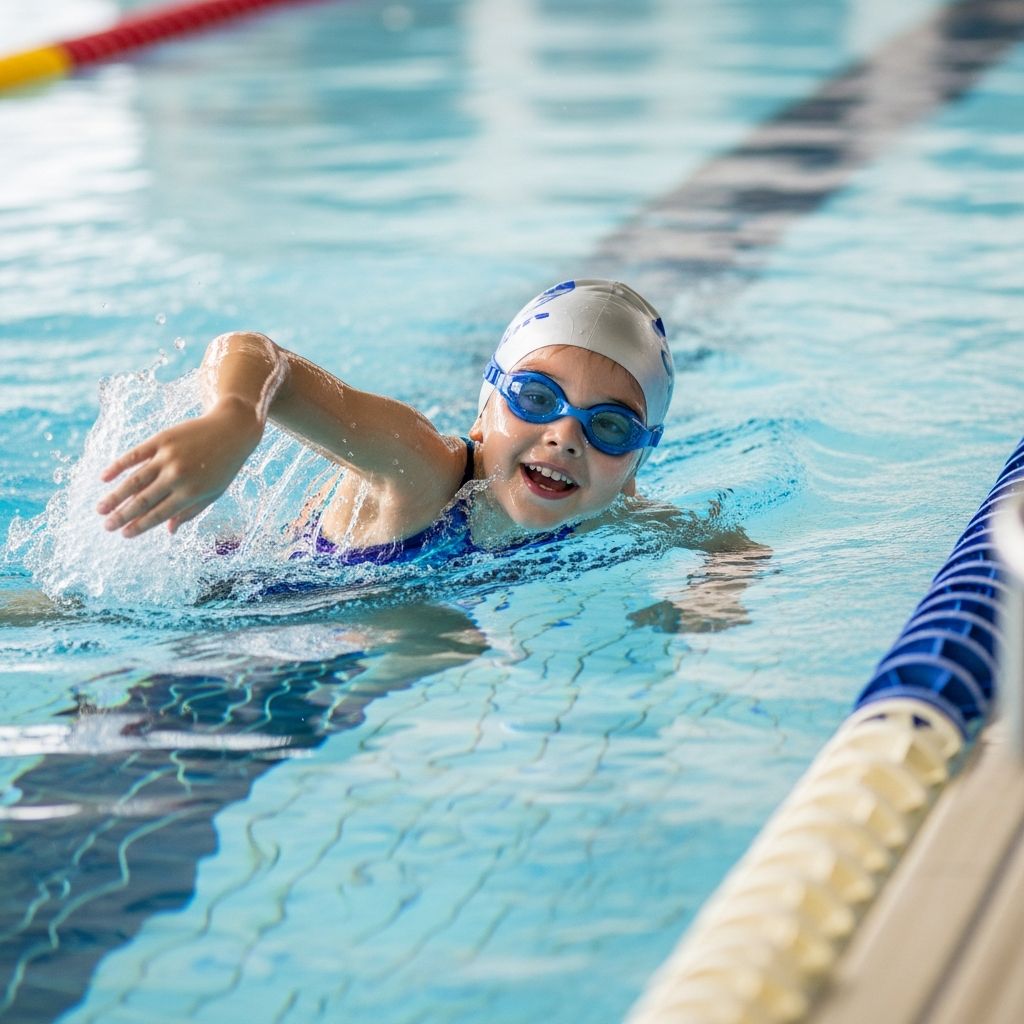
Freestyle swimming, often called the front crawl, stands as the fastest and most efficient stroke for children to master. It combines rhythmic arm pulls, a steady flutter kick, and coordinated breathing to propel young swimmers forward with minimal effort. Teaching this skill not only boosts physical fitness but also enhances water safety and confidence. Parents can guide their kids through this process at home in shallow pools, starting with foundational movements and progressing to independent swimming. This approach ensures children develop proper technique early, reducing bad habits and promoting lifelong enjoyment of swimming.
Building a Strong Foundation for Success
Before diving into freestyle specifics, ensure your child feels secure in the water. Familiarity with floating on their back or stomach, basic kicking, and reaching for the pool edge forms the bedrock. Children around 4-6 years old typically progress quickest, but any age willing to practice works. Use shallow areas where feet can touch the bottom for reassurance. Warm up with gentle games like splashing or blowing bubbles to relax muscles and build excitement.
- Practice floating: Hold under the belly to help them arch the body and hold position for 5-10 seconds.
- Introduce treading water: In chest-deep water, have them scissor legs and circle arms slowly.
- Streamline position: Arms extended overhead, body straight like an arrow, to minimize drag.
These basics create hydrodynamic efficiency, allowing freestyle elements to integrate smoothly. According to the United States Swimming Association, early mastery of body position improves stroke efficiency by up to 30% in young swimmers.
Mastering the Flutter Kick
The flutter kick drives forward momentum in freestyle, using quick, alternating leg movements from the hips. Unlike bicycle kicks, it demands straight legs with minimal knee bend to avoid fatigue. Begin on dry land to ingrain the motion.
Stand your child on pool steps or a mat. Demonstrate pointing toes like a dancer, then alternate up-and-down kicks with relaxed ankles. Progress to water: Sit them on the edge, legs dangling, and guide ankles in a whip-like flutter. Hold above ankles to feel the straight-line motion.
| Drill Name | Description | Goal |
|---|---|---|
| Edge Kick | Sit on pool step, kick legs alternately while holding rail. | Straight legs, pointed toes. |
| Superman Kick | Face down on step, arms extended, kick while supported. | Combine with body alignment. |
| Forward Glide Kick | Hold hands, pull child forward as they kick. | Propulsion and speed. |
Emphasize keeping kicks shallow, just below surface, to prevent splashing energy loss. Sessions of 2-3 minutes repeated daily yield quick results. Kids often tire knees first, so rest frequently and praise small improvements.
Developing Powerful Arm Strokes
Arm recovery and pull generate 70-80% of freestyle propulsion. Each arm alternates in a continuous cycle: reach forward, pull back underwater like scooping ice cream, then recover high overhead.
Start prone on steps: Arms forward, pull one to thigh (boys to shorts, girls past suit), exit thumb-first, swing forward relaxed. Mirror this holding hands out front in water, releasing one at a time for practice.
- High elbow catch: Bend elbow underwater to grab more water.
- Hand entry: Fingers first, shoulder-width apart.
- Rhythmic alternation: Count ‘one-two’ to sync arms.
Combine with kicking early: ‘Kick and pull’ chant keeps coordination. Use a kickboard initially for balance, transitioning to no aid as confidence grows. Visual cues like watching videos of Olympic swimmers help model form.
Coordinating Body Rotation and Balance
Freestyle thrives on slight side-to-side rotation, rolling from hips and shoulders to lengthen reach and power pulls. Flat swimming creates drag; rotation streamlines the body.
In shallow water, have child swim towards you while you gently rotate their hips. Practice ‘shark fin’ drill: One arm extended, other pulling, head neutral looking down. This builds roll without overwhelming beginners.
Progress to full stroke integration: 3-5 kicks per arm cycle initially, tightening to 6-beat as skill advances. Balance drills on a noodle under chest prevent sinking hips.
Essential Breathing Techniques
Breathing synchronizes with rotation, turning head to side on every 3rd or 5th arm stroke. Poor breathing causes panic; master it last after propulsion.
Waist-hold support: Child swims, you cue ‘breathe’ every few strokes, tilting to lift mouth clear. Exhale bubbly underwater. Advance to hand-under-belly support, then independent rolls.
- Side breath: Mouth to air pocket beside armpit, one goggle in/out.
- Quick inhale: Sip air, don’t lift head high.
- Bilateral breathing: Alternate sides for balance.
Common pitfalls: Forgetting to exhale or pausing kicks. Remind ‘kick harder when breathing.’ Practice extended swims with breath counts to build endurance.
Putting It All Together: Full Stroke Practice
Once components click, assemble into freestyle. Start short bursts: Push off wall, 3-5 strokes to you. Gradually increase distance, reducing support.
Games boost engagement:
- Relay races with family.
- Collect toys from pool bottom mid-stroke.
- Simon Says: ‘Kick,’ ‘Pull,’ ‘Breathe.’
Monitor form: Streamlined body, steady rhythm, happy face. Sessions 20-30 minutes, 3-4 times weekly prevent burnout.
Safety Guidelines Every Parent Must Know
Never leave children unattended. Use Coast Guard-approved flotation only as training aid, not crutch. Teach ‘reach, throw, don’t go’ for rescues. Check water temperature (78-82°F ideal) and supervise fatigue signs.
USA Swimming reports drowning as leading cause of death for kids 1-4; lessons cut risk 88%. Progress in shallow end first.
Common Challenges and Fixes
| Issue | Solution |
|---|---|
| Knees bending | Shorter practice, emphasize hip drive. |
| Sinking head | Practice neutral gaze down, strengthen core. |
| Breath holding | Bubble games pre-stroke. |
| Uneven arms | Single-arm drills. |
Advanced Drills for Proficiency
After basics, refine with:
- Fist swimming: Closed hands force forearm pull.
- Single-arm freestyle: Focus one side.
- Parachute drag: Added resistance builds power.
Track progress: Time 25 yards, note stroke count. Aim reduce strokes while maintaining speed.
Frequently Asked Questions (FAQs)
Q: At what age can kids learn freestyle?
A: Most start effectively at 4-6 years, but water comfort allows earlier basics for toddlers.
Q: How often should lessons occur?
A: 3-4 sessions weekly, 20-30 minutes each, for steady gains without overwhelm.
Q: What if my child fears putting face in water?
A: Build with games like motorboat (hum bubbles) and gradual submersion.
Q: Can parents teach without instructor?
A: Yes, with patience and consistency; supplement swim school for form checks.
Q: How to motivate reluctant swimmers?
A: Use rewards, peer swims, fun toys; celebrate every milestone.
References
- Swim Lessons Reduce Drowning Risk — United States Swimming Association. 2023-05-15. https://www.usaswimming.org/news/2023/05/15/swim-lessons-reduce-drowning-risk
- Swimming Lessons Status — Centers for Disease Control and Prevention (CDC). 2024-11-20. https://www.cdc.gov/drowning/swimming-lessons.html
- Learn to Swim: Freestyle Progression — American Red Cross. 2025-01-10. https://www.redcross.org/take-a-class/swimming/front-crawl-freestyle
- Pediatric Drowning Prevention — World Health Organization (WHO). 2024-07-01. https://www.who.int/news-room/fact-sheets/detail/drowning
- Youth Swimming Technique Guidelines — USA Swimming Foundation. 2023-09-12. https://www.usaswimming.org/news/2023/09/12/foundation-stroke-development