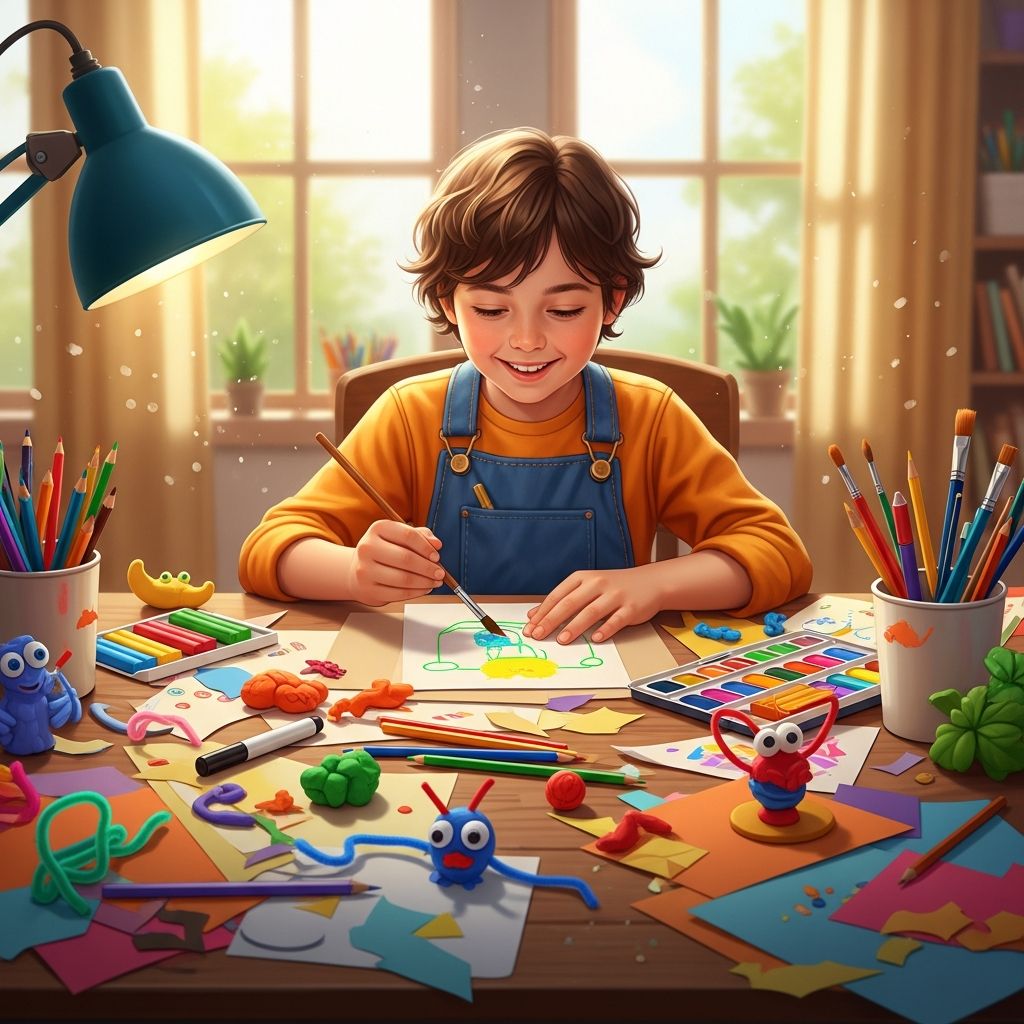
Many children write in short, plain sentences that tell what happened but rarely show it to the reader. Helping kids learn to describe things well gives their writing color, depth, and personality, and it can be taught with simple, repeatable strategies at home or in the classroom.
Why Descriptive Writing Matters for Kids
Descriptive writing helps young writers turn ideas into clear mental pictures for their readers. It also supports reading comprehension, vocabulary growth, and critical thinking, because students must choose words carefully and consider how others will understand their message.
- It makes stories, reports, and journal entries more engaging and memorable.
- It encourages children to slow down, observe details, and think about their five senses.
- It prepares kids for more advanced writing tasks where precision and clarity are required.
Foundations of Descriptive Language
Before children can write with strong description, they need a basic toolkit: vocabulary, sentence sense, and the habit of noticing details in the world around them. Adults can nurture these foundations long before formal writing assignments begin.
- Rich vocabulary exposure: Reading aloud, discussing new words, and talking about pictures all build a bank of words kids can draw from.
- Modeling full sentences: When adults speak in clear, complete sentences, they give children a pattern to follow in their own writing.
- Observation practice: Asking children what they see, hear, smell, taste, and feel in everyday situations trains them to notice details.
Show, Don’t Just Tell
One of the easiest principles to teach is “show, don’t just tell.” Instead of writing that a character is sad, a child can describe the tears, the slumped shoulders, or the quiet voice. This kind of writing lets readers experience the moment instead of being told about it.
Simple Show vs. Tell Table
| Plain “Tell” Sentence | More Descriptive “Show” Sentence |
|---|---|
| The room was messy. | Clothes spilled off the chair, and toy cars were scattered across the floor. |
| She was excited. | She bounced on her toes and could not stop smiling. |
| The dog was big. | The dog’s head almost reached my shoulder when he stood next to me. |
Use quick activities where kids change one “telling” sentence into a “showing” sentence. This builds awareness of how much information a single sentence can hold when details are added thoughtfully.
Using the Five Senses
Sensory details are the backbone of descriptive writing. They help children move beyond what something looks like and begin to describe how it sounds, feels, smells, and tastes when relevant to the scene.
- Sight: colors, shapes, size, light, shadows.
- Sound: volume, pitch, rhythm, repetition, background noises.
- Smell: strong, faint, sweet, sour, fresh, stale, smoky.
- Taste: salty, sweet, bitter, spicy, bland.
- Touch: rough, smooth, warm, cold, sticky, sharp, soft.
When children write about a scene, encourage them to answer questions such as: What do you see? What do you hear? What does the air feel like on your skin? They do not need to include every sense every time, but even one or two strong sensory images can transform a paragraph.
Building a Stronger Word Bank
Kids often rely on a small set of familiar words like “nice,” “big,” or “good.” Teaching them to use more precise adjectives and verbs makes their descriptions sharper and more interesting.
Strategies for Expanding Vocabulary
- Word of the day: Introduce a new descriptive word each day, use it in conversation, and invite children to use it in a sentence or drawing caption.
- Synonym lists: Create kid-friendly lists for common words (for example, alternatives to “said,” “big,” or “happy”) and keep them visible during writing time.
- Picture-word matching: Show an image and brainstorm as many descriptive words as possible to label colors, emotions, actions, and textures.
Focusing on strong verbs is especially effective: instead of “walked,” children can learn words like “marched,” “tiptoed,” or “stomped,” which each paint a slightly different picture.
Describing Settings and Characters
Two common places for descriptive language in children’s writing are settings (where and when a story happens) and characters (who is in the story). Teaching kids to describe these elements helps readers understand and care about what happens next.
Guiding Questions for Settings
- Where is this taking place? Indoors or outdoors? City, countryside, school, home?
- What time of day or season is it, and how can readers tell?
- What sounds, smells, and feelings in the air belong in this particular place?
Guiding Questions for Characters
- What does the character look like, and which details are truly important to the story?
- How does the character move, speak, and react when something happens?
- What small actions can reveal emotions without naming them directly?
Encourage children to pick a few well-chosen details instead of listing every feature. A single unusual or vivid phrase can tell readers more than a long, generic description.
Sentence Stretching and Combining
Many young writers start with short, simple sentences: “The cat ran.” “I saw a tree.” One practical skill is learning how to stretch and combine sentences to add detail without losing clarity.
Sentence-Stretching Activity
- Begin with a basic sentence, such as “The dog barked.”
- Ask children to add where the action happened: “The dog barked in the yard.”
- Add when or how: “The dog barked loudly in the yard at night.”
- Invite a descriptive phrase: “The scruffy brown dog barked loudly in the yard at night.”
This step-by-step process shows students that they can build stronger sentences piece by piece. As they grow more confident, they can also combine related short sentences into one smoother, more descriptive sentence.
Fun Classroom and At-Home Activities
Descriptive writing improves when children have frequent, low-pressure chances to practice. Short, playful activities keep them engaged and help them remember the strategies they have learned.
- Mystery bag: Place objects in a bag. Ask children to reach in, feel an object without looking, and describe it using touch words before guessing what it is.
- Picture prompts: Show a photograph or illustration and have kids write three descriptive sentences about what they notice.
- Color walk: Take a walk and list everything of one color, then write a descriptive paragraph using some of those details.
- Smell or taste test: With appropriate supervision, let kids describe foods or scents with as many sensory words as they can think of.
- Before-and-after sentence makeovers: Give a plain sentence and have children “decorate” it with adjectives, strong verbs, and sensory details.
Using Graphic Organizers
Many children benefit from visual supports that help them plan details before they start drafting sentences. Graphic organizers offer structure so that students are not overwhelmed by a blank page.
- Five-senses web: Place the topic (for example, “the beach”) in the center and branch out with sight, sound, smell, taste, and touch, filling in words or phrases for each.
- Character chart: Divide a page into boxes for appearance, actions, speech, and feelings, then list descriptive notes in each area.
- Setting map: Ask children to draw a simple map of the location and label it with descriptive words.
Once the organizer is complete, children can turn each cluster of ideas into one or more sentences, making the transition from notes to full paragraphs much smoother.
Encouraging Revision and Feedback
Descriptive writing rarely appears in its best form on the first try. Teaching kids that revision is normal helps them see writing as a process rather than a one-time task.
- Ask students to highlight or underline places where they used strong description, then look for spots that feel plain or empty.
- Use simple checklists: Did you use at least one sensory detail? Did you choose strong verbs? Did you help the reader picture the scene?
- Invite peer or family feedback focused on clarity: “What can you see in your mind after reading this?” and “What part would you like to know more about?”
Framing revision as an opportunity to make the writing more powerful, not as a punishment for mistakes, keeps children willing to revisit and strengthen their work.
Supporting Different Ages and Skill Levels
The same basic strategies can be adjusted for students at different ages. Younger children need more modeling and oral practice, while older students can handle more independent writing and self-reflection.
- Younger kids: Focus on talking through descriptions out loud, labeling pictures, and writing single descriptive sentences.
- Upper elementary: Practice full paragraphs that describe scenes or characters and introduce simple “show, don’t tell” activities.
- Middle school: Integrate descriptive language into narratives, explanatory essays, and responses to literature, with greater attention to revision.
Meeting children where they are makes success more likely and prevents them from feeling overwhelmed by long assignments too soon.
Frequently Asked Questions (FAQs)
1. At what age should children start learning descriptive writing?
Children can begin learning the basics of description as soon as they start speaking in sentences. At first, this might look like talking about what they see in a picture or describing a favorite toy, then later moving into short written sentences in the early elementary years.
2. How can I help a child who writes very short, simple sentences?
Start with sentence-stretching exercises. Take one of the child’s sentences and ask guiding questions such as “Where?” “When?” “What kind?” and “How did it feel?” Add one new piece of information at a time so the child can see how a basic sentence grows into a more descriptive one.
3. What if a student adds too many adjectives and the writing sounds crowded?
Explain that good description is not about stacking as many adjectives as possible. Instead, help the child choose two or three strong, specific details that really matter. Reading the sentence aloud together can show where it feels cluttered or confusing.
4. How often should kids practice descriptive writing?
Short, frequent practice is more effective than rare, long assignments. A few minutes of description in journals, science notebooks, or art projects several times a week builds skill without overwhelming students.
5. Can descriptive writing help in subjects other than language arts?
Yes. Clear descriptions support learning in science, social studies, and even math, where students may need to explain steps, describe observations, or interpret graphs. Teaching children to be precise and descriptive improves communication across the curriculum.
By building vocabulary, practicing sensory details, modeling strong sentences, and giving kids fun, low-pressure opportunities to revise and improve, adults can help young writers learn to describe things clearly and confidently. Over time, these simple habits turn flat, vague writing into vivid, memorable pieces that readers can truly picture.