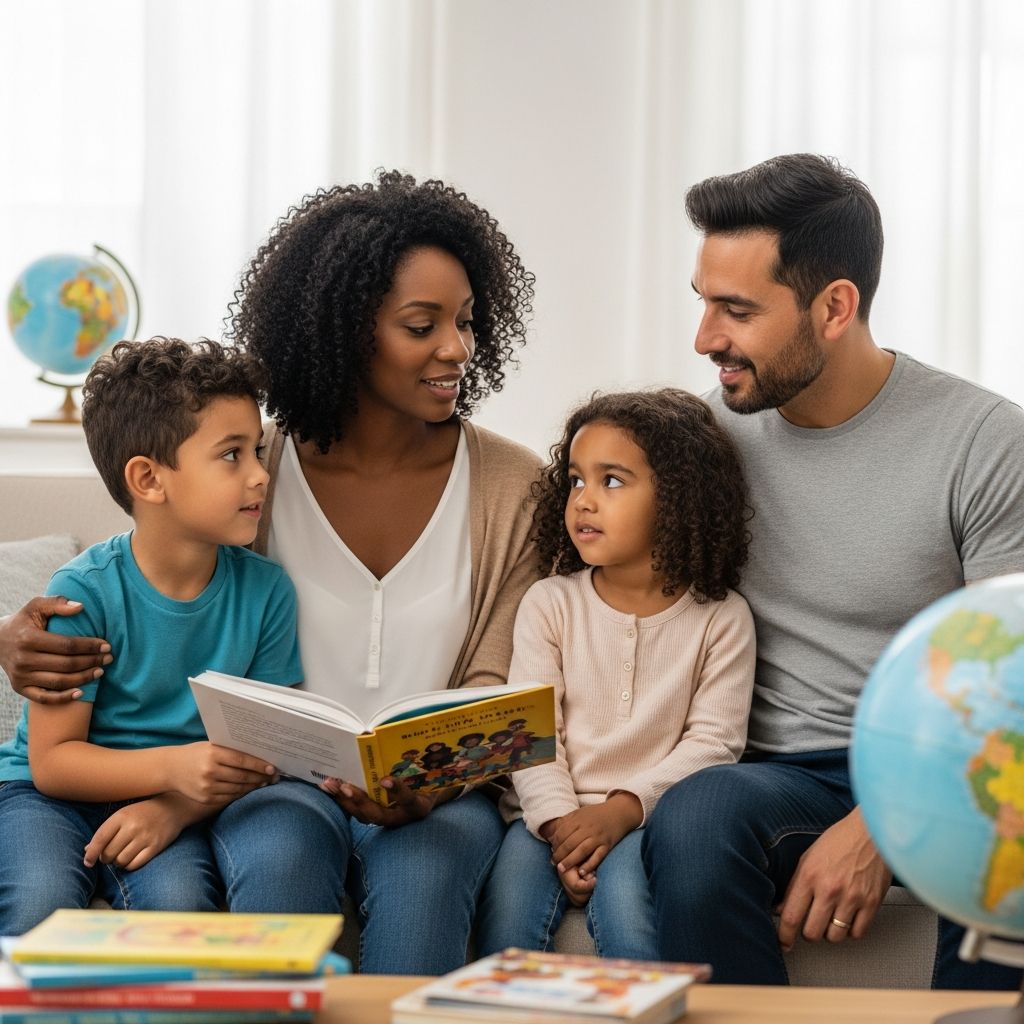
Children notice differences long before adults expect it, which means conversations about race start earlier than many families imagine. Talking openly and calmly about race helps kids build empathy, challenge unfairness, and navigate a diverse world with confidence.
This guide walks through how to approach race and racism with children at different ages, offering practical language, everyday strategies, and simple family practices you can begin using today.
Why These Conversations Matter
Silence about race does not protect children; instead, it leaves them to absorb unfiltered messages from media, peers, and the wider culture. When adults speak clearly about fairness, dignity, and shared humanity, children learn to connect differences with curiosity rather than fear or judgment.
Ongoing conversations about race support several key skills:
- Healthy identity development, including pride in one’s own background and respect for others.
- Critical thinking about stereotypes, biased stories, and unfair rules.
- The courage to speak up when someone is being treated badly because of how they look or where they are from.
Guiding Principles For Any Age
Before looking at age-specific guidance, it helps to anchor in a few principles that apply from toddlerhood through the teen years. These principles will shape the tone of every conversation you have about race.
- Make it a series, not a single talk. Treat race like any other important topic—something you weave into daily life instead of saving for a serious one-time lecture.
- Stay honest and simple. Offer enough truth to be accurate, but keep language and examples aligned with your child’s age and temperament.
- Link race to values. Highlight fairness, kindness, courage, and mutual respect as guiding ideals for how you want your family to treat others.
- Model what you want to see. Children watch how adults choose friends, react to news, and respond to bias; they learn as much from what you do as from what you say.
- Welcome questions. Respond to awkward or blunt comments as openings for learning, not as reasons for shame.
Age 0–3: Name Differences With Warmth
Infants and toddlers are constantly scanning faces, voices, and gestures, gradually learning who feels safe and familiar. They notice skin tones, hair textures, and languages long before they have words for them. Your role is to pair those observations with warmth, respect, and neutral or positive language.
Practical Strategies With Babies and Toddlers
- Use simple descriptive language. When reading or out in public, you might say, “That person has brown skin,” or “She wears her hair in tight curls,” in the same tone you’d use for “blue shirt” or “tall tree.”
- Offer diverse images and stories. Choose books, toys, and media that naturally include people of many races, cultures, and family structures without making difference seem rare or exotic.
- Respond calmly to blunt comments. If a toddler loudly points out how someone looks, start by acknowledging what they noticed, then add a respectful frame. For example: “Yes, his skin is darker than yours. People’s skin comes in many beautiful shades.”
At this stage, avoid long explanations about history or injustice. Focus on building the habit of noticing and naming differences without judgment, while consistently modeling warmth and respect toward all kinds of people.
Age 3–5: Connect Fairness and Feelings
Preschoolers are both literal and deeply invested in fairness. They can already form ideas about who is “good” or “bad” based on what they see and hear. This is a crucial moment to link race conversations to fairness, friendship, and feelings.
How to Talk With Preschoolers
- Invite their observations. Ask questions such as, “What do you notice about the people in this picture?” or “Do you see anyone who looks like you?” to open the door for discussion.
- Correct stereotypes gently. If a child says, “People with that skin color are ___,” you might respond, “Some people say that, but it’s not true. People of every skin color can be kind or unkind. We decide who we like based on how they act, not how they look.”
- Use simple fairness language. Explain racism in basic terms, such as, “Sometimes people are treated unfairly just because of the color of their skin, and that’s not right. In our family, we believe everyone deserves to be treated kindly.”
Preschoolers often respond well to stories that show characters standing up for someone being left out, teased, or treated unfairly because of how they look. After reading or watching, ask, “How do you think that person felt?” and “What could friends do to help?”
Age 6–9: Build Vocabulary and Context
Early elementary-age children can understand rules, systems, and the idea that something can be unfair even if it is allowed by adults. They are often curious about history and can handle more direct explanations of bias, stereotypes, and unequal treatment.
Key Goals in the Early School Years
- Introduce clear words. You can begin using terms like “racism,” “discrimination,” and “stereotype,” always paired with concrete examples they can relate to.
- Link the past and present. Children this age can understand that unfair rules existed in the past and that some unfairness continues today. Short, age-appropriate stories about people who worked to change those rules help connect the dots.
- Encourage critical thinking. When a TV show, commercial, or game shows only one type of person as the hero or the boss, ask, “Who is missing?” and “Is that what the real world looks like?”
Many children in this age range also begin encountering biased comments at school or online. Practice simple responses together, such as, “That’s not kind,” or “We don’t say things like that about people.” Role-playing empowers them to respond if they hear hurtful words.
Age 10–12: Explore Systems, Power, and Action
Preteens are increasingly aware of social hierarchies, rules, and fairness on a bigger scale. They may encounter videos, memes, or news stories about racial injustice and feel angry, confused, or overwhelmed. This is an ideal time to talk about how bias can show up in institutions, not just in individual interactions.
Conversations With Preteens
- Explain systems with everyday analogies. You might compare unfair systems to a game where the rules secretly help one team win over and over, even when both teams play well.
- Discuss media and current events. When a story about race appears in the news, invite your child’s thoughts: “What do you think happened?” “What feels unfair here?” “How do you think people are feeling?”
- Highlight responsibility, not guilt. Especially for children who belong to majority or advantaged groups, emphasize that recognizing unfairness is not about blaming them, but about deciding what kind of person they want to be.
Preteens often benefit from brainstorming concrete ways to act on their values—supporting classmates, choosing inclusive projects, or joining efforts at school that promote fairness and respect.
Teens: Partner in Honest, Nuanced Dialogue
Teenagers are capable of complex thinking and may already have strong views on race, identity, and justice shaped by school, friends, and social media. The adult role shifts from lecturer to collaborator and guide. Teens need space to question, critique, and even disagree while knowing you remain a steady, respectful presence.
Ways to Engage Teens
- Ask before advising. Start with, “What’s your take on this?” or “How are people your age talking about this topic?” Then build on what they share instead of launching into a monologue.
- Explore sources together. Encourage teens to check where information comes from, how images are framed, and whose voices are missing or amplified.
- Support real-world engagement. This may mean encouraging them to join clubs, service projects, or creative efforts that align with their values—art, writing, coding, or organizing can all be tools for justice.
With teens, it is especially important to share your own learning process. Admitting when you do not know something or when you are rethinking an old belief models humility and lifelong growth.
At-A-Glance: Focus Areas by Age
| Age Range | Main Focus | Helpful Adult Actions |
|---|---|---|
| 0–3 years | Neutral, warm naming of differences; building trust with diverse caregivers and community members. | Use simple descriptive language, offer diverse books and images, respond calmly to blunt observations. |
| 3–5 years | Fairness, kindness, and the idea that no one should be excluded or teased because of how they look. | Use stories about inclusion, gently correct stereotypes, tie discussions to feelings and friendship. |
| 6–9 years | Basic concepts of racism, stereotypes, and historical unfairness. | Introduce vocabulary, connect past and present, ask critical questions about media and stories. |
| 10–12 years | Understanding systems, power, and multiple perspectives. | Use analogies, discuss news stories, brainstorm ways to act on values at school and online. |
| 13+ years | Nuanced, reflective dialogue about identity, justice, and responsibility. | Listen more than you lecture, explore sources together, support meaningful engagement and advocacy. |
Common Challenges and How to Respond
Even the most thoughtful adults sometimes feel stuck, anxious, or unsure about what to say. Anticipating common challenges can make it easier to stay grounded and keep the conversation going instead of shutting it down.
“What If I Say the Wrong Thing?”
Perfection is not the goal. Children benefit far more from an imperfect but sincere conversation than from silence. If you realize you have misspoken, you can simply say, “I’ve been thinking more about what we talked about, and I’d like to change or add something,” then try again.
“My Child Never Brings Up Race.”
A child’s silence does not mean they are unaware; it only means they have not yet decided whether you are a safe, open person to ask. You can show that you are available by commenting on something you read or watched together and then inviting their thoughts with open questions.
“We Live in a Very Homogeneous Community.”
If your daily environment lacks visible diversity, you can still expose children to a broader world through books, films, community events, language classes, cultural festivals, and travel when possible. The goal is not just to “add diversity,” but to show that people of all races and cultures contribute to every area of life—science, art, leadership, and everyday community roles.
Daily Habits That Reinforce the Message
Conversations about race are most powerful when they match what children see in daily life. Small, steady choices send strong signals about what your family values.
- Curate your media. Choose stories, shows, and games that portray people of many races in varied, complex roles—not just as side characters or stereotypes.
- Scrutinize jokes and comments. Refuse to laugh along with humor that puts down a racial or cultural group, and explain why to your child in age-appropriate language.
- Build diverse connections where possible. Seek out parks, classes, faith communities, and activities that bring your family into contact with people from a variety of backgrounds.
- Reflect on your own habits. Notice who you greet warmly, whose mistakes you excuse, and whose opinions you trust. Children pick up these subtle patterns.
Sample Conversation Starters
Having a few simple phrases in mind can ease anxiety about opening the topic. Adjust the wording to suit your style, your child’s age, and the specific moment.
- For young children: “People’s skin comes in many shades. Your skin has more/less melanin than mine, and that’s why it looks the way it does.”
- For early elementary: “Sometimes people make unfair rules or choices because of someone’s skin color. That’s called racism, and it’s not okay.”
- For preteens: “You might see videos or comments about people being treated differently because of race. When you see something like that, you can always talk to me about how it makes you feel.”
- For teens: “There’s a lot of information out there about race and justice. I’m interested in what you’re hearing and how you’re making sense of it.”
FAQs: Talking to Children About Race
Isn’t it better to be “color-blind” and not talk about race at all?
Avoiding race often sends the message that it is a taboo subject or that noticing differences is wrong. Children do notice, and they need adults to show that differences can be talked about openly, respectfully, and without shame. Recognizing race and racism also allows families to name unfairness and work toward more just choices.
How early is too early to start?
There is no need to wait for a certain age to begin; what changes over time is not whether you talk but how you talk. With infants and toddlers, you simply pair differences with positive or neutral language; with older children, you gradually add context, vocabulary, and opportunities for action.
What if my child repeats a racist comment?
Try to stay calm and curious rather than panicked. Ask, “Where did you hear that?” or “What do you think that means?” Then explain clearly that the statement is untrue and unkind, and offer a more accurate perspective. Follow up by checking what messages they are getting from friends, media, or other environments.
How can we support a child who experiences racism directly?
Begin by validating their feelings and making it clear that what happened was wrong, not their fault. Ask what they need from you—comfort, a plan for safety, or help speaking to teachers or other adults. Ensure they see positive representations of people who share their background and emphasize their worth, dignity, and strengths.
What if family members disagree about how to address race?
Disagreement is common and does not have to stop you from acting. Clarify your own values and the messages you want your children to receive, then communicate those calmly and consistently. If possible, talk with other caregivers in advance about what you are comfortable with, and set boundaries around language or jokes that are not acceptable around your child.
Closing Thoughts
Talking about race with children is not a single task to complete but an ongoing part of raising thoughtful, compassionate human beings. When adults combine honest information with empathy, daily modeling, and age-appropriate action, children learn that they can both recognize what is unfair and play a role in making their communities more just and welcoming for everyone.