When a new baby is on the way, many parents wonder how to explain pregnancy and birth in ways young children can truly understand. Picture books, simple language, and warm, honest conversations can turn confusion or anxiety into curiosity, excitement, and connection.
This article offers a fresh framework for using children’s books to talk about pregnancy, birth, and life with a newborn. It focuses on emotional safety, age-appropriate information, and practical ideas you can adapt to your family’s values and circumstances.
Why Young Children Need Gentle Explanations
Children notice changes long before the baby arrives: body changes, mood shifts, new routines, and the grown-ups’ conversations. When adults stay vague or avoid questions, children often fill in the gaps with their own worries or fantasies.
Thoughtful explanations help children:
- Feel included instead of pushed aside as the family prepares for a baby.
- Understand that big changes are coming, but their place in the family is still secure.
- Learn correct (yet gentle) language for bodies, pregnancy, and birth.
- Process mixed feelings—excitement, jealousy, fear, and pride.
Core Principles for Talking About Pregnancy and Birth
Before choosing books or planning talks, it helps to anchor your approach in a few core principles. These make conversations clearer for children and less stressful for adults.
- Be honest, but not overwhelming. Offer enough truth to answer the question, without extra detail your child did not ask for.
- Follow your child’s lead. Answer the question that was asked, then pause. Curiosity guides how much information they are ready for.
- Normalize all feelings. Children can feel thrilled and resentful in the same hour. Both are acceptable.
- Use consistent language. Decide on the main words you will use (for example, “uterus” or “baby’s special home inside the body”) and stick with them.
- Show, don’t just tell. Use pictures, gestures, and concrete examples so abstract ideas become visible.
Matching Explanations to Age and Stage
A toddler and a school-age child may ask the same question—“How did the baby get in there?”—but need very different answers. The goal is not to deliver a single perfect speech, but to build a series of small, age-appropriate conversations over time.
| Child’s age | Main focus | Helpful book features |
|---|---|---|
| Toddlers (1–3) | Basic ideas: there is a baby; pregnancy takes time; adults care for baby and child. | Simple pictures, few words, familiar routines (snuggling, feeding, diaper changes). |
| Preschoolers (3–5) | Where the baby grows; simple explanation of birth; what will change for them. | Clear illustrations of a baby growing, gentle mention of birth, sibling stories. |
| Early school-age (5–8) | Basic body parts, how babies begin, types of birth, more complex feelings. | More detailed diagrams, inclusive family examples, short factual sidebars. |
Types of Children’s Books That Help
Not all books about babies serve the same purpose. Thinking about categories helps you choose the right resource for each child and each question.
1. Simple “There’s a Baby Coming” Stories
These books follow a young child noticing a caregiver’s growing belly and wondering what will happen when the baby arrives. They tend to avoid detailed anatomy and focus on daily life before and after birth.
Look for stories that:
- Show a child helping with small tasks like choosing clothes or setting up the crib.
- Highlight that the older child is still loved, cuddled, and important.
- Portray realistic newborn behavior (crying, feeding, sleeping often).
2. Books Showing How Babies Grow Inside the Body
Development-focused books walk children through pregnancy month by month or stage by stage. They may compare the baby’s size to fruits or small objects, show the uterus, or depict the baby’s movements.
These books are useful when children ask questions such as:
- “What is the baby doing in there right now?”
- “How does the baby eat and breathe?”
- “Why is your belly getting so big?”
3. First Information Books About Conception and Birth
Some titles are designed as a child’s first introduction to conception, pregnancy, and birth. They use clear, respectful language for body parts and provide basic explanations of how a tiny cell grows into a baby.
Consider these when you want to:
- Introduce correct names for reproductive organs in a calm, matter-of-fact way.
- Give a simple overview of conception that fits your family’s beliefs and values.
- Prepare a child for seeing birth images or hearing the birth story in more detail.
4. Books Focusing on the Big Sibling Role
These stories center the older child’s experience. The baby is important, but the main emotional journey belongs to the big sibling: anticipation, jealousy, pride, frustration, and growing competence.
They often show:
- Concrete ways the older child can help (fetching diapers, singing to baby).
- Moments when the older child needs alone time or extra comfort.
- Adults naming and validating mixed feelings rather than shaming them.
5. Inclusive and Diverse Family Stories
Families form and grow in many ways: adoption, surrogacy, donor conception, single parents, blended families, same-sex parents, and more. Children’s books that reflect this variety help all children see that there is no single “correct” family shape.
Seek out books that:
- Feature families of different races, body types, and abilities.
- Show varied home settings and caregiving arrangements.
- Present alternative paths to parenthood in clear, non-judgmental language.
Choosing the Right Book for Your Child
With so many options, it helps to use a simple checklist when deciding which book to bring home or borrow from the library.
- Language level: Can your child follow the sentences and ideas, or do you need to simplify as you read?
- Visual style: Does your child tend to enjoy photos, realistic drawings, or bright, cartoony art?
- Values fit: Do the explanations of conception, pregnancy, and birth align with what you want to teach?
- Emotional tone: Does the book acknowledge difficult emotions, or is it relentlessly cheerful in a way that feels unrealistic?
- Representation: Can your child see something of your family in the story—or, at least, see that many kinds of families exist?
Reading Strategies That Encourage Conversation
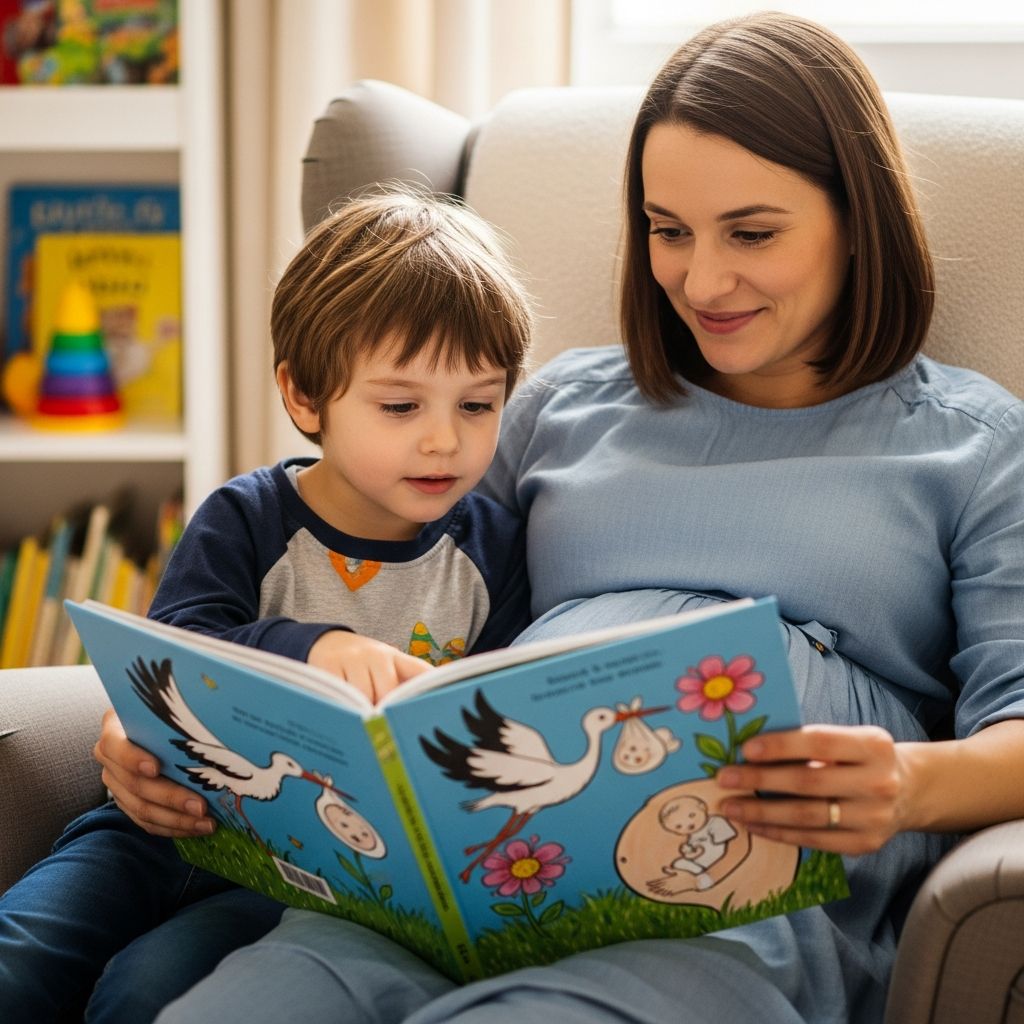
Reading about pregnancy and birth works best as a conversation, not a lecture. The way you share a book can be as important as the book you chose.
Pause and Invite Questions
Rather than racing to the end, stop on pages that show something new—a picture of a baby in the uterus, a parent in labor, or the moment siblings first meet. Give your child time to look, then ask open questions.
- “What do you notice on this page?”
- “How do you think the big sister is feeling in this picture?”
- “What do you think will happen next?”
Use Everyday Language
If a book uses very technical terms, you can offer a simpler phrase to sit alongside them. For example, “The book says ‘uterus’—that’s the soft, cozy place inside a body where a baby can grow.” Over time, children can learn both the everyday phrase and the anatomical term.
Circle Back to Your Own Family
After reading, connect the story to your real life. Point out what will be similar and what will be different in your family.
- “In this book, the baby was born in a hospital. Our plan is for the baby to be born in a birth center.”
- “In the story, the big brother stayed with Grandma while the parents went to have the baby. You’ll stay with Auntie when it’s our turn.”
- “This family has two moms. Our family has a mom and a dad, and we are all going to look after the baby together.”
Addressing Common Questions Children Ask
Children’s questions often repeat, become more detailed, or appear at surprising times—bedtime, in the bathtub, or at the grocery store. Books give you a starting point for answers, and you can adapt them as needed.
“How Did the Baby Get In There?”
For younger children, a simple explanation about a tiny seed or cell from one grown-up meeting a tiny egg cell in another grown-up is often enough. You can emphasize that grown-ups decide together when they are ready for a baby and that children are never responsible for making or caring for a baby on their own.
Older children may ask follow-up questions about exactly how those cells meet. You can add more detail in small steps, weaving together clear biological facts and your family’s moral or spiritual framework.
“How Will the Baby Come Out?”
Children often imagine that birth involves a dramatic tear through the belly or some magical disappearance. Most are reassured by concrete, calm descriptions: the baby usually comes out through a special opening between the legs, or sometimes a doctor helps by making a careful opening in the belly and then closing it again.
Books with gentle images of birth—whether vaginal birth, cesarean birth, or both—can show that this process is intense but purposeful, and that skilled helpers are nearby.
“Will It Hurt? Are You Going to Be Okay?”
Children are highly sensitive to adult pain and vulnerability. It helps to acknowledge that birth typically does involve strong sensations, and that adults often make noises, breathe heavily, or look very focused—but that this is part of the body’s way of helping the baby out.
You can reassure your child that:
- Doctors, midwives, or other helpers know how to keep the birthing parent and baby as safe and comfortable as possible.
- There is a plan for who will care for the older child during the birth.
- They will be told clearly when the adults are going to the place where the baby will be born.
Helping Children Anticipate Life With a Newborn
Pregnancy books naturally focus on the time before birth, but children’s biggest adjustment often happens after the baby arrives. Stories that depict realistic newborn behavior and family life prepare children far better than idealized baby-as-new-toy narratives.
Choose books and frame your conversations to show that:
- Babies cry often because it is their main way to communicate.
- Newborns need frequent feeding, diaper changes, and soothing.
- Grown-ups will sometimes be tired or busy, but still care deeply about the older child.
- The older child is not expected to be a second parent, but can have special “helper” jobs if they want.
Practical Ways to Involve the Big Sibling
Books are powerful, but children also need hands-on ways to feel included. After reading, you can invite your child into simple, meaningful roles.
- Prepare together: Let your child choose a small blanket or stuffed toy for the baby, or help fold tiny clothes.
- Practice with a doll: Use a doll to demonstrate holding, gentle touching, and safe distance from the baby’s face.
- Create rituals: Read a short “hello baby” story your child chose every night before the birth, or sing a particular song to the baby together.
- Plan special time: Talk in advance about when and how the older child will get one-on-one time with a caregiver after the baby comes.
Sample Reading Plan for Expectant Families
Families sometimes find it helpful to think of pregnancy in reading “phases.” You can adapt this rough plan to your due date, your child’s age, and your energy level.
| Stage | Focus of reading | Typical activities |
|---|---|---|
| Early pregnancy | Introducing the idea that a baby is growing and will join the family. | Simple picture books about expecting a baby; pointing out growing belly. |
| Middle months | How the baby grows; what babies need; feelings about becoming a sibling. | Development books; big sibling stories; drawing pictures for the baby. |
| Late pregnancy | How and where birth might happen; who will care for the child; reviewing the plan. | Books showing birth; talking about caregivers; packing a “big sibling” bag. |
| After birth | Adjusting to daily life; naming and normalizing big feelings. | Stories about new babies and siblings; revisiting favorite pages about crying, feeding, and cuddling. |
Frequently Asked Questions
How soon should I start reading baby-related books with my child?
You can begin as soon as you feel ready to share the news, especially if your child is old enough to notice changes in your body or routines. For toddlers, you might wait until the pregnancy is more visible, since their sense of time is limited; for preschoolers and older children, earlier reading can help them feel involved in the whole process.
What if I feel uncomfortable saying certain words out loud?
Discomfort is common, especially if you did not receive open, body-positive education yourself. Many parents find it easier to start with a book that uses clear, calm language, then echo those words. Over time, repeating the same phrases helps both you and your child feel more at ease.
Do I have to explain everything about sex when my child asks about the baby?
You are not required to give a full, adult-level explanation all at once. Instead, answer the specific question with a truthful, short response that fits your child’s age, then see whether they have more questions. As your child grows, you can add more detail in later conversations and new books.
What if my child shows no interest in the baby or the books?
Some children protect themselves from big changes by acting indifferent. Keep inviting them gently—offering to read together, leaving books available, or asking simple questions—without forcing participation. Respect their pace, while still making practical plans so they know what will happen during the birth and after the baby arrives.
How can I support a child who feels jealous or resentful?
Jealousy does not mean your child is unkind; it means they value your attention and worry about losing it. Use stories that show characters having mixed feelings, then name and validate your child’s emotions. Pair this empathy with small, reliable doses of one-on-one time, even if it is only ten minutes of focused play or reading together each day.
Creating Your Own Family Story
Ultimately, books are tools to support your own family’s story. You can adapt the language, choose images that reflect your reality, and weave your cultural and spiritual traditions into the way you talk about pregnancy and birth.
By combining carefully chosen books with everyday conversations, you offer your child a powerful gift: the sense that growing a family is something you do together, with honesty, tenderness, and room for everyone’s feelings.