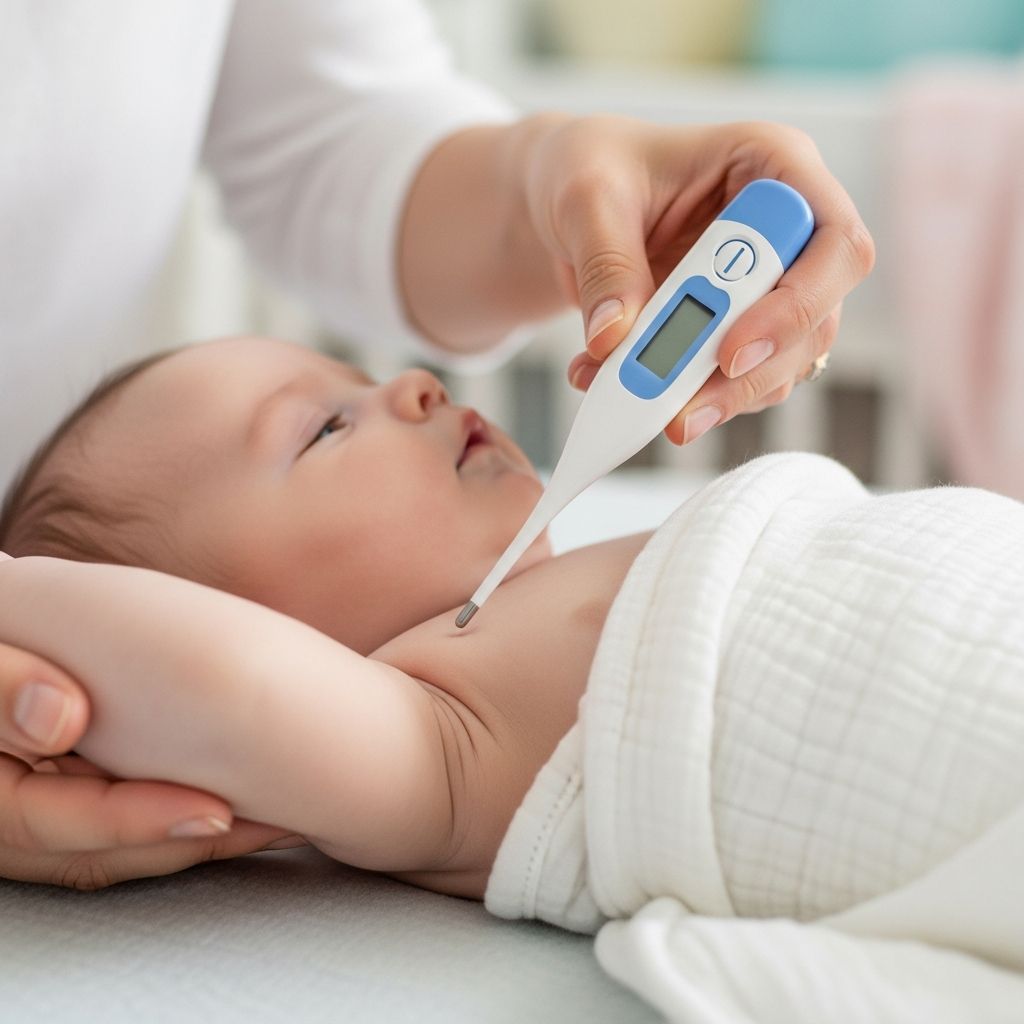
Checking a child’s temperature is one of the first things parents do when they worry about illness. The underarm, or axillary, method is a gentle way to take a child’s temperature, especially for babies and young kids who cannot hold a thermometer in their mouth yet. This guide explains how to use the underarm method correctly, what the numbers mean, and how to keep your child safe and comfortable while you do it.
Why Measure Temperature Under the Arm?
The underarm method involves placing a digital thermometer in the dry skin fold of the armpit and waiting for a reading. Parents often choose this technique because it is quick, noninvasive, and usually less upsetting for young children than rectal or oral temperature checks.
While it tends to be less precise than measurements inside the body, such as rectal or oral readings, it still offers a useful estimate of whether your child may have a fever when used correctly. The underarm method can be a helpful first check, especially at home or in situations where your child resists other methods.
When the Underarm Method Is a Good Choice
The underarm method is often used for babies, toddlers, and children who cannot safely or reliably hold a thermometer under their tongue. It is also commonly used as a quick screening method in clinics, schools, and childcare settings.
- Infants who wiggle a lot or are easily upset by rectal thermometers.
- Toddlers who cannot yet follow instructions well enough for an oral temperature.
- Children with sensory sensitivities who dislike devices in their mouth or ear.
- Situations where a rapid, rough estimate of temperature is better than no reading at all.
If you need the most accurate possible temperature in very young babies or medically fragile children, your child’s healthcare provider may recommend another method, such as rectal or oral, depending on age and circumstances.
Equipment: Choosing and Caring for a Thermometer
For underarm readings, parents should use a digital thermometer designed for multi-site use or specifically labeled for axillary temperatures. These devices are widely available in pharmacies and typically have a small, smooth tip that is safe for contact with your child’s skin.
Avoid using old-style glass thermometers containing mercury, which can break and pose serious health and environmental risks. Digital thermometers are safer, easier to read, and usually give results quickly through a number display and a beep or other signal.
Basic thermometer care
- Read the manufacturer’s instructions before first use and keep them for reference.
- Clean the tip before and after each use with mild soap and water or alcohol wipes, as directed by the manufacturer.
- Store the thermometer in a protective case and in a place your child cannot reach.
- Replace batteries when the display fades or the device warns of low power.
Preparing Your Child and the Environment
Preparation is an important step in getting a reliable underarm reading. Simple details such as recent bathing or clothing layers can affect the skin temperature under the arm. Taking a moment to set up properly can reduce errors and make the experience smoother for both parent and child.
Steps before taking the temperature
- Ensure your child has not just taken a hot bath, cold bath, or shower.
- If your child has been bundled in several layers, under heavy blankets, or tightly swaddled, allow 20–30 minutes for their body to cool toward normal room temperature.
- Make sure the underarm area is dry. Gently pat with a towel if there is moisture or sweat.
- Choose a calm, comfortable place where your child can sit or lie still for a short time.
- Explain to older children what you are doing in simple, reassuring language to reduce anxiety.
Step-by-Step: How to Take an Underarm Temperature
The exact procedure can vary slightly by thermometer, so always use the manufacturer’s instructions as your primary guide. The general process, however, is straightforward and becomes routine with practice.
- Turn on the thermometer. Press the power button and wait for any startup symbols or beeps to finish so it is ready to measure.
- Expose the underarm. Remove your child’s shirt or move it aside so you can access bare skin in the armpit. The thermometer tip should touch only skin, not clothing.
- Place the tip correctly. Gently lift your child’s arm and place the thermometer tip high in the center of the armpit, in contact with skin. Ensure the metal or sensor end lies flat within the skin fold, not sticking out.
- Position the arm. Lower your child’s arm down so it rests snugly against the body, helping to trap the thermometer in place. For small children, folding the arm across the chest can help hold the thermometer more securely.
- Keep your child still. Hold your child close or read a short story to encourage them to stay still. Avoid moving the thermometer until the reading is complete.
- Wait for the signal. Most digital thermometers beep or flash when they have finished measuring. This usually takes several seconds to a minute, depending on the device.
- Read and record. Remove the thermometer and read the number shown. Note whether it is in Fahrenheit (°F) or Celsius (°C). Write down the temperature, the method (underarm), and the time of day.
- Clean the thermometer. Turn off the device if it does not shut off automatically, and clean the tip following the manufacturer’s instructions.
Common Mistakes to Avoid
Small errors during an underarm reading can result in a temperature that is too low or too high, potentially leading parents to underestimate or overestimate a child’s illness. Being aware of common pitfalls can improve accuracy.
- Allowing the thermometer tip to touch clothing instead of skin.
- Not placing the tip high enough into the armpit fold.
- Letting your child’s arm hang away from the body instead of holding it snugly against the thermometer.
- Taking a temperature immediately after a warm bath, hot drink, or heavy bundling.
- Removing the thermometer as soon as your child moves, before the signal indicates the reading is complete.
If you suspect a reading is not accurate because your child moved or the thermometer slipped, wait a few minutes and repeat the measurement.
Understanding Your Child’s Underarm Temperature
Underarm readings usually run a bit lower than temperatures taken in the mouth or rectum. For this reason, many healthcare providers view axillary measurements as approximate values rather than exact reflections of internal body temperature.
Always use the same method consistently when you are monitoring a particular illness so you can notice changes over time, instead of comparing underarm readings with readings from other sites.
Typical ranges and fever reference
| Measurement site | Typical reference range (approx.) | Often considered fever (approx.) |
|---|---|---|
| Underarm (axillary) | About 95–98.5 °F (35–36.9 °C) | Around 99 °F (37.2 °C) or higher, depending on guidance from your child’s doctor |
| Oral (mouth) | About 97–99 °F (36.1–37.2 °C) | Often near or above 100 °F (37.8 °C) |
| Rectal | About 97.5–100.3 °F (36.4–37.9 °C) | Often near or above 100.4 °F (38 °C) |
The exact temperature that counts as a fever may vary slightly by age and medical situation, so it is important to follow the advice of your child’s healthcare provider. When in doubt, calling a clinic or nurse line for guidance can help you decide what to do next.
When to Call the Doctor
A single temperature number does not tell the whole story. Parents should look at both the reading and how their child is acting. Some children with mild fevers may appear very ill, while others with higher temperatures might still be playful but need monitoring.
- Your baby is very young (especially under three months) and feels warm or unwell, regardless of the temperature reading.
- Your child has an underarm reading that suggests a fever and also appears unusually sleepy, irritable, or in pain.
- Your child is having trouble breathing, has a rash that worries you, or shows signs of dehydration such as dry mouth or fewer wet diapers.
- The fever lasts more than a couple of days, gets higher, or keeps coming back even after your child seems better.
Emergency services should be contacted right away for serious warning signs such as difficulty breathing, seizures, bluish lips or face, or unresponsiveness. In urgent situations, do not wait to recheck the temperature before seeking help.
Tips for Comforting Your Child During Temperature Checks
Taking a child’s temperature can be stressful for both parent and child, particularly when your little one already feels unwell. Turning the process into a calm routine can reduce fear and resistance.
- Use comforting language, such as explaining that the thermometer is a “helper” that tells grown-ups how to help them feel better.
- Offer a favorite toy, blanket, or gentle song while you hold the thermometer in place.
- For toddlers, let them see the thermometer and press the power button (under supervision) so they feel involved.
- Praise your child after the reading, even if they wiggled, to build cooperation over time.
Comparing Underarm Temperatures with Other Methods
Each temperature-taking site has advantages and limitations. Understanding these can help you choose the best option for your child’s age and situation. Many parents start with an underarm reading and then confirm with another method if they are still concerned.
| Method | Pros | Cons | Often used for |
|---|---|---|---|
| Underarm (axillary) |
|
| Babies, toddlers, early screening at home or in group settings. |
| Oral (mouth) |
|
| Children old enough to follow directions, usually school-aged. |
| Rectal |
|
| Newborns and young infants, as advised by healthcare providers. |
Frequently Asked Questions (FAQs)
Is an underarm temperature enough to diagnose a fever?
An underarm reading gives a reasonable estimate but may not be as exact as a rectal or oral temperature. Many healthcare providers treat it as a screening tool. If your child’s underarm temperature seems high and they appear unwell, your provider may recommend confirming it with a more accurate method based on your child’s age.
How long should the thermometer stay under the arm?
Most digital thermometers are designed to signal when the reading is complete, often with a beep or flashing light. Parents should wait for that signal before removing the device, even if it seems to be taking longer than expected. Removing the thermometer too soon can lead to a reading that is lower than the true value.
Can clothing or blankets change the reading?
Yes. Heavy clothing or blankets can warm the skin and temporarily raise an underarm reading. If your child has been bundled up or tightly swaddled, it is best to wait 20–30 minutes after removing extra layers before checking an underarm temperature for a more accurate result.
What if my child will not stay still?
Wiggling can cause the thermometer to slip out of place, making the reading unreliable. Try holding your child in your lap, distracting them with a book or song, or enlisting another adult to help keep their arm in position. If it is still too difficult, speak with your child’s healthcare provider about alternative methods that might work better for your family.
Should I write down the temperatures?
Keeping a simple record of your child’s temperatures can be extremely helpful, especially during a prolonged illness. Note the date, time, method (such as “underarm”), and the exact number. This information helps healthcare providers see trends, such as whether the fever is rising, falling, or staying the same.
Key Takeaways for Parents
- The underarm method is gentle and easy, making it a popular choice for young children.
- Proper placement of the thermometer tip on dry skin and holding the arm snugly against the body are crucial for a reliable reading.
- Underarm readings are approximate and usually run lower than internal temperatures, so follow your provider’s guidance about what counts as a fever.
- Always consider how your child looks and feels, not just the number on the screen, when deciding whether to seek medical care.
- When in doubt, contacting a healthcare professional can provide reassurance and clear next steps.