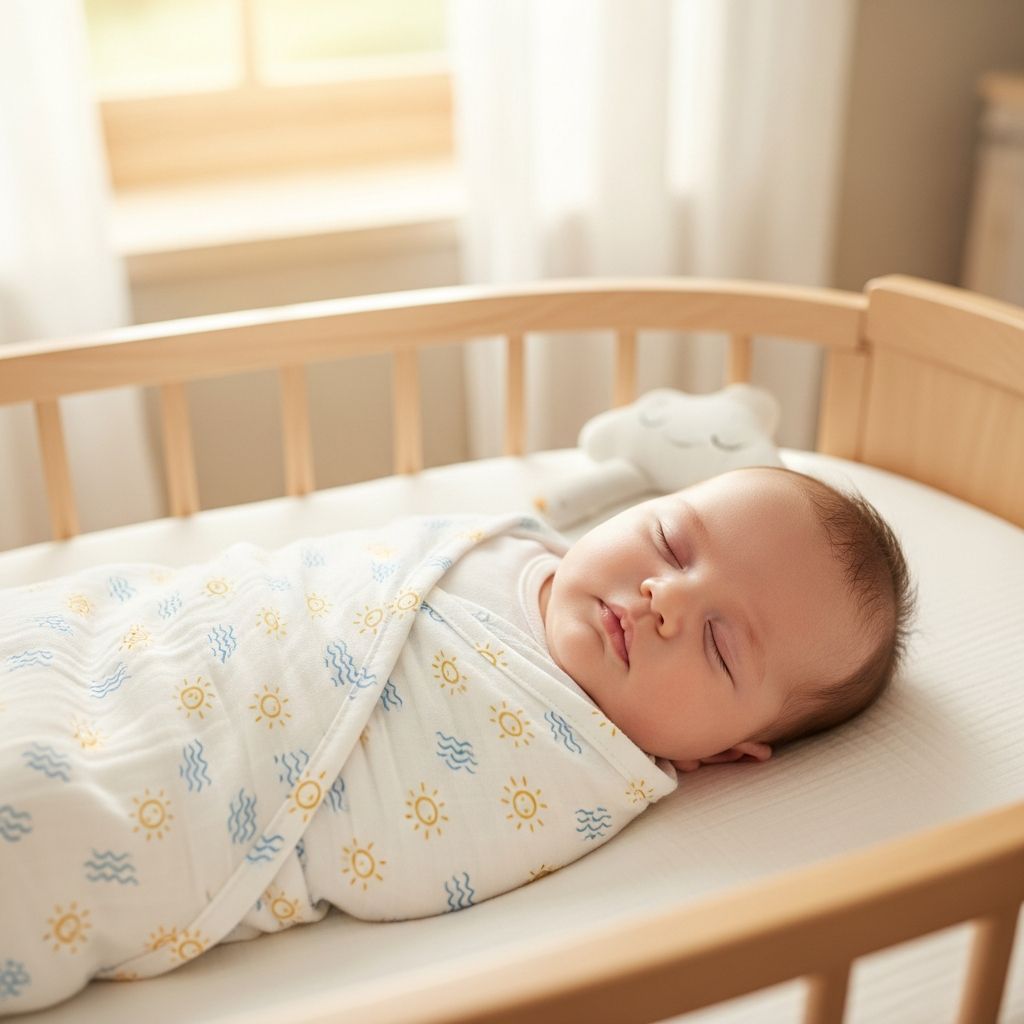
Swaddling can be incredibly soothing for newborns, but hot weather adds a layer of complexity for parents worried about overheating. The goal in summer is to balance comfort and safety: your baby should feel snug and secure, but never hot or sweaty.
This guide walks through how to swaddle in warm conditions, how to dress your baby under the swaddle, what fabrics and products to choose, and when it is safer to stop swaddling altogether.
Why Swaddling Feels So Comforting
Swaddling mimics the snug environment of the womb, which can help many babies settle more easily and sleep longer stretches. The gentle pressure around the torso and arms reduces the startle (Moro) reflex, meaning fewer sudden arm flails that can wake your baby.
In the early weeks, that secure feeling can:
- Support more predictable naps and night sleep.
- Reduce crying associated with overstimulation.
- Prevent accidental face scratching from jerky arm movements.
In warm weather, however, the same wrapping that soothes can contribute to overheating if you do not adjust layers, fabrics, or room conditions. Understanding temperature and heat risks is the starting point for safe summer swaddling.
Heat, Overheating, and Safety in Hot Weather
Newborns and young infants are not yet efficient at regulating their body temperature. They lose heat more quickly than adults in cold environments and can become overheated more quickly in hot ones. When swaddled in thick or multiple layers, excess heat can be trapped around their body.
Overheating during sleep is associated with increased safety risks, which is why safe-sleep guidelines emphasize light sleepwear and avoiding too many layers. Your strategy in summer should always be: dress light, choose breathable fabrics, and monitor your baby’s temperature regularly.
Is It Ever Too Hot to Swaddle?
There is no single temperature at which swaddling must automatically stop, because babies and homes differ in humidity, airflow, and clothing choices. Instead, focus on a combination of room temperature, what your baby is wearing, and how your baby feels to the touch.
As a practical rule of thumb, if the room feels uncomfortably warm to you in light clothing and you cannot cool it with a fan or air conditioning, it may be safer to use a light sleep sack or just a diaper and onesie instead of a full swaddle. When in doubt, fewer layers are safer than more.
Ideal Room Conditions for Summer Sleep
Before adjusting your baby’s clothing or swaddle style, look at the sleep environment itself. A slightly cooler room allows you to use a light swaddle more safely than a very warm room.
Helpful ways to moderate the room include:
- Using a fan to circulate air, positioned away from blowing directly on the baby.
- Keeping blinds or curtains drawn during the hottest part of the day.
- Using lightweight, breathable crib sheets.
- Avoiding heavy bumpers, quilts, or stuffed toys in the sleep space.
If your baby sleeps in your room (which is recommended for the first several months), ensure both of you are using light bedding so body heat does not build up in the shared space.
Choosing the Right Summer Swaddle Fabrics
The fabric you choose matters just as much as the number of layers. Lightweight, breathable textiles help moisture and heat escape, while heavy fabrics hold it in.
Best Fabrics for Hot Weather
- Muslin cotton – Thin, airy, and loosely woven, making it one of the most popular choices for summer.
- Lightweight cotton – Soft, breathable, and widely available in wraps and sleep sacks.
- Bamboo or bamboo blends – Often silky and cool-feeling, with good moisture-wicking properties.
Look for single-layer blankets or swaddles marketed as “lightweight” or “summer weight,” and avoid insulated or fleece-lined products when temperatures are high.
Fabrics to Use Sparingly in Heat
- Fleece – Very warm and better reserved for cold seasons.
- Thick knit or quilted cotton – Can trap heat even if cotton-based.
- Synthetic-heavy blends – Some trap heat and moisture; check how breathable the fabric feels.
How to Dress Your Baby Under a Summer Swaddle
Dressing your baby correctly underneath the swaddle is one of the most effective ways to avoid overheating. In general, use one layer more than you feel comfortable wearing in the same environment only during cooler conditions; in the summer, that often means equal or even fewer layers than you are wearing.
Common warm-weather combinations include:
- Diaper only + lightweight muslin swaddle.
- Short-sleeve onesie + breathable cotton wrap.
- Sleeveless bodysuit + light zip-up swaddle.
Avoid adding hats, mittens, or socks for indoor sleep in hot weather unless advised for a specific medical reason. Babies release heat through the head and extremities, so covering them unnecessarily can lead to overheating.
Sample Summer Dressing and Swaddling Combinations
The table below provides example outfits and swaddle choices for different room temperature ranges. These are general suggestions; always adjust based on your own baby’s cues and your healthcare provider’s guidance.
| Room temperature (approx.) | Suggested clothing | Swaddle option |
|---|---|---|
| 21–23°C / 70–73°F | Short-sleeve cotton onesie | Single-layer muslin wrap or lightweight swaddle sack |
| 24–25°C / 75–77°F | Sleeveless bodysuit | Thin cotton or bamboo swaddle (1 layer) |
| 26–27°C / 79–81°F | Diaper only or diaper + very light sleeveless bodysuit | Very light muslin swaddle or consider a light sleep sack instead |
| Above 27°C / 81°F | Diaper only | Often safest with no swaddle, or a very minimal, loose-weave wrap if the room can be cooled soon |
Remember that humidity and airflow also matter. A still, humid room may feel warmer than the thermometer reads, so continue to check your baby for signs of overheating.
Signs Your Baby Is Too Hot While Swaddled
Because your baby cannot tell you they are overheating, you will rely on physical signs and your own sense of touch. Make it a habit to check in periodically, especially during naps and at the beginning of night sleep.
Common Overheating Signs
- Skin that feels hot or very warm on the back of the neck, chest, or tummy.
- Damp hair, sweaty neck, or moist clothing.
- Flushed or very red cheeks.
- Rapid breathing or seeming unusually fussy and uncomfortable.
- Lethargy or difficulty waking, which can be a more concerning sign and warrants immediate attention.
If you notice these signs, remove one or more layers, choose a lighter swaddle, or cool the room. If your baby seems unwell despite cooling measures, contact a healthcare professional promptly.
How to Swaddle Safely in Summer
Swaddling safely is about more than temperature. A well-done swaddle keeps the blanket away from your baby’s face, allows room for healthy hip and leg movement, and is snug but not restrictive around the chest.
Key Summer Swaddling Principles
- Use a single lightweight layer for wrapping rather than multiple blankets.
- Keep the swaddle below the shoulders and away from the chin and mouth.
- Leave enough room at the hips and legs so your baby can bend and move their knees.
- Ensure the wrap is secure enough that it will not unravel and cover the face, but loose enough to slide one or two fingers between the fabric and your baby’s chest.
Whether using a traditional blanket or a shaped swaddle with fasteners, always lay your baby to sleep on their back on a firm, flat surface free of pillows, loose blankets, or toys.
Traditional Wrap vs. Swaddle Products in Hot Weather
Parents often wonder whether to choose a simple square blanket or a purpose-designed swaddle for summer. Each has advantages, but the decision often comes down to what you find easiest and safest to use in your specific environment.
| Option | Advantages | Considerations in summer |
|---|---|---|
| Muslin square blanket |
|
|
| Velcro or snap swaddle |
|
|
| Convertible swaddle/sleep sack |
|
|
When to Stop Swaddling (Even in Summer)
Swaddling is a short-term newborn tool and should not continue indefinitely. One of the most important safety milestones is rolling. Once your baby shows clear signs of trying to roll, it is time to transition away from traditional arms-in swaddling.
Signs it is time to stop swaddling include:
- Consistent attempts to roll from back to side or tummy.
- Breaking out of the swaddle frequently, even when it is done correctly.
- More active sleep movements that make the wrap hard to keep secure.
At that point, consider a transition product that allows arms-out sleep or switch to a simple sleep sack or wearable blanket. These options maintain some cozy feeling without restricting arm movement, which is important if your baby rolls onto their tummy.
Common Summer Swaddling Mistakes to Avoid
Even well-intentioned efforts can sometimes create unintended risks. Being aware of common mistakes makes it easier to adjust your routine confidently.
- Using too many layers – Heavy pajamas plus a thick swaddle increase overheating risk.
- Covering the head indoors – Hats and hooded garments are rarely needed during indoor summer sleep.
- Wrapping too tightly around the hips – This can affect healthy hip development; always leave room for leg movement.
- Allowing loose fabric near the face – Increases risk of the blanket covering the nose or mouth.
- Not reassessing as the weather changes – A hot afternoon may require a different setup than a cooler night.
Practical Tips for Daytime Naps vs. Night Sleep
Daytime and nighttime temperatures can vary significantly in summer, especially in homes without central air. Adjust your swaddling strategy as the day progresses rather than using a single approach 24/7.
Daytime Naps
- Use blackout shades to reduce direct sunlight but keep air flowing with a fan or open window if it is safe to do so.
- Consider a lighter combination for daytime naps, such as diaper-only plus a thin muslin wrap.
- Check your baby more frequently during naps, as rooms can heat up quickly in the middle of the day.
Night Sleep
- Reassess room temperature each evening and early morning; nights may cool enough to allow a slightly warmer outfit.
- A consistent bedtime routine (bath, quiet time, feed, swaddle) helps signal sleep even when the weather is unpredictable.
- If your home cools significantly overnight, you may need to add a light layer under the same swaddle used during earlier, warmer hours.
FAQs About Swaddling in Summer
Can I swaddle my baby in just a diaper when it is very hot?
Yes, many parents safely swaddle their babies in only a diaper under a very lightweight, breathable swaddle when the room is warm. This setup allows for fewer layers while still giving your baby the snug, secure feeling of being wrapped.
Is it safe to use a fan in the room while my baby sleeps swaddled?
A fan can help keep the room cooler and improve airflow, which may reduce the risk of overheating. Position the fan so it circulates air around the room rather than blowing directly on your baby, and always ensure cords and devices are kept well out of reach.
How often should I check for signs of overheating?
In hot weather, check your baby shortly after settling to sleep and periodically throughout long stretches, especially if the room is warm or you have needed to use more layers than you would like. Use your hand to feel the back of the neck or chest rather than hands or feet, which can feel cooler even when your baby’s core is warm.
Are breathable mesh swaddles or sleep sacks worth it for summer?
Breathable mesh panels or lightweight, open-weave fabrics can help improve airflow, which some parents find helpful in hot climates. The most important factor is still the total amount of fabric and layers around your baby, so even with mesh, keep clothing light and avoid adding thick layers underneath.
What if my baby hates being unswaddled but is close to rolling?
When rolling is imminent or already happening, safety takes priority over preference, even in hot weather. Consider a transition product that allows arms-out sleep while keeping some gentle pressure on the torso, or gradually swaddle with one arm out and then both arms out to help your baby adjust.
Key Takeaways for Safe Summer Swaddling
- Keep layers light and breathable; choose muslin, lightweight cotton, or bamboo for wrapping.
- Adjust clothing under the swaddle to the room temperature, sometimes down to just a diaper.
- Check for signs of overheating regularly and remove layers if your baby feels hot or sweaty.
- Stop traditional arms-in swaddling once your baby begins to roll, even if it is still hot outside.
- Prioritize a cool, well-ventilated room and follow safe-sleep guidelines for every nap and night.