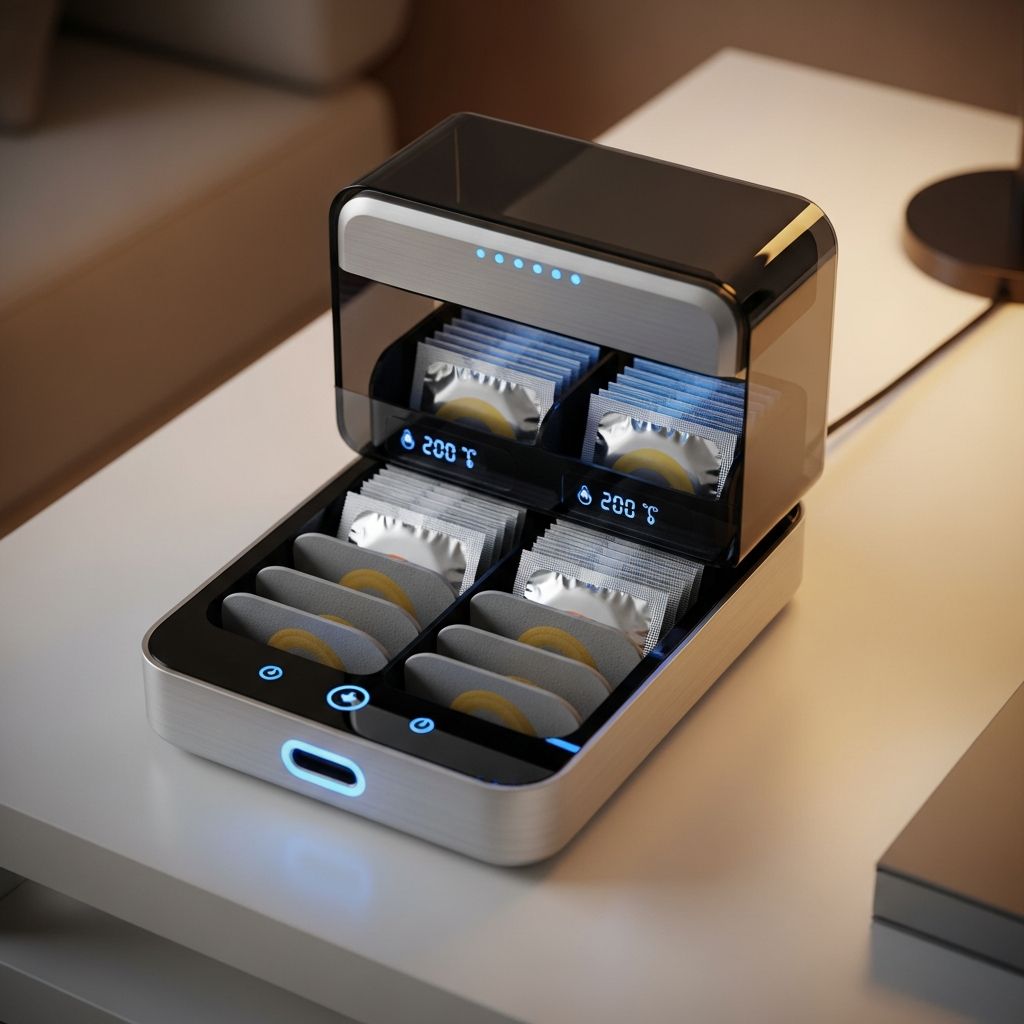
Condoms work very well to help prevent pregnancy and many sexually transmitted infections (STIs) when they are used correctly and are in good condition. To stay effective, condoms have to be stored and handled with care. Heat, moisture, friction, and sharp objects can all weaken the material, making it more likely to tear during use.
This guide explains how to keep condoms safe at home, how to carry them when you go out, what to avoid, and how to check if a condom is still OK to use. It is written for teens and young people, but the information is useful for anyone who wants to protect their health.
Why Condom Storage Matters
Condoms are made from materials like latex, polyurethane, or polyisoprene. These materials are strong but not indestructible. Over time, or if they are exposed to the wrong conditions, they can dry out, weaken, or crack.
When that happens, the condom:
- Is more likely to tear or break during sex
- May not block body fluids as well
- Can offer less protection against STIs and pregnancy
Proper storage is part of using condoms correctly, just like putting them on the right way and using them every time you have sex.
Best Places to Keep Condoms at Home
At home, condoms should be stored somewhere that is:
- Cool – around normal room temperature, not extremely hot or cold
- Dry – away from steam, splashes, and damp air
- Dark – not in direct sunlight or strong artificial light
- Stable – not squeezed, bent, or squashed
Good options include:
- A bedside drawer
- A small box or pouch in your closet
- A desk drawer away from windows
- A private container on a shelf that does not get hot
Wherever you choose, keep condoms in their original sealed wrappers until you are ready to use them. The wrapper is designed to protect the condom from air, moisture, and physical damage.
Places to Avoid Storing Condoms
Certain spots in your home or daily life can slowly damage condoms, even if they look fine on the outside. Try not to keep condoms long-term in any of these places:
- Bathroom – Hot showers create steam and humidity that can weaken latex over time.
- Sunny windowsill – Direct sunlight and UV light can damage the material.
- On top of radiators or heaters – High temperatures can shorten shelf life.
- Near cleaning products or chemicals – Some chemicals and fumes can affect latex and rubber.
- On appliances that heat up – Like on top of a computer tower or game console.
If you live in a very hot or very cold climate, pay extra attention to keeping condoms somewhere with steady, comfortable room temperature.
Carrying Condoms Discreetly and Safely
Many people like to carry condoms so they are prepared. This is a responsible choice, but how you carry them matters. Condoms that are constantly bent, rubbed, or overheated can be damaged before you ever open the package.
Good Ways to Carry Condoms for a Short Time
When you are going out, you can usually carry a condom safely for a few hours if you:
- Slip one or two condoms into a jacket or coat pocket, then return any unused ones home afterward
- Put them in a small hard case (like a card holder or metal tin) in your bag
- Keep them in a purse or backpack compartment away from keys, coins, or sharp objects
If you use a case, make sure it is just the right size—not so tight that it bends the condom, and not so loose that it slides around and gets rubbed constantly.
Why Wallets and Back Pockets Are a Problem
Many people think a wallet is a convenient place to stash a condom, but it is one of the most common ways to damage them. Wallets and tight pockets can expose condoms to:
- Heat from your body
- Friction every time you sit, move, or take the wallet out
- Pressure from being sat on for hours
- Possible contact with sharp edges from cards or coins
Health agencies and sexual health organizations warn that keeping condoms in a wallet for a long time can make them more likely to fail. If you do place a condom in a front pocket or wallet for one evening, treat it as a short-term solution and move any unused ones back to a better storage spot when you get home.
How Temperature, Moisture, and Light Affect Condoms
Understanding what harms condoms can help you make smart choices in everyday situations, like going on a trip or to a party.
| Factor | Why It Is a Problem | What To Do Instead |
|---|---|---|
| High heat (e.g., hot car, near heaters) | Can speed up aging of latex, making it brittle and more likely to tear. | Keep condoms below about 40°C / 104°F and avoid leaving them in cars or hot bags. |
| Cold and freezing | Extreme cold can damage the material, especially when it warms up again. | Aim for stable room temperature, away from windows and outdoor walls. |
| Moisture and humidity | Steam and dampness can weaken some condom materials over time. | Store them in dry areas, not in bathrooms or near kitchen steam. |
| Sunlight and UV light | Can break down latex and shorten shelf life, even through packaging. | Keep condoms in drawers, boxes, or other dark locations. |
| Ozone and some chemicals | Ozone from certain lights or machines, and some chemicals, can damage latex. | Do not store condoms right next to strong cleaners, paints, or motors. |
Checking Expiration Dates and Package Condition
Even when condoms are stored well, they do not last forever. Most male condoms are labeled to last about three to five years from the manufacturing date if kept under proper conditions.
How to Check If a Condom Is Still Good
Before you use a condom, do a quick check:
- Look for the expiration date printed on the box or individual wrapper.
- Check the wrapper for rips, tears, leaks, or holes.
- Gently feel the wrapper – you should be able to feel the condom inside, and it should not feel dried out, stiff, or stuck to the sides.
- Inspect for air – many condom wrappers are air-tight; if it feels completely flat with no small air pocket, the seal may be damaged.
If anything seems off, throw it away and use another one. Condoms are usually much cheaper than dealing with an STI or unintended pregnancy.
When You Should Not Use a Condom
Do not use a condom if:
- The expiration date has passed
- The wrapper is torn, wet, or looks like it has been opened before
- The condom looks discolored, extremely dry, sticky, or brittle when unrolled
- There are visible holes, thin spots, or damage
Always open the wrapper carefully with your hands. Do not use scissors, teeth, or anything sharp that might accidentally cut the condom.
Special Situations: Travel, School, and Sleepovers
Being prepared matters at school, on trips, and during sleepovers or parties. Here are some tips for different situations.
At School or College
- Keep condoms in a small protective case inside your backpack or locker.
- Do not place them loose at the bottom of the bag where they can rub against books, laptops, or pens.
- If you carry them all day, try to use an inside pocket or padded compartment that does not get crushed.
Traveling by Car, Bus, or Train
- Do not leave condoms in a car for long periods, especially in hot or freezing weather.
- Instead, keep them in your bag and take the bag with you when you leave the vehicle.
- If you must store them in the car briefly, keep them in a shaded, insulated spot and move them indoors as soon as possible.
Traveling by Airplane
- Pack condoms in your carry-on bag rather than checked luggage, since cargo areas can get very hot or very cold.
- Use a small case so they do not get bent or crushed in your bag.
Sleepovers and Parties
- Bring only the number of condoms you realistically might need.
- Carry them in a hard or semi-hard case in your pocket, purse, or bag.
- Return any unused condoms to your usual storage place when you get home so they are not left in a steamy bathroom or hot room by accident.
Male vs. Female Condoms: Storage Differences
Most people are familiar with external (male) condoms that roll onto the penis, but there are also internal (female) condoms that are worn inside the vagina. The materials these products use can affect how sensitive they are to storage conditions.
- Male latex condoms are more sensitive to heat, moisture, and ozone, and must be kept below 40°C (104°F) and away from humidity, bright light, and chemicals.
- Some internal/female condoms are made from polyurethane, which is generally less affected by humidity and temperature than latex, although users should still follow the manufacturer’s storage advice.
Always read the instructions on the package, because different brands and materials can have slightly different rules for storage and shelf life.
Respect, Responsibility, and Privacy
Learning to store and carry condoms properly is part of taking responsibility for your sexual health. It also shows respect for partners, because it means you are thinking ahead about safety and consent.
If you need privacy:
- Choose a place in your room that others are unlikely to search.
- Use a small, nondescript box, pencil case, or pouch.
- Keep condoms separated from everyday items like school supplies or snacks so they do not get damaged or discovered accidentally.
If you feel comfortable, talking with a trusted adult or health professional can also help you get clear, accurate information about condoms and other forms of birth control.
Frequently Asked Questions (FAQs)
Q: Is it ever OK to keep a condom in my wallet?
A: Keeping a condom in a wallet for a long time is not recommended because of heat and friction that can weaken it. If you place one in a wallet just for a few hours while you go out, try to keep it in a front pocket (not where you sit on it), then move any unused condoms back to a safer storage place when you get home.
Q: Can I store condoms in the bathroom cabinet?
A: Bathrooms often get hot and steamy from showers, and that humidity can damage condoms over time. If your bathroom stays very dry and cool, an enclosed cabinet might be safer than leaving them out, but a bedroom drawer or another dry area is usually a better choice.
Q: How long do condoms last if I store them correctly?
A: Many male condoms have a shelf life of three to five years when stored below about 40°C (104°F) and away from sunlight, moisture, and chemicals. Always check the expiration date on the package, because the exact time can vary by brand and material.
Q: Do condoms still work if they were in a hot car for a day?
A: Cars can get extremely hot inside, sometimes well above the temperatures condoms are designed to handle safely. If condoms were left in a hot car, it is safest to throw them away and replace them, especially if you are not sure how hot it got or for how long.
Q: Is it safe to keep condoms near my phone or laptop?
A: Keeping condoms next to cool electronics for a short time is usually fine, but avoid placing them right against devices that heat up a lot, like a laptop running in a bag, because that can raise the temperature around the condoms. Try to store them in a separate pocket or compartment.
References
- Condom Storage and Distribution Guidelines — Minnesota Department of Health. 2018-01-01. https://www.health.state.mn.us/diseases/hiv/partners/storage.pdf
- Condom Storage and Expiration Tips — Trojan Brands. 2022-01-01. https://www.trojanbrands.com/en/sex-information/condom-storage-and-expiration
- How to Store Condoms: Expert Advice and Tips — Flo Health. 2023-06-01. https://flo.health/menstrual-cycle/sex/birth-control/how-to-store-condoms
- Where to Store Condoms & Keep Them Discreet — Marie Stopes South Africa. 2021-05-01. https://www.mariestopes.org.za/where-to-store-your-condoms-keep-them-discreet/