Seeing a toy whiz past your head or watching an entire plate of dinner land on the floor can make even the calmest parent feel angry, embarrassed, or helpless. Yet for toddlers, throwing is rarely about being “bad” and much more about curiosity, communication, and immature self-control. Understanding what is going on under the surface makes it far easier to respond in ways that keep everyone safe without damaging the relationship.
Why Throwing Is So Common in the Toddler Years
Throwing is one of the first ways toddlers discover that their actions have a visible impact on the world. It feels powerful, exciting, and sometimes funny, especially when adults react strongly. At the same time, toddlers lack language and self-regulation skills, so big feelings easily spill out through their bodies, including through throwing.
In other words, the behavior that drives you up the wall is tightly connected to your child’s normal brain and motor development. While it still needs limits, recognizing it as a phase rather than defiance helps you respond with steady, consistent guidance instead of shame or harsh punishment.
The Many Meanings Behind a Thrown Object
Not all throwing has the same message. Different situations point to different needs, and your response works best when it matches the underlying reason rather than the surface behavior. Looking for patterns over days or weeks often reveals a clearer story than focusing on a single incident.
Below are some common motives toddlers have for throwing. A child might show more than one of these at the same time, and the mix can change as they grow, get tired, or face new stressors such as a new sibling or childcare change.
| Underlying motive | What it looks like | What the child usually needs |
|---|---|---|
| Exploring cause and effect | Throws toy repeatedly and watches where it lands; laughs or looks curious rather than angry. | Safe chances to experiment with throwing and dropping, plus clear rules about where it is allowed. |
| Building motor skills | Throws anything within reach; tries different directions, distances, and strengths. | Physical play that includes appropriate throwing targets and objects that won’t break or hurt. |
| Seeking attention or connection | Throws mainly when adults are busy; checks your face immediately afterward. | Predictable pockets of focused attention and playful interaction, along with boundaries. |
| Expressing big feelings | Face looks angry, sad, or overwhelmed; may shout or cry while throwing. | Help naming feelings, calming support, and a safe outlet for physical tension. |
| Testing limits and control | Stares at you, throws an object after you say “no,” and watches your reaction. | Firm, predictable follow-through so the child can trust that boundaries are real and safe. |
| Overload, hunger, or fatigue | Throwing increases late in the day, during long outings, or after overstimulating events. | Rest, food, less stimulation, and shorter demands matched to the child’s capacity. |
Safety First: What Parents Should Protect Right Away
Before addressing the emotional or educational side of throwing, it is important to make sure no one is getting hurt and nothing irreplaceable is at risk. Toddlers are not yet capable of judging distance, weight, and impact consistently, even when they know a rule like “Don’t throw at people.” Safety needs to be built into the environment rather than left up to willpower alone.
In spaces where throwing tends to happen, aim to remove fragile, sharp, or extremely heavy items from your child’s reach. This is not giving in; it is setting up a space where your toddler has a better chance to succeed while they are still learning control.
Quick environment adjustments that reduce risk
- Keep breakable decorations and framed photos out of reach in toddler play areas.
- Use unbreakable plates and cups for young children, especially when they are seated high off the ground in a chair or booster.
- Offer soft balls, plush toys, and lightweight blocks instead of heavy or sharp objects that could hurt someone if launched.
- Have a designated storage spot for hard or heavy toys, like wooden blocks, and bring them out only for supervised play on the floor.
- Teach older siblings to store their tiny or fragile items in a separate, higher space away from curious toddler hands.
Responding Calmly in the Heat of the Moment
In the split second after something flies through the air, your tone, body language, and next action all send strong signals. Yelling may stop the behavior temporarily, but it usually adds fear and shame without teaching better options. Calm does not mean permissive; it means being firm without being frightening.
Having a simple, repeatable response makes it easier to stay steady. Think of it as a script you lean on when your own frustration spikes. Over time, your child learns as much from your consistent calm as from your words.
A simple three-step response
- Block or move if needed. If an object is about to be thrown at someone, gently hold your child’s arm or remove the object while saying very little in that instant.
- State the limit briefly. Use one clear sentence such as “Toys are not for throwing at people” or “Food stays on the table.” Avoid lectures.
- Redirect to an acceptable option. Offer a safe alternative like “You can throw this soft ball into the basket” or “If you are done eating, place the food on the plate and say ‘all done.’”
Sample phrases you can adapt
Instead of long explanations or threats, keep your language short and steady. A few examples:
- “I won’t let you throw that at people. You may roll it on the floor.”
- “The food is for eating, not throwing. If you throw again, the meal is finished for now.”
- “You look really angry. You may stomp your feet or squeeze this pillow, but you may not throw blocks.”
- “You threw the truck. That means the truck is all done for now. We can try again later.”
Teaching Where Throwing Is Allowed
Because the urge to throw is so strong, it often works better to channel it than to try to eliminate it. Designating a clear place and clear objects for throwing sends a simple message: throwing itself is not bad, but some ways of doing it are unsafe or unkind. This framing also prevents constant battles over an impulse that is part of healthy development.
Once you choose a safe throwing option, refer to it consistently. Over time, your toddler begins to link the physical urge with that specific location and set of toys. Practice during calm moments rather than waiting for conflicts.
Ideas for a “yes” space for throwing
- Set up a small laundry basket or cardboard box as a target for soft balls, beanbags, or rolled-up socks.
- Use painter’s tape to mark a simple “throwing zone” on the floor where balls may be tossed, rolled, or bounced.
- Create a mini-indoor “basketball hoop” with a child-safe hamper and lightweight balls.
- When possible, regularly visit outdoor spaces where your toddler can throw pinecones, leaves, balls, or snowballs safely away from people and windows.
- Play structured games like rolling a ball back and forth, knocking down towers of soft blocks, or tossing beanbags at a cushion to satisfy the urge under your supervision.
Handling Thrown Food without Power Struggles
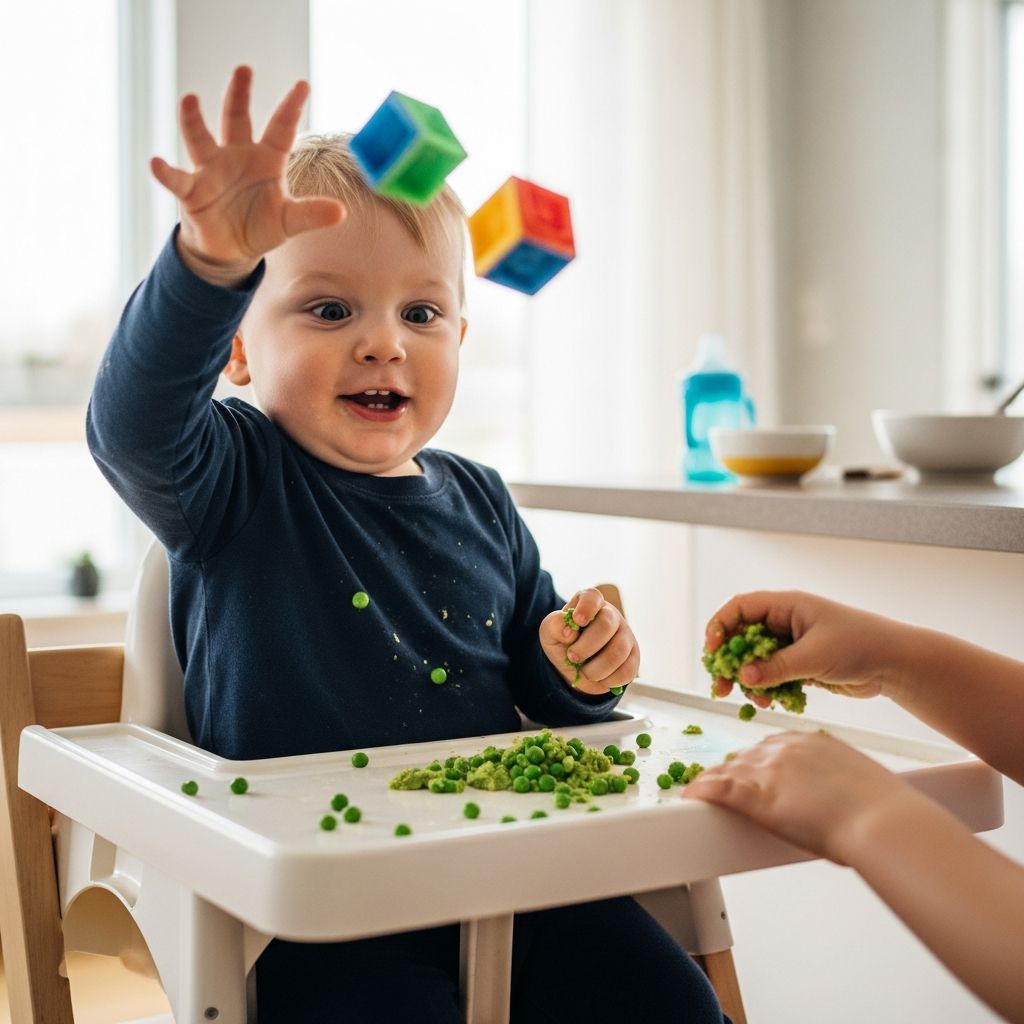
Meals offer countless chances for things to go flying: peas roll, yogurt splats, and plates flip with a single swipe. Food throwing is especially frustrating because it combines mess, waste, and strong emotions about nourishment. Yet many toddlers use food to test limits, show they are done, or explore textures rather than to insult the cook.
Approaching food throwing as communication allows you to respond clearly without taking it personally. Often, a few consistent rules and simple routines around meals reduce the problem dramatically over time.
Practical guidelines for reducing food throwing
- Offer small portions. Start with modest servings so that if some food hits the floor, there is less waste and less temptation to play with oversized piles.
- Teach an “all done” signal. Show your child how to say “all done” or use a simple gesture instead of throwing when they are finished or need a break.
- End the meal briefly after repeated throwing. After one calm reminder, if the food continues to fly, calmly remove the plate and say that the meal is over for now, offering the next snack or meal at the usual time.
- Use sturdy, child-friendly dishware. Choose plates, bowls, and cups that will not shatter if dropped or tossed, reducing both danger and your stress level.
- Avoid turning it into a show. Dramatic reactions can unintentionally make the behavior more exciting. Keep your tone neutral and your actions predictable.
When Throwing Hurts Others: Boundaries and Consequences
Throwing that risks injury demands a stronger, more immediate response. A block aimed at a sibling’s head calls for firmer limits than a stuffed animal tossed harmlessly on the couch. Still, the goal remains to teach skills and protect relationships rather than to shame.
Think of boundaries as a protective fence rather than a punishment. A toddler who learns, “Adults will step in quickly and consistently when someone could get hurt,” gains a sense of safety and trust along with the rule itself.
Healthy consequences that teach, not shame
- Remove the object. If a particular toy has become a weapon, calmly take it away and explain that it will return when it can be used safely.
- Pause the activity. End a game temporarily if repeated throwing at people or pets continues despite reminders.
- Check on the hurt person. Show your child how to look at, speak to, or gently comfort someone who was hit, modeling empathy rather than forcing insincere apologies.
- Stay close for a while. After a dangerous incident, supervise more closely, sitting near your child when they play with throwable items until their choices become more reliable.
Supporting Emotional Skills Beneath the Behavior
Every time you handle throwing with connection and clarity, you are also teaching emotional skills that reach far beyond this phase. Toddlers gradually learn to notice their own rising frustration, to use words instead of objects, and to accept “no” without needing to explode. These skills take years to fully develop, but small, consistent efforts add up.
Viewing your child as a learner rather than a troublemaker helps you focus on building skills instead of simply stopping symptoms. Over time, fewer objects fly because your child has more tools to handle the same big feelings.
Ways to build emotional regulation
- Name feelings out loud. Say things like “You look disappointed” or “You’re mad that the game ended” to help your toddler link body sensations and words.
- Offer physical outlets. Encourage jumping, running in place, squeezing a pillow, or stomping feet as safe ways to release tension.
- Practice calming routines. Teach simple strategies like taking a big breath, counting to three together, or cuddling with a favorite stuffed animal when upset.
- Model your own calm. When you take a slow breath before reacting, narrate it briefly: “I’m feeling frustrated, so I’m taking a breath to calm my body.”
Preventing Throwing with Smart Routines
While no strategy can eliminate throwing entirely, proactive changes to your daily rhythm often reduce how often and how intensely it shows up. Prevention is easier on everyone than constant correction. Think in terms of filling key needs before your child becomes too tired, hungry, or overstimulated.
Simple shifts in timing, transitions, and expectations go a long way. When you design your day with your toddler’s limited stamina in mind, problem behaviors lessen because demands feel more manageable to them.
Preventive strategies that help
- Build in short breaks for movement and free play between errands or structured activities.
- Keep snacks handy and schedule meals at roughly consistent times to prevent meltdowns driven by hunger.
- Limit toys available at any one time, rotating them so your child is less likely to throw out of boredom or overload.
- Give warnings before transitions (for example, “One more minute, then we clean up” or “Two more throws, then bath time”).
- Plan high-energy play—like running, jumping, or supervised ball games—each day so that the need to move doesn’t erupt at the dinner table instead.
Frequently Asked Questions about Toddlers Who Throw
Is throwing always normal, or can it signal a problem?
Occasional throwing, especially during play or moments of frustration, is typical for toddlers. It often peaks and then declines as language and self-control grow. If the behavior is relentless, deliberately harmful, or paired with other major concerns about development, it is reasonable to talk with a pediatric professional for further guidance.
Should I make my child clean up after they throw?
Inviting your child to help clean up can be a useful, respectful way to link actions and consequences. However, it works best when done calmly and without shaming, and when the task is age-appropriate. A simple request like “Please help me pick up these blocks” keeps the focus on collaboration rather than punishment.
Will ignoring throwing make it go away?
Ignoring attention-seeking throws of soft, harmless objects can sometimes reduce the behavior, but this approach is not safe or appropriate when people or pets could be hurt. A balanced response is to calmly block dangerous throws while avoiding dramatic reactions that accidentally reward the behavior with excitement.
What if my toddler only throws with me and behaves fine with other adults?
Children often save their most intense behaviors for the adults with whom they feel safest. While this can feel unfair, it usually means your child trusts you with their hardest moments. You can still hold firm limits while remembering that you are the secure base where they practice and sometimes fail at self-control.
How long does this phase usually last?
The heaviest throwing phase typically spans from late infancy through the preschool years, with intensity varying from child to child. As language, impulse control, and problem-solving skills develop, most children naturally reduce the behavior, especially when adults have consistently taught safer alternatives.
Key Takeaways for Overwhelmed Parents
Living with a frequent thrower can be exhausting, but it does not mean you are failing or that your child is destined for lifelong aggression. Most toddlers outgrow this phase as adults guide them with a blend of clear limits, safe outlets, and steady emotional support. The goal is not to raise a perfectly calm child but to help a real, spirited child learn how to handle big impulses without hurting people or property.
Each time you pause, protect, and redirect instead of exploding, you offer your child a powerful lesson in handling frustration and power responsibly. Over time, fewer forks, blocks, and stuffed animals take to the air—not because your toddler is afraid of you, but because they have learned better ways to communicate and cope.