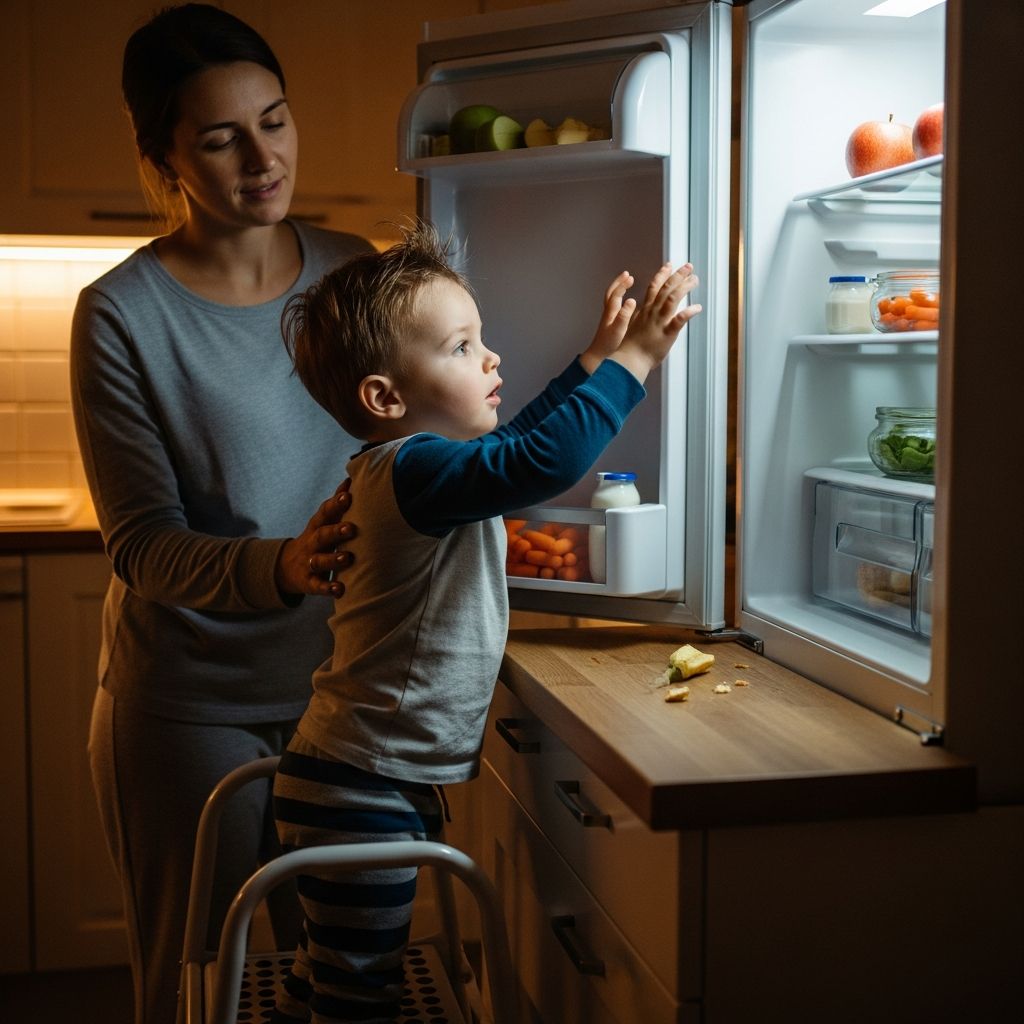
Many toddlers go through a phase of waking up at night, calling for parents, and asking for food or milk. It can leave caregivers wondering whether their child is truly hungry, using snacks to stall sleep, or just craving attention and comfort. Without tools and a plan, it is easy to slip into a routine where everyone is exhausted and every night includes a trip to the kitchen.
This guide explains the common reasons toddlers request nighttime snacks, how to respond in a calm and consistent way, and how to protect both healthy eating habits and healthy sleep. It offers practical strategies, sample phrases, and routines so families can move away from middle-of-the-night snacking and toward more restful nights.
Why Toddlers Wake Up and Ask for Food
Toddlers rarely wake at night for just one reason. Their brains, bodies, and emotions are developing rapidly, and hunger is only one possible explanation for those midnight demands for crackers or a refill of milk. Understanding the underlying drivers helps you choose a response that fits your child’s needs instead of guessing in the dark.
- True hunger. Growth spurts, long gaps between dinner and bedtime, or small dinners can lead to genuine nighttime hunger.
- Comfort and connection. Some children have learned that asking for food brings a cozy, extended visit from a parent and use snacks as a way to seek closeness.
- Habit and association. If food has been offered during night wakings, the toddler’s brain may link “wake up” with “snack time,” even after true hunger is no longer an issue.
- Bedtime anxiety or FOMO. Fear of missing out, separation worries, or changes in routine can all show up as requests for extra snacks and drinks.
- Thirst or physical discomfort. A dry room, teething, reflux, or illness sometimes get mislabeled as hunger when a child does not yet have the words to explain what feels off.
Real Hunger or Just a Habit?
Before changing anything, it helps to step back and ask whether your toddler’s nighttime snacking is driven more by physical need or by routine. Looking at patterns over several days is more useful than focusing on a single night, especially when sleep has already been disrupted.
| Signs of true hunger | Signs of habit or comfort |
|---|---|
| Eats a solid portion at breakfast afterward. | Skips or barely touches breakfast. |
| Dinner was light or eaten many hours before bedtime. | Dinner and bedtime snack were both offered and mostly eaten. |
| Growth spurt: needing more food during the day too. | Nighttime snack is very specific (one certain treat or drink). |
| Wakes up at varying times, not on a predictable clock. | Wakes around the same time each night after a pattern is set. |
| Accepts simple, plain food if offered. | Rejects plain options and insists on preferred snacks. |
Setting Up the Day to Prevent Night Hunger
The best way to avoid true hunger at night is to make sure your toddler has predictable opportunities to eat enough during the day. Small stomachs, short attention spans, and busy schedules can all mean that a child simply does not get the fuel needed to stay satisfied overnight.
- Offer regular meals and snacks every 2–3 hours so your child does not arrive at dinner starving and too tired to eat well.
- Include a mix of fat, protein, and complex carbohydrates at most meals to help keep energy steady instead of swinging between extremes.
- Provide water throughout the day and with meals so thirst is not confused with hunger at bedtime.
- Avoid relying on grazing all day; sitting for structured meals teaches the body to expect fuller feedings at predictable times.
Rethinking the Role of Bedtime Snacks
A small, balanced snack before bed can be useful for toddlers who eat dinner early or whose appetites are unpredictable. The goal is not to feed them until they are stuffed, but to provide a calm opportunity to top off their energy tank so they can sleep soundly.
Choosing foods that digest slowly and do not spike blood sugar is more helpful than sugary treats or drinks. Offering the same general options each night also keeps the snack from becoming an exciting event that delays bedtime.
- Stick to simple combinations such as yogurt with fruit, cheese and whole-grain crackers, or a small bowl of oatmeal.
- Offer water or plain milk instead of juice or sweetened beverages.
- Serve snacks at the table, with lights on, rather than in bed where they blur into the sleep routine.
- Make it clear that bedtime snack is the last chance to eat before morning.
Designing a Sleep-Friendly Evening Routine
Toddlers thrive when evenings follow a consistent, predictable arc. When children know what comes next and what to expect, they are less likely to use snacks and drinks as bargaining chips to delay sleep.
A simple routine could include the same set of steps in the same order every night, with a clear boundary between “eating time” and “sleep time.” This helps toddlers understand that once the routine moves past food, the kitchen is closed and the focus shifts to calming the body and brain.
- Choose a short sequence such as: playtime, dinner, quiet play, snack, bath, pajamas, toothbrushing, stories, bed.
- Use the same phrases each night to mark transitions, such as “This is your last snack before morning” when sitting down to the bedtime snack.
- Keep screens off for at least an hour before sleep to reduce stimulation and help melatonin levels rise naturally.
- Dim the lights and lower noise after dinner to send the message that daytime energy is winding down.
What to Say When Your Toddler Asks for Food at Night
Even with a strong routine, your toddler may still wake up and ask for food. Planning your words ahead of time can reduce frustration at 2 a.m. and keep both parents responding in a similar way. The goal is to be kind but firm and to communicate that nighttime is for sleeping, not for eating.
The exact wording is less important than the tone: calm, warm, and confident. Avoid long negotiations and explanations, which often wake your toddler fully and turn a short waking into an hour-long argument.
Simple response templates
- “Your tummy ate enough today. It’s time for sleep now. We can eat again in the morning.”
- “The kitchen is closed at night, but I can give you a sip of water and a cuddle.”
- “You feel hungry and that is hard. We will have breakfast when the sun comes up.”
- “You are safe in your bed. It’s time for your body to rest.”
When You Decide to Offer a Snack Anyway
Some nights will be exceptions: a skipped dinner, illness, jet lag, or an unusually active day. In those cases, you may choose to offer food in the middle of the night. Doing this thoughtfully reduces the chance that an emergency solution becomes a permanent habit.
If you decide to feed your toddler at night, keep the experience dull and brief so the brain does not label it as special or exciting. A boring nighttime snack is less likely to be requested again once the underlying issue passes.
- Stick to one simple option that you use every time, such as a small portion of plain yogurt or toast.
- Keep lights low, avoid conversation beyond a few reassuring words, and return your child to bed as soon as the snack is done.
- Avoid screens, toys, or games so the wake-up does not feel like a reward.
- Tell your toddler in advance that this is a special exception because of the specific situation.
Gradually Phasing Out Nighttime Snacks
If your toddler currently expects food every time they wake, your family may need a gentle plan to phase out nighttime snacks. Changing any long-standing habit takes time, and progress may be slower when everyone is already overtired, so small steps can be kinder to both parents and child.
Think of the process as trading one association for another: shifting from “I wake and get food” to “I wake and get brief comfort, then go back to sleep.” Gradual adjustments reduce battles and help your child build confidence in falling back asleep without eating.
- Start by reducing portion sizes at night while increasing the size or substance of the bedtime snack.
- Begin to delay the snack by a few minutes after each waking, offering cuddles or a reassuring presence first.
- After several nights, replace the snack entirely with a clear, consistent script and a short check-in.
- Keep a simple chart or notes to track progress; this can reassure you that things are improving even when a single rough night feels discouraging.
Handling Big Feelings Without Using Food
Toddlers often use the words and ideas they know best to describe big feelings they do not yet understand. “I’m hungry” can mean “I’m lonely,” “I’m scared,” or “I miss you.” One of the most helpful things caregivers can do is to separate emotional comfort from eating so children do not learn to use food as their only coping tool.
Offering connection in non-food ways teaches your child that emotions are welcome and manageable without creating an automatic link between feelings and snacks. This helps support healthy relationships with food in the long term.
- Use short, validating phrases such as “You miss Mama,” or “Nighttime feels a little scary,” to put words to your child’s emotions.
- Offer physical comfort: a quick back rub, brief rocking, or holding hands for a minute or two.
- Introduce simple calming tools before bed, like a special stuffed animal, a nightlight, or a short breathing exercise.
- Avoid using food as a reward for being brave; instead, praise effort and coping skills directly.
Special Considerations and When to Call the Pediatrician
While most nighttime snack requests are part of normal toddler development, there are times when frequent waking and hunger should prompt a conversation with your child’s healthcare provider. Trust your instincts if your child’s patterns shift suddenly or seem extreme.
Professional guidance is especially important if nighttime eating is accompanied by concerning physical symptoms or if your child has known medical conditions that affect appetite, digestion, or blood sugar. A provider can help rule out underlying issues and offer tailored advice.
- Reach out if your toddler is losing weight, gaining weight rapidly, or seems unusually thirsty and hungry around the clock.
- Ask for help if snoring, breathing pauses, or gasping in sleep accompany night wakings.
- Consult a professional if you suspect reflux, food allergies, or other gastrointestinal problems.
- Mention persistent mood changes, extreme fatigue, or behavior shifts alongside nighttime hunger.
Sample Evening Schedule for Better Sleep and Fewer Snacks
Many families find it easier to implement changes when they can see a concrete example. The details will vary based on your child’s age and your household routine, but the general structure below illustrates how you might separate eating from sleeping while still supporting your toddler’s needs.
| Time | Activity | Key goals |
|---|---|---|
| 5:30–6:00 pm | Dinner at the table | Offer a balanced meal, limit distractions. |
| 6:00–6:30 pm | Calm playtime | Gentle transition away from busy daytime energy. |
| 6:30–6:45 pm | Optional bedtime snack | Simple, predictable choices; remind child this is the last food until morning. |
| 6:45–7:15 pm | Bath, pajamas, toothbrushing | Body cues that sleep is approaching. |
| 7:15–7:30 pm | Books, cuddles, lights dim | Connection, language, and winding down. |
| 7:30 pm | Into bed | Consistent bedtime, clear boundary that kitchen is closed. |
Frequently Asked Questions
How old should my child be before I stop offering milk at night?
There is no single age that works for every child, but many toddlers are able to sleep through the night without milk once they are eating three meals and one or two snacks during the day. If milk is still a regular part of nighttime wake-ups, you can gradually reduce the amount in each cup or bottle, increase daytime calories, and then transition to offering comfort without drinks.
My toddler barely eats dinner but wants food at bedtime. What should I do?
First, look at the entire day’s intake: if afternoon snacks are large or very close to dinner, your child may simply not feel hungry at dinnertime. Try moving snack earlier, serving a predictable bedtime snack that is not overly exciting, and avoiding pressure at the dinner table. Keeping food-related conversations neutral often leads to better overall eating and fewer power struggles.
Is it cruel to refuse food when my toddler says they are hungry at night?
Meeting a child’s needs is always the first priority, and that includes recognizing real hunger. At the same time, consistently responding to every waking with snacks can make it harder for them to learn other ways to settle. Balancing responsiveness with boundaries—by ensuring robust daytime nutrition and offering comfort at night—allows you to be both compassionate and consistent.
What if caregiving is split between households?
When parenting happens across multiple homes, it helps to agree on a few shared principles: similar mealtime schedules, a clear understanding of whether bedtime snacks are offered, and similar responses to nighttime demands for food. Perfect uniformity is not necessary, but broad consistency can prevent your toddler from becoming confused or using the different rules to push for late-night treats.
How long will it take to change a nighttime snacking habit?
The timeline varies based on your child’s temperament, your starting point, and how consistently the new plan is followed. Many families notice progress within a week or two, even if there are still bumps along the way. Expect some protest, stay calm, and remind yourself that you are not just saying “no” to snacks—you are saying “yes” to healthier sleep patterns and coping skills.
Key Takeaways for Tired Parents
Nighttime snack requests are a common part of toddlerhood, but they do not have to rule your evenings. By nourishing your child well during the day, offering a simple bedtime snack when needed, creating a predictable routine, and responding calmly to night wakings, you can gradually shift away from midnight pantry raids.
Each small step toward clearer boundaries helps your toddler feel safer and more secure, even if they protest at first. Over time, most children learn that nights are for resting, mornings are for eating, and love and comfort are available whether or not food is on the table.