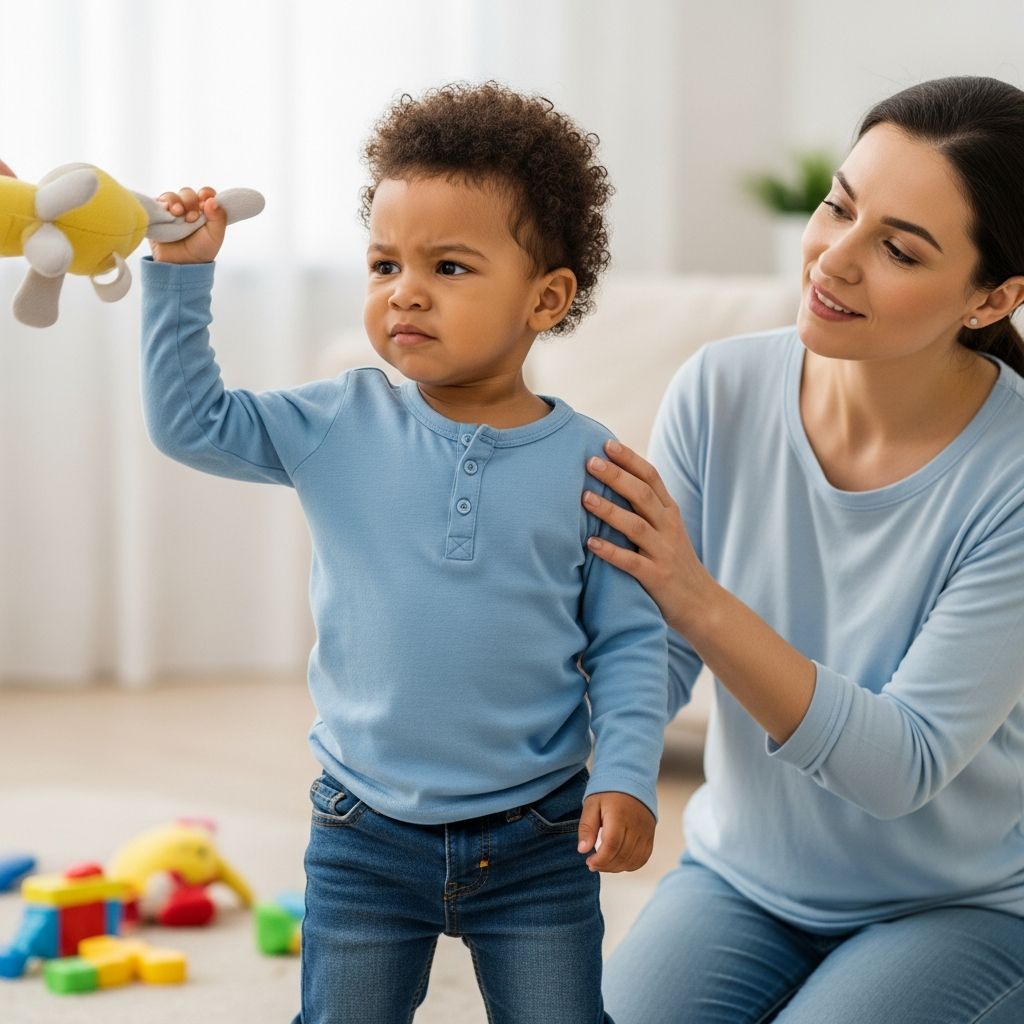
Toddlers who hit, kick, or throw toys can leave even the most patient parents feeling shocked, embarrassed, and unsure what to do next. The good news is that this behavior is common, temporary, and highly responsive to calm, consistent guidance.
This article explains why older toddlers act out physically, what’s developmentally normal, and how to respond in ways that protect everyone’s safety while also teaching self-control. You will find practical scripts, step-by-step strategies, and realistic expectations—not quick fixes or harsh punishments.
Why Toddlers Hit and Throw
Before changing behavior, it helps to understand why it happens. Toddlers almost never hit or throw toys because they are “bad”; they are usually overwhelmed, curious, or trying to communicate.
Developmental Reasons Behind Hitting and Throwing
Around ages 2–4, children are still learning how to manage impulses, use language to solve conflicts, and handle frustration. Their bodies can move faster than their thinking, so reactions often come out as swinging arms or flying toys.
- Limited language: When a child cannot find words like “stop,” “mine,” or “I’m mad,” they may use their hands instead.
- Impulse control: The brain systems that pause, think, and choose are still under construction in early childhood.
- Curiosity and cause-and-effect: Throwing shows them how objects move, make sounds, and get adult attention.
- Big emotions: Disappointment, jealousy, fatigue, or fear can overflow as hitting or flinging objects.
Common Triggers to Watch For
Patterns often emerge once you step back and observe. Noticing triggers helps you prevent many difficult moments before they explode.
- Transitions (leaving the park, bedtime, turning off screens).
- Sharing toys or siblings taking things.
- Hunger, fatigue, or overstimulation (noisy parties, busy stores).
- Sudden changes in routine (new caregiver, new baby, moving house).
Safety First: What to Do In the Moment
When a toddler hits or throws, your first job is safety; your second job is teaching. Discipline in these moments should be about guidance, not fear or shame.
Step-by-Step Response to Hitting
You do not need a long speech in the heat of the moment, just a simple, clear routine.
- Block or move: Gently hold their arm or place your body between children to prevent another hit.
- State the limit: Use a short phrase such as “No hitting. Hitting hurts.”
- Offer what they can do: “You can say ‘stop’,” or “You can stomp your feet instead.”
- Calm the storm: If they’re very upset, pause teaching and focus on helping them settle—through deep breaths, a hug (if they want), or quiet space.
- Repair: When they are calm, support a simple repair: checking on the other person, bringing ice or a toy, or saying “sorry” if your family uses apologies.
Step-by-Step Response to Throwing Toys
Throwing can be part aggression, part experiment, and part entertainment. The response should again focus on safety and practice of better options.
- Stop the action: “I won’t let you throw that truck. It’s not safe.” Remove the toy if needed.
- Label the rule: “Toys stay low. We throw balls, not blocks.”
- Redirect the urge: Offer a safe way to throw: soft balls into a basket, pillows onto a bed, or beanbags at a target.
- Follow through calmly: If throwing continues, end that activity for now: “Throwing is done. We’ll try again later.”
Helpful Phrases You Can Use
Having a few short phrases ready makes it much easier to stay calm. Below is a table of situations and simple, respectful scripts.
| Situation | What You Can Say |
|---|---|
| Your child hits you during play. | “Ouch. I won’t let you hit. You can touch me gently like this.” |
| Child throws a hard toy near someone. | “That toy is not for throwing. Balls are for throwing. Let’s roll this one instead.” |
| Child hits to get a toy back. | “You wanted the toy. Hitting is not okay. Next time say, ‘My turn please.’ Let’s practice that.” |
| Child is mid-tantrum and swinging. | “You’re very mad. I’m keeping everyone safe. I’m right here while your body calms down.” |
| Child calms and looks ashamed. | “You had a hard moment. You are not a bad kid. We’ll keep practicing gentle hands.” |
Teaching Skills Outside the Meltdowns
The calmer moments between conflicts are where most learning happens. Think of these as practice sessions for the next time big feelings show up.
Build Emotional Vocabulary
Toddlers handle frustration better when they have words for their inner world. You can turn everyday moments into mini lessons in emotional language.
- Name feelings you see: “You look frustrated that the tower fell,” or “You’re excited about the bubbles.”
- Use pictures or books with faces and ask, “How do you think she feels?”
- Teach simple feeling words first: mad, sad, scared, happy, tired.
Practice Gentle Hands and Safe Throwing
Instead of only saying “no,” show your child what to do.
- Play games where you take turns touching a stuffed animal gently and then more firmly, asking, “Which one is gentle?”
- Create a “throwing zone” with soft balls, rolled-up socks, or plush toys that are allowed to fly.
- Role play with figurines or dolls: one “hits” and the other says, “Stop. That hurts,” then switch to a kind response.
Setting Clear, Respectful Limits
Children feel safer when the rules are predictable and fairly enforced. Limits do not have to be harsh to be firm.
Three Qualities of Effective Limits
- Simple: Use short phrases like “Gentle hands,” “Toys stay low,” or “Feet on the floor.”
- Consistent: The rule is the same at home, at Grandma’s house, and on the playground.
- Predictable follow-through: If a toy is thrown at someone, it is put away for a while every time.
Natural and Logical Consequences
Punishments that humiliate or scare tend to increase fear and aggression. Natural and logical consequences gently connect actions with outcomes.
- If a toy is used to hurt, that toy is temporarily removed.
- If your child hits to avoid a task, the task still needs to be completed once they are calm.
- If your child damages something, you guide them in helping fix, clean, or replace it in an age-appropriate way.
Your Calm is Contagious
The way adults respond to aggression shapes how children will manage conflict later. Staying regulated yourself is one of the most powerful tools you have.
Managing Your Own Reactions
- Pause for one deep breath before speaking, especially if you feel angry or hurt.
- Use a quiet, firm voice instead of yelling, even when you set very clear boundaries.
- After a tough episode, repair with your child: “I was very upset earlier. I love you, and we’re okay.”
Common Parent Traps to Avoid
Even well-meaning adults can accidentally feed the cycle of hitting and throwing.
- Labeling the child: Avoid calling them “mean,” “naughty,” or “a bully.” Focus on the behavior, not their identity.
- Inconsistent rules: Laughing about rough play one day and scolding for it the next sends mixed messages.
- Over-talking: Long lectures overwhelm young children; short, clear statements teach much more.
Supporting Siblings and Other Children
When hitting or throwing affects siblings or playmates, everyone needs support. You are not only managing the child who is aggressive, but also protecting trust and safety in the group.
Protecting the Targeted Child
- Comfort the hurt child first so they know adults will keep them safe.
- Give words to their experience: “That was scary. You didn’t like being hit. I’m here.”
- Later, when everyone is calm, reinforce: “In our family, we keep each other’s bodies safe.”
Helping the Aggressive Child Rebuild Connection
The child who did the hitting also needs reassurance that they are still loved and capable of making better choices.
- Guide a simple repair—bringing a toy, drawing a picture, or saying a brief apology if appropriate.
- Offer a fresh start: “You had a hard moment. Now we’ll practice gentle play again.”
- Plan low-conflict, cooperative games so siblings can experience positive moments together.
When to Seek Extra Help
Many children move through a hitting or throwing phase with steady support at home. Sometimes, though, additional guidance from professionals can be helpful.
Signs It Might Be More Than a Phase
- Injury to others happens frequently, despite consistent limits and teaching.
- Aggression appears in many different settings (home, daycare, relatives’ homes) over several months.
- Your child seems constantly tense, anxious, or disconnected, not just occasionally upset.
- There are concerns about language delays, sensory challenges, or other developmental differences.
In these situations, consulting with a pediatrician, child therapist, or early childhood specialist can provide tailored strategies and reassurance. Seeking help is not a sign of failure; it is a sign that you are taking your child’s wellbeing seriously.
Frequently Asked Questions
Is it my fault that my toddler hits?
No single interaction or parenting style “causes” a toddler to hit. Hitting and throwing are common in early childhood because young children are still learning how to handle impulses and feelings.
That said, the way adults respond can either reduce or increase how often it happens. Calm, consistent limits, good sleep routines, and space for emotions to be expressed safely all support better behavior over time.
Should I make my child say sorry?
Forced apologies may stop the moment but do not always build empathy, especially when a child is still upset. A more helpful approach is to wait until they are calm and then guide a genuine repair that matches their developmental level.
For example, you might say, “You hurt your brother. How can we help him feel better—bring a toy, a hug, or a picture?” Over time, many children begin to offer “sorry” on their own, along with other caring actions.
What if my toddler laughs when I say no?
Laughter during discipline does not always mean defiance; it can be a release of tension or uncertainty. Rather than escalating, keep your message brief and steady, and follow through on the limit.
For instance: “You’re laughing, but I still won’t let you hit. I’m going to hold your hands until your body is safe again.” Your reliability over time teaches that you mean what you say, even if your child’s first reaction looks playful or provocative.
Is time-out useful for hitting and throwing?
Traditional time-outs that isolate or shame children can reduce behavior in the short term but may not teach better skills. Many families find more success with “time-in,” where the adult stays close, helps the child calm, and then revisits the limit.
If you use breaks, keep them brief, predictable, and connected: “We’re taking a calm break together until your body is safe again.” The goal is not to punish the feeling, but to pause the behavior and support self-regulation.
How long does this phase usually last?
There is no exact timeline, but many children show the most intense hitting and throwing between ages 2 and 4. With consistent guidance, clear routines, and growing language skills, the behavior usually decreases significantly.
Progress often looks like fewer incidents, quicker recovery, and more use of words or gestures instead of hands. Occasional setbacks during big life changes are normal; use them as reminders to return to the basics of empathy, structure, and connection.
Key Takeaways for Tired Parents
- Toddler hitting and throwing are common, developmentally normal ways of communicating unmet needs and big feelings.
- Your priority in the moment is safety, followed by short, clear limits and calm redirection to safer behaviors.
- Most learning happens outside the crisis—through emotional coaching, practice with gentle hands, and predictable routines.
- Your steadiness and self-regulation are powerful teaching tools, even on days when your child’s behavior looks “out of control.”
- Reaching out for professional help is appropriate if aggression is frequent, intense, or persists across many settings.
Parenting an older toddler who hits or throws can be exhausting, but you are not alone. With patient practice, your child can learn to express themselves more safely, and your home can feel calmer and more connected over time.