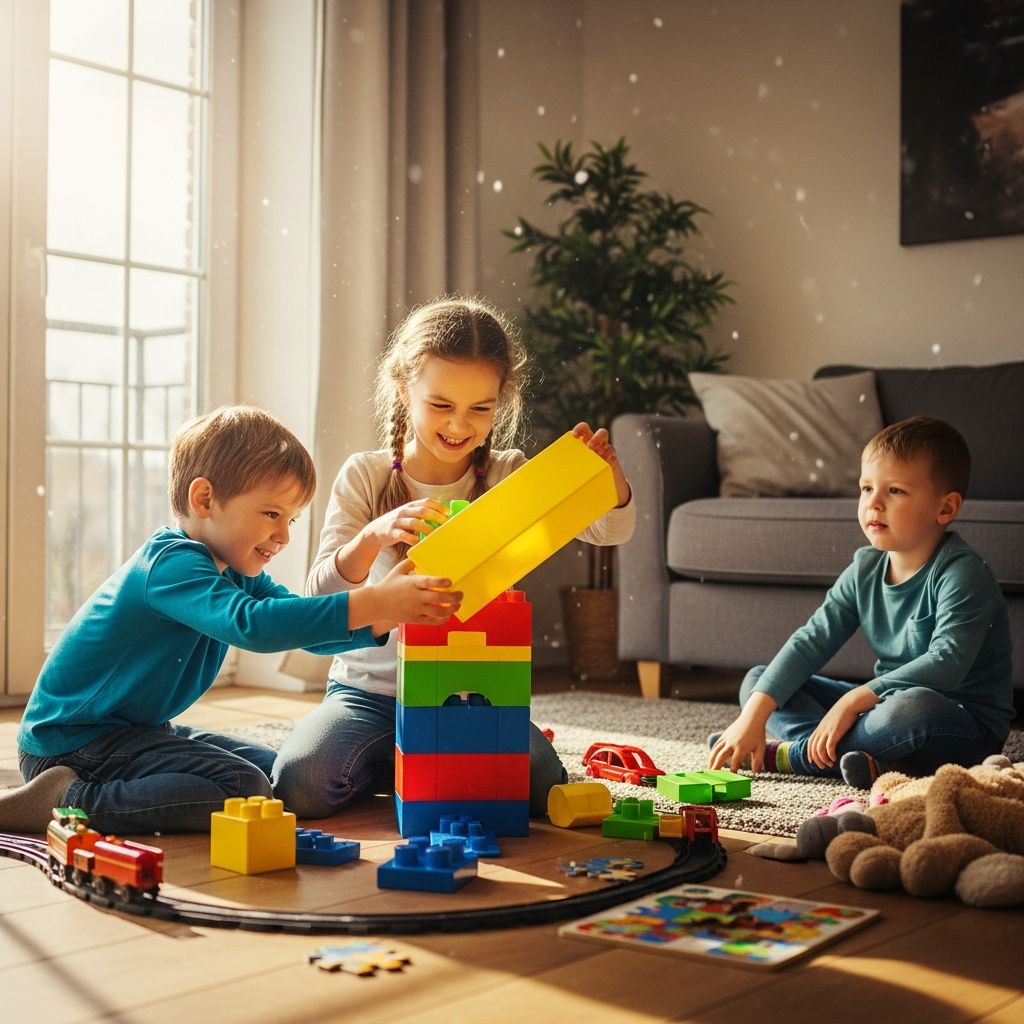
Playdates promise built-in entertainment for kids and a short break for adults, but for many families they quickly devolve into tears, door-slamming, and sibling meltdowns. Instead of getting a breather, parents end up running interference, breaking up arguments, and wondering whether playdates are even worth the effort.
The good news is that sibling sabotage is rarely about one “naughty” child and more often about understandable feelings: jealousy, fear of being left out, or anxiety about losing parental attention. When parents anticipate these emotions and set up thoughtful ground rules, playdates become calmer, kinder, and far more enjoyable for everyone involved.
Why Siblings Clash During Playdates
Understanding why sibling conflict spikes during playdates makes it easier to respond calmly and constructively. Kids are not trying to ruin the fun; they are trying, in clumsy ways, to protect their needs and status in the family.
- Fear of exclusion: The sibling without a guest often feels pushed to the sidelines, especially if play takes place in shared spaces or bedrooms.
- Loss of control over space: A child may feel invaded when a sibling and friend take over their room, toys, or favorite activities.
- Competition for attention: Playdates bring a new audience, and siblings may compete to be the funniest, bravest, or most impressive child in the room.
- Different ages and abilities: Younger siblings may not keep up with complex games, while older ones may feel annoyed by “babyish” behavior.
- Unclear expectations: When kids don’t know the rules ahead of time—who plays when, where, and with what—they test boundaries in real time.
Core Principles for Calm Playdates
Before building specific rules, it helps to adopt a few guiding principles. These ideas shape the tone of playdates and reassure all siblings that their needs matter.
- Everyone matters, even if not everyone participates equally. One child may have a guest, but the others still deserve respect, safety, and reasonable consideration.
- Alone time is not selfish. It is healthy for a child to want one-on-one time with a friend without a sibling constantly joining in.
- Inclusion has limits. It is kind to include siblings sometimes, but forced inclusion every minute often fuels more resentment.
- Predictability calms anxiety. When kids know the plan—when they will have privacy, when siblings can join, and what parents expect—emotional intensity decreases.
Designing a Simple Playdate Framework
A flexible but consistent framework helps kids understand what will usually happen when friends come over. Think of it as a rhythm rather than a rigid schedule; the pattern stays similar, even if timings vary.
| Phase | Who Is Involved | Typical Activities |
|---|---|---|
| Arrival & Settling | All kids (briefly) | Quick greeting, snack, simple shared game or tour of play space. |
| Alone Time With Friend | Host child + guest only | Bedroom play, building sets, crafts, imaginative games. |
| Sibling Special Time | Non-host siblings + adult | Screen time, baking, board game, outdoor play, or quiet one-on-one time. |
| Group Activity (Optional) | All children | Outdoor games, simple board games, quick team challenge. |
| Wind-Down & Goodbye | All kids | Tidy-up, last low-energy game, farewell ritual. |
You can adapt this framework to your children’s ages and temperaments, but having a recognizable pattern gives siblings a sense of fairness and reduces last-minute arguments about who gets to be where and when.
Ground Rules to Share With Kids
Ground rules work best when children help create them rather than having them announced as non-negotiable commands. Before a playdate, sit down as a family and brainstorm what would help the visit feel fair and fun. Then, refine that list into a handful of clear rules everyone understands.
- Respect the host child’s privacy. The child who invited a friend can have some private time in a specific room or space. Other siblings knock before entering and accept that sometimes the answer will be “Not right now.”
- Protect special possessions. Each child chooses a small group of toys or items that are off-limits during playdates, and those items are put away in advance.
- Have a sibling plan. Non-host siblings know what they will be doing during private friend time (e.g., a special activity, screens, or time with a parent), so they are not left adrift and resentful.
- Set a clear joining time. Decide ahead of time when siblings can join in (for example, after 30–45 minutes or after a certain activity). Treat this like a promise, not a vague “maybe later.”
- Use kind words and safe bodies. Hitting, name-calling, and door-slamming have predictable consequences that are calmly enforced, even during playdates.
Preparing Siblings Before the Doorbell Rings
Most of the work of a smooth playdate happens before the guest arrives. A short, focused conversation can prevent many blowups later.
1. Clarify the plan
Walk through what will happen in order: where the kids will play, when private time starts and ends, when siblings can join, and what adults will be doing. Concrete details reduce anxiety and make it less likely that a sibling feels blindsided.
2. Acknowledge feelings in advance
Let siblings know it is normal to feel left out or jealous when someone else has a friend over. Giving these feelings words—before they turn into behavior—helps children handle them more constructively.
3. Give each child a role
Assign positive roles to avoid defaulting to “excluded sibling” and “fun sibling.” One child might be the “greeter,” another the “snack helper,” another the “game chooser” later in the playdate. Clear roles highlight each child’s importance.
Making Siblings Feel Seen and Valued
Siblings are more likely to respect boundaries when they feel their needs are recognized, not dismissed. Small, intentional actions can transform “I’m the kid who gets ignored on playdate days” into “I’m part of the plan, even if the playdate isn’t for me.”
- Offer a special privilege. Non-host siblings might choose screen time, a particular game with a parent, or first choice of dessert after the playdate.
- Plan one-on-one time. Even ten minutes of dedicated attention before or after the playdate communicates, “You matter to me just as much.”
- Celebrate helpful behavior. After the playdate, notice and name times when siblings were patient, respectful, or flexible.
Balancing Inclusion and Alone Time
Many parents wrestle with whether siblings should always be included or mostly kept away. A middle path usually works best: predictable private time plus at least one low-stakes group activity everyone can enjoy.
When planning shared time, choose activities that minimize competition and maximize cooperation, such as:
- Cooperative board or card games where players work as a team.
- Outdoor games that do not require strict teams, like a casual scavenger hunt or obstacle course.
- Short creative projects—building a blanket fort, making simple crafts, or inventing a silly challenge together.
Scripts for Common Playdate Conflicts
In the heat of conflict, it helps to have a few phrases ready. These scripts can be adjusted to match your style, but the key is to stay calm, acknowledge feelings, and refer back to the plan you agreed on earlier.
When the non-host sibling barges in
“I know you really want to play with them; it looks fun. Right now is their private friend time. Let’s check the clock together and choose what you and I will do until it’s time to join.”
When the host child refuses any sibling contact
“You get private time with your friend, and we also agreed on one activity that includes your sibling. You may choose which game you want for that, but skipping it is not an option today.”
When jealousy spills into name-calling
“You are allowed to be upset and even jealous, but calling names is not okay. Tell me what feels unfair, and we will see what we can adjust for next time.”
Adjusting Playdates by Age
The balance between privacy and inclusion looks very different for preschoolers than for tweens. Tailoring expectations to age makes success more likely.
| Age Group | Typical Needs | Helpful Adjustments |
|---|---|---|
| Preschool (3–5) | Short attention span, limited social skills, strong need for supervision. | Shorter playdates, adults nearby, more shared group play, simple rules. |
| Early Elementary (6–8) | Growing desire for privacy, emerging empathy, still learning conflict skills. | Clear private friend time, one or two planned sibling activities, simple house rules repeated often. |
| Tweens (9–12) | Stronger peer focus, sensitivity about social image, more independent play. | Longer private time, fewer forced sibling interactions, more responsibility for planning and cleanup. |
Handling Things When They Go Off the Rails
Even with thoughtful planning, not every playdate will be peaceful. When things unravel, the goal is not to rescue the day perfectly but to respond in a way that teaches useful skills for next time.
- Pause the action. If voices escalate or someone is in tears, call a brief break. Move kids to separate areas to cool down.
- Stay neutral. Avoid dramatic blame. Focus on describing what happened and what needs to change: “Two people are shouting, and someone is crying. That tells me we need a reset.”
- Revisit the plan. Quietly remind children of the ground rules and decide whether the playdate can continue or needs to end early once everyone is calm.
- Debrief later. After the guest leaves, gently talk through what worked, what did not, and one small change you will try next time.
Frequently Asked Questions (FAQs)
Should siblings always be included in playdates?
No. Children benefit from occasional one-on-one time with friends, just as adults do. However, building in at least one brief, low-pressure activity where siblings can join often eases feelings of exclusion and makes house rules feel more balanced.
What if my child insists a sibling can never join?
This usually signals anxiety about status and control. Acknowledge that your child wants privacy, affirm that they will get it, and clearly explain that living in a family means sometimes sharing space and attention. Offer choices within that boundary: which game will include the sibling, when it will happen, and where.
How long should playdates last to minimize conflict?
There is no universal ideal length, but shorter is usually better when you are still experimenting with new ground rules. It is easier to extend a successful hour-long visit next time than to rescue a four-hour marathon after everyone is exhausted and irritable.
What if the visiting child is the one mistreating a sibling?
You are still responsible for maintaining a respectful environment. Calmly restate your house rules—”In our home we don’t call people names”—and, if necessary, redirect the activity or end the playdate early. Protecting siblings from ongoing mistreatment is more important than preserving an awkward social ritual.
Can I cancel playdates if siblings keep fighting?
Occasionally pausing playdates to reset expectations is reasonable, but using cancellation as the only tool often increases resentment. Instead, scale back the length, reduce the number of children involved, or host in a neutral location like a park while you continue to practice the skills and routines described above.
Bringing It All Together
When siblings sabotage playdates, it is tempting to conclude that your family “just can’t do” these social experiences. In reality, most families can enjoy smoother playdates by combining empathy for each child’s feelings with clear, predictable structures. Start small: choose one or two rules, experiment with a simple schedule, and talk openly with your children about what feels fair.
Over time, playdates become less about refereeing battles and more about building social skills—sharing space, negotiating boundaries, and recovering after conflict. Those skills will serve your children long after the last juice box is handed out and the final guest goes home.