Keeping baby bottles and feeding accessories free from harmful bacteria is crucial for infant health, especially in the early months when their immune systems are developing. Sterilization goes beyond regular cleaning by eliminating nearly all germs, reducing risks of infections like thrush or gastrointestinal issues. This guide explores effective techniques, compares modern devices, and provides practical advice drawn from reliable health practices.
Understanding Cleaning vs. Sterilization
Many parents confuse cleaning with sterilization, but they serve different purposes. Cleaning removes milk residue, food particles, and visible dirt using soap and water, while sterilization kills invisible bacteria, viruses, and fungi that survive washing. According to health experts, thorough cleaning is the first step before any sterilization method to ensure maximum effectiveness.
- Cleaning: Involves hot soapy water, brushes, and rinsing; safe for daily use on most items.
- Sterilization: Uses heat, chemicals, or UV light to destroy 99.9% of pathogens; recommended for newborns.
For babies under 3 months, immunocompromised infants, or during illness outbreaks, sterilization is particularly vital as their defenses are weakest.
Why Sterilize Baby Feeding Gear?
Baby bottles, nipples, pacifiers, and breast pump parts can harbor bacteria like E. coli or Staphylococcus if not properly treated. Studies show that even washed bottles retain bacterial loads that sterilization significantly reduces. Health organizations emphasize this for preventing colic, reflux, or serious infections. Prioritize it until your baby is 12 months old, then transition to rigorous washing if local water quality is high.
Traditional Boiling Method
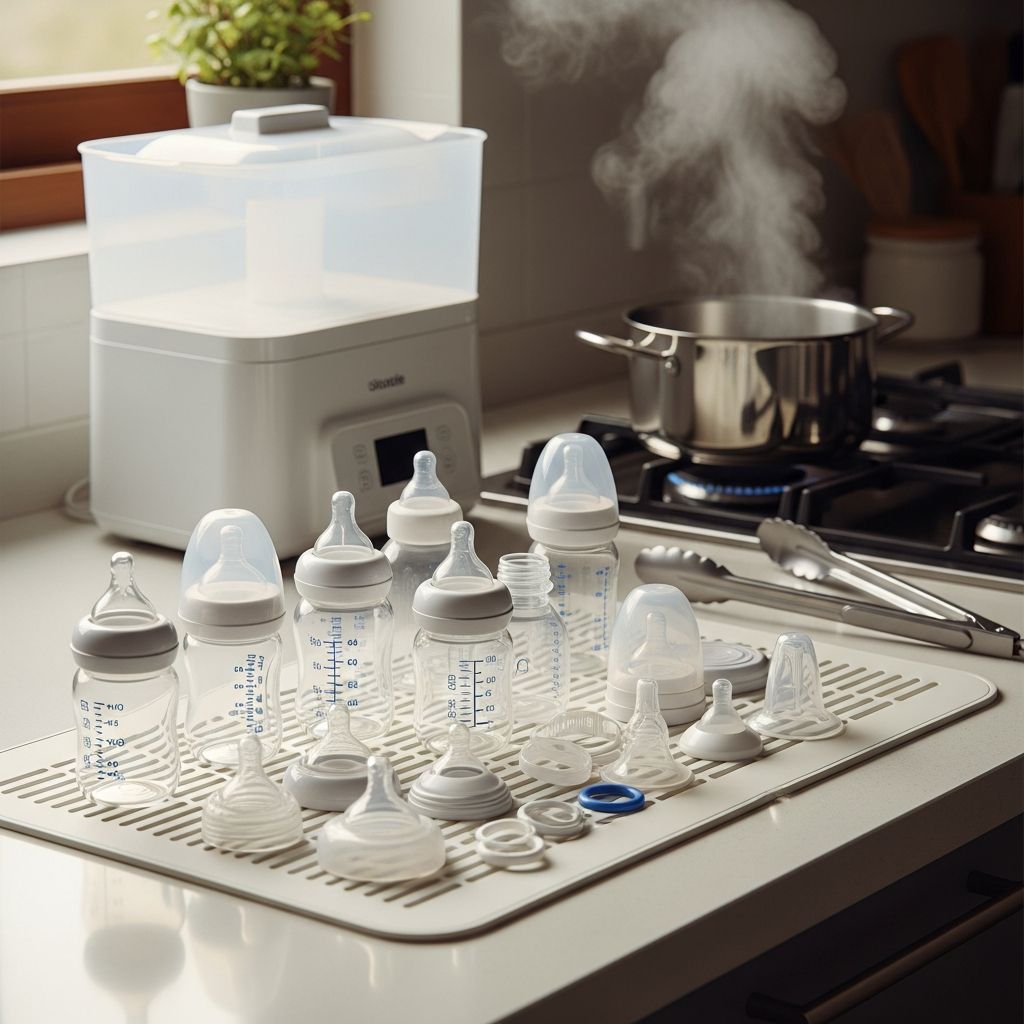
Boiling remains one of the simplest, cost-free ways to sterilize. Fill a large pot with water, submerge disassembled bottles and parts ensuring they don’t touch sides or each other, and boil for at least 5 minutes. Use tongs to remove items and let them air dry on a clean rack. This heat-based approach kills most germs effectively but requires vigilance to avoid plastic warping.
| Pros | Cons |
|---|---|
| No special equipment needed | Time-consuming; risk of burns |
| Highly effective on heat-safe items | Not ideal for frequent use |
| Zero ongoing costs | Large pots take stove space |
Always check manufacturer guidelines, as some silicone or glass parts handle boiling best.
Steam Sterilization Options
Steam methods use high-temperature vapor to penetrate surfaces without chemicals. Microwave steam bags or tubs offer portability: add water, insert parts, and heat for 2-5 minutes. Electric steam sterilizers are countertop units that hold 4-6 bottles, cycle in 6-15 minutes, and often include drying functions for up to 24-hour sterility.
- Microwave Steam: Affordable (£11-£40), quick, but bags may wear out, creating waste.
- Electric Steam: Reliable (£70-£100), eco-friendlier, with auto-shutoff for safety.
Steam reaches 100°C+, eradicating 99.9% of pathogens, making it ideal for daily routines.
Chemical Cold Water Sterilization
Perfect for travel or power outages, this involves dissolving sterilizing tablets or fluid in cold water in a sealed bucket. Submerge items for 15-30 minutes; the solution lasts 24 hours. It’s gentle on plastics but requires thorough rinsing to avoid chemical residue taste.
Pros include portability and no heat, but cons are the need for fresh solutions daily and potential skin irritation if not rinsed well.
UV Light Sterilization: A Modern Alternative
UV-C sterilizers use ultraviolet rays to disrupt microbial DNA, killing germs without heat or water. Place items inside, close the lid, and run a 10-30 minute cycle. They’re versatile for heat-sensitive materials like certain plastics or pacifiers and prevent mineral buildup.
| Feature | Steam | UV |
|---|---|---|
| Time | 5-15 min | 10-30 min |
| Heat Used | Yes | No |
| Capacity | Multiple bottles | Smaller loads |
| Best For | Speed | Delicates |
Research confirms UV matches traditional methods in reducing bacteria by over 99%.
Dishwasher as a Sanitizer
Many dishwashers have a ‘sanitize’ cycle reaching 155°F, killing substantial germs. Load bottles upside down on the top rack, use a heated dry setting, and avoid detergents with enzymes. It’s convenient but not full sterilization—combine with occasional boiling for best results.
Step-by-Step: Prepping Items for Sterilization
- Disassemble all parts: bottles, nipples, rings, valves, lids.
- Wash with hot soapy water and bottle brush, focusing on crevices.
- Rinse thoroughly under running water.
- Sterilize using chosen method.
- Air dry on clean towel or rack; store upright in covered container.
Handle sterilized items with clean tongs or washed hands to maintain sterility.
How Often Should You Sterilize?
For newborns (0-3 months), sterilize after every use. From 3-12 months, do it daily or every few uses if cleaning is meticulous. After 12 months, hot soapy washing suffices unless illness strikes. Frequency depends on water quality and household hygiene.
Safety Tips and Common Mistakes
Avoid overcrowding sterilizers, which reduces efficacy. Never submerge electric units in water. For microwaves, use only approved bags to prevent explosions. Store dry items to inhibit bacterial regrowth—wet environments breed germs. If traveling, opt for portable UV or chemical kits.
- Inspect for wear: Replace cracked nipples monthly.
- Test water temperature post-boiling to prevent burns.
- Label sterilized batches if prepping multiples.
Choosing the Right Sterilizer for Your Needs
Consider family size, budget, and lifestyle. Small households suit microwave options; larger ones need electric capacity. Eco-conscious parents prefer reusable steam over disposable bags. Read reviews for models like Papablic or Philips Avent, which combine sterilization and drying.
Budget breakdown:
- Boiling: Free after initial pot.
- Chemical: £25/year.
- Microwave: £12-£60/year.
- Electric/UV: £70+ upfront, low ongoing.
Frequently Asked Questions (FAQs)
What is the fastest way to sterilize baby bottles?
Electric steam sterilizers complete cycles in 5-10 minutes, ideal for busy parents.
Can I sterilize glass and plastic bottles the same way?
Yes, but check labels—glass excels in boiling/steam; some plastics prefer UV to avoid warping.
Do I need to sterilize breast pump parts?
Absolutely, after every use to prevent mastitis or milk contamination.
Is tap water safe for sterilization prep?
In most developed areas, yes after boiling or filtering; boil extra if concerned about contaminants.
How do I know if sterilization worked?
Devices often have indicators; otherwise, trust validated methods reducing germs by 99.9%.
Advanced Options: Hybrid Sterilizers
Modern units blend steam, UV, and drying for comprehensive care. Touch controls allow custom cycles, and some hold pacifiers, teethers, and toys. Parents report time savings and peace of mind with features like 24-hour sterility retention.
For multiples, jumbo models handle 8+ items. UV hybrids avoid moisture, preventing mold in storage.
Maintaining Your Sterilizer
Descale steam units monthly with vinegar to remove minerals. Wipe UV interiors with alcohol wipes. Empty water reservoirs to avoid stagnation. Regular upkeep ensures longevity and peak performance.
In summary, select methods matching your routine while prioritizing safety. Consistent habits safeguard your baby’s health through vital early stages.
References
- How to Sterilise Baby Bottles: Comparing Methods — Bebello. 2023. https://bebello.club/blogs/news/how-to-sterilise-baby-bottles-comparing-methods
- Sterilizing Baby Bottles: The Easiest Ways to Keep Bottles Germ Free — Milk Drunk. 2024. https://milk-drunk.com/sterilizing-baby-bottles-best-method/
- Should I Choose Steam Sterilizer or UV Sterilizer? — Papablic. 2023. https://papablic.com/blogs/bottle-cleaning-sterilizing/sterilizing-baby-bottle-guideshould-i-choose-steam-sterilizer-or-uv-sterilizer
- Steam vs. UV Sterilizer Machine for Baby Bottles: Which Is Better? — Promom.in. 2024. https://promom.in/blogs/motherhood-unplugged/steam-vs-uv-sterilizer-machine-for-baby-bottles-which-is-better
- Best practices for baby bottle sterilization — Texas Children’s Hospital. 2023-10-01. https://www.texaschildrens.org/content/wellness/best-practices-for-baby-bottle-sterilization
- Lightening in a bottle: comparison of ultraviolet light to traditional methods — PubMed. 2019-10-07. https://pubmed.ncbi.nlm.nih.gov/31600856/