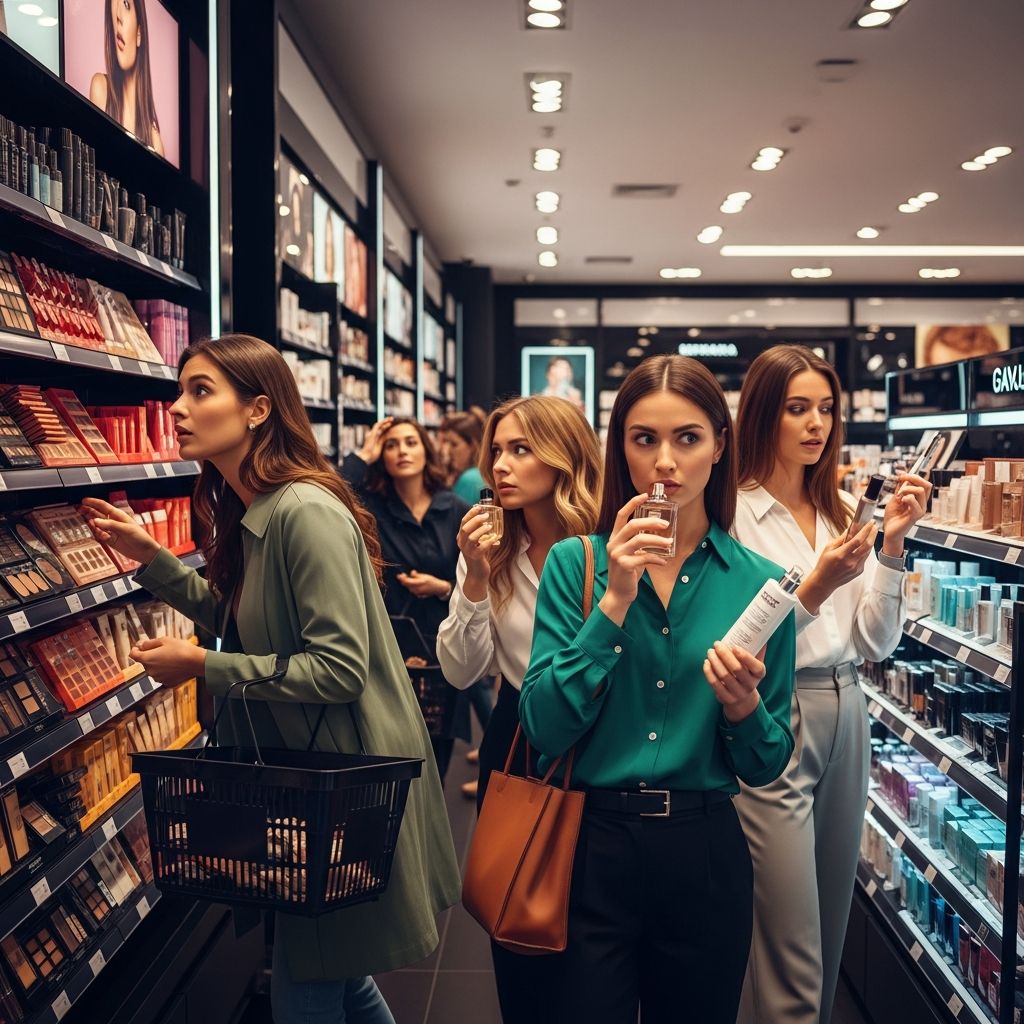
If walking into Sephora makes you feel like you missed a semester-long course called “Makeup 101,” you are not alone. The good news: you do not need an esthetician license, a ring light, or 47-step routines to make beauty shopping work for you.
Why Beauty Stores Feel So Intimidating
Beauty mega-stores are designed to be immersive, playful, and aspirational—but when you are already unsure what you need, that can quickly turn into sensory overload. Bright lights, walls of products, strong fragrances, and enthusiastic sales staff can leave even confident shoppers feeling like they are failing some invisible test.
Add in social media trends, endless jargon (serum, essence, ampoule, anyone?), and price tags that climb fast, and it is no wonder so many people freeze or panic, then grab something random just to escape. The goal of this guide is to replace that panic with a realistic plan you can adapt to your own comfort level.
Before You Go: Homework That Actually Helps
A little preparation turns a chaotic wander into a focused mission. Think of it like writing a grocery list before entering a warehouse-sized supermarket. You do not need a spreadsheet—just a few clear decisions.
Clarify Your Real-Life Needs
Instead of starting with products, start with situations in your actual life. That makes it easier to avoid buying a glitter eyeliner when what you truly need is sunscreen.
- List 2–3 everyday situations: work, school run, Zoom calls, gym, date night.
- Write one short goal for each: “look awake on camera,” “hide redness,” “add definition without heavy makeup.”
- Translate each goal into product categories, not specific brands (e.g., “light coverage base,” “creamy concealer,” “brow gel,” “neutral lipstick”).
Set a Clear Budget Range
Nothing intensifies panic like realizing halfway through that you have no idea how much you are about to spend. Decide your overall budget and your “splurge” versus “save” categories before you walk in.
| Category | Suggested Strategy | Example Budget Range |
|---|---|---|
| Base (foundation, tinted moisturizer) | Spend a bit more for shade match and finish you love. | $25–$50 |
| Concealer | Mid-range; you use small amounts, so price per use is low. | $15–$35 |
| Mascara | Save; drugstore-level options are often great. | $10–$25 |
| Lip products | Mix; one special shade, one everyday basic. | $10–$30 each |
| Skincare actives (acids, retinol) | Invest if you have specific skin goals; otherwise start simple. | $20–$60 |
Know Your Skin and Preferences
A five-minute self-check at home can save you 30 confused minutes at the display wall. No one else knows your skin better than you do living inside it every day.
- Skin type: dry, oily, combination, sensitive, or “no idea but it sometimes burns and sometimes flakes” (tell staff that exact sentence—it helps).
- Coverage comfort: sheer, medium, or full. Think of how much you want your natural skin to show through.
- Finish preferences: matte, natural, dewy. If you hate feeling “sticky” or “powdery,” mention that upfront.
Walking In: Managing Overwhelm in the First Five Minutes
The first five minutes often decide whether you have a useful trip or a meltdown. You do not need to look like you know what you are doing; you just need a few simple moves.
Start With a Slow Scan, Not a Sprint
Instead of rushing to the first shiny display, pause just inside the entrance and take a slow look around. Notice where skincare lives, where makeup stations are, and where checkout is—your brain calms down when it understands the layout.
- Walk one quiet lap around the perimeter without picking anything up.
- Look for signage by category: “foundation,” “brows,” “clean skincare,” etc.
- Mentally mark one less-crowded area you can retreat to if you feel overloaded.
Simple Scripts for Interacting With Staff
Beauty advisors can be amazing resources, but pressure-y conversations can spike anxiety. Having a few phrases ready makes it easier to steer the interaction.
- “I am feeling a bit overwhelmed. I am just looking for [one product category] today.”
- “My budget for this is around [$amount]. Do you have two or three options in that range?”
- “That is more than I want to spend. Is there a simpler or more affordable alternative?”
- “Thank you, I need a few minutes on my own to think about it.”
How to Test Products Without Regret
Swatching and sampling can feel like a science lab experiment gone rogue. A simple framework keeps your hand from turning into a muddy patchwork of 12 foundations and 9 lipsticks.
Foundation and Base: A Quick Testing Method
Matching base products is one of the biggest anxiety points. Instead of trying every shade, narrow down fast and test in good light.
- Identify your undertone: look at your neck and chest. Do you lean more golden/olive, pink/rosy, or neutral? If you are unsure, ask staff specifically about undertone, not just shade depth.
- Pick two or three shades that seem close rather than seven that might be possible.
- Stripe them vertically from jawline down to neck—not on the back of your hand, which is often a different color.
- Step as close as possible to natural light (near the entrance or a window). The shade that “disappears” into both face and neck without turning orange or gray is your winner.
Eye and Lip Products: Stay Organized
Color products are fun but easy to over-test. A little structure prevents decision fatigue and stained-skin chaos.
- Use one hand for “neutral/everyday” tests and the other for “bold/occasion” shades.
- Limit yourself to 3–4 lipstick swatches at a time; wipe off and restart if needed.
- For eye products, ask if there is a reusable eye chart or small disposable applicators—do not apply shared testers too close to your eyes.
- Take a quick phone photo of your favorite swatches in store lighting to compare later.
Skincare: Keeping It Simple and Safe
Skincare aisles are packed with promises: glass skin, anti-aging miracles, texture erasing potions. When you are anxious or feeling insecure about your skin, those claims can be especially alluring—and overwhelming.
Build a Basic Routine First
If your current routine is “sometimes I wash my face with whatever is in the shower,” you do not need seven serums. Aim for a realistic, foundational routine you can actually stick to.
- Gentle cleanser: no burning, tightness, or intense fragrance after rinsing.
- Moisturizer: suited to your skin type (gel for oilier, cream for drier, lotion for in-between).
- Daily sunscreen: broad spectrum, at least SPF 30, with a texture you do not hate.
When (and How) to Add Treatment Products
Active ingredients like acids and retinoids can be powerful and helpful—but they can also cause irritation if you pile them on without a plan.
- Choose one main skin goal to address first: breakouts, dark spots, fine lines, redness, or texture.
- Pick one active ingredient that matches that goal (for example, salicylic acid for acne, niacinamide for oil control, vitamin C for brightness).
- Skip adding multiple new actives at once; introduce one, patch test, and give it at least 2–4 weeks before judging.
- If you have sensitive skin or existing skin conditions, ask staff to point you only to the “gentle” or “sensitive skin” ranges and avoid anything labeled “intense,” “extra-strength,” or “peel” for now.
Social Media Trends vs. Your Real Face
It is easy to feel behind when trending products and 10-step routines dominate your feed. Remember that most viral routines are content, not prescriptions; they exist to be watched, not necessarily replicated exactly on your own bathroom counter.
Spotting When a Trend Is Not for You
Use a few quick questions to decide whether a product is actually worth your time and money.
- Does it solve a problem you personally have, or just look cool on video?
- Is it designed for your skin type and age group, or for someone with a completely different situation?
- Is it significantly more expensive than similar options that would do the job?
- Would using it regularly fit into your morning or night in a realistic way?
Creating Your Own Core Capsule
Instead of chasing every new release, build a small “capsule collection” of workhorse products you know you like. Once that foundation is solid, the occasional trendy lip oil or shimmer palette is just icing, not pressure.
- 1 everyday base product (tinted moisturizer, light foundation, or BB cream).
- 1 concealer for under-eyes or spots.
- 1 brow product that matches your hair and skill level.
- 1 neutral eyeshadow or cream stick.
- 1 mascara you do not hate removing.
- 1 everyday lip color and 1 “fun” shade.
Making Decisions: A Simple System to Avoid Panic Purchases
By the time you have swatched, sniffed, and chatted, your brain might be buzzing. A quick decision-making system stops you from panic-buying half the store—or talking yourself out of the one thing you actually wanted.
The YES / MAYBE / NO Basket Method
If your store offers baskets, use them as a physical sorting tool as you browse. Even if it is just in your mind, grouping items this way clarifies your priorities.
- YES items: Directly match your original list, fit your budget, and you already know how you would use them.
- MAYBE items: You like them, but they are either more expensive than planned, duplicate something you own, or are more experimental.
- NO items: Anything you picked up because you felt pressured, rushed, or momentarily dazzled but cannot describe a real use for.
The 3-Question Checkout Check
Before you join the line, stop somewhere quiet and ask yourself three questions about each YES or MAYBE product.
- “When in my actual life will I use this?” If you cannot see at least one specific occasion, reconsider.
- “What will I reach for instead if I do not buy this?” If you already have something similar that works, you might not need the upgrade.
- “Will I still be glad I bought this in two weeks?” If the honest answer is “probably not,” gently put it back.
After the Trip: What to Do With Regret, Reactions, or Ruts
Even with the best planning, not every purchase will be perfect. What matters is how you handle the aftermath so that one questionable blush does not turn into long-term store anxiety.
Trying Products at Home the Smart Way
Give new products a fair but gentle trial inside your actual routine before declaring them failures.
- Test one new skincare product at a time; wait a few days before adding another.
- For makeup, wear it on a low-pressure day at home first to see how it feels and wears.
- Take notes or photos over a week if you are unsure—sometimes a product grows on you or reveals issues over time.
Handling Returns Without Guilt
Most major beauty retailers allow returns, especially if a product caused a reaction or clearly does not work for you. You are not a bad customer for needing to exchange or return; you are using a policy designed exactly for this.
- Keep receipts or digital order confirmations somewhere easy to find.
- Clean the exterior of the product before bringing it back; it is polite and speeds up the process.
- Keep your explanation simple: “This irritated my skin” or “The shade is wrong” is enough.
FAQs: Common Beauty Store Panic Questions
What if I feel judged for not knowing anything about makeup?
Most people in the store are thinking about their own appearance, not silently grading yours. You are allowed to say, “I am pretty new to this; can you explain it like a beginner?” Anyone worth your time will happily meet you at your level. If someone makes you feel small, that is a reflection on them—not proof that you do not belong there.
How many products do I really need as a beginner?
For makeup, you can do a complete, polished everyday look with as few as four items: a light base, concealer, mascara, and one lip product. Everything else—highlighters, contour, eyeliner, multiple palettes—is optional decoration, not a requirement. For skincare, start with cleanser, moisturizer, and sunscreen; only add more when you are consistent with those.
What if a sales associate keeps pushing expensive items?
You are allowed to repeat your boundaries. Try, “I appreciate the suggestions, but my budget is firm at [your number],” or, “Those sound nice, but I am only buying what is on my list today.” If you still feel pressured, thank them and physically move to another part of the store or switch to browsing alone.
How do I handle strong scents if they trigger headaches or sensory overload?
Ask if your store has fragrance-free or low-scent zones, and try to complete most of your browsing there. You can also plan shorter visits with a very specific list, go during quieter hours, and avoid standing by the perfume sections for long. If scent sensitivity is severe, consider testing products via samples at home instead of lingering in-store.
Is it embarrassing to bring photos or notes into the store?
Not at all; it is smart. A few photos of your bare face, your usual makeup, or a look you admire can help staff quickly understand what you want. A written list or even a note titled “Things I Do Not Want” can keep you grounded when the displays start to blur together.
Turning the Store Into Your Space
Sephora and similar beauty stores are designed to invite experimentation and play, but you are allowed to engage on your own terms. You do not have to perform expertise to deserve help. You do not have to buy in bulk to justify your presence.
With a short list, a simple budget, a few scripts, and a gentle decision-making system, you can walk in, explore, and walk out with products that fit your life instead of your panic. Over time, each calm visit quietly rewrites the story in your head—from “I do not belong here” to “This is just another store, and I know how to shop it.”