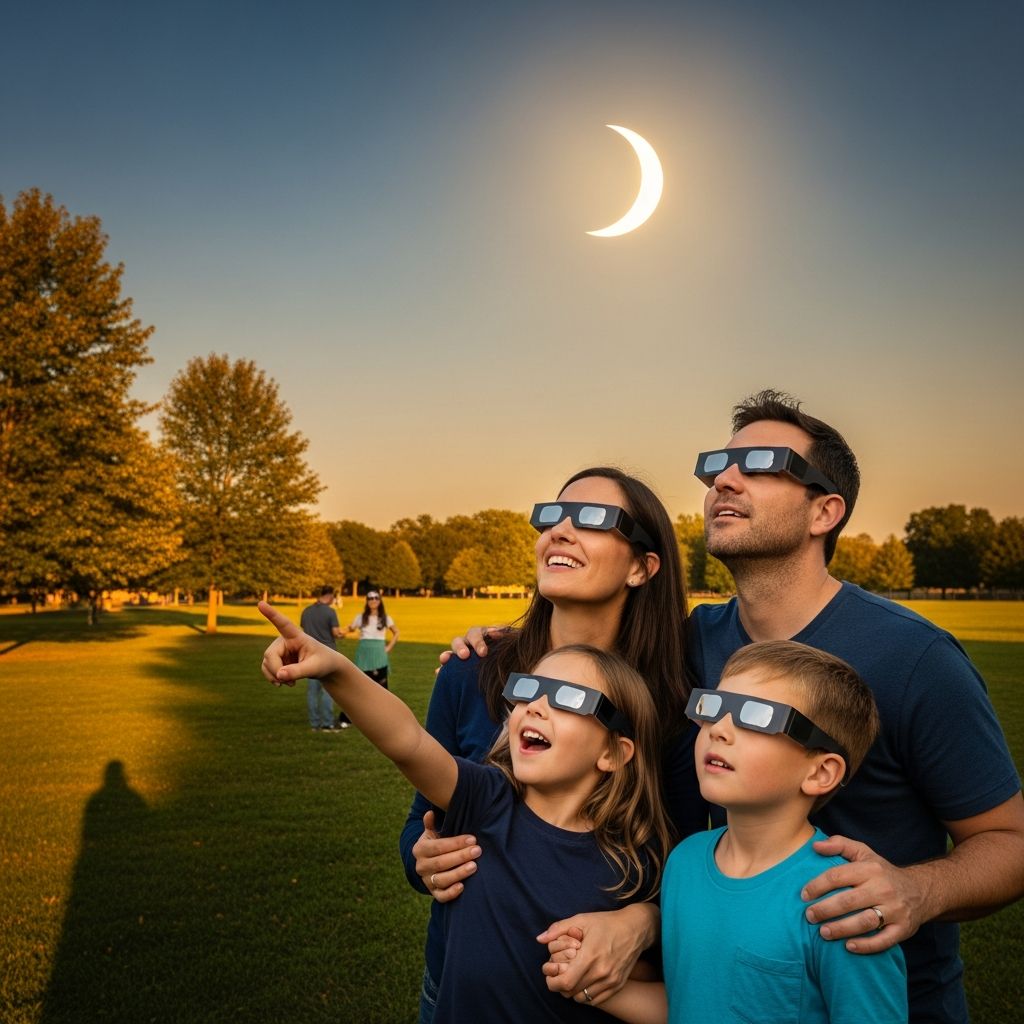
Solar eclipses captivate families with their rare celestial beauty, but unprotected viewing can lead to permanent eye damage like solar retinopathy, where intense sunlight burns the retina painlessly. Parents must prioritize certified protective gear and indirect methods to safeguard children’s vision during these events.
Understanding Eye Risks in Solar Eclipses
The sun’s rays during an eclipse appear dimmer, tricking eyes into not squinting, which exposes the retina to harmful ultraviolet and infrared radiation. This can cause immediate, irreversible harm without warning symptoms. Children are especially vulnerable due to smaller pupils allowing more light entry and less awareness of risks.
Solar retinopathy damages light-sensitive retinal cells, potentially leading to central vision loss, distorted sight, or blind spots. Recovery is rare and partial at best, emphasizing prevention through proper techniques.
Choosing Certified Protective Eyewear
**Eclipse glasses** meeting **ISO 12312-2** standards are essential for direct viewing. These filters block nearly all harmful wavelengths while permitting a faint sun image. Purchase from reputable vendors like libraries, science museums, or official suppliers to avoid counterfeits.
- Inspect for scratches, tears, or dents before use; discard damaged ones.
- Test by viewing a bright light: it should appear dim without glow around edges.
- Ensure snug fit covering entire eye area to prevent light leaks, especially for kids.
Sunglasses, even polarized or dark ones, offer insufficient protection. Never use homemade filters, phone cameras, or regular binoculars.
| Approved Gear | Not Safe |
|---|---|
| ISO 12312-2 eclipse glasses | Ordinary sunglasses |
| Handheld solar viewers | Homemade filters |
| Solar-filtered telescopes | Camera lenses without filters |
Supervision Strategies for Young Viewers
Constant adult oversight is critical for children. Instruct kids to don glasses before glancing at the sun and remove them only after looking away. For toddlers unable to comply, opt for indirect methods.
Conduct pre-eclipse talks explaining rules: no peeking without protection, even briefly during partial phases. Use visuals like NASA’s eclipse diagrams to reinforce messages.
- Position children facing away from sun until ready.
- Enforce one-on-one monitoring in crowds.
- Prepare backups: extra glasses or indoor viewing options.
Indirect and Creative Viewing Methods
For total safety, avoid direct sun gazing entirely. Pinhole projectors create safe projections using household items.
- Cut a small hole in cardboard; project sunlight through onto shaded paper.
- Use a colander over white surface: multiple crescent shadows form via holes.
- Interlock fingers for natural pinholes casting projections on ground.
These techniques let families observe eclipse progression without eye risk, turning viewing into interactive play. NASA endorses them for all ages.
Watch live broadcasts on TV or streams for close-ups and expert commentary, eliminating all optical hazards while providing multi-angle perspectives.
Navigating Totality: Special Rules
During **totality**—when the moon fully obscures the sun—brief direct viewing is safe without filters, but only in the path of totality. Glasses must resume immediately post-totality as the sun reemerges intensely.
Most families experience partial eclipses, where protection is mandatory throughout. Confirm local totality via official maps; otherwise, stick to indirect methods.
Advanced Optical Safety Protocols
Avoid all optical devices unless equipped with certified solar filters matching ISO standards. Concentrated rays through unfiltered telescopes or binoculars can shatter protective glasses and injure eyes.
For photography, use dedicated solar cameras. Supervise any device use rigorously, prioritizing naked-eye alternatives for children.
Pre-Eclipse Preparation Checklist
Build excitement safely with these steps:
- Source ISO-compliant glasses weeks ahead; stock extras.
- Test gear and practice pinhole setups.
- Review weather; have indoor backups.
- Pack shaded viewing spot supplies: water, snacks, blankets.
- Discuss traffic safety: obey limits, minimize distractions during travel.
Post-Eclipse Eye Health Monitoring
Watch for symptoms like spots, blurriness, or pain. Seek immediate ophthalmologist care if noticed. Most issues stem from non-compliance, but vigilance ensures quick intervention.
Frequently Asked Questions
Can kids remove eclipse glasses during totality?
Yes, only if in totality path and sun is fully covered; replace instantly afterward. Partial eclipse areas require constant wear.
Are used eclipse glasses safe next time?
Yes, if undamaged and stored properly; re-inspect before reuse.
What if eclipse glasses don’t fit my child?
Use indirect projection methods or adult supervision with snug adult glasses; avoid loose fits.
Is watching on TV really safe and fun?
Absolutely—safest option with expert insights and no eye risk.
How do I spot fake eclipse glasses?
Verify ISO 12312-2 label, test dimness on lights, buy from trusted sources.
Community and Educational Engagement
Involve schools or libraries for group viewings with professional oversight. Hands-on workshops building projectors foster science interest safely.
Share experiences post-event to build community awareness, emphasizing protection’s role in future astronomy enjoyment.
References
- But First, Shades! How Kids Can View the Solar Eclipse Safely — Cincinnati Children’s Hospital Medical Center. 2024. https://blog.cincinnatichildrens.org/safety-and-prevention/viewing-the-solar-eclipse-how-kids-can-do-it-safely/
- Children and eye safety during solar eclipses: Educational strategies and supervision — Delta Dental of Kentucky. 2024. https://www.deltadentalky.com/solar-eclipse/children-eye-safety-solar-eclipse/
- How to safely view a solar eclipse with kids — Children’s Health. 2024. https://www.childrens.com/health-wellness/how-to-safely-view-a-solar-eclipse-with-kids
- Here’s What You Can Do to Watch a Total Eclipse of the Sun — Safe Kids Worldwide. 2024. https://www.safekids.org/blog/heres-what-you-can-do-watch-total-eclipse-sun
- Eclipse Viewing Safety — NASA Science. 2024-04-08. https://science.nasa.gov/eclipses/safety/
- Safely View a Solar Eclipse — National Safety Council. 2024. https://www.nsc.org/community-safety/safety-topics/seasonal-safety/how-to-watch-a-solar-eclipse