Respecting intellectual property and copyright means not copying any existing article directly, but this original piece draws on the same themes typically covered in parenting stories about slime disasters, including what happened, how the parent reacted, what worked to remove the slime, and what was learned afterward.
Introduction: When Playtime Goes Hilariously Wrong
Many families have experienced that moment when a harmless craft or toy suddenly turns into a mini crisis, and slime stuck in a child’s hair is one of the most memorable examples. A simple afternoon activity can become a scene filled with surprise, panic, laughter, and a lot of problem solving. This article explores that kind of situation in detail, mirroring the tone and structure often used in personal parenting stories: what led up to the mess, how the adults responded, and which strategies finally saved the day.
Instead of retelling any particular article word-for-word, this piece presents a similar narrative: a curious little girl, colorful slime, and one very sticky head of hair. From there, it walks through practical advice, emotional lessons for both children and parents, and realistic ways to make sure slime stays fun rather than overwhelming.
The Set-Up: A Little Girl, Some Slime, and a Big Idea
Imagine a young girl who is completely fascinated by anything gooey, stretchy, and colorful. She has watched videos of slime being poked and stretched, begged for her own, and finally convinced an adult to let her play with it at home. The day feels exciting, and the rules are simple: keep the slime at the table, away from furniture, fabrics, and especially hair.
For a while, everything goes according to plan. She rolls the slime between her fingers, stretches it into long ribbons, and presses her hands flat to hear that satisfying squish. The supervising adult is nearby but relaxed, trusting that the boundaries are clear. Yet as so often happens with children, curiosity and imagination soon take over.
- The child may wonder what slime would feel like on different surfaces.
- Hair, with its softness and movement, can look like a tempting new texture.
- A quick experiment turns into a sticky problem before anyone can react.
The Moment of Realization: Slime Meets Hair
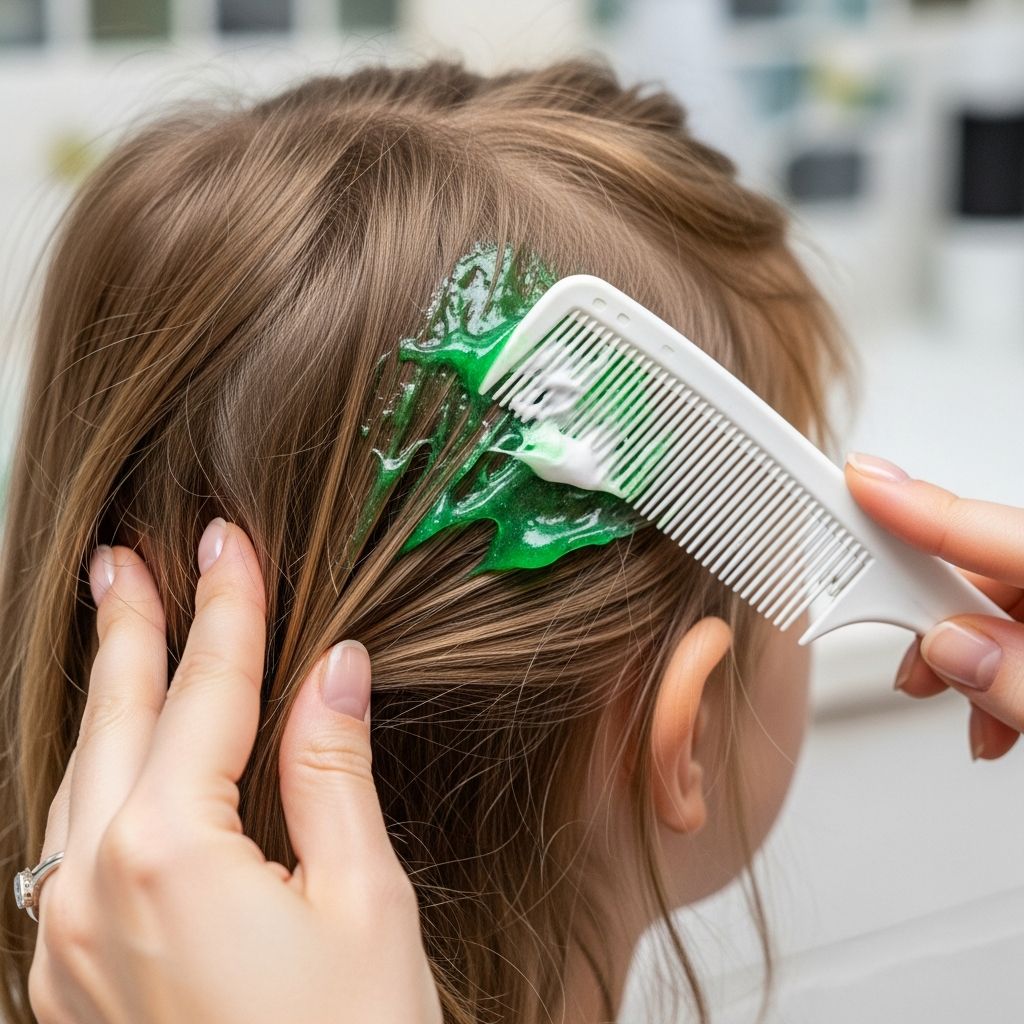
At some point, the child either intentionally presses slime onto her head or accidentally swings her hair into the pile on the table. Within seconds, colorful goo clings to strands, wraps around them, and begins to sink deeper. Instead of sliding off easily, it grips the hair and breaks into smaller, tackier pieces that seem to multiply as she tries to pull them away.
The first reaction is often a squeal, a laugh, or a shout for help. Parents describe a mix of horror and amusement when they first see a bright blob of slime stuck to their child’s hair. In many similar stories, the child may alternate between giggling at the absurdity of the situation and worrying that they might need a dramatic haircut. This emotional roller coaster is a big part of why such incidents become memorable family tales.
The Parent’s First Response: Panic, Laughter, or Both?
When a caregiver walks into the room and sees slime firmly attached to their child’s hair, there is usually a split-second decision: either react with visible frustration or treat the moment with humor and calm authority. Parents who handle these situations well often choose to take a deep breath, acknowledge that the mess is fixable, and reassure the child before doing anything else.
In many personal parenting narratives, humor becomes a vital coping tool. The adult might snap a quick photo, not to embarrass the child, but to remember the chaos later and to diffuse the tension in the moment. Laughter has a way of shrinking the problem so that, instead of feeling like a disaster, it feels like a shared adventure that can be solved together.
- Calm words help the child feel safe and less ashamed of their mistake.
- A light-hearted tone prevents the situation from escalating into tears.
- Seeing the adult stay composed models emotional regulation for the child.
Initial Attempts That Do Not Work
Before finding the right method, many families try a series of quick fixes that do not help much and can sometimes make the slime cling even more. Tugging at the slime with dry fingers may break it apart, scattering small sticky bits through more sections of hair. Rinsing quickly with only water can turn some types of slime into a softer but still stubborn residue.
These trial-and-error efforts usually teach an important lesson: patience and the right tools matter more than rushing. Parents often reflect later that yanking, scrubbing too hard, or panicking only increases the child’s discomfort and tangles the hair further. Gentle, thoughtful steps turn out to be far more effective than force.
Safe, Gentle Ways to Remove Slime from Hair
Once everyone takes a breath, the focus shifts to methods that actually loosen slime without damaging hair or causing unnecessary pain. Different households use different products, but the core idea is the same: break down the slime’s sticky texture with oils, conditioners, or other slippery substances before attempting to comb it out.
Here are common, gentle approaches parents often rely on when slime gets stuck in hair:
- Use oil-based products: Household oils, such as cooking oil or baby oil, can help break apart the slime and allow it to slide off strands more easily.
- Apply generous conditioner: Thick conditioner, worked into the affected hair, can soften the slime and make it easier to remove with fingers and a wide-tooth comb.
- Work in sections: Separating the hair into small sections makes the process less overwhelming and helps avoid pulling too many strands at once.
- Comb slowly from tips to roots: Starting at the ends of the hair reduces painful tugging and prevents knots from tightening near the scalp.
- Rinse and repeat: After the first round of treatment, a gentle shampoo and another pass with conditioner can eliminate any remaining residue.
Step-by-Step Slime Removal Routine
To make the process easier to follow, the following simple routine can guide parents when dealing with slime stuck in hair. These steps keep the child’s comfort and the health of their hair as the main priorities.
- Reassure the child. Sit them somewhere comfortable, explain that the slime will come out, and encourage deep breaths or light conversation.
- Apply oil or thick conditioner. Coat the slimed hair generously, making sure every sticky area is fully covered.
- Gently massage the product in. Use fingers to work the product through, loosening the slime and breaking it into more manageable pieces.
- Use a wide-tooth comb. Start at the ends of the hair, pulling small portions of slime away as you move slowly upward.
- Wipe excess onto a towel. Keep a cloth or paper towel nearby to collect the slime as it comes out, preventing it from reattaching.
- Rinse with warm water. After most of the slime is gone, rinse thoroughly and follow with gentle shampoo and more conditioner if needed.
- Dry and detangle. Pat the hair dry and finish with a final detangle to ensure there are no hidden sticky spots.
When a Trim Becomes Necessary
In some extreme cases, especially when the slime has been in the hair for a long time or is deeply matted, a small trim may be the only realistic solution. While many parents hope to avoid cutting any hair, a few snips can sometimes save a child from ongoing discomfort and hours of painful tugging.
The key is to frame a necessary trim as a neutral or even fun experience rather than a punishment. A quick visit to a stylist, or a careful at-home trim, can be presented as part of the adventure. For many children, the relief of having the sticky mess finally gone outweighs any disappointment about losing a bit of length.
Table: Common Approaches to Removing Slime from Hair
The table below summarizes popular approaches parents use, including general pros and cons. It is meant as a practical guide and not as a replacement for professional advice if the situation is severe.
| Method | How It Works | Pros | Cons |
|---|---|---|---|
| Oil (cooking or baby oil) | Breaks down the slime’s stickiness and adds slip to hair. | Gentle on most hair types; often already available in the home. | Can leave hair greasy and may require extra shampooing. |
| Thick hair conditioner | Softens slime and makes it easier to comb through strands. | Familiar product; adds moisture to hair. | May take several rounds for heavy slime coverage. |
| Warm water and comb | Loosens some slime while comb removes softened pieces. | Simple; no extra ingredients needed beyond basic grooming tools. | Not very effective on stubborn or dense slime by itself. |
| Careful trimming | Removes the most tangled sections quickly. | Fast solution when hair is severely matted with slime. | Permanent length loss; should be a last resort. |
How the Child Reacts: From Fear to Relief
Children frequently move through a full spectrum of feelings during a slime-in-the-hair episode. At first, they might be afraid that they are in serious trouble or that their hair will be ruined forever. Tears and apologies can come quickly, especially if the child knows that they ignored a rule like “keep slime away from your head.”
As the adult works patiently to remove the slime, many children gradually relax. Jokes, stories, or even a favorite video can distract them during the process. The moment all the slime is finally gone often brings visible relief, followed by renewed laughter when everyone looks back at how dramatic the situation once felt.
Parenting Lessons: Staying Calm in Messy Moments
Stories about kids getting slime stuck in their hair often resonate with parents because they highlight everyday choices about how to respond under stress. Children learn from watching how adults handle accidents and mishaps, and a sticky mess offers a chance to model patience, flexibility, and humor instead of anger.
Parents commonly draw a few long-term lessons from experiences like this:
- Mistakes are not moral failures; they are chances to learn new skills.
- Staying calm helps everyone think more clearly and find practical solutions.
- Household disasters can become favorite stories that bond the family together.
- Clear rules for messy activities reduce risk, but accidents remain a normal part of childhood.
Teaching Kids About Consequences Without Shaming
One of the most meaningful parts of any messy incident is the conversation that follows. After the slime is out and everyone is calmer, caregivers can talk with the child about what happened, why it was a problem, and how to make different choices next time. This works best when the tone is warm and collaborative rather than scolding.
Constructive conversations might include questions like, “What were you thinking when you put the slime in your hair?” or “What could we do differently so playtime stays fun and safe?” Such questions invite the child to reflect and take responsibility while still feeling respected and loved.
Simple Rules for Safer Slime Play
Many parents adjust their household rules after dealing with a major slime incident. The goal is not to ban fun completely but to channel it into safer, easier-to-clean circumstances. Clear guidelines also help children understand that messy activities come with shared responsibilities.
- Designate a slime zone: Choose a table or surface covered with a mat or old tablecloth where slime is always used.
- Keep hair secured: Use hair ties, clips, or headbands to keep long hair pulled back during play.
- Wear old clothes: Reserve a specific set of “messy play” clothes that can handle stains or residue.
- Set time limits: Shorter slime sessions can reduce the chances of boredom leading to experiments that break the rules.
- Clean as you go: Encourage kids to wash their hands and tidy the play area when they are finished so slime does not travel around the house.
When to Say No to Slime
Not every household is ready for the level of supervision and clean-up that slime sometimes demands. Some parents, after multiple mishaps, decide that slime is best played with in limited settings, such as at school, outside, or during supervised group activities where rules are stricter and clean-up tools are already prepared.
Choosing to limit or avoid slime at home can be a reasonable boundary, especially for families with very young children, pets, or valuable fabrics and carpets that are hard to clean. Setting these limits is part of tailoring activities to a family’s specific needs rather than following trends blindly.
Turning a Mess into a Memory
Over time, what once felt like a small disaster often becomes a beloved story retold at family dinners or shared with friends. The image of a child with a head full of slime, the scramble to find a solution, and the eventual victory can all become part of the family’s shared narrative.
These memories remind everyone that perfection is not the goal of parenting. Instead, the goal is connection: being present when things go wrong, helping children through their mistakes, and finding the humor in situations that do not go according to plan.
Frequently Asked Questions (FAQ)
Can slime permanently damage my child’s hair?
In most cases, slime does not permanently damage hair, though it can cause temporary tangles and dryness if removed roughly or left in too long. Using gentle, moisturizing products, avoiding harsh pulling, and following up with conditioner usually restores the hair’s normal texture.
Is it ever necessary to cut all of the hair?
Completely cutting off all of a child’s hair because of slime is rare and typically unnecessary. Focusing on patient detangling, using oils or conditioners, and trimming only the most severely matted sections usually solves the problem without drastic changes.
Which works better: oil or conditioner?
Both oil and conditioner can work well, and the best choice often depends on what is available and how sticky the slime is. Some parents prefer starting with conditioner because it feels familiar, while others find that oil breaks down stubborn slime more effectively before they wash the hair as usual.
How can I keep my child from panicking during removal?
Staying calm as the adult is the first and most important step in preventing panic. Offering distractions, like music or a favorite story, and reassuring the child that the slime will come out and that they are not in trouble can also help them relax.
Should I avoid slime completely after one bad experience?
Whether to avoid slime entirely is a personal decision that depends on the child’s age, temperament, and the family’s patience for messy activities. Many parents choose to keep slime but tighten rules and supervision, turning the first incident into a learning experience rather than an outright ban.
Key Takeaways for Parents
A child getting slime stuck in their hair can feel overwhelming at first, but it is usually a solvable problem and a powerful teaching moment. Gentle removal techniques, calm parenting, and open conversations afterward help transform a sticky situation into a story of resilience and growth.
- Respond with reassurance and patience rather than anger.
- Use oils, conditioners, and slow combing to protect the child’s hair and comfort.
- Frame the experience as a lesson in responsibility and problem solving.
- Adjust household rules for slime play to balance fun with practicality.