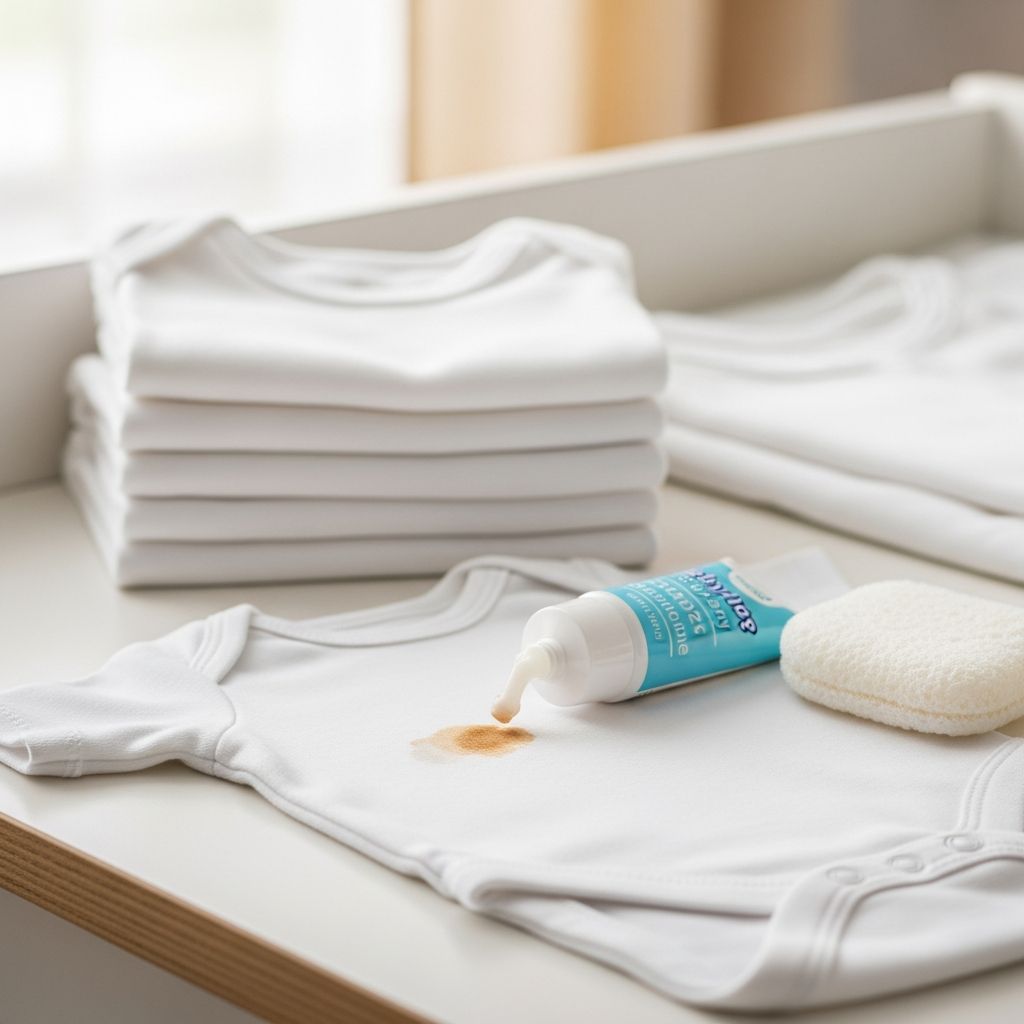
Poop stains are a normal part of life with a baby, but they do not have to ruin your favorite onesies or cloth diapers. With the right routine, you can safely remove both fresh and set-in stains, keep fabrics soft, and avoid irritating your baby’s skin.
This guide walks you through the most effective, baby-safe ways to tackle poop stains, from the moment a blowout happens to long-term stain prevention.
Why Poop Stains Are So Stubborn
Baby poop is a mix of pigments, fats, and proteins that can bind tightly to fabric fibers, especially when allowed to dry or when washed in hot water too soon. These components can:
- Penetrate absorbent fabrics like cotton and bamboo.
- Oxidize and darken when exposed to air or heat.
- React with detergents differently depending on water temperature and pH.
Understanding this helps explain why acting quickly and using the right water temperature and products makes such a difference in stain removal.
Immediate Actions: What to Do Right After a Blowout
The earlier you treat a poop stain, the easier it is to remove. If you can deal with it right away, follow these basic steps.
1. Contain the Mess
- Place the soiled garment or diaper on a waterproof surface (changing pad, plastic bag, or laundry sink).
- Avoid stacking stained items directly on clean clothes to prevent transfer.
2. Remove Excess Poop Safely
- Use a spatula, spoon, or paper towel to gently lift solid material into the toilet.
- For runny stools, a baby wipe can help remove as much as possible before rinsing.
- Do not rub the poop deeper into the fibers; dab or scrape instead.
3. Rinse with the Right Water Temperature
Rinsing is essential because it removes much of the stain load before you even add detergent.
- Use cool or lukewarm water first to flush out as much residue as possible. Hot water at this stage can cause proteins to coagulate and set the stain.
- Hold the fabric so the water runs from the back of the stain outward, pushing residue away instead of further into the cloth.
Pre-Treating Fresh Poop Stains
Pre-treatment gives your detergent a head start and is often the difference between a faint shadow and a perfectly clean garment.
Detergent-Based Pre-Treatment
- Apply a small amount of liquid laundry detergent directly to the damp stain.
- Gently rub the fabric against itself or use a soft brush to work the detergent into the fibers.
- Let it sit for 10–15 minutes before washing. Do not let it fully dry with detergent on it.
Enzyme Cleaners: Why They Work So Well
Many modern detergents and stain removers contain enzymes that break down proteins and fats in biological stains like poop. These usually include:
- Proteases to digest proteins.
- Lipases to tackle fats and oils.
Check the product label for terms like “enzymatic,” “bio,” or specific enzyme names. These are especially effective for baby poop stains and are widely used in household laundry products.
Gentle Options for Sensitive Skin
For babies with eczema or very sensitive skin, dermatology guidance often recommends fragrance-free, dye-free, hypoallergenic detergents and thorough rinsing to minimize irritation.
- Choose products labeled “free & clear,” “for sensitive skin,” or approved by pediatric dermatology associations.
- Use an extra rinse cycle to remove detergent residues.
How to Wash Clothes with Poop Stains
Once the stain is rinsed and pre-treated, it is time to wash the garment or diaper properly.
Machine Washing Guidelines
| Step | What to Do | Why It Helps |
|---|---|---|
| 1. Load | Wash stained items with other baby laundry of similar colors. | Prevents dye transfer and allows enough friction for cleaning. |
| 2. Cycle | Use a normal or heavy-duty cycle depending on fabric care instructions. | Extra agitation improves stain removal. |
| 3. Temperature | After a cool pre-rinse, use warm water if safe for the fabric. | Warm water helps dissolve fats while avoiding over-setting proteins. |
| 4. Detergent | Use the recommended dose of a quality detergent; do not under-dose. | Too little detergent cannot suspend and remove soils effectively. |
| 5. Extra Rinse | Add an extra rinse if your machine allows. | Helps remove detergent and soil residues that could irritate skin. |
Hand Washing When a Machine Is Not Available
- Fill a basin with warm water and dissolve a small amount of detergent.
- Soak the stained item for 15–30 minutes.
- Gently agitate and rub the stained area under water.
- Rinse thoroughly until water runs clear, then squeeze out excess (do not wring delicate fabrics).
Dealing with Set-In or Old Poop Stains
Sometimes you only notice a stain after it has been through the dryer. Heat can set stains, but you can still improve or remove them with a bit more effort.
Step 1: Rehydrate and Rinse
- Soak the stained area in cool to lukewarm water for 30–60 minutes to loosen dried residues.
- Gently rub under running water to see how much lifts out.
Step 2: Use a Stronger Pre-Treatment
For persistent stains, you can use a more intensive method such as:
- Concentrated detergent paste: Mix a little water with liquid or powdered detergent to make a paste and apply directly to the stain.
- Enzyme soaks: Soak in water mixed with an enzymatic detergent for 1–4 hours (follow product instructions) to break down remaining organic material.
Step 3: Optional Oxidizing Agents
For white or colorfast items, some caregivers use oxygen-based bleach (sodium percarbonate) according to label directions. These products release hydrogen peroxide in water and are generally gentler than chlorine bleach on fabrics and colors.
Always:
- Check the care label for bleach compatibility.
- Test on a hidden area first.
- Rinse thoroughly and rewash with detergent afterward.
Natural Methods: Using Sunlight and Pantry Ingredients
If you prefer to limit chemical products, there are effective, low-cost options that rely on natural processes.
Sunlight as a Natural Bleach
Sunlight contains ultraviolet (UV) radiation, which can break down many stain molecules and has a mild bleaching effect on fabrics. Many cloth diaper manufacturers and parenting sources recommend “sunning” diapers and clothes to reduce staining.
How to Sun-Bleach Baby Laundry
- Wash the item first so it is clean but still damp.
- Lay it flat, stain facing up, in direct sunlight for several hours.
- Flip the item over and repeat if the stain is still faint.
- Once you are satisfied, rewash or rinse and dry normally to restore softness.
Parents often report this working particularly well on yellow breastfed-baby stains and cloth diaper inserts.
Common Household Helpers
Some everyday products can support stain removal when used correctly:
- Dish soap – Designed to cut grease; helpful against fatty components of poop. Often used in small amounts as a pre-treatment before washing with laundry detergent.
- Baking soda – Adds mild abrasiveness and can help control odors in pre-soaks.
- White vinegar – Sometimes used in the rinse to reduce mineral deposits and odors; should be used cautiously with certain fabrics and elastics.
- Lemon juice – When combined with sunlight, it can have a mild bleaching effect, but items should be rewashed afterward to remove residual acidity.
Special Considerations for Cloth Diapers
Cloth diapers endure repeated exposure to urine and feces, so a good routine protects both the fabric and your baby’s skin.
Poop Handling Basics
- For solid stools, knock or spray solids into the toilet before storing the diaper.
- For breastfed-only babies, many caregivers place diapers directly into a dry pail since the stool is water-soluble.
- A diaper sprayer attached to the toilet can make rinsing easier while keeping your hands away from most of the mess.
Cloth Diaper Washing Routine
Many cloth diaper brands recommend a two-step wash:
- Pre-wash or rinse cycle in cool to warm water with a small amount of detergent to remove bulk waste.
- Main wash cycle on warm or hot (depending on manufacturer guidance) with a full dose of a strong detergent and adequate water.
After washing, “sunning” clean, damp diapers can help fade any remaining stains without harsh chemicals.
Protecting Fabric and Baby’s Skin
Effective stain removal should not come at the cost of ruined fabrics or skin irritation. Pediatric and dermatology guidance emphasizes a balance between cleanliness and gentleness.
Check Care Labels Every Time
- Follow fabric recommendations for maximum water temperature and bleach use.
- Avoid high heat drying on items with elastic, waterproof layers, or delicate prints.
Minimize Irritation Risks
- Use fragrance-free, dye-free detergents when possible, especially for younger infants.
- Rinse thoroughly so no residue remains against your baby’s skin.
- Skip fabric softeners directly on cloth diapers, as they can reduce absorbency.
Preventing Future Poop Stains
You cannot avoid every blowout, but you can reduce the likelihood and limit the consequences when they happen.
Better Diaper Fit
- Make sure diapers fit snugly around the legs and waist without gaps.
- Move up a size if diapers leave deep red marks but still leak frequently.
Use Barriers Strategically
- Consider diaper liners (disposable or reusable) to catch solids and protect cloth diapers from heavy staining.
- For outings, keep a wipeable diaper cover over disposals or cloth diapers to contain leaks.
Create an On-the-Go Stain Kit
- Pack a wet bag for soiled clothes.
- Include a travel-sized stain spray or a small bottle of liquid detergent to pre-treat once you get home.
- Always have spare outfits for your baby (and a top for yourself).
Frequently Asked Questions (FAQs)
Q1: Is it safe to use bleach on baby clothes?
For white, bleach-safe garments, diluted chlorine bleach can remove tough stains and sanitize laundry when used as directed on the label. However, it can be harsh on fabrics and may irritate sensitive skin if not rinsed thoroughly. Many parents prefer oxygen-based bleaches (color-safe bleach) or enzymatic detergents instead. Always follow garment care labels and product instructions.
Q2: Can I put a stained item in the dryer?
It is best to air-dry after the first wash if you suspect a stain might remain. Heat from the dryer can further set stains, making them harder to remove. If the stain is gone or nearly invisible, it is usually safe to use the dryer.
Q3: Does breastfed baby poop stain differently from formula poop?
Breastfed baby poop is typically more liquid and yellow, which can cause bright stains, but it is often easier to dissolve in water. Formula-fed stools may be thicker and sometimes darker, which can leave more persistent marks. The removal steps are the same, but sunning and enzymatic detergents are especially helpful for both types.
Q4: Are commercial stain removers safe for newborns?
Many commercial stain removers are formulated for family use, but not all are ideal for newborns. Look for products that are free of added fragrances and dyes, and always rinse garments thoroughly after treatment. If your baby has a history of sensitive skin or eczema, consult your pediatrician or dermatologist before using stronger products.
Q5: How often should I sun diapers or clothes?
You can sun items whenever you notice visible staining or dinginess. There is no fixed schedule, but many cloth diaper users sun their diapers occasionally as needed. Avoid overly prolonged exposure that could weaken elastic or fade bright prints; a few hours at a time on clean, damp fabrics is usually sufficient.
References
- Tips on How to Get Poop Stain out of Baby Clothes — Dreft Laundry. 2023-05-01. https://www.dreft.com/en-us/washing-tips/how-to-remove-stains/how-to-remove-poop-stain
- How to Clean Baby Poop Stains With Sunshine — Babylist. 2022-07-15. https://www.babylist.com/hello-baby/how-to-remove-baby-poop-stains
- Children’s Skin: The Basics — American Academy of Dermatology Association. 2023-03-10. https://www.aad.org/public/everyday-care/skin-care-basics/kids
- UV Radiation — U.S. Environmental Protection Agency. 2022-08-01. https://www.epa.gov/sunsafety/uv-radiation
- All About Staining — Esembly Baby. 2021-06-20. https://esemblybaby.com/blogs/trash-talk/all-about-staining