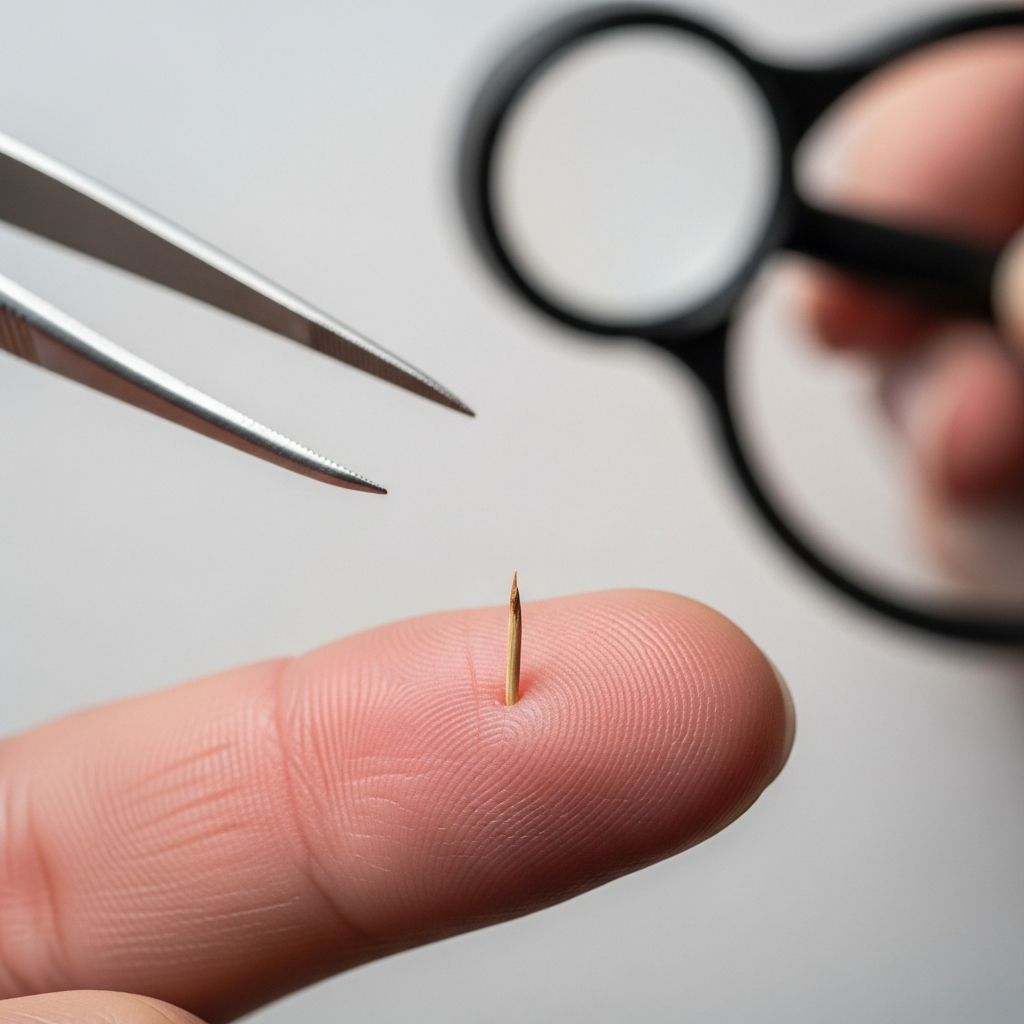
Splinters are tiny pieces of wood, glass, metal, or other materials that get stuck in your skin. They are common in active kids and teens, especially if you walk barefoot, handle wood or metal, or play outdoors a lot. Most splinters are minor and can be handled at home, but some need medical care to prevent infection or long-term problems.
What Exactly Is a Splinter?
A splinter is a small foreign object that breaks the skin and becomes lodged in the upper layers or deeper tissues. It may be:
- Wood (like from decks, fences, pencils, or mulch)
- Glass (from broken bottles, screens, or windows)
- Metal (wire, nails, shavings, or tiny fragments)
- Plastic, thorns, cactus spines, or even hair-like fibers
Even though they’re small, splinters can be surprisingly painful because they irritate the skin and nerves in the area. If they stay in the body, they may trigger inflammation, infection, or a chronic lump called a granuloma.
Common Ways Teens Get Splinters
Splinters can show up almost anywhere, but some situations make them more likely:
- Walking barefoot on wooden decks, old floors, or rough outdoor surfaces
- Handling sports equipment or instruments with cracked or unfinished wood
- Doing DIY projects, metal or wood shop, or art projects without gloves
- Sliding hands along railings, fences, or tree branches
- Falling onto gravel, glass, or rough concrete
How to Tell If You Have a Splinter
Sometimes you can clearly see a dark or shiny line under the skin. Other times, all you notice is pain or tenderness. Signs that a splinter may be present include:
- Sharp, localized pain when you press or touch the spot
- Redness or mild swelling around a tiny puncture
- A visible line, dot, or fragment under or breaking through the skin
- Discoloration or a tiny dark speck in the area
- Pain when moving the nearby joint or finger
If the injury is older, the only clue might be a sore spot that doesn’t heal normally or a lump that becomes tender or inflamed.
When It’s Okay to Try Removal at Home
Most teens can safely remove small, shallow splinters if they follow clean technique. Home care is usually reasonable when:
- The splinter is tiny and close to the surface
- You can see it clearly without digging deep into the skin
- Part of it is sticking out or is just under a thin layer of skin
- The area is not already very red, draining pus, or severely swollen
Your first goal is to avoid pushing the splinter deeper, breaking it, or introducing germs into the wound.
When You Should See a Doctor Instead
Some splinters are risky to remove on your own and may need a health professional. Get medical care if:
- The splinter is deep or you can’t see the end clearly
- It’s in or near the eye, face, genitals, or a joint
- It’s under a fingernail or toenail and is long or very painful
- It’s made of glass, metal, or unknown material
- You tried once or twice and could not get it out
- The area becomes more red, warm, swollen, or starts to drain pus
- You have a fever or feel ill after the injury
- You have diabetes, poor circulation, or a weakened immune system
A doctor can numb the area, use sterile tools, and sometimes order imaging (like X-rays or ultrasound) to find hidden pieces if needed.
Step-by-Step: Safe Splinter Removal at Home
Follow these steps carefully to reduce pain, avoid infection, and improve the chance of getting the entire splinter out.
1. Get Set Up and Keep It Clean
- Wash your hands with soap and water first.
- Rinse the area around the splinter with soap and clean water to remove dirt and germs.
- Make sure you have good lighting and, if possible, a magnifying glass.
2. Prepare Your Tools
Use clean, sharp tools to avoid tearing the skin or pushing bacteria into the wound:
- Tweezers with a fine, pointed tip
- Needle with a sharp point for splinters just under the skin
- Rubbing alcohol or soap and hot water to clean the tools
Before you start, wipe the tips of the tweezers and needle with rubbing alcohol to disinfect them.
3. Decide Your Approach
| Type of Splinter | Best Home Technique |
|---|---|
| Part sticking out of the skin | Grasp with tweezers and pull in the same direction it entered |
| Just under a thin layer of skin | Use a needle to gently open the skin over one end, then pull with tweezers |
| Tiny superficial splinter | Wash and sometimes use tape to lift it off if it’s barely embedded |
| Long or deep, under nail, or very painful | Stop and seek medical help |
4. Removing a Splinter That Is Sticking Out
If you can see and grab the end of the splinter:
- Use the sterilized tweezers to firmly but gently grasp the exposed tip.
- Pull in the same direction that the splinter entered so it slides out along its track instead of breaking.
- Avoid squeezing around the splinter with your fingers, which can push it deeper or snap it.
5. Removing a Splinter Just Under the Skin
For splinters slightly buried under the skin surface:
- Consider placing an ice pack wrapped in a thin cloth on the area for a few minutes to reduce pain.
- Use the cleaned needle to gently pierce or lift the thin layer of skin over the visible end of the splinter.
- Once one end is exposed or lifted, switch to tweezers to grab that end.
- Pull slowly, staying along the same line in which it entered.
If you cannot see a clear end or it feels like you have to dig deeply, stop and get professional help.
6. After the Splinter Is Out
Once you’re confident the whole splinter has been removed:
- Rinse the area again with soap and water.
- Pat dry with a clean towel or sterile gauze.
- Apply a thin layer of petroleum jelly or an antibiotic ointment, if recommended by your doctor.
- Cover with a small adhesive bandage or sterile dressing.
- Keep it clean and dry; change the bandage daily or if it becomes wet or dirty.
Most minor splinter wounds heal within a few days if kept clean.
Watching for Infection or Complications
Even when you’re careful, germs can get into the tiny wound created by the splinter. Monitor the area for several days. Call a healthcare provider if you notice:
- Increasing redness spreading away from the spot
- Warmth, throbbing, or growing tenderness
- Swelling that worsens instead of shrinking
- Yellow or green drainage or pus
- A bad smell from the wound
- Red streaks moving up the limb
- Fever, chills, or feeling sick overall
If you have a chronic condition such as diabetes or a circulation problem, do not ignore even mild signs of infection. These can become serious more quickly.
Tetanus: Why Your Vaccine Status Matters
Any injury that breaks the skin, including splinters, can be a chance for tetanus bacteria to enter the body. Tetanus is rare but serious and affects the nervous system, causing painful muscle stiffness and spasms.
Health professionals often check your tetanus vaccination history when you come in for splinter removal or other wounds. You may need a booster shot if:
- You have not had a tetanus booster in 10 years, or
- The wound is particularly dirty or caused by soil, metal, or outdoor debris and your last booster was more than 5 years ago.
Ask a parent or caregiver if you’re not sure when your last shot was, and let your doctor know if your vaccination history is incomplete.
Preventing Splinters in Everyday Life
You can’t avoid every splinter, but a few habits can greatly reduce your risk:
- Wear shoes or sandals outdoors, especially on decks, docks, and rough surfaces.
- Use work gloves for yard work, woodworking, or handling rough materials.
- Inspect and smooth sports gear, instrument handles, or tool grips that are cracked or peeling.
- Avoid running hands along old railings, fences, or benches.
- Clean up broken glass carefully using a broom and dustpan, never your bare hands.
Frequently Asked Questions (FAQs)
What if a very tiny splinter is too hard to remove?
If a very small splinter is shallow and not painful, sometimes the body will gradually push it out on its own as the skin sheds. Keep the area clean, avoid picking at it, and watch for any signs of infection. If pain or redness increases, see a doctor.
Is it safe to use needles or pins from a sewing kit?
It can be safe only if you clean the tip thoroughly with rubbing alcohol and handle it gently. Never use dirty or rusty needles, and don’t dig deeply into the skin. If you can’t reach the splinter without cutting or tearing the skin, get medical help instead.
Can I use home remedies like soaking in baking soda or vinegar to remove splinters?
Some people use soaking methods to soften the skin, but evidence-based medical guidance still relies mainly on mechanical removal with clean tools and good wound care. If you try any home remedy and the splinter does not come out easily, stop and ask a healthcare provider for advice.
How do doctors remove deep or hidden splinters?
In a clinic, doctors can numb the area with local anesthesia, use sterile instruments, and sometimes rely on imaging like X-rays, ultrasound, or other scans to locate splinters that do not show on the surface. They may make a small incision to expose and remove the object, then provide detailed aftercare instructions.
What if I think part of the splinter is still inside?
If you suspect a fragment remains—especially if the area stays sore, swollen, or fails to heal—contact a healthcare provider. Retained splinter pieces can cause chronic pain, inflammation, or infection, and may need professional removal.
References
- Splinter removal — American Academy of Family Physicians. 2003-06-15. https://www.aafp.org/pubs/afp/issues/2003/0615/p2557.html
- Splinters — Nationwide Children’s Hospital. 2023-01-01 (updated date approximate). https://www.nationwidechildrens.org/conditions/health-library/splinters
- How to remove a splinter — American Academy of Dermatology Association. 2021-06-01. https://www.aad.org/media/news-releases/how-to-remove-a-splinter
- Splinter removal — MedlinePlus Medical Encyclopedia, U.S. National Library of Medicine. 2023-08-03. https://medlineplus.gov/ency/article/002137.htm
- Foreign object in the skin: First aid — Mayo Clinic. 2022-09-01. https://www.mayoclinic.org/first-aid/first-aid/basics/art-20056604
- Removing Splinters — Kaiser Permanente Health Encyclopedia. 2022-02-01. https://healthy.kaiserpermanente.org/health-wellness/health-encyclopedia/he.removing-splinters.sid42412spec
- Splinter removal — PubMed, Curr Sports Med Rep. 2003-06-01. https://pubmed.ncbi.nlm.nih.gov/12825845/