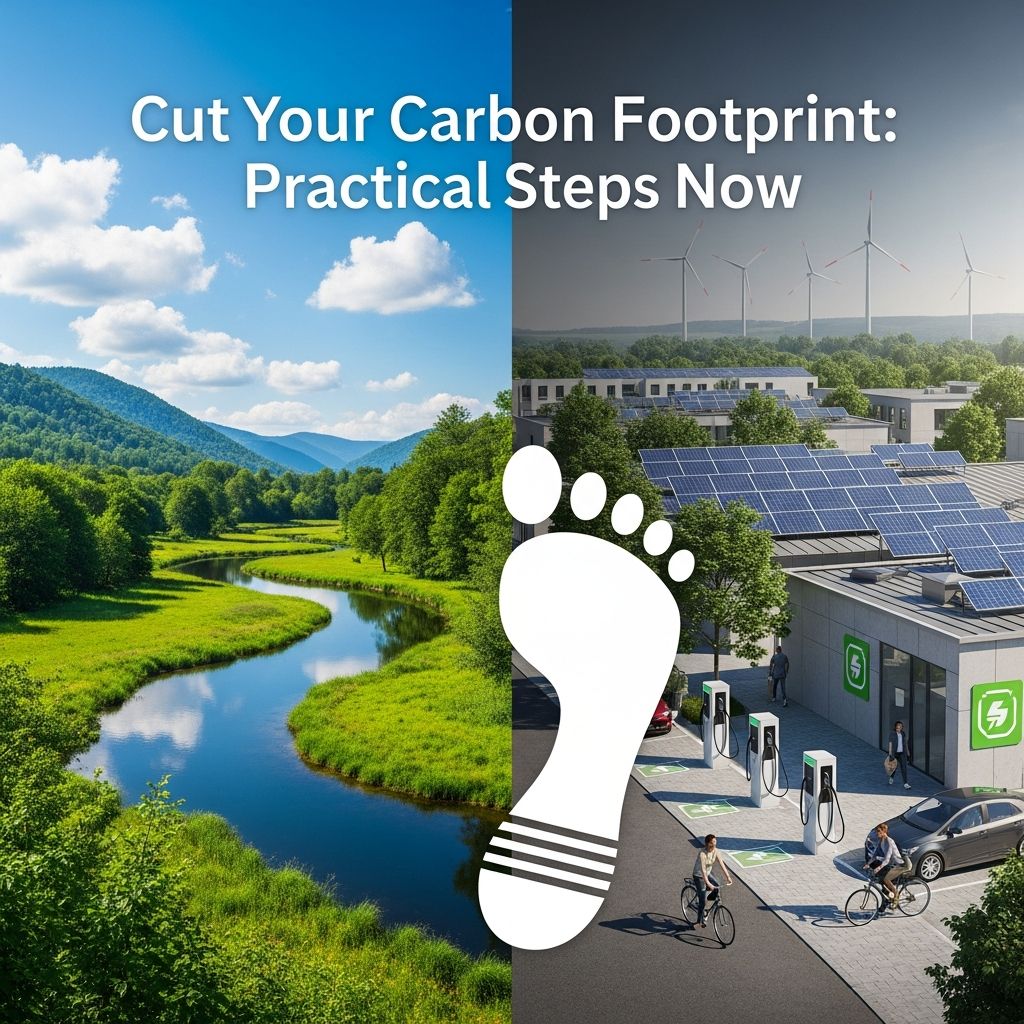
Reducing your carbon footprint involves making intentional changes in daily habits that collectively lower greenhouse gas emissions. These actions, from energy choices to transportation, can significantly decrease your environmental impact while promoting health and savings.
Transform Your Energy Consumption
Household energy use is a major contributor to carbon emissions, primarily from fossil fuels like coal and gas. Transitioning to renewable sources such as solar or wind can cut emissions by up to 1.5 tons of CO2 equivalent per year. Contact your utility provider to switch to green energy plans or install solar panels on your roof for direct benefits.
Enhance efficiency with simple upgrades: replace incandescent bulbs with LEDs, which use 85% less energy and can save 4,000 pounds of CO2 annually if replacing 30 bulbs. Use programmable thermostats to adjust temperatures—lowering by 2°F in winter and raising by 2°F in summer reduces emissions by 2,000 pounds yearly. Insulate your water heater and set it to 120°F to save another 1,850 pounds.
- Install power strips to eliminate ‘ghost power’ from idle electronics.
- Opt for ENERGY STAR-rated appliances to minimize energy draw.
- Weatherize doors and windows to prevent heat loss.
Revolutionize Your Daily Diet
Food production accounts for a substantial portion of global emissions, with livestock responsible for 14.5% due to methane and feed. Shifting to a plant-based diet—emphasizing vegetables, fruits, grains, legumes, nuts, and seeds—lowers your impact dramatically. Skipping meat and dairy one day a week can reduce your footprint by nearly 3,000 pounds annually.
Plan meals to cut waste: freeze leftovers, reuse scraps, and compost organics. Food waste reduction prevents methane release from landfills. Local, seasonal produce cuts transportation emissions.
| Food Choice | Annual CO2 Savings | Key Benefit |
|---|---|---|
| Plant-based meals | 2,920 lbs | Reduces methane |
| Less food waste | Variable, up to 1,200 lbs | Landfill reduction |
| Local sourcing | Transport savings | Lower shipping emissions |
Greener Ways to Get Around
Transportation, especially cars, generates massive emissions from fuel combustion. Living car-free can save up to 2 tons of CO2e yearly. Walk, bike, or use public transit for short trips—driving 10 miles less per week saves 500 pounds.
Carpool or rideshare to divide emissions; one shared ride daily cuts 2,000 pounds annually. For car owners, maintain tires, drive smoothly to avoid excess fuel use, and consider electric vehicles. Electric bikes expand low-emission options for longer distances.
- Take stairs over elevators for micro-exercise and energy savings.
- Combine errands to shorten total travel.
- Explore train or bus for vacations closer to home, avoiding 720 pounds from one 1,600-mile flight.
Minimize Waste and Consumption
Excessive buying and discarding fuel emissions through production and disposal. Recycle half your waste to save 2,400 pounds of CO2 yearly. Avoid over-packaged products to reduce trash by 10%, saving 1,200 pounds.
Reuse items, repair before replacing, and buy second-hand. Shorter showers with low-flow heads save 850 pounds by cutting hot water use. Home energy audits via programs like Mass Save offer free upgrades, yielding 1,000 pounds savings plus 30% on heating/cooling.
Build Sustainable Habits for Long-Term Impact
Track your baseline emissions to measure progress, then implement changes systematically. Small actions compound: turning off lights, unplugging devices, and eating lower on the food chain add up. Community involvement, like food scrap programs, amplifies effects.
For families, these steps foster eco-awareness. Governments and organizations provide tools—United Nations’ ActNow offers guides. Consistent adoption leads to broader societal shifts.
Frequently Asked Questions
What is a carbon footprint?
Total greenhouse gases emitted from your activities, measured in CO2 equivalents.
How much can I save by switching to LEDs?
Up to 4,000 pounds CO2 per year by replacing 30 bulbs.
Is biking realistic for daily commutes?
Yes, for distances under 10 miles; it cuts emissions entirely and boosts health.
Does diet really matter for climate?
Yes, animal agriculture emits 14.5% globally; plant-focused eating slashes this.
What’s the easiest first step?
Conduct a home energy audit or switch utility to renewables.
References
- Actions for a healthy planet | United Nations — United Nations. 2023. https://www.un.org/en/actnow/ten-actions
- 5 Ways to Reduce Your Carbon Footprint — Church World Service. 2023. https://cwsglobal.org/blog/5-ways-to-reduce-your-carbon-footprint/
- 14 Ways to Reduce Your Carbon Footprint — University of Wisconsin Sustainability. 2023. https://sustainability.wisc.edu/14-ways-to-reduce-your-carbon-footprint/
- How you can reduce your carbon footprint — WWF. 2023. https://explore.panda.org/climate/how-to-reduce-your-carbon-footprint
- 10 Proven Strategies to Reduce Your Carbon Footprint — Brightly Software. 2023. https://www.brightlysoftware.com/blog/reduce-business-carbon-footprint
- Reduce Your Carbon Footprint at Home — Mass.gov. 2023-10-01. https://www.mass.gov/info-details/reduce-your-carbon-footprint-at-home
- The 35 Easiest Ways to Reduce Your Carbon Footprint — Columbia Climate School. 2018-12-27. https://news.climate.columbia.edu/2018/12/27/35-ways-reduce-carbon-footprint/