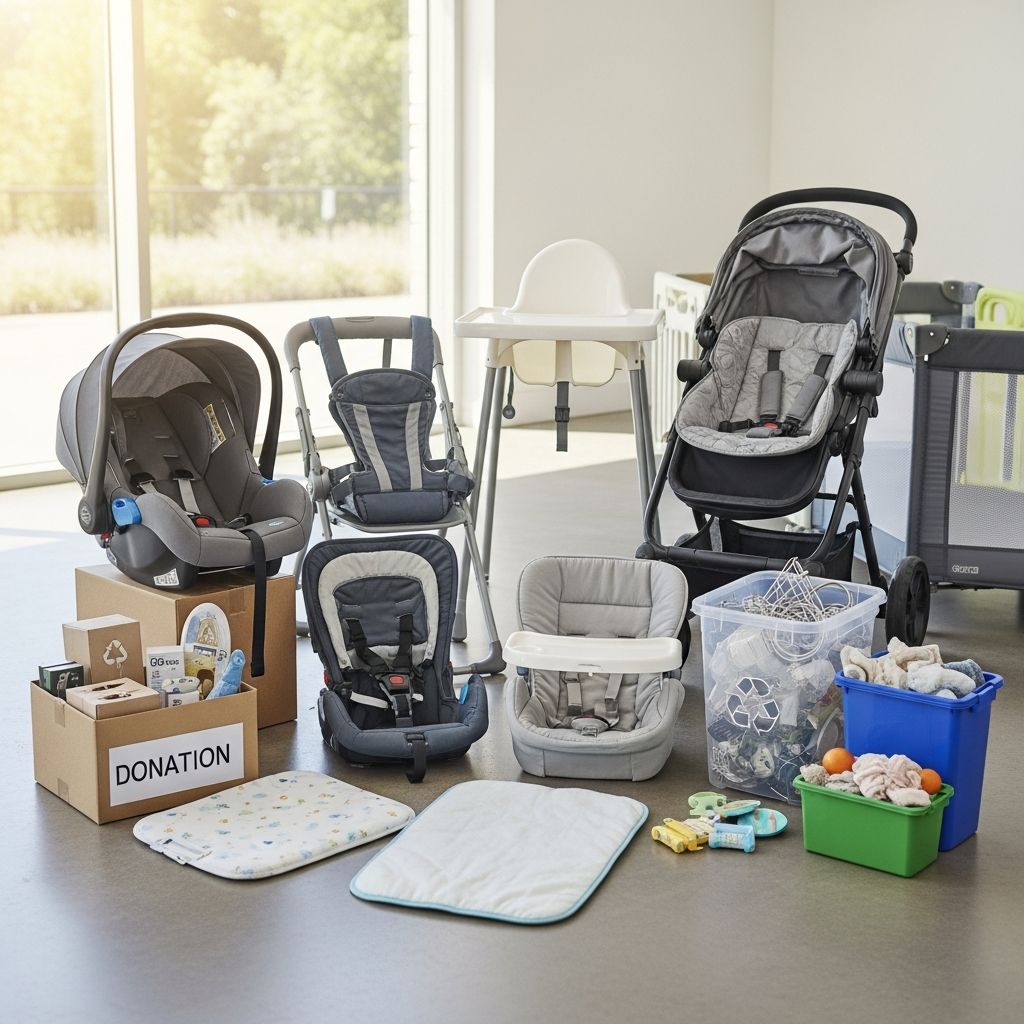
Parenting brings joy but also generates a significant amount of gear that quickly becomes outgrown or obsolete. From bulky car seats to plastic bottles and high chairs, these items often end up in landfills if not handled properly. Adopting sustainable disposal practices not only minimizes environmental impact but also aids families in need. This guide explores donation, resale, recycling, and specialized programs tailored for baby products, ensuring your items find a second life or are processed responsibly.
Understanding the Environmental Impact of Baby Gear
Baby products contribute substantially to household waste due to their short usage periods and durable materials like plastics and metals. Car seats, for instance, have a lifespan of just 6-10 years before expiration, rendering them unsafe for reuse despite their robust construction. Similarly, strollers and playpens accumulate wear, making donation challenging if damaged. Recycling these items prevents methane emissions from landfills and conserves resources, as rigid plastics can be repurposed into new products.
Key challenges include local recycling restrictions on bulky items and contamination risks from food residues in feeding gear. By prioritizing the waste hierarchy—reduce, reuse, recycle—parents can make informed choices that align with circular economy principles.
Prioritizing Reuse: Donation and Resale Options
Before considering recycling, assess if items are in good, safe condition for reuse. Donation extends product life cycles and supports community welfare.
- Local Charities and Shelters: Women’s shelters, crisis pregnancy centers, and family resource centers often accept clean strollers, cribs, high chairs, and clothing. Verify safety standards, especially for sleep products meeting current regulations.
- Diaper and Baby Banks: Organizations like the National Diaper Bank Network distribute unopened diapers, wipes, and essential gear to low-income families. Search their directory for nearby partners.
- Buy Nothing Groups: Community Facebook groups facilitate free local handoffs, fostering neighborly support without shipping emissions.
Resale platforms like Facebook Marketplace, Mercari, or local consignment shops allow earning back value from gently used items. Always disclose expiration dates and conditions transparently to maintain trust.
Car Seat Disposal: Safety First
Car seats pose unique disposal challenges due to crash-test damage and expiration dates printed on them. Never donate or sell expired or involved-in-crash seats, as they compromise child safety.
| Program | Details | Locations | Incentive |
|---|---|---|---|
| Target Car Seat Trade-In | Twice-yearly events; accept any brand, expired, or damaged seats | All U.S. Target stores | 20% off coupon for new gear |
| Recycle Your Car Seat | Directory of local free recycling events | U.S.-wide | None |
| Clek Recycling | Brand-specific for U.S./Canada | Mail-in | Discount on new seat |
| TerraCycle Zero Waste Box | Paid boxes for any baby gear | National | Prepaid shipping |
These programs ensure proper dismantling: foams are repurposed, metals melted, and plastics granulated, diverting tons from landfills annually.
Recycling Feeding and Daily Essentials
Feeding items vary in recyclability based on material. Check municipal guidelines for plastics #1-7.
- Plastic Bottles and Jars: Rinse thoroughly; curbside recyclable if caps are reattached. Glass jars follow similar rules.
- Sippy Cups and Utensils: Rigid plastics may qualify locally; otherwise, use TerraCycle’s paid pouches for non-curbside items.
- Pacifiers and Nipples: Non-recyclable due to silicone; discard or check brand take-back programs.
- Baby Food Pouches: Trash unless brand-specific recycling exists; pouches’ layered films resist standard processing.
For bulkier items like high chairs, dismantle metal frames for scrap metal recycling and plastics separately if accepted locally.
Handling Larger Gear: Strollers, Cribs, and Playards
Bulky items require strategic approaches. Professional services like LoadUp offer pickups with donation prioritization, charging 20-30% less than competitors while committing to eco-disposal.
- Disassemble for Parts: Wheels and frames often recyclable; fabrics for textile programs.
- Specialized Drives: Community events or WeeCycle’s Essential Baby Gear Program collect for redistribution.
- Textile Recycling: Outgrown clothing via Carter’s program or local bins; shoes through Zappos for Good (limited).
National and Brand-Specific Recycling Initiatives
Beyond local options, national programs simplify hard-to-recycle waste.
- TerraCycle: Free shipping labels for select baby products; Zero Waste Boxes ($140+) for unlimited gear like toys and pouches. Partners with Walmart for car seats.
- Chicco Trade-Ins: Exchange old seats for discounts on new models.
- WeeCycle: Focuses on essentials distribution and diaper banks, reducing new purchases.
These initiatives process materials into playground equipment, benches, and packaging, closing the loop sustainably.
Step-by-Step Guide to Eco-Disposal
- Inspect and Clean: Ensure items are safe; deep clean to remove residues.
- Check Expiration: Discard unsafe sleep gear and car seats per labels.
- Prioritize Reuse: Post online or contact local nonprofits.
- Recycle Smart: Verify local rules; use national programs for rest.
- Track Impact: Programs like Target report diverting thousands of seats yearly.
Common Pitfalls and Pro Tips
Avoid curbside for non-accepted items like diapers or foam mattresses to prevent contamination. Pro tip: Photograph items before disposal for tax deductions if donated to qualified 501(c)(3) organizations. For textiles, wash and bag separately.
Seasonal events amplify impact—Target’s spring/fall trade-ins coincide with gear upgrades.
Frequently Asked Questions
Can I recycle diapers?
No, diapers are not curbside recyclable due to human waste. Donate unopened packs to diaper banks via the National Diaper Bank Network.
Are breast pump parts recyclable?
Yes, plastic shields and tubing often qualify for curbside if clean; check local rigid plastics rules.
How do I find local car seat recycling?
Use Recycle Your Car Seat’s U.S. directory for free events near you.
Is it safe to donate used strollers?
Yes, if undamaged and recalled models are checked via CPSC.gov. Confirm with recipients.
What about baby toys?
Donate intact plastic/wood toys; small parts or batteries require special handling—TerraCycle accepts via Zero Waste Boxes.
Building a Sustainable Nursery from the Start
Prevent future waste by choosing modular gear, secondhand buys, and zero-waste brands. Renting strollers or car seats via services extends usability. Educating on these practices empowers parents to parent green.
(Word count: 1678)
References
- Here’s How You Can Get Rid of Your Used Baby Stuff — Babylist. 2023. https://www.babylist.com/hello-baby/what-to-do-with-old-baby-stuff
- Recycle baby gear and children’s products with TerraCycle — TerraCycle. 2024. https://www.terracycle.com/en-US/pages/walmart-car-seat-recycling
- The ABCs of Recycling Baby Items — Recycling Partnership. 2023. https://recyclingpartnership.org/communitiesforrecycling/baby-items-what-can-you-recycle/
- Convenient Baby Gear Recycling & Disposal Services — LoadUp. 2024. https://goloadup.com/what-we-take/baby-gear/
- Programs – Weecycle — WeeCycle. 2024. https://weecycle.org/programs/
- What to Do with Old Car Seats: Recycling & Disposal — Chicco USA. 2023. https://www.chiccousa.com/baby-talk/what-to-do-with-old-car-seats/