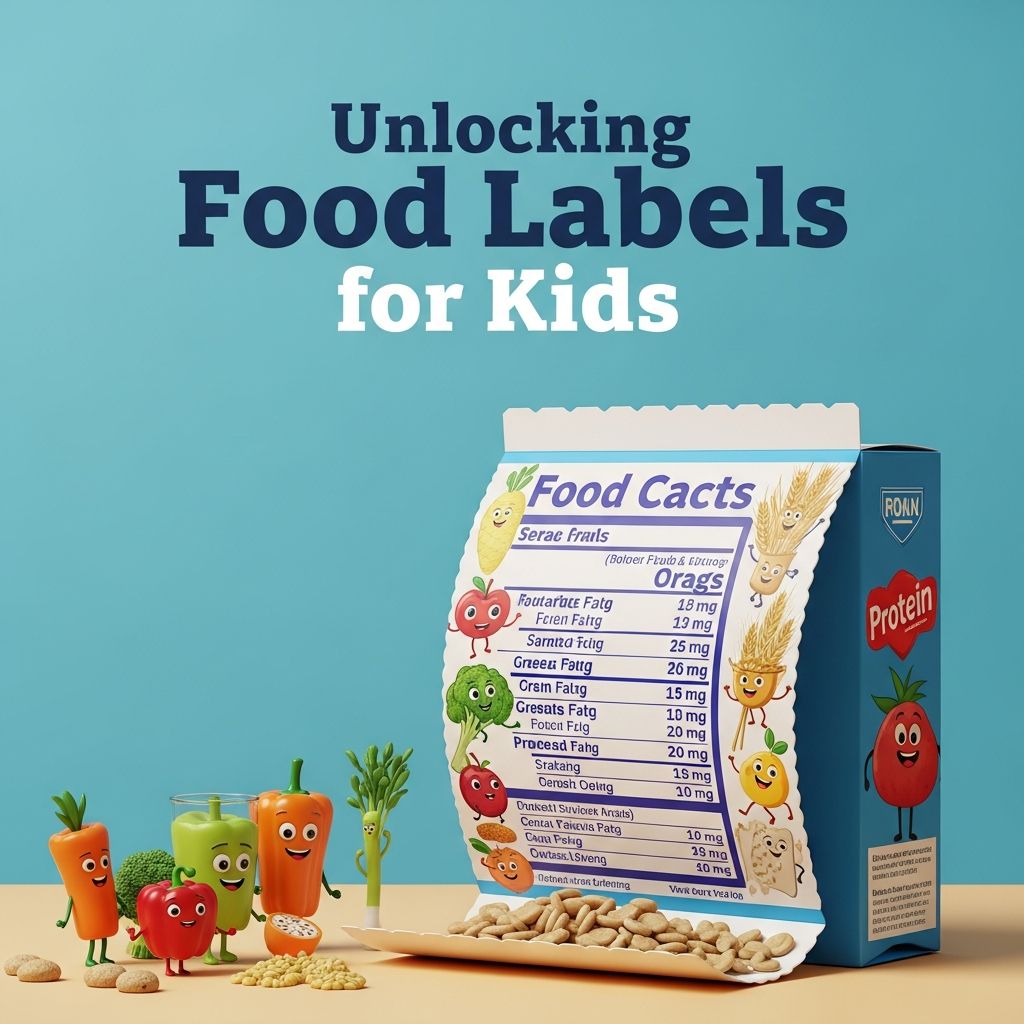
Food labels hold the key to smarter eating decisions for children. By understanding the nutrition facts panel, ingredients, and claims, parents and kids can select options that support growth, energy, and well-being.
Why Mastering Labels Changes Everything
Packaged foods surround us, but not all deliver the nutrition kids need. Labels reveal calories from quality sources, nutrient balances, and potential risks like excess sugar or allergens. Pediatric experts emphasize label literacy to combat obesity and promote balanced diets. Starting young builds habits that last a lifetime, helping children thrive.
For families, this skill means fewer hidden pitfalls. A single bag of snacks might seem innocent, but labels expose multiple servings loaded with sodium or fats. Regular checks ensure meals fuel active bodies and sharp minds.
Breaking Down the Nutrition Facts Panel
The core of every label is the Nutrition Facts panel. It standardizes info so comparisons are easy across brands.
Start with Serving Size
Everything ties to this number—cups, grams, or pieces. Packages often hold 2-4 servings, so double-check consumption. Kids eating a ‘single’ yogurt might get twice the listed calories.
- Match portions to real intake.
- Adjust for age: smaller for toddlers, larger for teens.
Calories: Fuel Quality Matters
Calories indicate energy per serving. Aim for nutrient-dense ones from proteins and veggies, not empty sweets. Compare per serving and container total to avoid surprises.
Fats: Choose the Healthy Kinds
Total fat includes saturated, trans, and unsaturated. Limit saturated fats (<10% daily value) and avoid trans fats entirely—they harm heart health. Opt for avocados or nuts over processed snacks.
| Fat Type | Daily Goal for Kids | Good Sources |
|---|---|---|
| Total Fat | 25-35% calories | Olive oil, fish |
| Saturated | <10% calories | Coconut (moderate) |
| Trans | 0g | Avoid all |
Sodium: Keep It Low
High sodium links to high blood pressure later. Kids under 14 should stay under 1500mg daily. Scan for <140mg per serving.
Carbs, Fiber, and Sugars
Total carbs fuel activity, but focus on fiber (>25g daily for teens) for digestion. Added sugars should be <10% calories—spot them as syrups or dextrose.
- Fiber: Apples, beans.
- Sugars: Limit fruit juices too.
Protein: Building Blocks
Essential for muscles and growth. Needs vary: 19g for ages 4-8, 34g for 14-18. Eggs, yogurt, lentils shine here.
Vitamins and Minerals: Fill the Gaps
% Daily Value shows contributions. Prioritize vitamin D, calcium, iron, potassium—often low in kids’ diets. 20%+ DV is high; 5% or less is low.
Deciphering the Ingredients List
Listed by weight, first items dominate. Short lists with real foods (oats, almonds) beat long ones with chemicals. Watch for 60+ sugar names like maltose.
Allergens appear bolded or in ‘Contains’ statements: milk, eggs, peanuts, etc. Vital for safety.
- Rule: If you can’t pronounce it, skip it.
- Whole grains first? Better choice.
Front-of-Package Claims: Truth or Trick?
‘Low-fat’ or ‘natural’ sounds good, but check facts. ‘Low sodium’ means <140mg; ‘high fiber’ >20% DV. Ignore hype—dive deeper.
| Claim | Means | Example |
|---|---|---|
| Low Fat | <3g/serving | Some yogurts |
| Sugar Free | <0.5g/serving | Gum |
| Whole Grain | First ingredient | Breads |
Allergens and Safety First
Labels must declare top 9 allergens. Even traces matter for sensitive kids. Cross-contamination warnings help too. Teach children to spot peanuts or wheat.
Fun Ways to Teach Kids Label Skills
Turn shopping into a game. Ages 5-7: Hunt low-sugar cereals. Teens: Compare chips’ sodium.
- Grocery bingo: Mark healthy picks.
- Apps for scans.
- Reward smart choices.
Hands-on builds confidence. Soon, kids choose independently.
Daily Strategies for Busy Families
Shop perimeter first—fresh foods lack labels. For packaged:
- 140/5 rule: <5g sugar, >5g fiber? No: <140mg sodium, 5g+ fiber.
- Weekly meal plans with label checks.
- Batch-prep label-approved snacks.
Consistency pays off in healthier weights and energy.
Common Label Pitfalls to Dodge
Serving tricks: Tiny sizes mislead. ‘Organic’ doesn’t mean low-calorie. Always verify totals.
Frequently Asked Questions (FAQs)
What if a label lacks Nutrition Facts?
Fresh produce doesn’t need them. For packaged, it’s required by FDA.
How much sugar for kids?
<25g daily for ages 2-18. Check added vs. natural.
Best apps for labels?
FDA tools or scanners like Yuka simplify.
Labels for special diets?
Gluten-free, vegan claims verified; read ingredients.
Do drinks have labels?
Yes—juices hide sugars. Compare to water.
Building a Healthier Tomorrow
Label mastery equips kids against junk food marketing. Families eating cleaner report better focus, sleep, immunity. Start today—one aisle at a time.
References
- Smart Label Reading for Kids’ Healthier Eating — Kidsville Pediatrics. 2023-10-12. https://www.kidsvillepeds.com/blog/1329249-reading-food-labels-the-key-to-healthier-eating-habits/
- How to read a nutrition facts label — CHOC Children’s. 2024-05-15. https://health.choc.org/how-to-read-a-nutrition-facts-label/
- Understanding Food Nutrition Labels — American Heart Association. 2025-01-10. https://www.heart.org/en/healthy-living/healthy-eating/eat-smart/nutrition-basics/understanding-food-nutrition-labels
- Read the Label Youth Outreach Materials — U.S. Food and Drug Administration (FDA). 2024-11-20. https://www.fda.gov/food/nutrition-facts-label/read-label-youth-outreach-materials
- How To Read Food Labels — Children’s Wisconsin. 2023-08-05. https://childrenswi.org/teaching-sheet/clinical-nutrition/how-to-read-food-labels
- Reading Food Labels — Rady Children’s Hospital. 2024-02-28. https://www.rchsd.org/health-article/reading-food-labels/