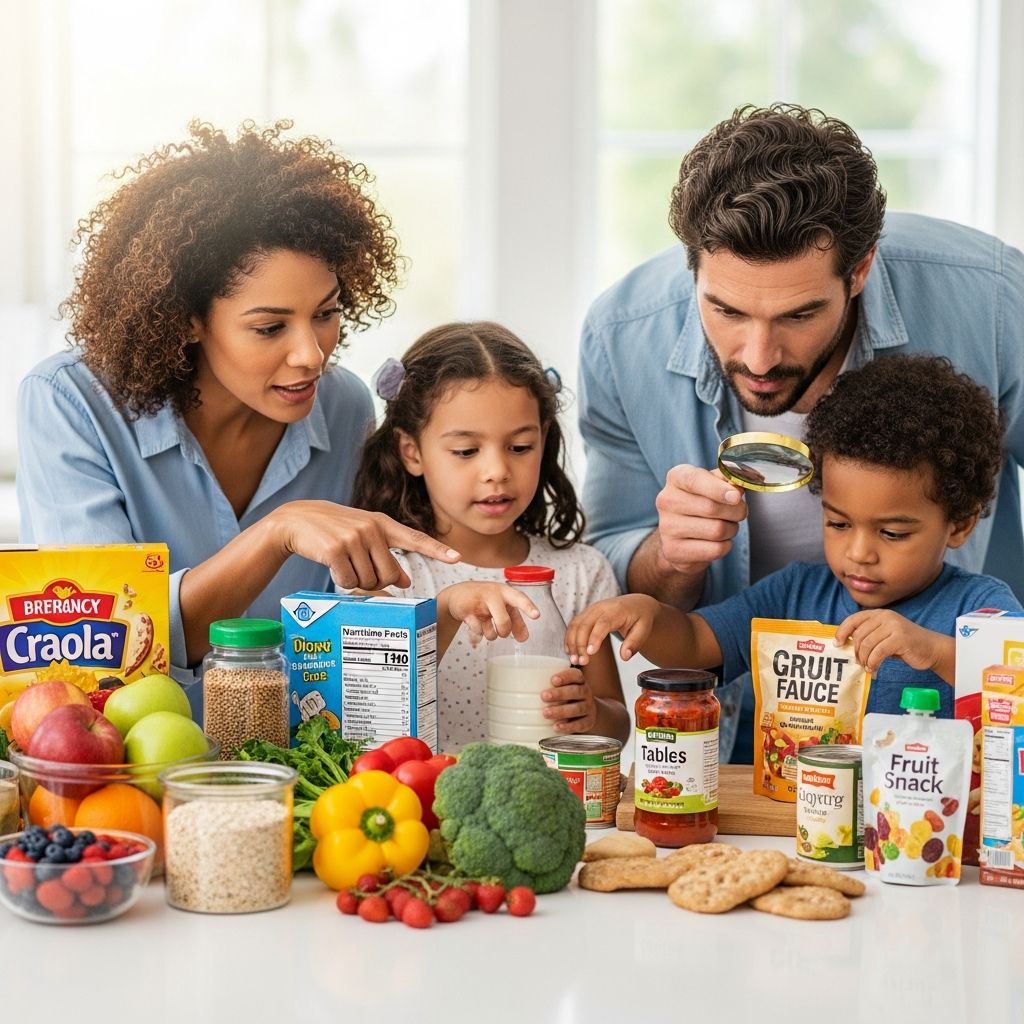
Navigating the grocery store with children in mind requires more than grabbing the brightest package. Food labels provide critical insights into what you’re feeding your family, helping you prioritize nutrition, avoid allergens, and build balanced meals. This guide breaks down every element of modern labels, offering practical strategies for parents to make informed decisions daily.
Why Food Labels Matter for Growing Kids
Children have unique nutritional needs that evolve with age, from toddlers needing dense calories for growth to teens requiring fuel for activity. Labels reveal hidden sugars, salts, and fats that can impact energy levels, immunity, and long-term health. By mastering label reading, parents can steer toward products supporting development while limiting excesses linked to obesity and related issues.
Regular label checks also foster healthy habits in kids, teaching them to question marketing and value whole foods. Start early by involving children in shopping, turning it into a fun lesson on balanced eating.
Breaking Down the Nutrition Facts Panel
The nutrition facts panel is the cornerstone of any label, standardized by regulations to ensure transparency. It lists key metrics per serving, enabling apples-to-apples comparisons across brands.
Serving Size and Servings Per Container
Always check the serving size first—it’s often smaller than what families consume. For instance, a cereal box might list one cup as a serving, but kids may eat two or three. Multiply nutrients accordingly to gauge true intake. This prevents underestimating calories or over-relying on ‘healthy’ portions.
Calories: Fuel for Active Days
Calories indicate energy content. Young children need about 1,000-1,400 daily, scaling up with age and activity. Use the per-serving and per-100g columns for consistency when comparing items like yogurts or snacks.
Fats: Choosing the Right Types
Total fat includes saturated, unsaturated, and trans fats. Aim for low saturated fat (<5% Daily Value or DV) and zero trans fats, as they raise heart risks. Prioritize healthy fats from avocados or nuts over processed sources.
| Nutrient | Goal for Kids | Why It Matters |
|---|---|---|
| Saturated Fat | <5% DV per serving | Supports heart health |
| Sodium | <20% DV | Prevents high blood pressure |
| Added Sugars | <10% DV | Avoids energy crashes |
Carbohydrates, Fiber, and Sugars
Carbs provide quick energy, but distinguish total from added sugars. Limit added sugars to under 25g daily for kids over 2. Fiber, often lacking in children’s diets, aids digestion—seek >20% DV in cereals or breads.
Protein, Vitamins, and Minerals
Protein builds muscles; kids aged 4-8 need 19g daily. Highlighted nutrients like vitamin D, calcium, iron, and potassium are crucial if diets fall short. Excellent sources offer >20% DV.
Demystifying Ingredients Lists
Ingredients appear in descending order by weight, revealing true composition. Short lists with recognizable items like oats, fruits, or whole grains signal minimally processed foods. Long lists with unfamiliar additives often indicate ultra-processed products to limit.
- Look for whole foods first: Apple, oats, lentils.
- Avoid hydrogenated oils and artificial sweeteners.
- Spot hidden sugars: Maltose, dextrose, high-fructose corn syrup.
Compare similar products—choose the one with fewer, simpler ingredients for better nutrition.
Allergen Awareness: Protecting Sensitive Eaters
For families with allergies, labels are lifesavers. U.S. law mandates clear listing of top allergens: milk, eggs, fish, shellfish, tree nuts, peanuts, wheat, soy, sesame. Check ‘Contains’ statements and full lists, as allergens hide in names like casein (milk) or whey.
Read every label every time—formulas change. Teach kids to self-check, and consult dietitians for hidden triggers. Short ingredient lists reduce risk.
Understanding Marketing Claims
Front-of-pack claims like ‘low-fat’ or ‘natural’ are regulated but can mislead. FDA definitions include:
- Low: Sodium <140mg>
- Free: Fat-free <0.5g/serving.
- Light: 1/3 fewer calories or 50% less fat.
- Excellent source: >20% DV of a nutrient.
Health claims link diets to disease reduction but verify with the facts panel. Traffic light systems (green=low, red=high) offer quick scans for sugar, fat, salt.
Practical Strategies for Busy Parents
Streamline shopping with these tips:
- Use per-100g for comparisons.
- Plan meals to balance labels across the day.
- Stock familiar products after initial checks.
- Involve kids: Make label hunts a game.
- Opt for greens in traffic lights.
Portion awareness matters—labels suggest adult sizes, so adjust for kids.
Building Weekly Menus with Label Insights
Sample a day’s meals:
- Breakfast: Cereal with >3g fiber, low sugar (<5g>
- Lunch: Sandwich on whole-grain bread (first ingredient: whole wheat).
- Snack: Yogurt ‘light’ verified low-calorie.
- Dinner: Pasta with short, clean ingredient list.
This approach ensures variety and nutrient coverage.
Common Pitfalls and How to Avoid Them
Avoid assuming ‘organic’ means low-sugar or juice equals healthy. Multi-grain isn’t always whole grain. Always cross-reference claims with facts.
Frequently Asked Questions (FAQs)
What if my child has allergies—how do I shop safely?
Scan for ‘Contains’ statements and ingredients. Avoid if unsure; read anew each purchase as recipes evolve.
Is ‘low-fat’ always better for kids?
Not necessarily—fats are vital for brain development. Check total nutrients, not just one claim.
How much sugar is too much?
Limit added sugars to <10% daily calories; use labels to track.
Should I ignore calories?
No—balance with activity, but focus on quality sources.
Are traffic lights universal?
Common in some countries; U.S. relies on DV percentages.
Empowering Your Family’s Future
Label literacy transforms shopping from guesswork to strategy. Consistent use leads to healthier pantries, happier kids, and sustainable habits. Share these skills to raise a generation of savvy eaters.
References
- How to read food labels for kids: A Parent’s Guide — Charlotte Stirling-Reed (YouTube). 2025-10-08. https://www.youtube.com/watch?v=4vmayP6fvTo
- How to read food labels – Children’s Health — Michealann Rangel, RD, Children’s Health. Accessed 2026. https://www.childrens.com/health-wellness/how-to-read-a-food-label-3-tips-to-protect-children-with-food-allergies
- How to read a nutrition facts label — CHOC Children’s. Accessed 2026. https://health.choc.org/how-to-read-a-nutrition-facts-label/
- Reading Food Labels — Nemours KidsHealth. Accessed 2026. https://kidshealth.org/en/parents/food-labels.html
- How to Read Food Labels — Nationwide Children’s Hospital. 2015-05-01. https://www.nationwidechildrens.org/family-resources-education/700childrens/2015/05/how-to-read-food-labels
- Food Labels: Read It Before You Eat It! — American Academy of Allergy, Asthma & Immunology (AAAAI). Accessed 2026. https://www.aaaai.org/tools-for-the-public/conditions-library/allergies/food-labels