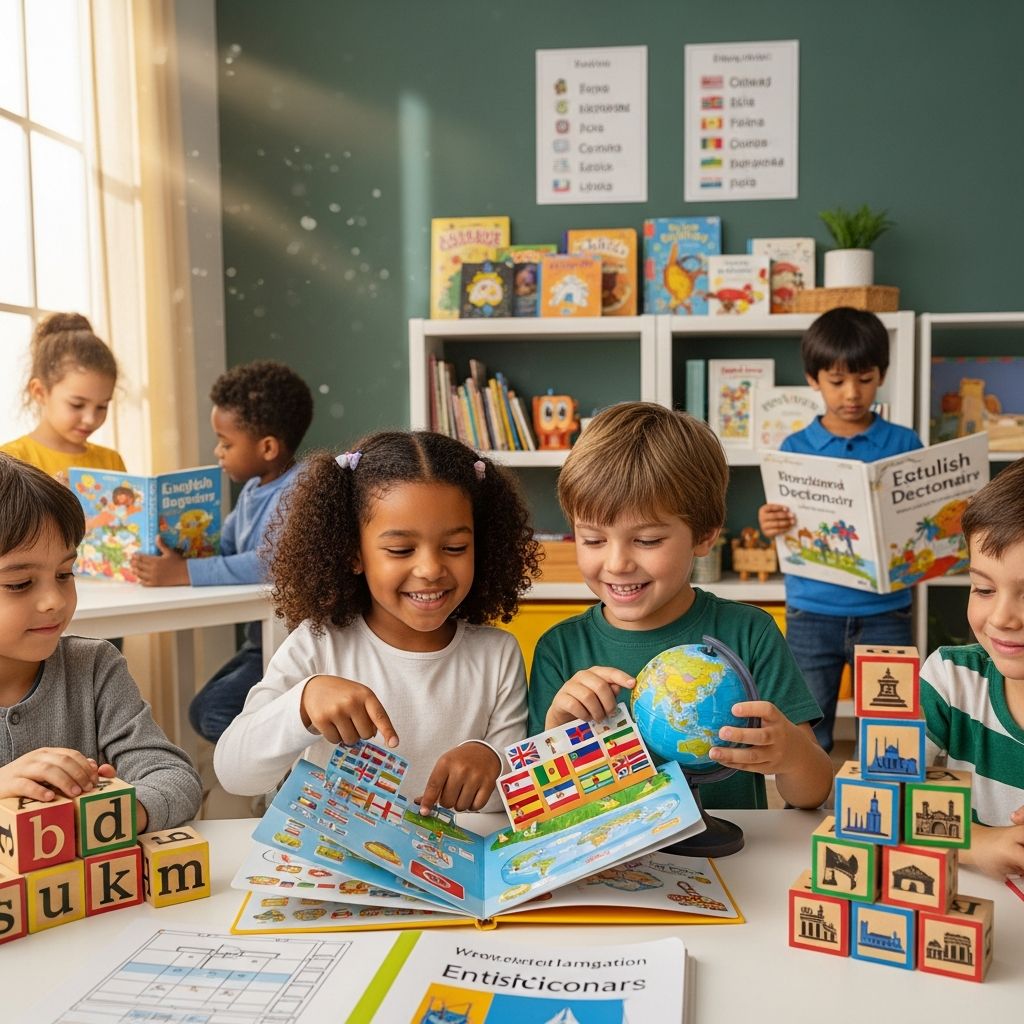
Bilingualism offers children cognitive advantages, enhanced problem-solving skills, and stronger cultural ties. Parents can foster this by integrating consistent language exposure into daily routines from birth.
Why Prioritize Bilingual Upbringing?
Exposing children to multiple languages early enhances brain development and executive function. Research shows bilingual kids outperform monolingual peers in tasks requiring attention and multitasking. Beyond academics, bilingualism builds empathy and global awareness, preparing children for diverse societies.
Heritage languages preserve family identity, strengthening intergenerational bonds. In communities where one language dominates, maintaining the minority language prevents loss and fosters pride.
Building a Strong Language Foundation at Home
Consistency is crucial in home environments. One effective approach is the ‘one-parent-one-language’ method, where each parent sticks to a single language during interactions. This creates clear associations without confusion.
- Establish daily routines like mealtimes or bedtime in the target language to reinforce usage.
- Use simple, repetitive phrases for basic needs—eating, dressing, playing—to build vocabulary naturally.
- Model correct grammar by recasting children’s attempts; if they say ‘me want milk’ in mixed code, respond with ‘I want milk’ in the target language.
Even if children mix languages initially—a normal phase—parents should persist with their designated language to delineate boundaries.
Fun and Engaging Language Activities
Turn learning into play to sustain interest. Music, games, and stories captivate young minds, aiding memory through rhythm and repetition.
| Activity Type | Examples | Benefits |
|---|---|---|
| Music & Songs | Sing nursery rhymes, play heritage music | Improves pronunciation, vocabulary retention |
| Games | I Spy, memory matching, role-play | Encourages interactive speaking |
| Reading | Picture books, comics with visuals | Builds literacy, imagination |
| Media | Shows, movies with subtitles/audio switch | Increases exposure volume |
Incorporate interests like sports or cooking; prepare a traditional recipe naming ingredients solely in the heritage language. Apps and AI tools can generate personalized stories or poems, making sessions unique.
Leveraging Community and External Resources
Extend learning beyond home through playgroups, cultural events, and libraries stocking heritage materials. Playdates with same-language peers provide real-world practice and motivation.
- Enroll in bilingual programs or childcare emphasizing the minority language.
- Visit shops, festivals, or relatives abroad for immersive experiences.
- Encourage video chats with overseas family to maintain connections.
For older children, interest-based online communities (with safety monitoring) sustain engagement. Schools with dual-language tracks amplify efforts; parental involvement, like homework help, reinforces school learning.
Navigating Common Hurdles in Bilingual Parenting
Challenges like language refusal or imbalance arise, but solutions exist. If a child favors the community language, persist with heritage input without pressure.
Challenge 1: Language Refusal
Children may reject the minority language if it feels low-status. Counter by highlighting its value through stories of successful bilinguals and positive reinforcement.
Challenge 2: Sibling Dynamics
Older siblings might switch to the dominant language. Assign roles, like teaching the baby, to involve them.
Challenge 3: Fluctuating Proficiency
Skills may dip temporarily; consistent exposure prevents loss.
Long-Term Strategies for Sustained Success
Literacy in the minority language boosts relevance. Teach reading/writing via books and apps. Track progress with journals, celebrating milestones like first sentences.
Adapt to ages: Infants thrive on parental talk; toddlers on play; school-age on academics and media. Teens benefit from cultural exchanges or apps.
Frequently Asked Questions
At what age should I start raising a bilingual child?
Begin at birth for optimal results, as early exposure mimics natural acquisition.
Is code-switching harmful?
No, it’s typical for bilinguals. Minimize it initially for clarity, but it evolves naturally.
What if only one parent speaks the heritage language?
That parent should consistently use it; supplement with external resources like classes or media.
Will bilingualism delay speech development?
Myths debunked: Bilingual children meet milestones similarly, often with added cognitive perks.
How do I motivate a reluctant child?
Link language to joys—games, media, family ties—and involve them in choices.
Measuring Progress and Adjusting Approaches
Observe receptive skills first (understanding), then expressive. Use checklists: Can they follow directions? Narrate stories? Adjust based on needs, increasing immersion if lagging.
Parental perseverance yields rewards: Enhanced career prospects, cultural fluency, and family unity.
References
- Raising multilingual and bilingual children: options — Raising Children Network (Australian Government initiative). 2023. https://raisingchildren.net.au/babies/connecting-communicating/bilingualism-multilingualism/raising-bilingual-children-tips
- Tips for Parents Raising Bilingual Children — American Speech-Language-Hearing Association (ASHA). 2023. https://leader.pubs.asha.org/do/10.1044/tips-for-parents-raising-bilingual-children-when-the-home-language-differs-from-the-community-language/full/
- 5 Tips for Raising a Bilingual Child — French American Academy. 2024. https://faacademy.org/raising-a-bilingual-child/
- Raising Bilingual Children (Video Transcript) — Babbel YouTube Channel. 2023. https://www.youtube.com/watch?v=9HYwZXbfCP8
- How to raise a bilingual child — Goethe-Institut USA. 2024. https://www.goethe.de/ins/us/en/spr/unt/cam/dfk/gdl/rfp/hch/rbc.html
- PEaCH Guide for Parents — European Commission Erasmus+ Programme. 2022. https://ec.europa.eu/programmes/erasmus-plus/project-result-content/3a77aad5-9caf-46b4-b3bb-677aff6b5d69/IO1._PEaCH_guide_for_parents_in_English.pdf