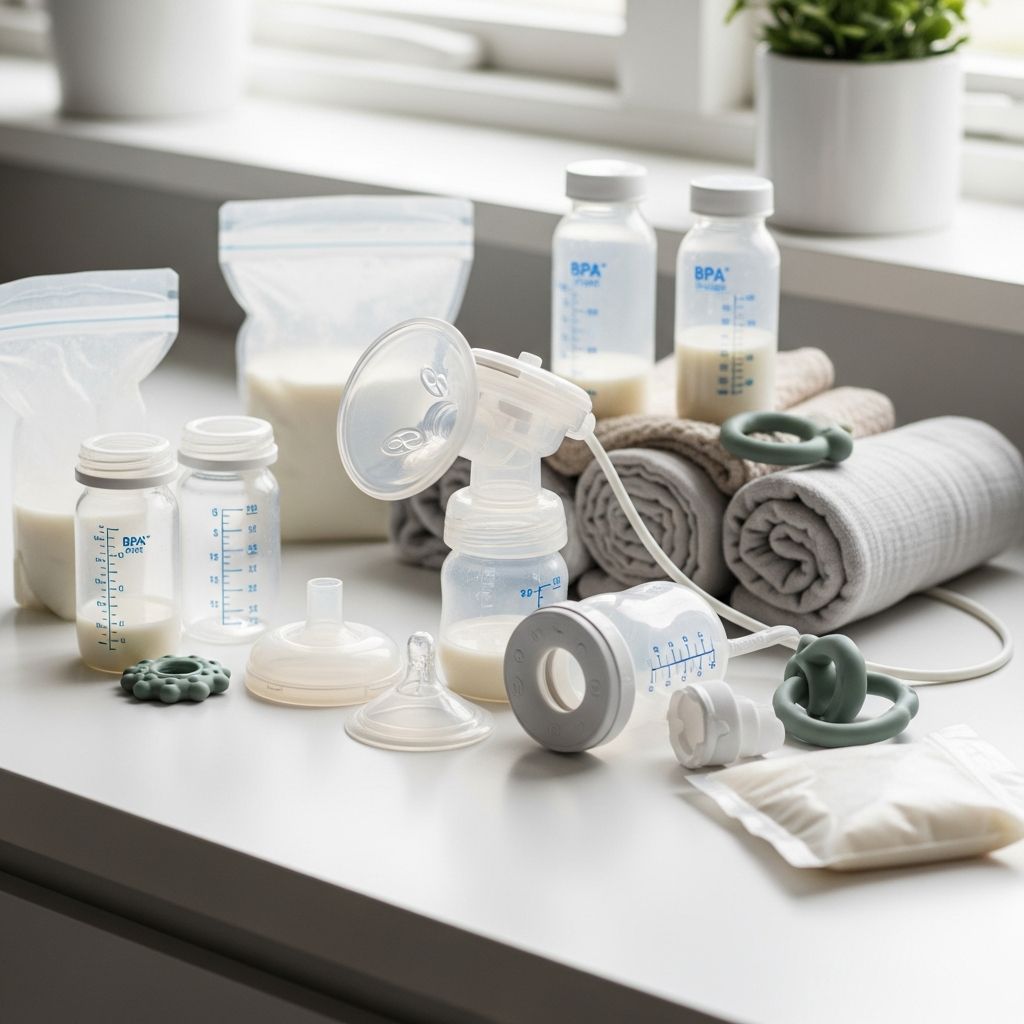
Providing your baby with breast milk is possible even when you are away, at work, or need others to help with feeds. Learning how to pump, handle, store, thaw, and warm breast milk safely protects both your baby and your milk supply while giving your family more flexibility.
Why Pumping and Storing Breast Milk Matters
Pumping and storing breast milk can help you:
- Return to work or school while continuing to provide human milk.
- Share feeding duties with a partner, family member, or caregiver.
- Build a backup supply for emergencies or days when baby feeds more than usual.
- Support milk production if your baby is premature, ill, or not latching well.
Human milk contains antibodies and nutrients that support your baby’s immune system and development, and correct storage helps preserve these benefits.
Preparing to Pump: Hygiene and Setup
Good hygiene is essential to reduce the risk of harmful germs in pumped milk.
Handwashing and Clean Surfaces
- Wash your hands thoroughly with soap and water for at least 20 seconds before pumping.
- Dry hands with a clean towel or disposable paper towel.
- Wipe down the surface where you will place pump parts and bottles using a clean cloth and, if possible, a mild disinfectant safe for food-prep areas.
Checking and Assembling Pump Parts
- Confirm that all pump parts that come in contact with milk (flanges, valves, membranes, collection bottles) are clean and completely dry.
- Inspect silicone parts (like valves and membranes) for cracks, stickiness, or tears and replace them as needed to maintain suction.
- Assemble the pump according to the manufacturer’s instructions, making sure all connections are tight.
- Plug in the pump or check that batteries are charged if you use a portable model.
How to Pump Milk Comfortably and Effectively
Comfortable, efficient pumping helps protect your milk supply and makes sessions less stressful.
Choosing a Pumping Schedule
- If your baby is a newborn and you are exclusively pumping, aim for 8–12 pumping sessions in 24 hours, similar to a newborn’s feeding pattern.
- If you are pumping at work and nursing when you are with your baby, pump approximately every 3 hours away from your baby.
- Try not to go more than 4 hours regularly between milk removals in the early weeks.
Step-by-Step Pumping
- Sit in a comfortable, upright position and relax your shoulders.
- Center the flange over your nipple. Your nipple should move freely in the tunnel without rubbing strongly on the sides.
- Start the pump on the lowest suction setting and gradually increase to the highest level that is strong but still comfortable.
- Many electric pumps have a short, fast “let-down” mode followed by a slower, stronger expression mode; use both according to instructions.
- Continue pumping 15–20 minutes, or for several minutes after milk flow slows and you no longer see sprays or steady drips.
- If double pumping (both breasts at once), you usually finish sooner and may collect more milk.
Handling Freshly Pumped Milk Safely
Once you finish pumping, proper handling keeps breast milk safe and maintains its quality.
Transferring and Labeling Milk
- If you pumped into reusable bottles, you can store milk directly in those bottles or transfer it to breast milk storage bags designed for freezing.
- Leave a little space at the top of containers for expansion when freezing.
- Label each container clearly with:
- The date (and time, if you like) the milk was pumped.
- Your baby’s name if the milk will be used in a child care setting.
- Amount of milk in milliliters or ounces.
- Always use the oldest milk first (first in, first out).
Room Temperature and Refrigeration Guidelines
Current recommendations from expert bodies such as the U.S. Centers for Disease Control and Prevention (CDC) and the American Academy of Pediatrics (AAP) provide specific limits for safe storage.
| Situation | Typical Recommendation* |
|---|---|
| Fresh milk at room temperature (up to about 25°C / 77°F) | Commonly considered safe for a few hours; shorter times are safer in very warm rooms. |
| Fresh milk in the refrigerator | Store in the back of the fridge, where temperature is coldest and most stable, and use within the timeframe recommended by your health provider or national guidelines. |
| Fresh milk in the freezer compartment | Can be stored for a longer period, but quality is best when used earlier rather than later. |
*Because exact time limits can vary slightly between organizations and countries, always follow the specific guidance from your baby’s health care team or local health authority.
Freezing Breast Milk: Building a Safe Milk Supply
Freezing milk allows you to create a “milk stash” for future feeds.
Best Practices for Freezing
- Chill freshly pumped milk in the refrigerator before adding it to already-frozen milk, and only combine milk pumped on the same day.
- Freeze milk in small portions (for example, 60–120 ml or 2–4 oz) to reduce waste when thawed.
- Lay milk storage bags flat to freeze so they stack easily and thaw faster.
- Place milk toward the back of the freezer, away from the door, where temperature is most stable.
How Long Can Frozen Milk Be Kept?
Evidence suggests that stored human milk can lose some immune properties over time, especially with long or repeated freezing and thawing. Using milk sooner rather than later preserves more of its protective factors.
- Follow the shortest storage times recommended by trusted organizations (such as your national pediatric society or health ministry) for the type of freezer you have.
- For deep freezers that are rarely opened, properly sealed milk generally keeps longer than in freezers attached to a refrigerator.
Thawing and Warming Breast Milk
Gentle thawing and warming helps protect nutrients and prevent hot spots that can burn your baby’s mouth.
Safe Ways to Thaw Frozen Milk
- Refrigerator method: Place the frozen container in the refrigerator several hours before use (often overnight). This is the gentlest method.
- Cool water method: Put the sealed bag or bottle in a bowl of cool water. Change the water as it warms to speed thawing.
- Warm water method: After the milk is mostly thawed, you may place it in warm (not hot) water to reach feeding temperature.
What to Avoid
- Do not use a microwave to thaw or heat breast milk; it can create hot spots and damage some milk components.
- Do not boil breast milk or place it in very hot water.
- Never refreeze thawed milk once it has fully thawed.
Using Thawed Milk
- Swirl (do not shake vigorously) the container to mix in any separated fat.
- Test the temperature by dropping a few drops on the inside of your wrist; it should feel lukewarm, not hot.
- Use thawed milk within the timeframe recommended by your health care provider or national guideline.
Cleaning Pump Parts, Bottles, and Accessories
Thorough cleaning after each use helps prevent bacterial growth and keeps your baby safer.
Basic Cleaning Steps
- Disassemble all parts that come into contact with breast milk.
- Rinse pieces under running water to remove milk residue.
- Wash parts in hot, soapy water using a clean brush that you use only for infant feeding items, or place them on the top rack of a dishwasher if the manufacturer allows this.
- Rinse well with clean water.
- Air-dry items completely on a clean towel or drying rack; avoid using dish towels that may hold germs.
When to Sanitize
- For babies younger than 3 months, premature babies, or babies with weakened immune systems, sanitizing daily is often recommended.
- Sanitize by boiling parts for several minutes (if safe for the materials) or using a microwave or plug-in steam sterilizer according to instructions.
Storage Containers: What to Use and What to Skip
The type of container affects how well your milk is protected in storage.
Recommended Containers
- Food-grade glass bottles with leak-proof lids.
- BPA-free plastic bottles made for infant feeding.
- Breast milk storage bags designed for freezing (thicker and more durable than ordinary food bags).
Containers to Avoid
- Ordinary thin plastic storage bags not made for milk, which can leak or tear.
- Reusable containers that are difficult to clean, have cracks, or do not seal tightly.
- Any container not labeled as food-safe.
Organizing Your Milk Supply
Staying organized saves time and reduces wasted milk.
- Keep newer milk behind older milk, so you always grab the containers with the earliest date first.
- Use small boxes or bins in the refrigerator or freezer labeled by week.
- Track how much milk your baby typically drinks at a time and freeze portions in those amounts.
- Make a simple written or digital list of what milk you have stored and when it was expressed.
Transporting Breast Milk Safely
Whether you are taking milk home from work or to child care, temperature control is key.
- Use an insulated cooler bag with frozen ice packs to keep milk cold.
- Place containers close together in the center of the cooler to maintain a more stable temperature.
- Transfer milk to a refrigerator or freezer as soon as you arrive at your destination.
Working with Child Care Providers
Clear communication with caregivers ensures your milk is handled safely and used efficiently.
- Provide written instructions for how to store, thaw, and warm milk.
- Ask them to:
- Use the oldest milk first.
- Check labels for your baby’s name and date.
- Discard any milk left in the bottle after a feed, according to local guidance.
- Show caregivers how to swirl milk and test temperature before feeding.
Common Questions About Pumping and Storing Milk
Can I add freshly pumped milk to milk that is already frozen?
You can combine them if the freshly pumped milk has been cooled in the refrigerator first and both were pumped on the same day. Avoid pouring warm milk directly onto frozen milk, because this can partially thaw the older milk.
How do I know if stored milk has spoiled?
Breast milk can smell different from cow’s milk, especially after freezing, but if it smells truly sour or rancid, or looks curdled in an unusual way, it is safest to discard it. When in doubt, ask your baby’s health care provider or lactation consultant.
Is it normal for the cream to separate on top?
Yes. Fat naturally rises to the top in stored milk. Swirl the container gently to mix the layers before feeding rather than shaking it hard.
How much milk should I freeze in each portion?
Many babies take 60–120 ml (2–4 oz) per feeding, but amounts vary with age and individual needs. Start with smaller portions to avoid waste, and adjust based on how much your baby usually drinks at a time.
Can I reuse a bottle of milk that my baby started but did not finish?
Once a baby drinks from a bottle, saliva introduces bacteria into the milk. Follow the timeframe recommended by your health provider or local guideline for how long that milk can be kept before discarding.
When to Ask for Extra Help
Reach out to a health professional if you:
- Are pumping regularly but collecting much less milk than you expect.
- Feel pain or see nipple damage when pumping.
- Have questions about safe storage times or equipment cleaning that are not covered here.
Lactation consultants, pediatricians, and nurses can provide individualized recommendations based on your baby’s health, your medical history, and current expert guidelines.
References
- Proper Storage and Preparation of Breast Milk — Centers for Disease Control and Prevention (CDC). 2024-02-21. https://www.cdc.gov/breastfeeding/breast-milk-handling/index.html
- Breastfeeding and the Use of Human Milk — American Academy of Pediatrics. 2022-03-01. https://publications.aap.org/pediatrics/article/150/1/e2022057988/188347/Breastfeeding-and-the-Use-of-Human-Milk
- Effect of Storage on the Macronutrient and Bioactive Protein Composition of Human Milk — Peila C, et al., Frontiers in Pediatrics. 2016-09-13. https://www.ncbi.nlm.nih.gov/pmc/articles/PMC5025974/
- Human Milk and Breastfeeding — World Health Organization. 2023-05-01. https://www.who.int/health-topics/breastfeeding
- Safe Preparation, Storage and Handling of Powdered Infant Formula — World Health Organization & FAO. 2007-01-01. https://www.who.int/publications/i/item/9789241595414