Helping your child face anesthesia requires thoughtful preparation to ensure safety and minimize stress. This guide covers fasting protocols, medications, emotional readiness, procedural steps, and recovery, drawing from established pediatric practices.
Understanding Anesthesia in Children
Anesthesia allows medical procedures without pain or awareness, tailored for kids’ unique physiology. Pediatric specialists adjust dosages and techniques for age, weight, and health, prioritizing safety through monitoring and rapid-acting drugs. Common types include general anesthesia via inhalation or IV, sedation for minor needs, and regional blocks.
Preparation starts weeks ahead with medical history review, focusing on allergies, past reactions, and conditions like respiratory issues. Hospitals often provide checklists for parents to follow.
Key Fasting Guidelines for Safe Procedures
Fasting prevents aspiration during anesthesia by emptying the stomach. Guidelines vary by age and liquid type, updated by major institutions for optimal safety.
- Clear liquids: Allowed up to 2 hours before arrival—water, apple juice, Pedialyte, clear sodas, Gatorade (no pulp or dairy).
- Breast milk (under 6 months): Up to 4 hours prior; formula or solids 6 hours.
- Older infants/toddlers: No solids, dairy, or non-clear liquids 6-8 hours before; clear liquids 2 hours.
- Exceptions: Consult for special needs like undernutrition; avoid gum, candy, or teeth brushing near procedure time.
Adhering strictly reduces risks; popsicles count as clear if pulp-free, but confirm with providers.
Premedication Options to Ease Anxiety
Premedication calms children, reducing fear transfer from parents. Oral mixtures are common, combining sedatives with pain relief.
| Method | Drugs & Dosage | Notes |
|---|---|---|
| Oral (10-25kg) | Midazolam 0.4-0.5mg/kg + Atropine 0.02-0.05mg/kg; Paracetamol 30mg/kg | Orange-flavored syrup, onset 20min; max 15mg midazolam. |
| Rectal (5-20kg) | Midazolam 0.3mg/kg + Atropine | Quick alternative if oral refused. |
| Other | Ketamine 5mg/kg oral with midazolam | For stronger sedation; pair with parent presence. |
Parents stay involved; calm demeanor aids induction. Provide pre-op info to build trust.
Packing Essentials for Procedure Day
Bring comfort items to make the day smoother, especially for young ones.
- Change of clothes, diapers/Pull-Ups
- Favorite toy, book, pacifier, or blanket
- Formula/bottle, post-op snacks (allergy-safe)
- Stroller if needed
- Current medications list
Hospitals supply basics like crackers; arrive 1 hour early for prep.
Medications and Health Prep Beforehand
Continue prescribed meds with sips of water 2+ hours prior, except antibiotics in non-clear forms (6 hours). Inhalers/nebulizers ramp up 2 days early. Vitamins post-procedure. Disclose all supplements.
For colds or bleeding risks: Delay if possible, use nasal drops, anticholinergics like glycopyrronium.
The Day of Anesthesia: Step-by-Step
Expect 1-hour prep and 1-3 hour recovery. Team sets up monitors, airway tools sized for child.
- Check-in & Monitoring: Vital signs via pulse ox, BP cuff, EKG.
- Induction: Mask with sevoflurane for inhalation; IV propofol/ketamine if needed (3-5mg/kg).
- Airway Management: Laryngeal mask or intubation with sized ETT, stylet.
- Maintenance: Gases like isoflurane; drugs on hand (epinephrine, rocuronium).
- Emergence: Lateral positioning, small propofol doses to ease waking.
One calm parent may accompany to induction room.
Managing Risks and Complications
Pediatric anesthesia is safe with expert oversight. Prep mitigates issues:
- Respiratory: Pre-oxygenate, decongestants, lidocaine 1mg/kg IV.
- Bleeding: Transfusions—RBC 10ml/kg, plasma 10-20ml/kg, tranexamic acid 10-15mg/kg.
- Allergies: Note foods/meds; bring safe snacks.
Post-op nausea controlled; monitor for 1-3 hours.
Emotional Support Strategies
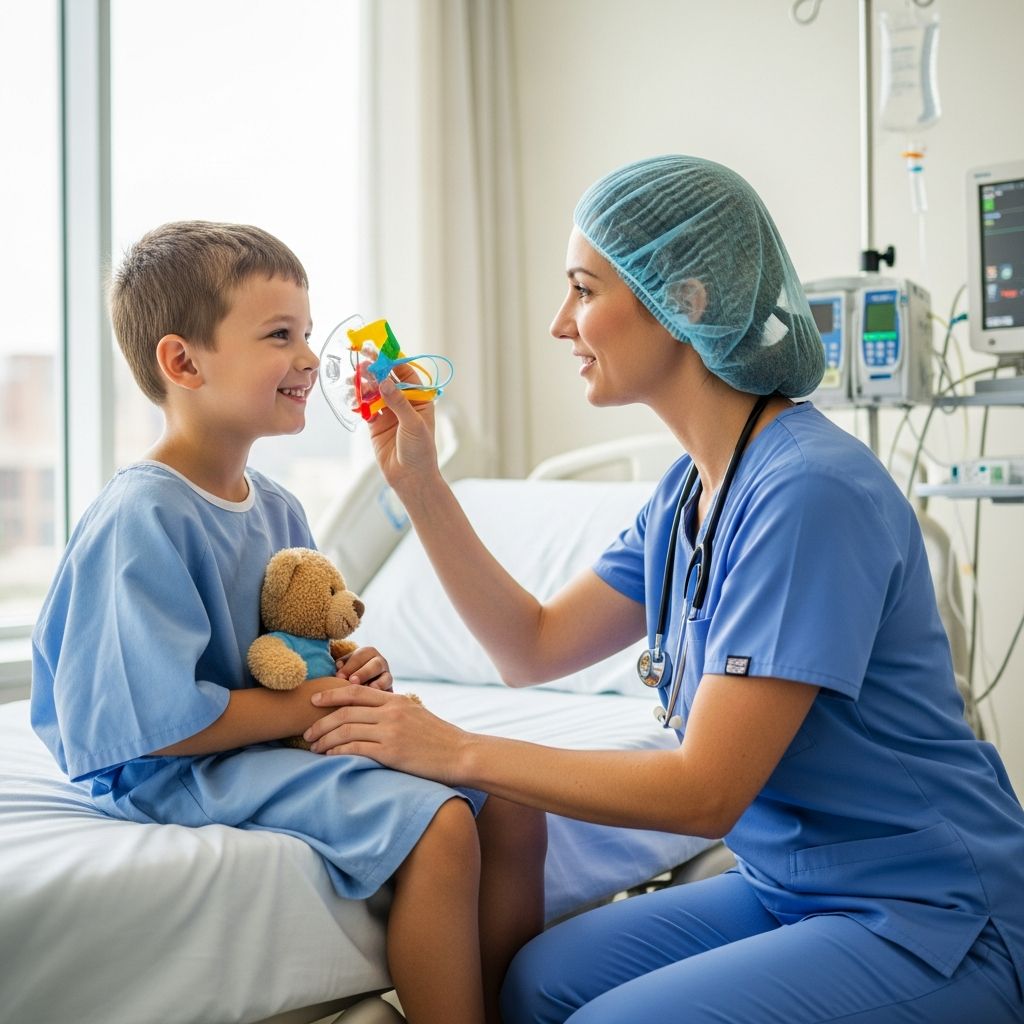
Age-appropriate talks reduce fear: Use stories, videos; avoid scary details. Practice deep breaths. Post-op, comfort with cuddles, favorite activities. Reassure it’s temporary.
Recovery and Aftercare at Home
Children wake groggy; hydrate with clears, advance diet slowly. Watch for vomiting, pain—paracetamol as directed. Rest 24-48 hours; resume school/activity gradually. Follow-up for concerns.
Frequently Asked Questions (FAQs)
What if my child has a cold before surgery?
Discuss with anesthesiologist; may postpone, use IV induction, nasal drops.
Can siblings visit during recovery?
Check hospital policy; often yes post-initial recovery for support.
How long until normal eating?
Clear liquids first, then light foods; full diet per tolerance.
Is premedication always needed?
Common for anxiety but individualized; oral preferred.
What about special needs kids?
Tailored fasting/meds; inform team early.
This guide empowers parents for smooth experiences. Consult providers for personalized advice.
References
- Pediatric anesthesia – methods, drugs and safety in anesthesia for children — Anesthguide. Accessed 2026. https://anesthguide.com/topic/pediatric-anesthesia/
- Preparing Your Child for General Anesthesia — Mass General Hospital for Children. Accessed 2026. https://www.massgeneral.org/children/anesthesia/preparing-your-child-for-general-anesthesia
- Pediatric Anesthesia Basics — Stanford Medicine. 2017-12-20. https://med.stanford.edu/content/dam/sm/pedsanesthesia/documents/pediatric-anesthesia-basics.pdf
- Preparing Your Child for Anesthesia — Children’s Health. Accessed 2026. https://www.childrens.com/specialties-services/specialty-centers-and-programs/anesthesiology/preparing-your-child-for-anesthesia
- 7 Easy Ways to Prepare Your Child for Anesthesia — Kaiser Permanente. Accessed 2026. https://mydoctor.kaiserpermanente.org/mas/news/7-easy-ways-to-prepare-your-child-for-anesthesia-1759132