Praise shapes a child’s worldview, influencing their motivation, self-worth, and approach to challenges. When delivered thoughtfully, it promotes a **growth mindset**—the belief that abilities improve through effort—rather than a fixed mindset reliant on innate talent. Research shows that specific, sincere praise enhances perseverance and intrinsic motivation, helping children thrive academically and socially.
Why Praise Matters in Child Development
Positive reinforcement through praise outperforms punishment in guiding behavior, as it strengthens desirable actions while building emotional security. Children who receive effective praise develop higher self-esteem, better problem-solving skills, and greater resilience to failure. For instance, praising effort over innate ability encourages kids to view setbacks as learning opportunities, reducing fear of challenges.
Parents often default to generic comments like “good job,” but these can foster external validation dependency. Instead, strategic praise focuses on processes and behaviors, empowering children to self-evaluate and persist independently.
Core Principles of Thoughtful Praise
To maximize impact, praise must align with psychological best practices. Key guidelines include specificity, sincerity, and timing. Here’s how to implement them:
- Be Specific: Detail the exact action or quality observed, making feedback actionable and believable.
- Focus on Effort and Process: Highlight persistence, strategies, and choices to nurture grit.
- Ensure Sincerity: Match words to genuine observations; children detect insincerity and dismiss it.
- Praise Behavior, Not the Child: Target actions to avoid inflating ego or creating pressure.
- Maintain Balance: Aim for a 1:3 criticism-to-praise ratio to keep positivity dominant.
These principles, drawn from decades of studies, transform routine interactions into growth catalysts.
Specific Phrases to Praise Effort and Persistence
Effort-based praise reinforces the value of hard work. Use these examples across ages:
| Situation | Generic Praise (Avoid) | Effective Praise | Why It Works |
|---|---|---|---|
| Homework struggles | “Smart kid!” | “You kept trying different ways to solve that math problem—your persistence paid off!” | Emphasizes strategy and stamina. |
| Sports practice | “Great swing!” | “I saw how you adjusted your stance after missing—that focus is impressive.” | Highlights adaptability. |
| Chores completion | “Good job cleaning.” | “You organized the toys by color without reminders—thanks for taking initiative!” | Notes specific method and autonomy. |
| Learning a skill | “You’re talented.” | “Practicing daily has improved your drawing—keep building those skills!” | Links effort to progress. |
Incorporate these to shift focus from outcomes to journeys, fostering long-term motivation.
Praising Social Skills and Kindness
Beyond academics, praise character strengths like empathy and cooperation. This builds relational competence essential for life success.
- “Sharing your toy showed real generosity—your friend lit up!”
- “You listened patiently during storytime; that kindness makes group time fun.”
- “Helping your sibling without being asked was thoughtful teamwork.”
- “Comforting grandma when she was sad highlighted your caring heart.”
Such phrases validate prosocial behaviors, increasing their frequency. Studies confirm that behavior-specific praise strengthens social bonds and moral development.
Encouraging Praise After Setbacks
Failure moments are prime for praise. Acknowledge emotions first, then spotlight positives:
- “That loss must sting, but you hustled the whole game—proud of your energy!”
- “Tough puzzle, huh? You stayed calm and tried new pieces—smart approach.”
- “Not your best drawing today, but experimenting with colors shows creativity.”
This validates feelings while modeling resilience, turning disappointments into growth lessons.
Daily Routines: Integrating Praise Seamlessly
Weave praise into everyday moments to “catch them being good.” Morning routines, meals, and bedtime offer natural opportunities:
Mornings: “You picked out matching clothes quickly—efficient start to the day!”
Meals: “Trying that new veggie took courage—adventurous eater!”
Bedtime: “Reading extra pages built your story skills—impressive dedication.”
Consistency amplifies effects; track progress with a family praise jar, noting daily wins to review weekly.
Age-Appropriate Praise Strategies
Tailor language to developmental stages for relevance:
Toddlers (1-3 Years)
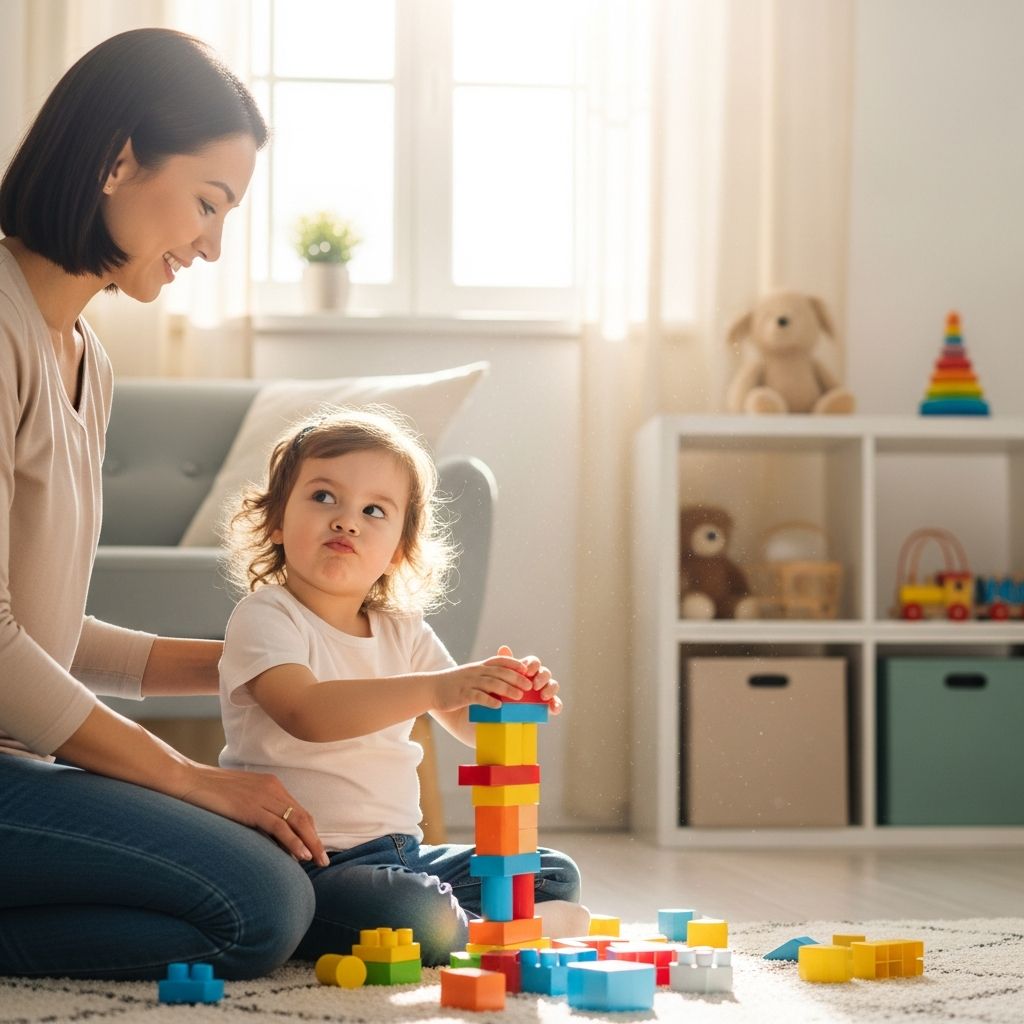
Keep it simple and immediate: “Yay, blocks stacked high!” Focus on motor skills and basic sharing to build foundational confidence.
Preschoolers (4-5 Years)
Introduce effort: “You drew the whole family—hard work!” Praise pretend play and emotional awareness.
School-Age (6-12 Years)
Emphasize strategies: “Breaking the project into steps was clever planning.” Support academic grit and peer interactions.
Teens (13+)
Highlight independence: “Managing your schedule independently shows maturity.” Respect autonomy while noting decision-making.
Common Praise Pitfalls and Fixes
Avoid these traps to prevent unintended harm:
- Overpraise: Sparse use keeps it meaningful; excessive dilutes impact.
- Public-Only Praise: Balance with private talks to avoid manipulation perceptions.
- Judgmental Language: Skip “perfect” or comparisons; opt for descriptive feedback.
- Ignoring Effort in Success: Even wins deserve process nods: “Your practice made that goal happen.”
Reframe habits gradually—start with one principle weekly for sustainable change.
Measuring Praise’s Impact
Observe signs of success: increased initiative, reduced tantrums, and self-initiated improvements. Journal interactions to refine techniques. Parental modeling—self-praise like “I figured it out through trial!”—reinforces lessons.
Frequently Asked Questions (FAQs)
What if my child dismisses praise?
Ensure sincerity and specificity; build trust over time. If insincere vibes persist, reflect on delivery.
How much praise is too much?
Quality trumps quantity—use sparingly for high-impact moments, maintaining a positive ratio.
Does praise work for all kids?
Yes, adapted to temperament. Neurodiverse children benefit from clear, labeled praise.
Can teachers use these?
Absolutely; classroom praise boosts engagement and equity.
What about quiet achievements?
Praise internals like focus: “Your concentration during quiet time was spot-on!”
Building a Praise-Rich Home
Transform your parenting by prioritizing observable positives. Combine with routines like gratitude shares at dinner. Over time, children internalize these messages, becoming self-motivated lifelong learners. Effective praise isn’t flattery—it’s a toolkit for empowerment.
References
- Five Ways to Use Positive Praise as a Parent — Mindhues. 2023-05-15. https://mindhues.com/five-ways-to-use-positive-praise-as-a-parent/
- The Ultimate Guide to Praising Your Kids — Big Life Journal. 2024-08-20. https://biglifejournal.com/blogs/blog/praise
- Using Praise: Positive Parenting Skill — Therapist Aid. 2023-11-10. https://www.therapistaid.com/therapy-worksheet/using-praise-positive-parenting
- The Do’s and Don’ts of Praising Your Child — Evergreen Psychotherapy Center. 2022-07-12. https://evergreenpsychotherapycenter.com/the-dos-and-donts-of-praising-your-child/
- Praise 101: Shaping Behavior Using Positivity — Center for CBT. 2020-09-25. https://centerforcbt.org/2020/09/25/labeledpraise/
- Ways to Praise and Encourage Your Child — First 5 California. 2024-02-14. https://www.first5california.com/en-us/activities/ways-to-praise-and-encourage-your-child/