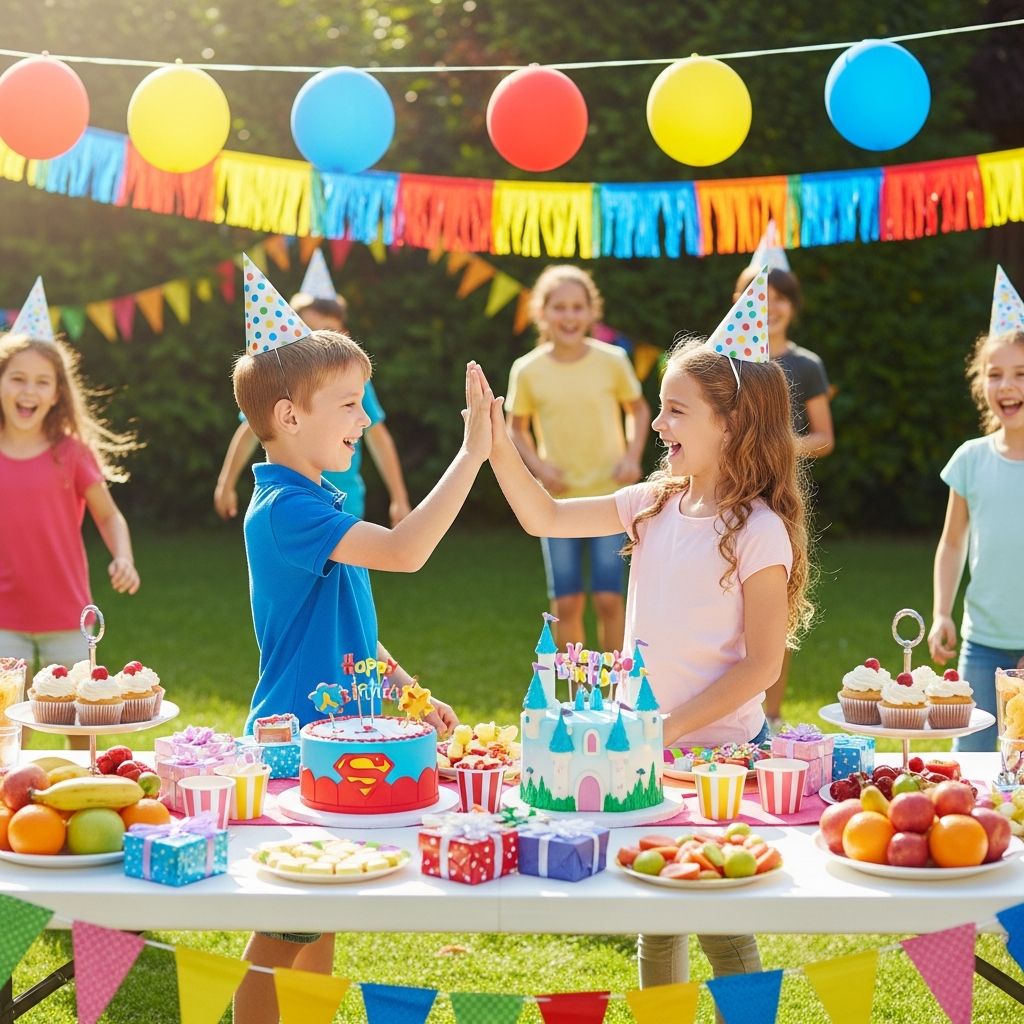
Joint birthday parties can save time, money and energy while still giving each child a celebration that feels special and personal. With a little planning, you can host one fun gathering that honors two (or more) birthday kids without double the work.
This guide walks you through how to design a shared party that feels fair, festive and easy to manage, whether you are celebrating siblings, cousins or best friends.
Why Choose a Joint Birthday Party?
Before you dive into planning, it helps to be clear about why a joint party makes sense for your family this year. Knowing your “why” will make decisions about size, budget and activities much simpler.
- Save time: One date to schedule, one setup, one cleanup.
- Lower costs: You can split big-ticket items like venue rental or entertainment across families.
- Avoid party overload: If your kids have birthdays close together, combining the celebration can reduce social fatigue for kids and adults.
- Shared memories: Siblings and friends get to remember a birthday they celebrated together, which can strengthen bonds.
- Guest convenience: One event is often easier for classmates and family than choosing between multiple parties on nearby dates.
Joint celebrations are especially practical when birthdays fall in the same month, when kids share many of the same friends, or when families live far apart and need a single gathering.
Step 1: Decide Together If a Joint Party Is Right
Even young kids appreciate being asked for their opinion. When possible, involve the birthday children from the start.
- Ask each child if they like the idea of sharing a party this year.
- Explain the benefits in kid-friendly language: a bigger party, more games, more friends in one place.
- Be honest about what you can manage in terms of time, budget and number of guests.
If one child is strongly opposed, consider alternatives like:
- Hosting one joint friend party but separate small family dinners.
- Doing a joint party this year, with an agreement to alternate years.
- Planning a shared party but building in a one-on-one outing (like a special lunch) for each child on their actual birthday.
Step 2: Balance Guest Lists and Expectations
A joint celebration almost always means more people. That affects space, food and your own stress level. Spend time early on roughing out numbers.
| Planning Area | Questions to Ask |
|---|---|
| Guests | How many kids does each birthday child hope to invite? Are there shared friends? |
| Space | Can your home handle everyone comfortably, or do you need an outdoor spot or venue? |
| Adults | Will parents stay? How many extra adults will need seating and refreshments? |
| Budget | What feels realistic for food, décor and activities once you know approximate numbers? |
Try to keep the number of guests relatively even so no one feels overshadowed. If one child has a much larger class or social circle, consider:
- Capping invitations at a shared number per child.
- Inviting school friends for one child and neighborhood or sports friends for another.
- Doing a modest joint party, then a separate low-key playdate for any “overflow” group.
Step 3: Choose a Theme That Works for Everyone
The theme is the backbone of your joint party: it informs colors, games, cake and invitations. For a shared celebration, your goal is a concept broad enough to include both kids while still allowing individual twists.
Easy Joint Theme Approaches
- Neutral, all-ages themes: Rainbows, animals, camping, outer space, art party, carnival, or backyard Olympics work for a wide range of ages.
- Two-in-one theme: “Superheroes & Science”, “Pirates & Mermaids”, or “Sports & Dance”—each child picks a side, but the decor overlaps.
- Color-based theme: Choose a shared color palette that incorporates each child’s favorite color and let that guide balloons, tableware and cake designs.
- Interest mash-up: Use one main theme (e.g., “Adventure Party”) and then customize each child’s area with their specific interests (dinosaurs on one table, unicorns on another).
When kids are old enough, have them vote or each propose a theme, then look for common ground. You can even treat it as a mini family decision-making lesson: list ideas, discuss pros and cons, and choose together.
Step 4: Make Each Child Feel Individually Celebrated
The biggest emotional risk in a joint birthday is that one child feels overshadowed or lost in the crowd. Small intentional touches can prevent that.
Simple Ways to Spotlight Each Birthday Child
- Separate cakes or desserts: Give each child their own cake, cupcake tower, or special dessert to choose and decorate.
- Individual candle moments: Sing “Happy Birthday” separately to each child or do two rounds back-to-back.
- Name displays: Hang a banner or poster with each child’s name and age in their favorite colors.
- Custom chair or “birthday spot”: Decorate a chair or area for each child near the cake or gift table.
- Personalized outfits or accessories: Crowns, sashes, badges or T-shirts that say “Birthday Kid” with their name.
Also think about the flow of the party: plan moments when attention shifts clearly from one honoree to the other, such as two short speeches, two sets of photos, or separate game captains.
Step 5: Keep Planning Simple and Share the Work
Joint parties are an opportunity to divide and conquer. If another family is involved, avoid miscommunication by agreeing early on who handles what.
Divide tasks clearly:
- One family manages invitations and RSVPs.
- Another handles cake and dessert.
- Split decorations, activities and party favors based on strengths and preferences.
Write the plan down, even informally, so no one double-buys or assumes the other person already handled an important detail.
Step 6: Plan Activities Everyone Can Enjoy
For a multi-age, multi-child birthday, the best activities are simple, flexible and low-pressure. Focus on movement, creativity and chances for kids to play together.
Activity Ideas That Work Well at Joint Parties
- Stations instead of a rigid schedule: Set up a craft table, a building zone, and a quiet reading or coloring corner so kids can rotate naturally.
- Team games: Relay races, scavenger hunts, or simple obstacle courses that mix guests from both guest lists.
- Free play space: Especially for younger kids, access to a playground, open yard, or indoor play gym can be the main attraction.
- Photo booth: Provide props tied to the party theme for kids to pose with. This doubles as an easy party favor when parents share photos later.
- Quiet corner: A small area with books or puzzles for kids who need a break from noise or crowds, helpful for more sensitive children.
Build in a little extra time between structured activities; larger groups take longer to gather, explain rules and move from one thing to the next.
Step 7: Smart Food and Cake Planning
With more guests, food planning can feel overwhelming. Keep the menu simple, familiar and easy to serve.
- Offer a few kid-friendly main options (like pizza slices, sandwiches or simple pasta) rather than an elaborate spread.
- Include at least one fruit or vegetable option; finger foods like sliced cucumbers, baby carrots or apple slices work well.
- Label any foods that contain common allergens like nuts or dairy.
- Provide water as the main drink and a limited choice of juice or a low-sugar option.
For cake, consider:
- Two smaller cakes, each decorated per child’s wishes.
- One big sheet cake divided visually into two designs.
- Individual cupcakes in two styles, grouped under each child’s name.
If guests include both younger and older kids, pre-cut slices or offer cupcakes to avoid long cutting lines and reduce adult supervision needs.
Step 8: Keep Gifts Simple and Manage Expectations
Gifts can be a sensitive topic at shared parties. Decide ahead of time what feels right for your family, and communicate it clearly on the invitation if needed.
Options include:
- Traditional gifts: Each guest brings a gift, and kids open presents after the party or at a quieter moment.
- Group gift suggestion: Ask guests to contribute toward one experience or larger item per child instead of individual gifts.
- No-gifts party: Invite guests to bring a card, a book to donate, or nothing at all, focusing on time together instead.
If both kids are opening gifts at the party, think through the logistics: two chairs, a helper to manage cards, and a plan for keeping siblings from grabbing or comparing. Younger children may need reminders that their turn will come or that each gift belongs to the person whose name is on the tag.
Step 9: Budget-Friendly Strategies
Joint birthdays can be cost-effective if you avoid trying to create two full parties inside one. Use the shared theme and guest list to your advantage.
- Decorate with color, not characters: Solid-color balloons, streamers and tableware are usually cheaper and can match both kids’ preferences.
- Reuse and repurpose: Pull out banners, jars, baskets and tablecloths from previous events and adapt them with new labels or ribbons.
- Limit favors: Choose one simple, useful favor (like a small notebook, bubble wand or craft kit) instead of overflowing goodie bags.
- Pick a low-cost location: A backyard, community room or public park often costs less than private venues, though check local rules for permits and food.
- Share big costs: If another family is involved, agree on a total budget range and split larger line items evenly.
Step 10: Protect Everyone’s Feelings
Behind the balloons and cupcakes are real emotions. Joint parties can stir up comparison, jealousy or disappointment if kids feel one child is getting more attention or better gifts.
Helpful emotional ground rules:
- Talk before the party about what to expect: more people, shared singing, shared games.
- Reassure each child that their preferences matter and point out the details chosen just for them.
- During the party, watch for signs of overwhelm—tears, hiding, crankiness—and offer a short break in a quieter spot if needed.
- After the party, spend one-on-one time with each birthday child, looking at photos and talking about their favorite parts.
Frequently Asked Questions (FAQs)
What is the ideal age range for joint birthday parties?
Joint parties can work at almost any age, but they are often easiest when kids are under 10 and still enjoy similar activities and simple themes. For tweens and teens, try to give them more say in theme, guest list and music so it still feels age-appropriate.
Can I host a joint party for kids with a big age gap?
Yes, but think in zones rather than a single activity schedule. Plan one or two all-ages moments (cake, group photo), then create separate activity areas for toddlers versus older kids so everyone stays engaged and safe.
How do I handle different school classes or friend groups?
If kids do not share many friends, keep invitations transparent and balanced. You might limit each child to a set number of invites or host a small second hangout later for any group that doesn’t fit well into the joint event.
Is it rude to ask for no gifts at a joint party?
Many families are moving toward simpler, less gift-focused parties, especially when space or budgets are tight. If you prefer no gifts, state it kindly on the invitation and offer an alternative like bringing a book to donate or just a card.
How long should a joint kids’ birthday last?
For most kids under 8, 1.5 to 2 hours is plenty, even with two birthday children. Older kids can handle 2 to 3 hours, especially if there is space to move, a clear plan for games, and time for free play.
References
- How to Host a Joint Birthday Party for All Ages — Bistro Live. 2023-05-10. https://www.bistrolive.com/helpful-info/latest-news/joint-birthday-party-all-ages/
- Double the Fun: How to Plan a Memorable Joint Birthday for Siblings or Friends — Affordable Weddings Plus Events. 2023-08-01. https://affordableweddingsplusevents.com/double-the-fun-how-to-plan-a-memorable-joint-birthday-for-siblings-or-friends/
- Shared memories: Expert planning services for joint birthday party celebrations — MGN events. 2022-11-15. https://www.mgnevents.co.uk/insights/planning-for-joint-birthday-party-celebrations/
- How to Plan a Joint Birthday Party — Jumpin’ Jamboree. 2022-04-20. https://jumpinjamboree.com/kids-party-places-doral/how-to-plan-a-joint-birthday-party/
- How To Throw Two Birthday Parties On The Same Day — Fab Party Planning Mom. 2021-06-10. https://fabpartyplanningmom.com/how-to-throw-two-frugal-birthday-parties-on-the-same-day/
- Planning a Joint Birthday Party? Read These 6 Tips Before the Big Day — Park Slope Therapist. 2019-03-05. https://parkslopetherapist.com/joint-birthday-party/