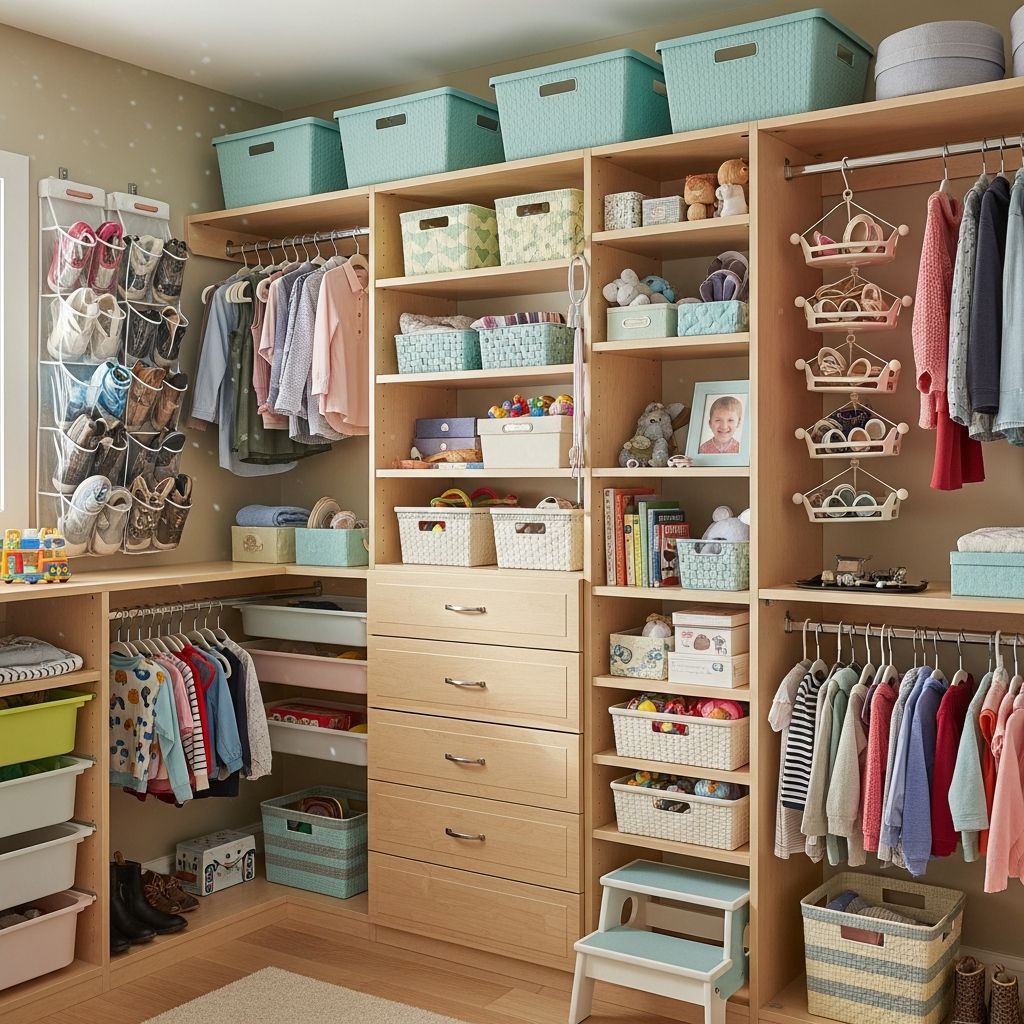
Creating an Organized Foundation for Your Child’s Closet Space
A well-organized children’s closet serves multiple purposes: it teaches responsibility, streamlines morning routines, and maximizes limited storage space in modern homes. Whether managing a single child’s wardrobe or coordinating clothing for multiple siblings sharing one closet, the principles of effective organization remain consistent. The key lies in understanding what your children actually need, establishing clear categories, and creating systems that children can maintain independently.
Before diving into storage solutions or purchasing organizational equipment, take time to assess your current situation. Examine the existing closet structure, measure available space, and identify what clothing and items genuinely belong in this storage area. This foundational work prevents common mistakes like overfilling closets or purchasing storage containers that don’t fit properly.
Starting with Strategic Decluttering and Assessment
The first step in any closet reorganization project involves thorough evaluation and purging. Remove everything from the closet completely, allowing you to see the bare space and understand its true capacity. As you pull items out, sort them into clear categories: items currently worn regularly, pieces kept for sentimental reasons, outgrown clothing, and damaged garments.
When working with older children, involve them directly in the decluttering process. Children aged eight and up can provide valuable input about which items they actually wear and prefer. This participation accomplishes several goals simultaneously: it teaches decision-making skills, reduces likelihood of future clutter accumulation, and ensures the final organization system reflects their preferences. For younger children, parents can make decisions independently but should still explain the reasoning behind keeping or removing items.
Consider establishing a donation system for clothing that no longer fits. Rather than storing outgrown items indefinitely, creating a designated box for regular charitable donations teaches children about generosity while freeing closet space. Similarly, identify any pieces that are stained, torn, or otherwise damaged beyond repair and remove them entirely.
Categorizing Items for Efficient Retrieval
Once you’ve determined what stays, organize remaining items into logical categories. Standard categories include:
- Tops and shirts
- Bottoms such as pants, shorts, and skirts
- Dresses or special occasion wear
- Outerwear including jackets and hoodies
- Undergarments and socks
- Sleepwear and loungewear
- Seasonal items or specialty clothing
- Accessories including belts or hats
Think about which categories your children access most frequently. These high-traffic items deserve prime real estate in the closet, typically at eye level or within easy reach. Less frequently used items, such as formal wear or seasonal clothing, can occupy higher shelves or less accessible areas.
Many families find it helpful to identify items specific to their lifestyle. Households where children participate in sports might dedicate separate storage for uniforms and athletic wear, placing these items in a location where children can quickly access them before practices or games. Similarly, families with regular swimming activities or dance lessons can create dedicated zones for these specialty items.
Designing Accessible Storage Systems
Accessibility represents a crucial consideration when organizing children’s closets. The goal is creating systems that allow children to independently select, retrieve, and return items without adult assistance. This independence builds confidence and reduces daily friction around getting dressed.
The lower half of closet space deserves special attention and investment. Reserve premium shelf and rod space at child height for the items they access most frequently. This might mean installing an additional lower rod specifically for items children hang independently, or creating low-level shelving dedicated to folded clothing. Lower drawer units provide excellent storage for items like socks, undergarments, and lightweight clothing that children can manage without difficulty.
For very young children or shared closets with significant height differences between siblings, consider assigning each child their own dedicated storage zone. This might include a specific shelf, drawer, or section of the closet rod. Clear ownership helps children understand what belongs to them and where they should store items after wearing.
Selecting and Implementing Storage Containers
After determining where items should live, choose appropriate containers that maximize vertical space and protect clothing. Several storage container options serve different purposes:
| Container Type | Best For | Key Advantages |
|---|---|---|
| Fabric Bins and Baskets | Folded items, undergarments, socks | Soft-sided, visually appealing, easy for children to handle |
| Plastic Drawers | Socks, underwear, pajamas, belts | Protects items, stackable, smooth operation |
| Clear Storage Boxes | Seasonal clothing, specialty items | See-through design shows contents, stackable |
| Hanging Organizers | Accessories, lightweight items | Utilizes vertical rod space efficiently |
| Drawer Dividers | Small items, preventing clutter | Keeps smaller pieces separated and visible |
Select containers that complement your closet’s design and can physically fit the available space. Before purchasing storage solutions, measure shelf widths, closet depth, and height clearances. Containers that are slightly too large will waste space, while undersized containers won’t provide adequate storage capacity.
Consider using consistent container styles throughout the closet. Uniform bins create a cohesive, organized appearance and make it easier for children to understand the organizational system. If using various container types, establish a logical reason for each—for example, clear boxes for seasonal items, fabric bins for everyday clothing, and drawer units for small pieces.
Creating an Effective Folding and Hanging Strategy
Determining what to hang versus fold significantly impacts closet functionality. Generally, items that wrinkle easily or are worn regularly should hang, while smaller pieces and items less prone to wrinkling can fold into designated bins or drawers.
Hanging items include dresses, skirts, most pants, and special occasion wear. Using uniform hangers throughout the closet saves considerable space compared to mismatched options and creates a neater appearance. Velvet or slightly textured hangers prevent clothing from slipping, while slim hangers maximize rod capacity.
For folded items, teach children simple, effective folding techniques they can replicate independently. The vertical folding method, sometimes called the KonMari system, creates stable, visible “envelopes” of folded clothing that stack neatly in bins and allow children to see all available options without disturbing carefully stacked piles.
Small items like fitted sheets, which present particular folding challenges, can be rolled instead of folded. Rolling saves space, prevents wrinkles, and creates cylinders that fit easily into bins. Similarly, socks pair well with rolling or simple bundle methods that help children quickly locate matching pairs.
Implementing Strategic Labeling Systems
Labels transform organizational systems from parent-maintained to child-maintained. Clear, visible labels on bins, drawers, and shelves answer the fundamental question: “Where does this item belong?” This eliminates daily negotiations about proper clothing storage.
Label systems can range from simple hand-written tags to printed labels using a label maker. Photography-based labels, showing actual contents of each bin, work particularly well for younger children who may not yet read fluently. Combining text labels with picture labels provides multiple information access points.
Maintain consistency in labeling placement, typically at eye level on front-facing surfaces. Color-coded labels or bins help younger children navigate the system independently, with specific colors designated for different categories or family members.
Managing Seasonal Transitions and Growth
Children’s clothing needs shift seasonally, requiring periodic reorganization. When transitioning between seasons, rotate seasonal items strategically. Items the child currently wears should remain accessible year-round, while off-season pieces move to higher shelves or storage outside the closet.
Children grow rapidly, making regular assessment essential. Establish a schedule—perhaps monthly or seasonally—to evaluate whether clothing still fits appropriately. Remove items that are too small before they clutter the closet, and bring forward items the child has grown into.
For families with multiple children, consider whether passing clothing between siblings makes sense. Storing items “just in case” they fit a younger sibling can create excessive clutter. Instead, donate or sell items promptly after outgrowing, refreshing the closet for the next size range when it’s actually needed.
Making the System Child-Friendly and Sustainable
An organizational system’s true success lies in whether children can maintain it independently. Even the most beautifully organized closet deteriorates quickly if children can’t understand or implement the system.
Ensure all frequently accessed items are within children’s reach without adult assistance. This might mean installing additional rods at child height or dedicating lower shelf space to frequently worn items. As children grow, adjust storage heights accordingly, allowing them to access new shelf levels as they mature.
Create realistic expectations about organization. Bins shouldn’t be packed to overflowing, as this makes items impossible to remove and return neatly. Leave space for air circulation and easier retrieval. If a bin consistently overflows, it signals the need for further decluttering or recategorization.
Build in regular maintenance routines. Brief monthly check-ins, taking just ten to fifteen minutes, prevent organizational systems from degrading. During these sessions, ask children about items they no longer wear, identify anything that’s broken or damaged, and reassess whether the current organization system still works for their lifestyle.
Handling Special Items and Equipment
Beyond everyday clothing, many children’s closets need to accommodate specialty items. Dance costumes, sports uniforms, formal wear, and seasonal gear require thoughtful placement. Creating dedicated bins or hanging space for these items keeps them organized and prevents them from overwhelming regular clothing storage.
Equipment like shoes demands particular consideration. Clear shoe organizers, over-the-door hanging systems, or shelving units specifically designed for footwear keep shoes visible and accessible. Using repurposed shoeboxes to store pairs prevents small shoes from getting buried in drawers or shuffled around.
Accessories including hair clips, belts, and jewelry can be stored in small drawer organizers or hanging compartments. Grouping these small items prevents them from becoming lost and makes them easy for children to locate when getting dressed.
Frequently Asked Questions
Q: At what age can children help organize their own closets?
A: Children as young as four or five can participate in simple sorting activities. Ages eight and up can take more significant roles in decision-making about what to keep and how to organize items, with adult guidance and supervision throughout the process.
Q: How often should closet organization be reassessed?
A: Monthly quick check-ins help maintain systems, while more thorough reorganization every three to six months accommodates seasonal changes and children’s growth patterns. Full closet overhauls once or twice yearly prevent clutter accumulation.
Q: What’s the best approach for organizing shared closets with multiple children?
A: Assign each child their own dedicated storage area with distinct shelves, drawers, or hanging sections. Use color-coding or labels to clearly identify which items belong to which child, reducing confusion and promoting ownership.
Q: Should out-of-season clothing stay in the closet?
A: Items currently out of season can move to upper shelves or external storage to free closet space for clothing children wear regularly. Reserve closet space for items the child wears at least somewhat frequently year-round.
Q: How can I prevent the closet from becoming disorganized again?
A: Involve children in maintenance through regular brief tidying sessions, ensure all systems are child-friendly and sustainable, avoid overstuffing bins, and establish consistent labeling. Teaching children to return items to designated locations immediately after wearing prevents gradual deterioration.
Q: What storage solutions work best for small closets?
A: Vertical organization is key for small spaces. Use slim hangers, stackable bins, over-the-door organizers, and additional shelving to maximize available space. Removing unnecessary items through aggressive decluttering provides the biggest impact.
References
- Kids Closet Organizer | How we organize a shared closet — Lemon Thistle Blog. Accessed April 2, 2026. https://www.lemonthistle.com/kids-closet-organizer-how-we-organize-a-shared-closet/
- How to Organize a Kid’s Closet with a Few Simple Tricks — Grid + Glam. Accessed April 2, 2026. https://www.gridandglam.com/blog/how-to-organize-a-kid-s-closet-with-a-few-simple-tricks
- Step-by-Step Guide: Kids’ Closet Organization — Inspired Closets. Accessed April 2, 2026. https://www.inspiredclosets.com/learning-center/custom-closets/step-by-step-guide-kids-closet-organization/
- DIY Kid’s Closet Organization — The Blush Home Blog. Accessed April 2, 2026. https://theblushhome.com/diy-kids-closet-organization/