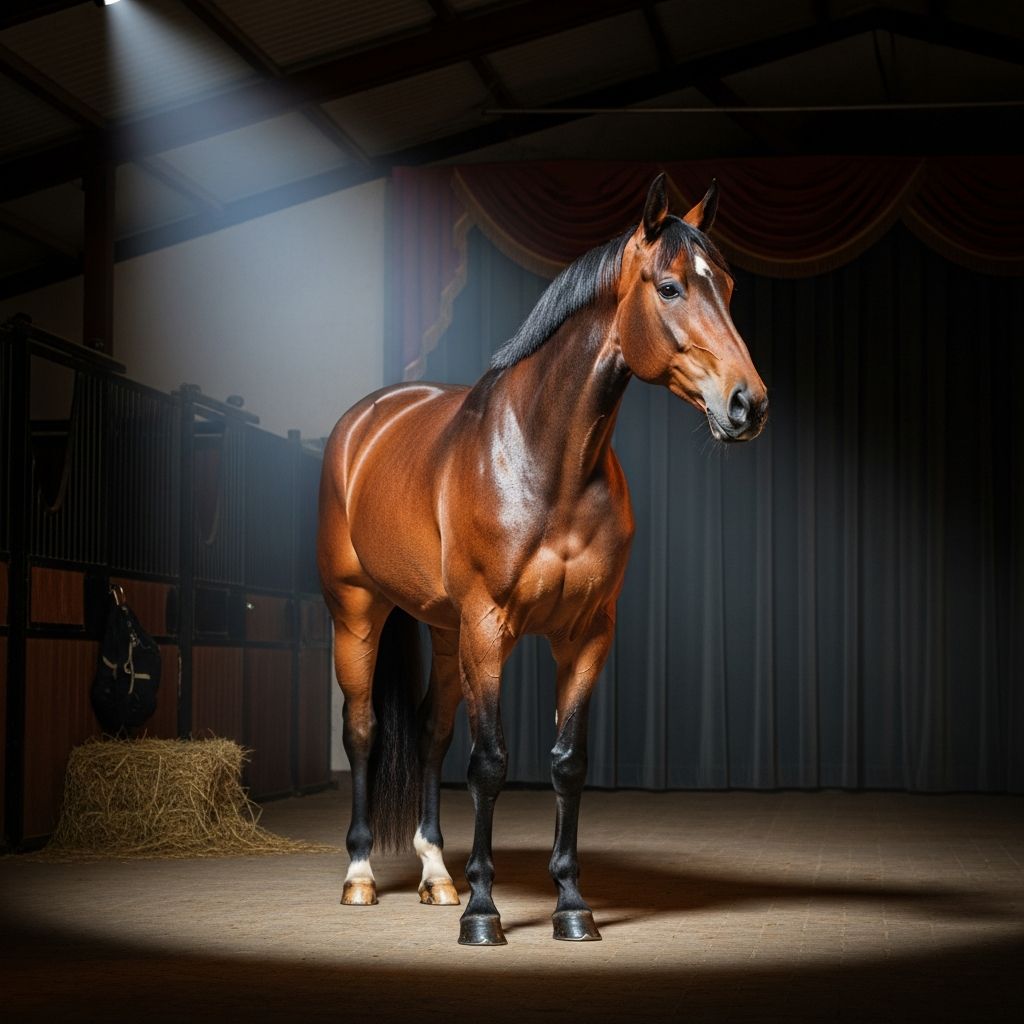
Naming a horse feels a bit like naming a legend in the making: the right name can echo across the arena loudspeakers, appear on show entries, and become part of family stories for years. A thoughtful name does more than label your horse; it captures personality, history, and the bond you share.
This guide walks through how to find a name that fits your horse’s look and temperament, fits any registry or show rules you must follow, and still feels special every time you say it out loud.
Understanding the Two-Name Tradition
Most horses end up with two names: an official or registered name used in paperwork and competition, and a shorter, easy “barn name” for daily use. Thinking about both from the start makes naming less stressful and more fun.
Registered name vs. barn name
- Registered or show name: The formal name that appears on breed registrations, show entries, and sale ads. It can be longer, more elaborate, and often references pedigree or a theme.
- Barn name: The casual nickname you use at the stable. It should be simple, quick to call across the pasture, and easy for everyone to remember.
Many owners choose a sophisticated, theme-based registered name and then pull a short barn name from it. For example, a registered name like “Storm Over Silver Bay” might become “Stormy” in daily life.
Why planning both names helps
- Prevents conflicts with registry rules and existing names.
- Makes it easy to switch between formal and casual contexts.
- Helps you avoid falling in love with a nickname that cannot reasonably connect to a formal name later.
Key Things to Consider Before You Decide
Before diving into lists of name ideas, pause to study your horse. The best names often come from careful observation rather than a random pick from the internet.
Look at appearance and movement
- Color and markings: Coat shade, socks, blazes, and dapples can spark ideas (e.g., shimmering coats, dark legs, star-shaped markings).
- Build and presence: Is your horse refined and delicate, or powerful and stocky? Tall, compact, or pony-sized?
- Movement: Floaty and elegant, quick-footed and agile, or long and lazy strides?
Notice personality and quirks
- Is the horse bold or cautious?
- Playful, serious, or unflappable?
- Does your horse have funny habits like flipping the feed bucket or greeting every person at the stall door?
Jot down words that match what you see: calm, fiery, sunshine, shadow, dancer, steady, or comet. These words can later combine with places, colors, or abstract concepts to create something unique.
Popular Naming Styles and What They Convey
There is no single “right” style for naming a horse, but most names fall into recognizable patterns. Choosing a style first can narrow your ideas quickly.
Common name styles
- Classic and elegant: Names that sound timeless, often one or two words with a refined tone.
- Fun and quirky: Playful names built on puns, jokes, or cute imagery.
- Mythical and heroic: Inspired by legends, gods, heroes, and epic tales.
- Nature-inspired: Drawn from weather, landscapes, plants, or celestial bodies.
- Place-based: Linked to cities, regions, barns, or meaningful locations.
Think about how you want your horse introduced over the loudspeaker or in a sales ad. A racehorse might carry a powerful or witty name, while a therapy horse might suit something gentle and reassuring.
Creative Frameworks for Inventing Unique Horse Names
Instead of copying lists, use simple frameworks to build original combinations. These repeatable patterns keep names fresh while still giving you direction.
Framework 1: Trait + Element
Combine a personality trait or mood word with a natural element.
- Formula: [Trait or mood] + [Sky/earth/water/fire element]
- Examples for inspiration (do not reuse literally, but follow the pattern): Calm + River, Bright + Horizon, Fierce + Ember.
Framework 2: Color + Object
Use your horse’s color plus an object with a matching or contrasting association.
- Formula: [Color or shade] + [Gem/metal/texture/season]
- Think along lines like “chestnut + ember” or “gray + mist” and refine the exact words.
Framework 3: Pedigree echo
For registered names, many owners echo parts of a sire or dam’s name to show lineage. Create a new phrase that hints at, but does not duplicate, the parents’ names.
- Use syllables or partial words from each parent.
- Include the breeder’s prefix or farm name at the start or end.
Framework 4: Story snippet
Some of the strongest names feel like tiny stories. Draw from how you found the horse, a challenge overcome, or a special moment.
- Consider phrases that hint at a journey, second chance, lucky break, or new beginning.
- Keep it short enough to say comfortably but long enough to feel distinctive.
Theme Ideas by Horse Type and Discipline
Another practical way to brainstorm is by matching name themes to discipline or type. Use the table below as an idea-starter and then invent your own variations.
| Horse type / discipline | Good themes to explore | Example concept patterns (not exact names) |
|---|---|---|
| Dressage | Music, classical art, elegance, poetry | Sonata + [word], Velvet + [word], Noble + [word] |
| Jumpers | Speed, flight, electricity, height | Sky + [word], Rocket + [word], Lightning + [word] |
| Western / ranch | Prairies, sunsets, rustic objects, frontier life | Canyon + [word], Mesa + [word], Dusty + [word] |
| Trail / pleasure | Calmness, nature, seasons, comfort | Willow + [word], Meadow + [word], Sunday + [word] |
| Ponies & kids’ horses | Sweets, stars, friendly characters, bright colors | Bubble + [word], Sprinkle + [word], Star + [word] |
Mix and match across disciplines if something fits your horse better; a calm jumper may suit a serene, nature-themed name more than a thunderous one.
Practical Guidelines for Registered Names
If your horse will be entered into breed registries or racing organizations, check naming rules before settling on anything permanent. Many registries have detailed requirements that can affect length, characters used, and reuse of famous names.
Common registration rules (always verify your registry)
- Maximum character limits, often including spaces and punctuation.
- Restrictions on certain punctuation marks or numbers.
- Bans on offensive language or commercial references.
- Limits on reusing or closely imitating historically important horses’ names.
Before printing saddle pads or halters, confirm that your chosen name is acceptable and available. Some registries let you submit a list of several options in case your first pick is already taken.
Tips for Choosing the Everyday Barn Name
The barn name may seem simple, but you will say it more often than the formal name. Short, clear names work best, especially in busy environments with multiple riders and horses.
Good barn name practices
- Keep it to one or two syllables when possible.
- Avoid names that sound too similar to common commands like “whoa” or “no.”
- Pick something all family members and barn staff feel comfortable saying.
- Try it out loud in different tones (happy, firm, urgent) to be sure it feels natural.
You can also use a name from your horse’s formal name, a childhood nickname you love, or a word tied to a special memory, such as a favorite movie character or beloved place.
Brainstorming Process: From Blank Page to Final Name
If you feel stuck, treat naming like a fun mini-project. A simple process can help turn a jumble of ideas into one or two well-chosen names.
Step-by-step brainstorming
- Make a word bank. List colors, traits, habits, locations, and feelings that describe your horse.
- Pick a style or theme. Decide if you are leaning toward elegant, playful, rustic, or mythical.
- Use frameworks. Try combinations from the formula ideas above (Trait + Element, Color + Object, etc.).
- Say them out loud. Imagine hearing the name over a loudspeaker or yelling it into the wind on a trail.
- Shortlist 5–10 names. Share them with friends, barn mates, or family, but keep the final choice yours.
- Test for a few days. Use the barn name candidates in real life and see which one settles naturally.
Common Mistakes to Avoid
Some names look charming on paper but cause headaches later. Thinking ahead about future uses and contexts can help you dodge the most frequent issues.
Pitfalls when naming a horse
- Overly complicated spelling: Creative spellings can be fun, but if no one can pronounce the name, it will cause confusion at shows and vet visits.
- Very long phrases: Extremely long names may not fit on forms or stall plates and can be awkward for announcers.
- Accidental negative meanings: Check that your chosen word does not have odd or offensive meanings in other languages or contexts you care about.
- Drastic trendiness: Ultra-trendy references can feel outdated quickly, especially for a horse that may be with you for decades.
Ideas by Coat Color and Type (Concept Inspiration)
Color is often the first thing people notice about a horse, which makes it a powerful starting point for names. Use the concepts below as inspiration, then customize words to your taste.
Light and gray horses
- Think of clouds, fog, silver metals, moonlight, and snow.
- Words like mist, gleam, frost, halo, or pearl can blend into many combinations.
Dark bay, black, and seal brown horses
- Look to night skies, shadows, rich woods, strong drinks, and ink.
- Concepts like eclipse, raven, onyx, espresso, or dusk offer a dramatic tone.
Chestnuts and sorrels
- Draw from fire, autumn leaves, spices, and sunsets.
- Ideas such as ember, cinnamon, maple, or blaze suggest warmth and energy.
Paints, pintos, and appaloosas
- Spots and patches invite playful themes such as paint, confetti, galaxies, or cookies-and-cream imagery.
- Words like freckle, splatter, galaxy, mosaic, or patchwork can combine in many original ways.
Making the Name Match Your Future Plans
Consider how permanent the name should be. A backyard companion may keep a lighthearted, whimsical name forever, while a horse you hope to sell or show widely might benefit from a more broadly appealing name.
Thinking long term
- Would the name look professional on competition results and sale advertisements?
- Is the name easy to spell for people searching online or on show records?
- Does it still fit if your horse changes disciplines or moves to a new owner?
Neutral but memorable names often age better than very niche references, especially for horses that may have evolving careers.
Simple On-Page SEO Tips for Publishing Horse Name Lists
If you are naming your horse and also writing about it on a blog or farm website, a bit of SEO awareness can help other owners find your ideas.
Basic SEO-friendly practices
- Use clear headings that mention phrases like “horse names” or “how to name a horse.”
- Include descriptive text around any lists or tables to explain the theme or inspiration.
- Add alt text to images that briefly describes the horse or naming theme rather than stuffing keywords.
- Create FAQ sections that answer common naming questions in natural language.
Frequently Asked Questions About Naming Horses
How long can a horse’s registered name be?
It depends on the organization. Many registries and racing bodies restrict the number of characters, including spaces and punctuation. Always check the current rules of your specific registry or association before submitting your final choice.
Can two horses have the same name?
At the barn level, yes—plenty of horses share casual barn names. However, registries and racing organizations usually prevent exact duplicates of registered names, especially for famous horses. If a name is already in use or reserved, you may need to adjust your spelling or choose an entirely different option.
Should I change a horse’s name after buying?
Many new owners give a horse a fresh barn name to mark the start of a new chapter, while leaving the registered name alone for record-keeping. Changing a registered name can be possible in some registries but may require fees, paperwork, and sometimes the breeder’s approval.
Is it bad luck to rename a horse?
Some riders are superstitious and avoid renaming, especially if the horse is already successful in competition. Others feel that a new name symbolizes a positive fresh start. If you are worried about luck, you might keep the registered name and simply introduce a new barn name that feels right to you.
How do I know when I’ve found the right name?
Often the right name will feel natural after a few days of use. If you find yourself calling the horse by one name more than any other and it makes you smile every time, you have probably found your match. Trust the combination of practicality and instinct.
In the end, a great horse name blends meaning, memorability, and ease of use. Take your time, play with words, and let your relationship with your horse guide you. The name you choose today may one day be spoken with pride in show arenas, whispered in quiet barn aisles, and remembered fondly long after hoofprints fade.