Starting your period is a significant milestone in your journey through adolescence. For many students, this natural biological process coincides with the demands of attending school—navigating classes, social interactions, and academic responsibilities. Understanding how to manage menstruation effectively while maintaining your daily routine is essential for your well-being and academic success. This comprehensive guide provides practical strategies to help you feel confident, comfortable, and prepared during your menstrual cycle while at school.
Understanding What Happens During Menstruation
Menstruation is a completely normal physiological process that occurs when the lining of your uterus sheds, resulting in the release of blood and fluid through your vagina. This process typically begins approximately two years after puberty starts, with most young people experiencing their first period around age twelve, though this can vary significantly from person to person. Some individuals may start as early as age nine, while others might not begin until age fourteen or later.
Your menstrual cycle is your body’s way of preparing for potential pregnancy. While this might seem like an overwhelming concept when you’re focused on school, it’s important to understand that experiencing a period is a healthy and natural sign that your body is developing as intended. This biological process affects millions of people worldwide, and having accurate information helps demystify what happens during menstruation and normalizes this important aspect of health.
Recognizing the Signs Before Your First Period
Your body typically provides warning signs that menstruation will begin soon. Being aware of these indicators helps you prepare mentally and practically for your first period at school. One of the most reliable signs is the development of breast tissue, which usually appears approximately two years before menstruation begins. Additionally, you may notice vaginal discharge on your underwear—a mucus-like fluid that typically appears six months to a year before your first period.
Other physical changes during puberty can include:
- Development of pubic and underarm hair
- Changes in body shape and weight distribution
- Increased sweating or changes in skin texture
- Growth spurts or changes in height
- Mood fluctuations or emotional sensitivity
Understanding these signs helps you recognize that menstruation is approaching, allowing you to prepare a period kit for your locker or backpack before you need it. This preparation is particularly valuable because it ensures you won’t be caught off guard during school.
How Often and How Long Periods Occur
Menstrual cycles are unique to each individual, and understanding your own pattern is key to managing your period effectively at school. During the first few years after your initial period, your cycle may be irregular and unpredictable. This is completely normal. However, typically within two to three years after your first period, most individuals develop a more consistent monthly pattern.
Most periods occur approximately once per month, though some people experience cycles every three weeks, while others may have cycles lasting up to six weeks. When a period does occur, it typically lasts between three to seven days, with heavier bleeding often occurring during the first day or two.
| Cycle Pattern | Typical Range | Average Duration |
|---|---|---|
| Frequency per month | Every 3-6 weeks | Once monthly |
| Period duration | 3-7 days | 5 days |
| Flow intensity | Varies daily | Heaviest on days 1-2 |
Tracking Your Period for School Preparedness
One of the most effective strategies for managing your period at school is maintaining a simple tracking system. Knowing when your period is likely to occur helps you prepare accordingly and ensures you’re never caught without the necessary supplies or support. You can track your period using various methods, from traditional paper calendars to digital applications designed specifically for menstrual tracking.
When tracking your period, record:
- The day your period begins
- The day your period ends
- Days with heavier flow
- Days with lighter flow
- Any physical symptoms or discomfort
- Mood changes or emotional patterns
After tracking for several months, patterns will emerge, allowing you to anticipate your period’s arrival. This information proves invaluable for planning school activities, physical education classes, field trips, or special events. Additionally, having a clear record of your menstrual cycle information is helpful when discussing your health with parents, school nurses, or healthcare providers.
Selecting and Using Menstrual Products
A variety of menstrual products are available to help manage your period while at school. Understanding the options allows you to choose what works best for your body, lifestyle, and comfort level. The most commonly used products include pads, tampons, and menstrual cups, each offering distinct advantages depending on your preferences and needs.
Sanitary Pads
Pads are the most straightforward menstrual product to use and are particularly popular among students new to menstruation. These absorbent products adhere to the inside of your underwear and collect menstrual fluid. Pads come in various sizes and absorbency levels, from light protection for lighter flow days to heavy or overnight options for heavier flow. Many students find pads comfortable for school use because they require no insertion and can be easily changed between classes.
Tampons
Tampons are small, cylindrical products that are inserted into the vagina to absorb menstrual fluid internally. They come in different absorbency levels and may be easier to use discreetly during the school day, particularly for activities like swimming or sports. However, tampons require practice to use correctly, and some students prefer to wait until they’re more comfortable with menstruation before trying them.
Menstrual Cups
Menstrual cups are flexible, bell-shaped devices inserted into the vagina to collect menstrual fluid rather than absorb it. These products are reusable, environmentally friendly, and cost-effective over time. However, they require more practice to insert and remove correctly, making them better suited for students with prior menstrual experience.
Regardless of which product you choose, changing your menstrual protection frequently throughout the school day is essential for comfort and hygiene. Most students find that changing products between classes or at lunchtime works well. Regular changes prevent leaking through to your clothing, reduce odors, and help maintain proper hygiene throughout your cycle.
Accessing Period Products at School
Many schools now recognize the importance of providing menstrual products to students as part of their commitment to health equity and attendance. If your school provides period products, these are typically available through the school nurse’s office or in designated bathroom locations. This access ensures that lack of menstrual products never prevents you from attending school or participating fully in your education.
If your school provides these products, take advantage of this resource without hesitation or embarrassment. Accessing period products is your right, and school staff members understand that menstruation is a normal health need. If your school doesn’t currently provide products but you need them, speak with your school nurse or a trusted administrator about what resources might be available.
Managing Physical and Emotional Symptoms
Beyond managing the physical aspects of menstruation, understanding and preparing for the symptoms that often accompany your period helps you maintain your academic focus and overall well-being at school. Premenstrual syndrome (PMS) encompasses emotional and physical symptoms that can occur before or during your period.
Common symptoms associated with menstruation include:
- Bloating and abdominal discomfort
- Cramping in the lower abdomen
- Breast tenderness or soreness
- Fatigue or reduced energy levels
- Mood changes, including irritability or sadness
- Anxiety or emotional sensitivity
- Acne or skin changes
Most of these symptoms subside within the first few days of your period. For managing these symptoms while at school, consider keeping pain relief medication approved by your parents or healthcare provider in your backpack. Staying hydrated, moving your body gently through stretching or walking, and getting adequate rest all help alleviate menstrual discomfort. If symptoms are particularly severe or interfere with your ability to participate in school, speak with the school nurse or a healthcare provider about additional management strategies.
Building Your Personal Period Preparation Kit
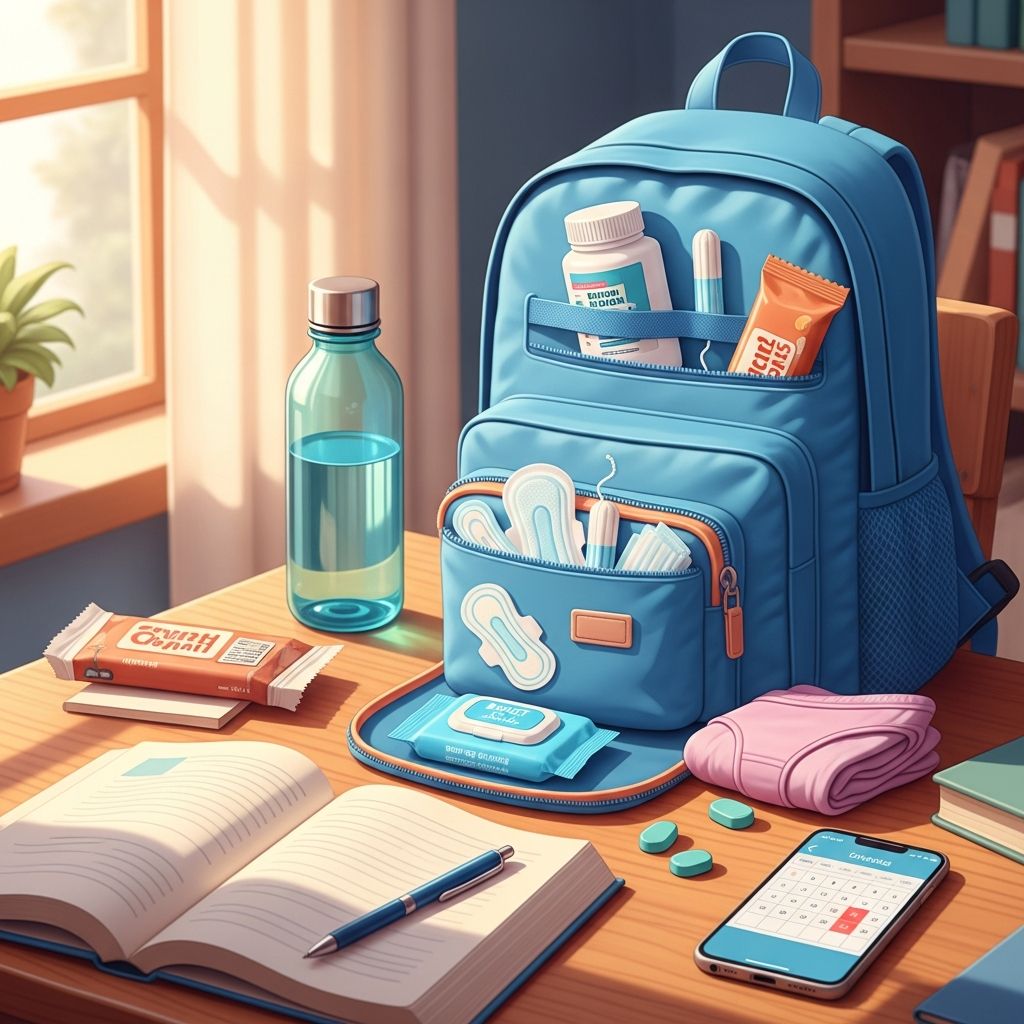
Creating a small kit specifically designed for managing your period at school eliminates stress and ensures you’re always prepared. Your kit should be accessible and discreet, ideally stored in your locker or backpack. Essential items to include are menstrual products, wet wipes or personal hygiene wipes for freshening up throughout the day, an extra pair of underwear or period underwear, and a small sealed plastic bag for disposing of used products discreetly.
Optional items that many students find helpful include:
- A small notebook or phone app for tracking your cycle
- Pain relief medication (if approved)
- A change of clothes or spare pants for emergencies
- Deodorant wipes for freshening up
- A portable heating pad or heat patch for cramps
- Mints or gum to manage any odor concerns
Before summer break, speak with your school nurse about obtaining any additional period products you might need during the months when school is not in session, ensuring uninterrupted access to supplies year-round.
Normalizing Menstruation in School Environments
An important aspect of managing your period at school is understanding that menstruation is completely normal and that many of your peers are experiencing the same process. Schools are increasingly implementing menstrual health education across grade levels to ensure all students—regardless of gender—understand menstruation and support period equity. This comprehensive approach helps reduce stigma and creates supportive school environments where students feel comfortable seeking information and resources related to menstrual health.
If you have questions or concerns about your menstrual health that affect your school experience, don’t hesitate to reach out to trusted adults including your parents, school nurse, health teacher, or school counselor. These individuals have the knowledge and resources to support you through any menstruation-related challenges.
Frequently Asked Questions About Periods at School
What should I do if I get my period unexpectedly at school?
First, don’t panic—this happens to many students. Visit the school nurse’s office or bathrooms where period products are provided. If you’ve stained your clothing, the nurse can often provide assistance or allow you to rinse your clothes. Many schools have accommodations for this situation, and staff members are experienced in helping students manage unexpected periods discreetly.
Can I participate in sports or physical education class during my period?
Yes, absolutely. Your period doesn’t prevent you from participating in physical education classes or sports. Many athletes menstruate and continue training. Choose a menstrual product that works for your activity level, stay hydrated, and listen to your body. If you experience significant pain or discomfort, speak with your coach, PE teacher, or healthcare provider about modifications that might help.
Why does my period smell, and is that normal?
A slight odor during menstruation is completely normal and results from the combination of blood and bacteria in your menstrual fluid. Changing your menstrual products frequently, maintaining good hygiene, and ensuring products are changed regularly throughout the day minimizes odor. If you’re concerned about odor, wash the external genital area with warm water during bathroom breaks, which many students find helpful during the school day.
How do I tell my teacher or friends about my period if I need to leave class?
You can keep this private by using a discreet signal or simply asking to visit the bathroom or nurse’s office without detailed explanation. Most teachers understand that students have personal needs and will allow you to step out without requiring explanation. If you need extended time or accommodations due to severe menstrual symptoms, speak with the school nurse or counselor about informing relevant teachers privately.
When should I be concerned about my period and talk to a healthcare provider?
Contact a healthcare provider if your period is extremely heavy, lasts longer than seven days, causes severe pain that interferes with daily activities, or if you have other concerning symptoms. Additionally, if you haven’t started menstruating by age fifteen, or if your previously regular period becomes irregular without explanation, these warrant professional evaluation.
What’s the difference between a normal period and a concerning flow?
Normal periods vary from person to person, but typically involve changing your menstrual product every few hours during heavier flow days. If you’re soaking through products in less than an hour or bleeding heavily enough to affect your school activities, consult a healthcare provider. Keeping track of your flow patterns helps you recognize what’s normal for you individually.
References
- Menstrual Period — Nationwide Children’s Hospital. https://www.nationwidechildrens.org/family-resources-education/health-wellness-and-safety-resources/helping-hands/menstrual-period
- Normal teen menstrual cycles: When to see a gynecologist — University of Chicago Medicine. 2025. https://www.uchicagomedicine.org/forefront/pediatrics-articles/2025/september/getting-your-period-normal-menstrual-cycle-teens-preteens
- Talking to Your Child About Periods — Nemours KidsHealth. https://kidshealth.org/en/parents/talk-about-menstruation.html
- Know Your Period: The NYC Student Guide — New York City Department of Education. https://pwsblobprd.schools.nyc/prd-pws/docs/default-source/default-document-library/health-and-wellness/knowyourperiod-cge-english.pdf
- Your Period: A Short Guide for Young Students — MFHS.org. https://mfhs.org/period/
- Education – Period.org — PERIOD. https://period.org/education