Taking one child out of the house can feel like a production; adding an older sibling to the mix can make even a simple walk around the block seem like a full-scale expedition. Yet errands, park trips, and neighborhood strolls are part of daily life, and with a few smart strategies, they can become manageable—and even enjoyable—moments of connection. This guide shares practical, encouraging ways to help older kids “tag along” safely and happily while you also manage a baby or toddler.
Instead of dreading every appointment or grocery run, you can equip yourself with systems, gear, and scripts that turn chaos into a predictable routine. The goal is not perfection but progress: each outing is a chance to refine what works for your unique family and to build confidence in your ability to handle life outside the living room.
Why Tag-Along Outings Matter
It can be tempting to avoid going out with more than one child, but regular outings offer real benefits for both parents and kids. For adults, getting outside the house breaks up the monotony and can improve mood, even if the destination is just the pharmacy or the post office. For children, exposure to new places, people, and routines builds flexibility, resilience, and real-world skills.
Outings also send an important message to older siblings: they are still part of the family adventure, even when a baby seems to consume much of the attention. When older kids are intentionally involved—given small jobs, responsibilities, and choices—they often feel more confident and less sidelined by the new arrival.
Planning Starts Before the Front Door
The success of a tag-along outing is often determined before anyone puts on shoes. A few minutes of preparation can prevent many common meltdowns and safety risks. Think of your pre-departure routine as a checklist that you repeat so often it becomes second nature, like buckling a seatbelt.
Rather than waiting until everyone is hungry, overtired, or rushing to leave, try to anticipate basic needs. A well-timed snack, a bathroom trip, or a quick conversation about expectations can transform the entire mood of the outing.
Essential Pre-Departure Checklist
- Check timing: Avoid leaving right at nap time or when a child is usually starving.
- Bathroom first: Prompt older kids to use the toilet before shoes go on.
- Explain the plan: Briefly outline where you’re going and how long it will take.
- Set expectations: Clarify rules (“You stay on the right side of the stroller,” “We hold hands crossing streets”).
- Grab essentials: Diapers, wipes, a simple snack, water, and one small comfort item or toy per child.
When children know what is going to happen and what is expected of them, they usually feel more secure and are less likely to test every limit just to figure out where the boundaries are.
Choosing the Right Gear for Multiple Kids
The gear you choose does not need to be expensive or elaborate, but it should make your life easier, not harder. Think about how your older child naturally moves: are they a runner, a dawdler, a helper, or a daydreamer? Your setup should meet them where they are while maintaining safety.
Some families prefer strollers with built-in standing boards or sibling seats; others use baby carriers and keep hands free for holding onto an older child’s hand or backpack. There is no one “right” configuration—only what fits your children, your body, and your everyday routes.
Common Gear Options for Tag-Along Outings
| Gear Option | Best For | Pros | Considerations |
|---|---|---|---|
| Stroller with ride-on board | Preschoolers who get tired but dislike sitting | Allows older child to hop on and off; keeps them close in crowds | Can be bulky; may affect stroller maneuverability |
| Stroller with side handle or strap | Walkers who need a clear “spot” to stay near you | Gives older child a tangible place to hold; simple and inexpensive | Requires reminders and practice to use consistently |
| Baby carrier + no stroller | Short trips, tight spaces, or stairs | Keeps hands free; easy to chase or assist older child | Can be tiring for long walks; limited storage space |
| Double stroller | Longer outings with two young children | Containment for both kids; predictable setup | Heavier and wider; not ideal for narrow aisles or buses |
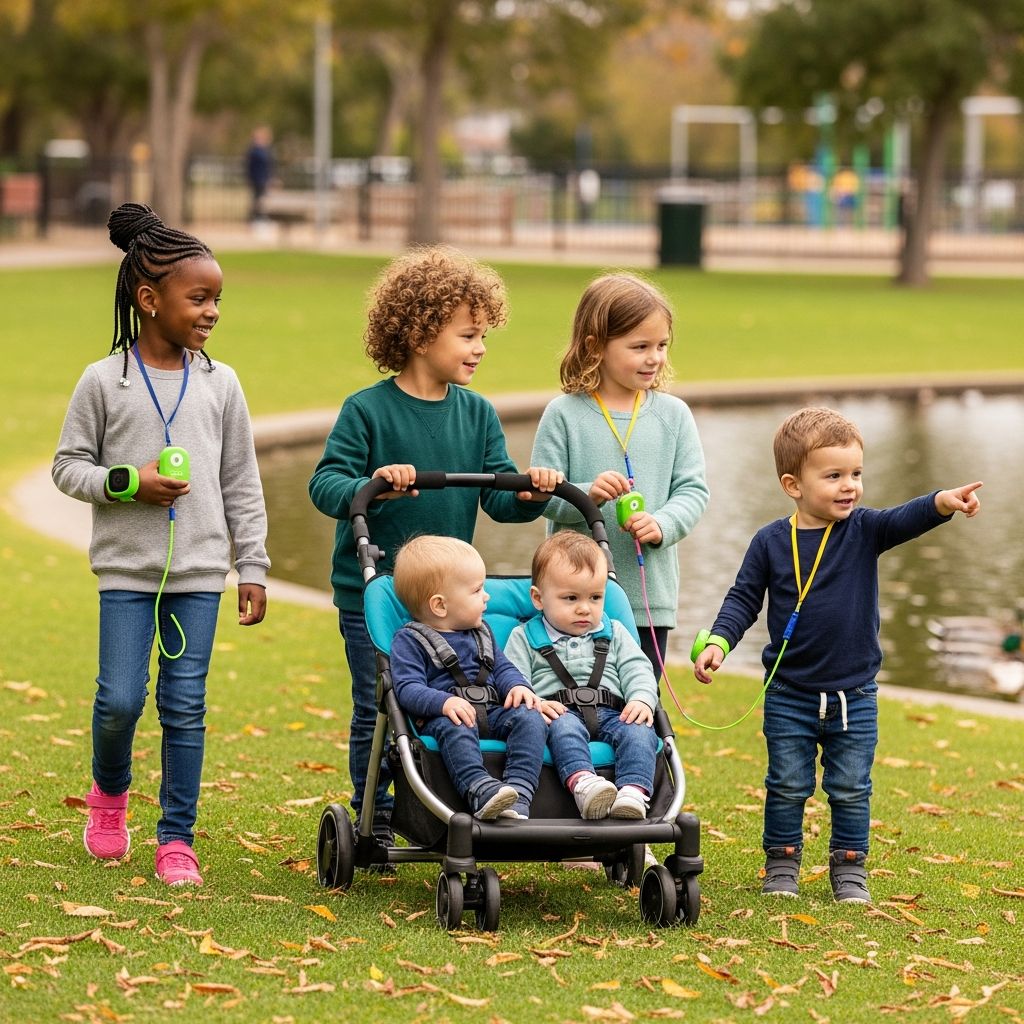
| Clip-on handle or wrist band | Neighborhood walks and parking lots | Reinforces staying close without hand-holding the whole time | Should be introduced gently so it feels like a tool, not a leash |
Whichever combination you choose, test it during low-stress practice runs. A quick walk around the block provides valuable insight into whether straps are too long, the stroller is too heavy to push one-handed, or a particular accessory annoys your child.
Keeping Older Kids Physically Close and Safe
Safety is the heart of any tag-along strategy. Busy parking lots, crowded sidewalks, and fast-moving bikes demand clear rules and predictable habits. Instead of relying on loud corrections once danger appears, aim to build automatic routines that keep your older child close without constant nagging.
Distance rules work best when they are simple and consistent. Pair these rules with physical cues—like a handle on the stroller or a colored spot on the sidewalk outside your building—to help kids understand where they belong.
Simple Safety Rules That Actually Stick
- Use a “zone”: Define a space where your child must stay (“between my hip and the stroller front wheel”).
- Create stopping points: Ask them to stop at every driveway, corner, or specific landmark and wait for you.
- Practice “freeze”: Play a game at home where they practice stopping quickly when you say “freeze” in a friendly tone.
- Assign a holding spot: Offer a stroller handle, bag loop, or specific side to walk on as their “job.”
- Use natural consequences: Explain calmly that if they cannot stay close, they may need to ride in the stroller or hold your hand.
Over time, these routines form muscle memory. The less you have to repeat yourself, the more mental energy you regain for things like crossing streets, finding your keys, and soothing the baby.
Making Older Siblings Feel Included
One of the biggest challenges of outings with a baby and an older child is emotional rather than logistical. The older sibling may feel pushed aside as you adjust buckles, feed the baby, or calm crying. To prevent resentment from building, look for small ways to show that the older child is not just “coming along” but contributing meaningfully.
Children tend to respond well when trusted with real tasks. When they see themselves as helpers or teammates, they are more likely to cooperate and less likely to act out just to reclaim your attention.
Age-Appropriate Helper Roles
- Bag monitor: Carry a lightweight backpack with snacks or a pack of wipes.
- Route captain: Choose which side of the street to walk on or which path through the park to take.
- List checker: Help cross off items on a simple picture or word shopping list.
- Baby’s buddy: Talk or sing to the baby while you buckle straps or load the stroller.
- Safety scout: Watch for driveways or bike paths and alert you when you approach one.
Praise the effort rather than perfection. A preschooler struggling to keep the bag on their shoulder or forgetting an item on the list is still learning responsibility; the goal is to reinforce that their presence and attempts are valuable.
Entertaining While Moving: Boredom-Busting Ideas
Many difficult behaviors on outings stem from boredom. Long lines, waiting rooms, and slow walks can feel endless to a child with excess energy and a short attention span. Instead of relying only on screens or toys, you can build simple, no-prep games into the routine.
Interactive games keep your child mentally engaged and connected to you, which also supports safety and cooperation. They are particularly helpful during transitions, like walking from the car to the store or waiting for the bus.
Low-Prep Games for Walks and Errands
- Color Hunt: Ask your child to find something of a specific color before you reach the next stop sign.
- Quiet Detective: Challenge them to notice three things they can see, hear, or smell without shouting them out until you ask.
- Step Challenge: Count steps, sidewalk squares, or doors together, turning the walk into a mini mission.
- Alphabet Spotting: For early readers, search for letters on signs or license plates.
- Story Building: Take turns adding a sentence to a silly story as you walk, giving your child creative control.
Keep games flexible and short. If one game loses its charm, switch to another, or simply shift to a calmer activity like humming a song or talking about what you will do when you get home.
Managing Common Meltdowns and Power Struggles
Even the best preparation cannot entirely eliminate meltdowns. Fatigue, hunger, frustration, and sibling jealousy still surface, especially in unfamiliar or overstimulating environments. The key is to respond with predictability rather than panic, so both you and your children know what happens next.
Having a simple, rehearsed plan for tantrums can keep you calmer in the moment and reduce the urge to abandon the outing entirely. Think of it as your “emergency manual” for emotionally intense moments.
Steps for Handling Public Meltdowns
- Pause and breathe: Take two slow breaths before responding, even if people are watching.
- Ensure safety: Move away from traffic, sharp corners, or crowded aisles if possible.
- Use a calm script: Repeat a short phrase like “You are upset. I’ll keep you safe” while you wait for the peak of the meltdown to pass.
- Offer a simple choice: Once your child is calmer, present two clear options (“Walk beside the stroller or ride in it until we reach the corner”).
- Follow through: Stick with the choice made, even if it takes a few extra minutes to settle.
Over time, your children will associate your consistent response with emotional safety, which can shorten or reduce future outbursts. You also model emotional regulation: they see that big feelings are manageable and do not derail the entire day.
Building a Predictable Outing Routine
Children lean heavily on routine, especially when many other things in their lives are changing, such as the arrival of a new baby or a move to a new neighborhood. Creating a simple, repeatable structure for outings helps them feel more in control and less likely to resist transitions.
A routine does not need to be rigid or complicated. The idea is to build recognizable “anchors” into each stage of leaving, traveling, completing tasks, and returning home.
Sample Tag-Along Outing Flow
- Before leaving: Bathroom, snack, explain destination and job roles.
- On the way: Play one walking game or sing a song together.
- At the destination: Give a clear start signal (“Now we’re shopping”) and end signal (“Last item, then we’ll head to the car”).
- Heading home: Offer a calm activity like story-building or quiet observation.
- After arriving: Briefly acknowledge effort (“You stayed close to the stroller the whole way. That helped us get home faster.”).
Repetition makes this sequence familiar and comforting. Even very young children begin to anticipate what comes next, which decreases arguments and stalls at each transition.
Adjusting Expectations and Taking Care of Yourself
It is easy to compare your real-life outings to social media images of serene walks and cooperative siblings. In reality, most parents of multiple children have at least one story involving forgotten diapers, crying in the car, or turning back mid-errand. Progress is measured less by flawless trips and more by small improvements over time.
Self-compassion is a critical part of any plan. When you view each outing as an experiment—rather than a test of your worth as a parent—you leave room to learn and adjust. Some days will be smooth, others rough, and the same strategies will not work equally well every time.
Practical Ways to Support Yourself
- Start small: Begin with short, low-stakes outings before tackling big shopping trips or long public transit rides.
- Debrief later: After the kids are in bed, mentally note one thing that went well and one thing you might change next time.
- Ask for help: When possible, schedule difficult errands when another adult can join or stay home with one child.
- Prepare for imperfection: Keep a spare outfit, extra wipes, and a sense of humor handy.
The more realistic your expectations, the less defeated you will feel when something goes sideways. Every outing you complete, even with hiccups, adds to your confidence toolkit for the next one.
Frequently Asked Questions
How old should my child be before walking instead of riding?
There is no single age when a child must stop using a stroller or ride-on device; it depends on their stamina, temperament, and safety awareness. A good rule of thumb is to let children practice walking on shorter, less crowded routes first, while keeping a backup riding option available in case of fatigue or overstimulation.
What if my older child refuses to hold the stroller or stay in the “zone”?
Resistance is common, especially when a new baby has arrived and the older child feels their independence slipping away. Acknowledge their feelings, then frame the safety routine as part of being a “big kid helper” rather than a punishment, backing it up with consistent follow-through and calm explanations.
How can I handle two kids melting down at the same time?
When both children are upset, focus first on immediate physical safety and then on regulating your own nervous system. Once you feel more grounded, respond to the child in the most urgent distress, using a simple, soothing phrase and gentle touch while keeping the other child within sight and offering brief reassurance as you are able.
Is it okay to use a wrist strap or similar device?
Tools that keep children close can be helpful when introduced thoughtfully and respectfully, especially in busy areas or with children who tend to bolt. To reduce resistance, explain that the device is a safety tool you are both using so you can stay together and enjoy the outing, and combine it with ongoing teaching about road safety and personal awareness.
How can I keep outings from taking all my energy?
Streamline whatever you can: keep a pre-packed outing bag, use simple meal options on heavy errand days, and cluster tasks so you are not making multiple exhausting trips. Over time, as routines become smoother and your children become more familiar with expectations, the energy cost of each outing usually goes down.
With patience, practice, and a handful of smart tools, tagging along can shift from a dreaded ordeal into a mostly manageable part of life with multiple kids. Outings will never be perfect, but they can be meaningful, memorable opportunities to explore the world together—one sidewalk square at a time.