Understanding Conflict in Blended Family Systems
When families blend through remarriage or partnership, they bring together individuals with different histories, values, routines, and expectations. This convergence creates a unique environment where disagreements are not just likely—they are virtually inevitable. Unlike traditional families that have years to develop shared norms and understandings, blended families must navigate these complexities while simultaneously building new relationships and trust. The challenges extend beyond typical sibling rivalry or parental disagreements; they encompass stepparent-stepchild dynamics, loyalty conflicts for children between biological parents, financial considerations, and differing parenting philosophies.
Research from leading family relationship experts indicates that the way families manage these conflicts—rather than the absence of conflict itself—determines the long-term health and cohesion of the household. Recognizing that conflict is a natural part of the blending process, rather than a sign of failure, helps family members approach disagreements with greater perspective and problem-solving orientation.
The Foundation: Establishing a United Partnership
The most critical factor in managing blended family conflict is the strength and alignment of the partnership between the two adult partners. When stepparent and biological parent operate as a cohesive team, they create a stable foundation that allows children and stepchildren to adjust more successfully. This unified approach does not mean parents must agree on everything, but rather that they present a consistent message to children regarding household expectations, values, and boundaries.
Partners should engage in regular, private conversations to discuss parenting philosophies before conflicts arise. These discussions allow couples to identify areas of agreement and disagreement while developing compromises that reflect both perspectives. When both adults feel heard and respected in these conversations, they are better equipped to present a collaborative front to the children. A strong partnership also models healthy conflict resolution, demonstrating to children how adults can disagree respectfully and work toward solutions.
Communication Strategies That Transform Relationships
Effective communication serves as the cornerstone of conflict resolution in blended families. The way family members express concerns, listen to one another, and respond to disagreements determines whether conflicts escalate into resentment or evolve into opportunities for greater understanding.
Shifting from Accusatory to Collaborative Language
One fundamental communication shift involves replacing blame-focused statements with perspective-based expressions. Rather than saying “You never listen to me” or “You’re too strict with the kids,” family members can express their needs using statements that begin with “I feel” or “I was concerned when.” This approach allows people to share their emotions and experiences without putting the other person on the defensive. When stepparents and biological parents model this communication style, children learn to express their own frustrations more constructively.
Creating Structured Communication Opportunities
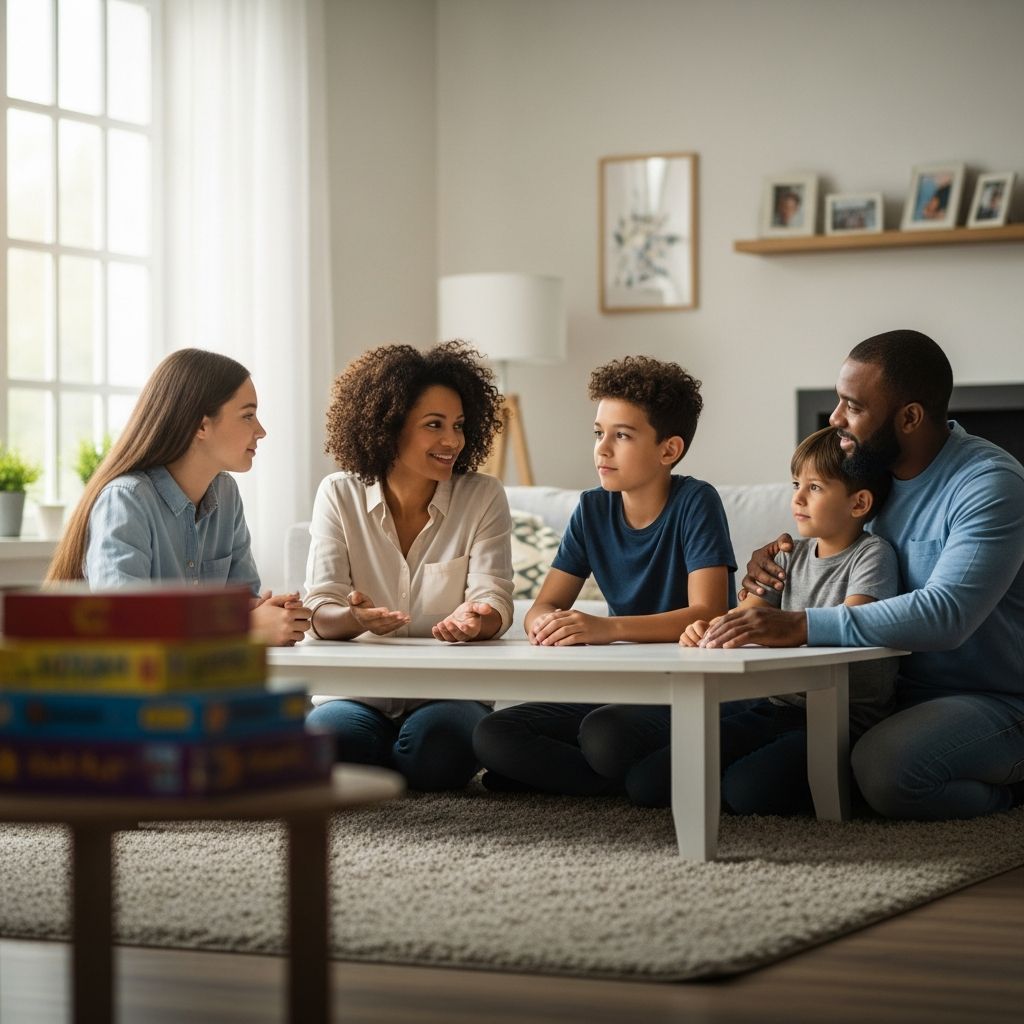
Many blended families benefit from establishing regular family meetings where all members can voice concerns in a designated, organized setting. These meetings work best when they follow a clear structure: each person gets uninterrupted time to speak, topics are addressed one at a time, and the focus remains on finding solutions rather than assigning blame. Establishing ground rules—such as no interrupting, using respectful language, and committing to listen without judgment—helps ensure these meetings remain productive rather than becoming additional sources of conflict.
The Practice of Active Listening
Many family conflicts persist because people focus more on preparing their rebuttal than on truly understanding the other person’s perspective. Active listening involves genuinely trying to understand the feelings and concerns underlying another person’s words, asking clarifying questions, and reflecting back what you have heard. When a stepchild says they feel left out, rather than immediately defending one’s actions, a stepparent might respond: “It sounds like you felt hurt when I didn’t include you in that activity. Can you help me understand what would have made a difference?” This approach validates emotions while opening dialogue.
Developing a Problem-Solving Mindset
Conflicts in blended families often become entrenched when family members approach disagreements as situations to be won rather than problems to be solved collectively. Shifting to a problem-solving orientation fundamentally changes how conflicts unfold.
Identifying Underlying Issues
Surface-level arguments often mask deeper concerns. A disagreement about household chores might actually reflect a child’s fear that a stepparent is trying to replace their biological parent. An argument about discipline might stem from a parent’s guilt about the divorce or remarriage. Taking time to explore what lies beneath the surface conflict allows families to address root causes rather than repeatedly fighting about symptoms. This exploration works best when conducted during calm moments rather than in the heat of disagreement.
Building Compromise and Consensus
Successful problem-solving in blended families requires that family members move beyond rigid positions toward mutual understanding. This means each person must be willing to explain not just what they want, but why it matters to them. A stepparent might explain that consistent bedtimes are important because they ensure children get adequate rest for school and health. A teenager might explain that later bedtimes feel important because they want more autonomy. Understanding these underlying needs opens possibilities for creative solutions that might partially satisfy both parties.
Managing Heightened Emotions and Conflict De-escalation
Blended family conflicts often trigger intense emotions because they touch on fundamental issues of belonging, loyalty, fairness, and identity. When conversations become heated, continuing to engage rarely leads to resolution.
Recognizing Signs of Emotional Flooding
Psychologists identify a state called “flooding,” where a person becomes so emotionally overwhelmed that their ability to think rationally and listen effectively diminishes significantly. Physical signs include elevated heart rate, tension, and difficulty focusing. When family members notice these signs in themselves or others, taking a deliberate break becomes essential. This is not about avoiding the problem but about creating space for emotions to settle so productive conversation can occur.
Implementing Structured Breaks
Establishing a household policy where family members agree to pause difficult conversations when emotions escalate provides everyone with permission to step back. A person might say, “I can see we’re both getting frustrated, and I want to handle this well. I’m going to take some time to calm down, and I’d like to talk about this later tonight.” Setting a specific time to revisit the conversation ensures the matter does not get forgotten. This approach prevents harsh words spoken in anger from accumulating into relationship damage.
Addressing Discipline and Parenting Differences
One of the most common sources of conflict in blended families involves differing approaches to discipline and child-rearing. These differences often reflect varying family backgrounds, parenting philosophies, and beliefs about what constitutes appropriate boundaries and consequences.
Clarifying Roles and Responsibilities
Many experts recommend that biological parents take primary responsibility for disciplining their own children, particularly in the early stages of family blending. This approach protects the developing relationship between stepparent and stepchild by preventing the stepparent from being cast as the enforcer or authority figure before a foundation of trust and affection exists. Stepparents can support the biological parent’s authority while building their own relationship with stepchildren through positive interactions, shared activities, and genuine interest in their lives.
Creating Unified Household Rules
While discipline responsibilities may differ, household rules should be consistent and apply to all children. Parents should collaborate to establish clear, reasonable rules regarding chores, curfews, technology use, and respect for family members. These rules should be developed and explained before conflict arises, reducing opportunities for perceived unfairness or favoritism. When children understand the reasoning behind rules—not just the rules themselves—they are more likely to comply and feel that the household operates fairly.
Respecting Individual Relationships and Loyalty
Children in blended families often experience conflicting loyalties. They may worry that developing a close relationship with a stepparent somehow betrays their biological parent. They may feel caught between parents who hold different values or expectations. Acknowledging these internal conflicts and actively reducing loyalty pressure supports children’s emotional wellbeing and allows relationships to develop more naturally.
Avoiding Negative Commentary About Other Parents
One of the most damaging patterns in blended families involves biological parents or stepparents criticizing the other parent to children. Even when such criticism feels justified, it forces children to choose sides and creates internal conflict that hampers their adjustment. Maintaining respect for all parental figures—even when relationships ended poorly—demonstrates maturity to children and protects their emotional security.
Supporting Multiple Relationships
Rather than viewing a child’s relationship with a biological parent as competing with their relationship with a stepparent, healthy blended families recognize that children can love multiple parental figures. Encouraging children to maintain strong connections with both biological parents while also building relationships with stepparents gives them the security of expanded family bonds rather than a zero-sum competition.
Time and Patience in the Blending Process
One critical realistic expectation that helps blended families weather conflicts is understanding that successful blending requires years, not months. The timeline varies depending on the age of children, the length of the parents’ relationship before remarriage, and the complexity of custody arrangements, but research suggests that meaningful bonding and trust-building typically requires three to seven years.
This extended timeline means that expecting instant closeness, complete acceptance, or fully integrated family dynamics in the first year or two sets families up for disappointment. Instead, celebrating small milestones—a stepchild including a stepparent in a school project, a spontaneous conversation that feels natural rather than forced, a shared laugh during a difficult moment—provides motivation during the challenging adjustment period.
When Professional Support Becomes Essential
Some blended families benefit tremendously from working with a family therapist or counselor who specializes in stepfamily dynamics. Professional support becomes particularly valuable when:
- Conflicts are chronic and strategies attempted by the family are not producing improvement
- A family member shows signs of depression, anxiety, or behavioral problems
- The couple’s relationship is significantly strained by parenting disagreements
- A child seems unable to adjust to the blended family structure
- Ex-partner conflicts are creating ongoing turmoil
A trained therapist can identify patterns that family members may not recognize, teach specific skills tailored to the family’s situation, and provide perspective during intense conflicts. Family therapy validates that seeking help reflects strength and commitment to the family’s wellbeing rather than failure.
Building Positive Shared Experiences
While conflict resolution skills are essential, equally important is intentionally creating positive experiences that build family bonds and create shared memories. Family traditions—whether weekly game nights, annual camping trips, holiday rituals, or regular cooking sessions—provide opportunities for family members to interact in low-pressure settings where connection naturally develops.
These shared experiences serve multiple functions: they create positive associations with family time, provide opportunities for informal conversations where trust builds, and establish the family identity distinct from each person’s previous individual or separated family experiences. Over time, positive experiences significantly outweigh conflicts in determining family members’ overall satisfaction and commitment to the blended family.
Frequently Asked Questions About Blended Family Conflict
How long does it typically take for a blended family to function smoothly?
Research suggests that meaningful integration and reduced conflict typically requires three to seven years, depending on the children’s ages, the adults’ relationship history, and custody arrangements. Expecting instant harmony sets families up for disappointment.
Should stepparents discipline stepchildren?
In the early stages of blending, biological parents should take primary responsibility for disciplining their own children. Stepparents can support these boundaries while building positive relationships. As trust and affection develop, stepparents may gradually take on more disciplinary roles.
What should I do if my partner and I disagree about parenting approaches?
Discuss parenting philosophies privately, listen to understand the reasoning behind each approach, and work toward compromises that reflect both perspectives. Present a united front to children even when you disagree internally.
How can I help my child adjust to a stepparent?
Validate your child’s feelings, maintain their relationship with their other biological parent, encourage low-pressure interactions between your child and stepparent, and ensure the stepparent is not immediately placed in an enforcement role.
Is it normal to have frequent conflicts in a blended family?
Yes, conflict is normal and does not indicate failure. What matters is how families handle disagreements—through respectful communication, problem-solving, and willingness to understand each other’s perspectives.
References
- Managing Conflict in Blended Families — The Gottman Institute. 2024. https://www.gottman.com/blog/managing-conflict-in-blended-families/
- Achieving Harmony in a Blended Family: Tips for Building Stronger Relationships — Parker Cole Curtis Counselling. 2024. https://parkercolescurtis.com.au/blog/achieving-harmony-in-a-blended-family-tips
- Blended Families: How to Overcome Challenges and Strengthen Bonds — Law and Wisdom Group Canada. 2024. https://luwg.ca/blended-families-how-to-overcome-challenges-and-strengthen-bonds/
- Dealing with Conflict as a Blended Family — The Drake Law Firm, PC. 2024. https://thedrakelawfirm.com/dealing-with-conflict-as-a-blended-family/
- Blended Family and Step-Parenting Tips — HelpGuide. 2024. https://www.helpguide.org/family/parenting/step-parenting-blended-families
- Blended Families: Finding Common Ground in Disciplining Your Children — Focus on the Family. 2024. https://www.focusonthefamily.com/marriage/discipline-discord/
- Navigating the Challenges of Counseling Blended Families — National Board for Certified Counselors. 2024. https://www.nbcc.org/resources/nccs/newsletter/challenges-of-counseling-blended-families