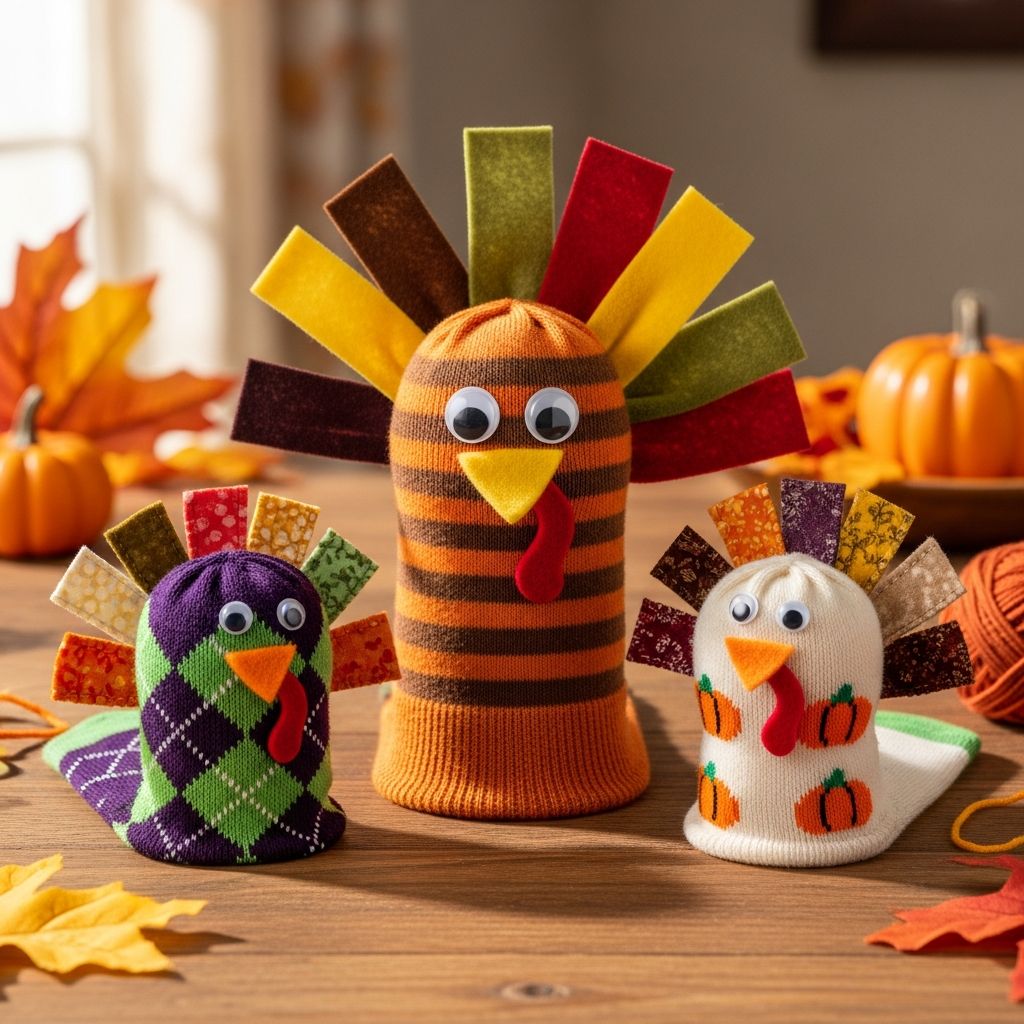
Turkey sock puppets offer a simple way to turn mismatched socks into lovable characters that bring Thanksgiving stories and traditions to life. This guide introduces an original approach to creating expressive turkey puppets that kids and adults can enjoy together.
Why Turkey Sock Puppets Belong in Your Thanksgiving
As families look for more screen-free ways to connect, sock puppets provide a hands-on project that naturally leads to storytelling, role-play, and laughter. Unlike fragile centerpieces, puppets are meant to be handled, voiced, and woven into games and skits throughout the holiday weekend.
Because this craft uses inexpensive household supplies, it works well in classrooms, youth groups, and large family gatherings where each child can customize a unique turkey personality without a complicated setup.
Gathering Supplies: What You Need
Most materials for turkey sock puppets are easy to substitute, which makes this project flexible for different budgets and age groups. Use the list below as a guide and adapt it to what you have on hand.
- Clean sock (solid or patterned; ankle or crew length both work)
- Scrap felt or craft foam (browns, reds, oranges, yellows)
- Googly eyes or small buttons for eyes
- Craft glue or low-temperature hot glue (for adults)
- Scissors suitable for fabric and paper
- Feathers (real or paper cut-outs) for the tail
- Optional: fabric markers, yarn, pom-poms, pipe cleaners, and sequins for extra flair
Planning Your Puppet: Design Before You Glue
Before attaching anything permanently, plan where the face, beak, and tail will sit when the sock is on a hand. Slide the sock onto your hand and open and close it like a talking mouth so you know which part naturally becomes the head.
Encourage kids to sketch a quick puppet face on paper first. This step helps them decide where to put eyes, how long the beak should be, and what expression they want their turkey to have.
Step-by-Step Instructions
The process below is organized for group settings and can be adapted depending on the age of the crafters. Younger children may complete only the basic version, while older kids can add details like wings and accessories.
Step 1: Prepare the Sock
Slip your hand inside the sock and position your thumb in the heel and your fingers in the toe to form a talking mouth. Adjust until the fabric stretches comfortably without pulling too tight.
Mark the top of the “head” lightly with a washable marker or tiny dot of chalk so you can line up the eyes and beak later without guessing.
Step 2: Create the Beak and Wattle
Cut a small diamond shape from orange or yellow felt or foam. When folded in half, this becomes a 3D beak that opens slightly as the puppet “talks.”
Cut a simple curved strip from red felt to form the wattle, allowing it to dangle slightly below one side of the beak for a friendly, cartoon-like appearance.
Step 3: Add Eyes with Character
Glue two eyes above the beak location, leaving enough space between them to show expression. Googly eyes create a playful look, while buttons give a more old-fashioned, handmade style.
Small felt eyelids can be added as half-circles above the eyes to suggest tired, silly, or curious expressions, giving each turkey a distinct personality.
Step 4: Build the Tail Feathers
Arrange feathers or paper feather cut-outs in a fan on the table until you like the shape and color combination. Aim for a semicircle that will peek over the puppet’s back when worn.
Glue the feather fan to the back of the sock where the heel meets the leg section, pressing firmly so that the feathers stand upright when the puppet is on your hand.
Step 5: Optional Details and Clothing
Once the main features are secure, add details that fit the puppet’s personality. A tiny felt bowtie, vest, or apron can suggest different roles, such as “chef turkey,” “storyteller turkey,” or “grandparent turkey.”
Use fabric markers to draw simple patterns, such as spots, stripes, or tiny leaves on the body, keeping designs bold and simple so they read well from a distance during puppet shows.
Simple Safety and Age Adjustments
Because this project often involves young children, it helps to prepare materials and safety guidelines in advance. Thoughtful planning keeps the focus on fun instead of frustration.
- For toddlers and preschoolers, pre-cut small shapes and use large, easy-to-grip pieces.
- Reserve hot glue for adults and older teens; younger children can use tacky glue.
- Skip small buttons and beads with children who still mouth objects, substituting felt circles instead.
Ideas for Using Turkey Sock Puppets
Once the puppets are complete, the real magic comes from how they are used. Consider integrating them into family rituals, classroom activities, and community events throughout the Thanksgiving season.
- Host a short “Thankful Theater” where each puppet announces something its maker is grateful for.
- Use puppets to retell family stories, such as memorable holiday meals or acts of kindness.
- Invite children to perform a mini puppet show for guests while adults finish cooking or cleaning up.
Teaching Gratitude Through Play
When children speak through puppet characters, they often share thoughts and feelings more openly. This makes turkey sock puppets a gentle tool for talking about gratitude, generosity, and family traditions.
Adults can prompt meaningful reflection by asking puppets questions such as “What made you feel thankful this year?” or “Who helped you when you needed it?” and allowing time for each child to respond in character.
Variations for Different Age Groups
| Age Group | Recommended Features | Adult Involvement |
|---|---|---|
| Preschool (3–5) | Pre-cut felt shapes, glued-on feathers, large eyes | High: attach pieces, supervise glue, guide storytelling |
| Early Elementary (6–8) | Simple tail patterns, basic clothing, drawn details | Moderate: help with tricky cuts and layout |
| Upper Elementary (9–11) | Custom clothing, layered tails, props like tiny books | Low: mainly supervise and suggest ideas |
| Teens & Adults | Elaborate costumes, stitched accents, themed sets | Minimal: collaborate on scripts and performances |
Organizing a Group Puppet Workshop
For classrooms, clubs, or large families, turning this craft into a mini workshop creates structure and energy. Start with a brief demonstration using a sample puppet so everyone sees the basic steps in action.
Set up stations—such as face, feathers, and accessories—so that participants can rotate, avoid crowding, and share materials easily. Having labeled containers for different small pieces also reduces cleanup time.
Eco-Friendly and Budget-Friendly Tips
Turkey sock puppets are naturally frugal, but there are additional ways to keep costs low and reduce waste while still producing colorful, durable puppets. Many common household items can stand in for store-bought supplies.
- Use old socks with small holes as long as the puppet area is intact.
- Cut feathers from magazine pages, construction paper scraps, or packaging.
- Replace plastic googly eyes with hand-cut felt circles or drawn eyes.
Incorporating Puppets into Thanksgiving Decor
While their main purpose is play, turkey sock puppets can also double as cozy, informal decorations that highlight the personalities of the children who made them. Displaying puppets proudly can help kids feel valued and included in preparations.
- Stand puppets upright in jars or mugs filled with dry beans near the dessert table.
- Place a labeled puppet at each child’s seat as a personalized place marker.
- Create a “Turkey Troupe” on the mantle or sideboard for guests to admire.
Extending the Fun Beyond Thanksgiving
Once children discover how easy it is to turn socks into characters, they may want to create puppets for other seasons and celebrations. The same basic process works for winter animals, storybook heroes, or original creatures.
Encourage kids to start a small puppet collection that can be reused for storytime, classroom presentations, and rainy-day play, building both creativity and confidence over time.
Frequently Asked Questions (FAQs)
1. Which type of sock works best?
Medium-thickness crew socks usually work best because they stretch comfortably over a hand without being too tight or floppy. Very thin dress socks can feel slippery, while extremely thick socks may be hard for young children to manipulate.
2. How long does this project take?
A simple puppet with basic features can usually be finished in about 20–30 minutes, making it suitable for classroom lessons or quick family activities. More elaborate designs with clothing and props may take up to an hour.
3. Can these puppets be washed?
Because many decorations are attached with glue and include paper or feathers, washing is not recommended. To keep puppets fresh, store them in a dry place and gently dust them off as needed instead of submerging them in water.
4. How can I adapt this for very young children?
Prepare most of the cutting in advance and let young children simply choose colors and press pre-glued pieces into place. Short puppet conversations about favorite foods or happy memories can keep the experience light and age-appropriate.
5. What if I don’t have feathers or felt?
You can draw feathers directly onto the sock with fabric markers or cut tail shapes from recycled paper to glue on. The personality of the puppet matters more than the exact materials, so feel free to improvise with what you have.
Bringing Your Turkey Characters to Life
With simple supplies and a little imagination, turkey sock puppets can turn any Thanksgiving gathering into a lively blend of craft time and storytelling. Each unique character gives children and adults a playful way to express gratitude, humor, and creativity together.
Whether used at the dinner table, in a classroom circle, or during a family puppet show, these handmade turkeys remind everyone that holidays are as much about shared moments as they are about menus and decorations.