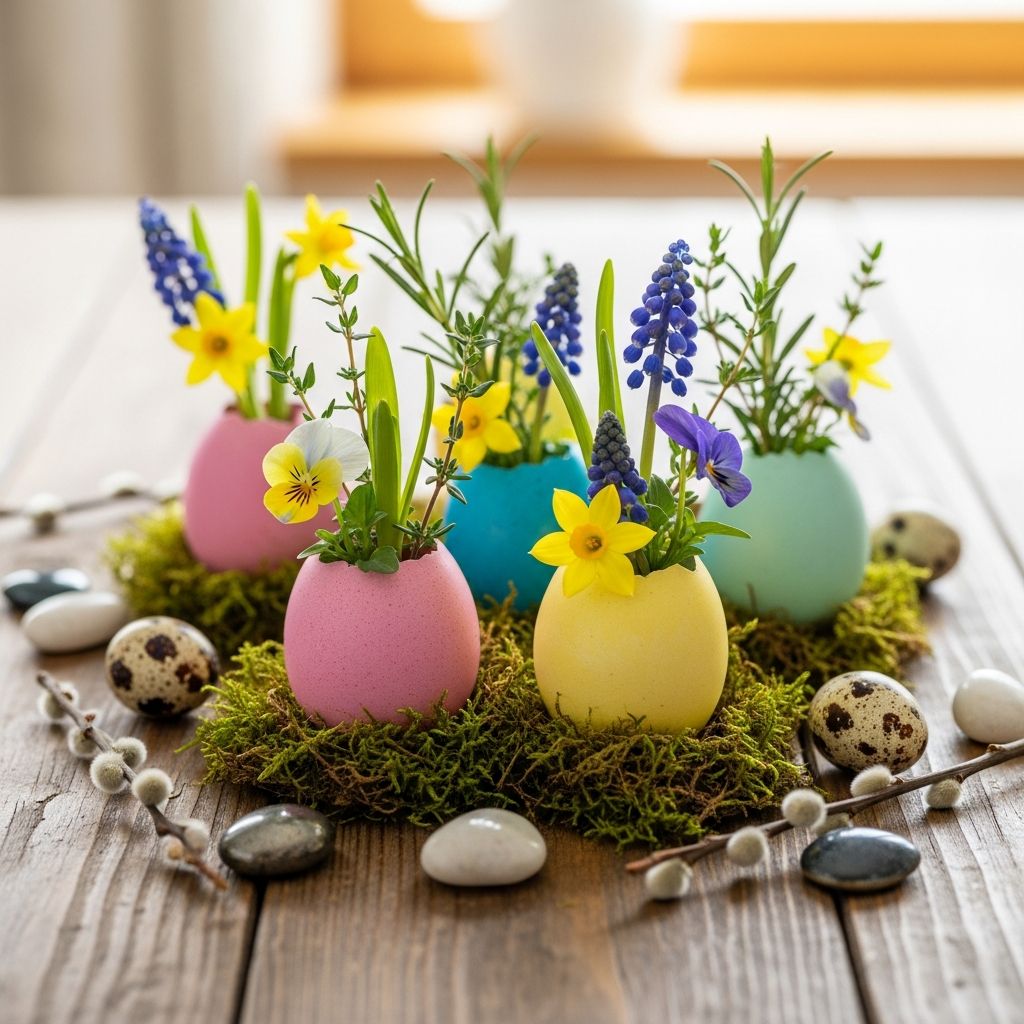
Mini egg vases are a playful way to bring spring flowers to your table without spending much money or space. By turning simple eggshells into tiny vessels, you create delicate centerpieces, place settings, and mantel accents that feel both elegant and fun.
This guide walks through every stage of the project—from prepping the shells to styling your finished vases—so you can enjoy a relaxing, family-friendly Easter craft that doubles as charming decor. The ideas, structure, and wording here are completely original and designed for creative inspiration.
Why Mini Egg Vases Are Worth Making
Before gathering supplies, it helps to understand why these little vases are more than just cute decorations. Mini egg vases combine seasonal symbolism, sustainability, and versatility in a single, easy craft.
- Seasonal charm: Eggs naturally symbolize spring and new beginnings, making them ideal containers for fresh blooms.
- Budget-friendly decor: You can use eggs you already plan to eat, plus small flower clippings from your yard or grocery store bouquets.
- Small-space friendly: These vases work beautifully on compact tables, narrow shelves, or window sills.
- Kid-friendly creativity: Adults can handle the delicate shell prep while kids enjoy painting, drawing, or embellishing the eggs.
Materials and Tools You Will Need
A successful project starts with the right supplies. For this craft, most items are everyday household staples or simple art materials, so you may already have everything on hand.
Core Materials
- Raw eggs (chicken eggs work best; choose white or brown)
- Small flowers or greenery (e.g., baby’s breath, tiny daisies, clover, herbs)
- Clean water for filling the vases
- Egg carton, bottle cap, or small dish to help the vases stand upright
Decorating Supplies
- Acrylic craft paints or watercolor paints
- Fine-tip permanent markers or paint pens
- Small paintbrushes
- Optional: glitter, metallic markers, washi tape, stickers, or ribbon
Tools and Safety Items
- Small needle, pushpin, or thumbtack (for piercing the shell)
- Toothpick or skewer (for enlarging the hole)
- Bowl for collecting egg contents
- Mild dish soap for rinsing shells
- Paper towels or a soft cloth
- Optional: disposable gloves if you prefer not to handle raw egg directly
Preparing the Eggshells Safely
The most important part of this project is creating clean, intact shells. Take your time with this step. The goal is to end up with hollow eggs that have an opening large enough to hold water and a few flower stems.
Step 1: Pierce the Egg
- Hold a raw egg over a bowl with the narrow end pointing up.
- Use a needle or thumbtack to gently pierce the top of the egg, twisting slightly to get through the shell.
- Once the shell is pierced, use the tool to widen the opening to about the size of a pea. A toothpick can help smooth the edges.
Step 2: Empty the Egg Contents
- Turn the egg so the hole faces down over your bowl.
- Blow gently through the other end of the egg, or shake it carefully, to encourage the contents to flow out.
- Continue until the egg is completely empty; set the egg mixture aside for cooking and refrigerate promptly.
Step 3: Rinse and Dry the Shell
- Run a small stream of cool water into the shell through the opening.
- Place your finger over the hole and shake gently to rinse the inside, then pour out the water.
- Add a drop of mild soap if desired, rinse thoroughly, and place the shell upside down on a paper towel to drain.
- Allow the shells to dry completely before decorating; moisture can interfere with paint and markers.
Design Ideas for Decorating Egg Vases
Once the shells are clean and dry, it is time to transform them from plain eggs into miniature works of art. The decorating style you choose can match your overall Easter aesthetic—modern, rustic, pastel, or bold.
Soft and Subtle Pastels
- Paint the eggs in pale shades like blush, mint, lavender, and butter yellow.
- Use watered-down acrylics or watercolors for a soft, almost translucent finish.
- Add tiny white dots or delicate lines for a light and airy look.
Modern Minimalist Patterns
- Leave the natural shell color visible and add simple, graphic designs with a black or gold paint pen.
- Consider repeating patterns such as small triangles, dashes, or tiny crosses.
- Limit yourself to one or two colors to keep the design clean and contemporary.
Playful Kids’ Creations
- Invite children to draw faces, animals, or abstract doodles on the shells.
- Use bright markers or paints and let each child sign the bottom of their egg.
- Stick on tiny stickers or add a narrow band of washi tape as a “belt” around the shell.
Nature-Inspired Details
- Paint loose, impressionistic flowers, leaves, or vines winding around the shell.
- Use earthy tones and combine brown eggs with greens and creams for a rustic feel.
- Glue on a small twine bow or a pressed leaf for extra texture.
Stabilizing and Filling Your Mini Vases
Because eggshells are rounded, they need support to stand upright. A simple stand stops them from tipping while also protecting them from accidental bumps.
Simple Ways to Keep Egg Vases Upright
- Egg carton base: Trim down an egg carton so each cup acts as a little nest for a single shell.
- Bottle caps: Turn metal or plastic caps upside down and place the egg inside as a discreet stand.
- Salt or rice bed: Pour a layer of salt, sugar, sand, or rice into a shallow dish and nestle the eggs into it.
- Mini candle holders: Repurpose small tealight holders or egg cups to cradle the shells.
Adding Water and Flowers
- Fill each eggshell about halfway with clean, cool water using a small spoon or syringe.
- Trim flower stems short so they fit comfortably without overpowering the shell.
- Place one to three stems in each egg, depending on the flower size.
- Adjust the arrangement so blooms face outward and the shell opening is still visible.
Styling Mini Egg Vases Around Your Home
Once your tiny vases are filled, you can style them in numerous ways. Consider the mood of your space and the type of gathering you are hosting, then choose an arrangement that suits your needs.
Table Centerpiece Ideas
- Line a row of decorated eggs down the center of a runner, spacing them evenly.
- Cluster groups of three or five eggs on small plates or trays for visual impact.
- Mix eggshell vases with candles, moss, and small figurines for a layered spring display.
Place Settings and Name Cards
- Set a single egg vase at each plate with a tiny tag or card tied around the base.
- Write each guest’s initial or name directly on the shell as a personalized touch.
- Coordinate flower colors with napkins or plates to create a cohesive look.
Mantel, Windowsill, and Entry Decor
- Line up vases along a mantel with greenery garlands weaving around them.
- Place a few in a sunny window where they catch the light and highlight the flowers.
- Arrange a set on an entryway console table to greet guests with a seasonal accent.
Flower Choices for Tiny Vases
Because the egg openings are quite small, certain flowers work better than others. Choosing blooms with thin stems and relatively light heads prevents tipping and allows more creative combinations.
| Flower Type | Why It Works Well | Styling Tip |
|---|---|---|
| Baby’s breath | Very light, airy clusters that fill space without weight. | Use a few tiny sprigs to soften bold egg patterns. |
| Mini daisies or chamomile | Small flower heads that match the scale of the shells. | Pair with simple, rustic designs for a meadow feel. |
| Waxflower or similar filler | Thin woody stems with petite blossoms. | Mix different colors in one egg for a wildflower look. |
| Herbs (rosemary, thyme, mint) | Fragrant, green stems that last well in water. | Use in the kitchen or dining room for a fresh scent. |
| Small clover or greenery | Delicate leaves that add texture and volume. | Combine greenery with a single mini bloom as a focal point. |
Making the Project Kid-Friendly
Children often love the idea of working with eggs, but the fragility of the shells calls for a helpful setup. With a few adjustments, this project becomes a wonderful family tradition that encourages creativity and care.
- Adults or older teens can handle the piercing and rinsing of the eggshells in advance.
- Provide each child with a tray or placemat to catch spills and keep eggs from rolling.
- Offer washable paints in small palettes and show how to hold the egg gently at the base.
- Let kids pick their own flowers for a sense of ownership over the final display.
Safety, Hygiene, and Sustainability Tips
Since this craft involves raw eggs and real water, a few simple safety practices will keep your project hygienic and planet-friendly. Following these steps also makes it easier to enjoy your decor without worry.
- Wash hands thoroughly after handling raw eggs and before touching other surfaces.
- Refrigerate the egg contents immediately and use them in cooking the same day when possible.
- Change the water in the egg vases daily if you want to keep them on display for more than one day.
- Retire any shells that become cracked or slimy, and compost them if your local rules allow.
- Consider mixing real eggs with a few faux eggshells or small bud vases if you want a longer-lasting centerpiece.
Creative Variations to Try Next Time
Once you master the basic technique, it is easy to adapt this concept for different occasions and color palettes. Mini egg vases can be surprisingly versatile across the entire spring season and even beyond.
- Monochrome elegance: Paint all shells in varying shades of a single color and use matching flowers for a sophisticated look.
- Metallic accents: Add touches of gold or silver paint around the rim or in small geometric shapes for extra sparkle.
- Nature nests: Arrange egg vases in a shallow bowl filled with moss and small branches for a woodland centerpiece.
- Holiday transitions: After Easter, repaint any leftover shells in neutral colors to use as spring decor without overt holiday themes.
- Giftable minis: Place one decorated egg vase in a small box with tissue paper as a sweet take-home favor.
Frequently Asked Questions
How long do mini egg vases last?
If kept indoors away from direct sun and handled gently, eggshell vases usually last several days before becoming too fragile or discolored. The flowers themselves may only look fresh for one to three days, depending on the variety and room temperature.
Can I use hard-boiled eggs instead of hollow shells?
Hard-boiled eggs are sturdier, but they are not ideal as vases because the solid interior cannot hold water. However, you can still decorate hard-boiled eggs and place tiny dried flowers on top with a dab of glue for a similar visual effect without fresh water.
What if I keep cracking the shells?
Cracking usually means the hole is being made too quickly or with too much pressure. Try using a finer needle, twisting gently instead of pushing straight in, and supporting the egg firmly with your hand. Having a few extra eggs on hand also reduces stress if a couple break.
Do I need a special sealant on the outside of the egg?
A sealant is not required, but a light coat of clear acrylic spray can protect painted designs and add a subtle sheen. If you use a sealant, do so in a well-ventilated area and allow the shells to dry thoroughly before adding water and flowers.
Can I reuse the same shells next year?
In most cases, real eggshell vases are best treated as temporary decorations. Over time, shells can absorb moisture, become brittle, or develop hairline cracks. If you want a reusable option, consider making a similar project with ceramic or plastic eggs that mimic the look.
Bringing It All Together
Turning ordinary eggs into miniature vases is a simple way to celebrate the arrival of spring with creativity and care. With just a few materials and some deliberate handling, you can craft a display that feels personal, delicate, and delightfully seasonal.
Whether these tiny vases appear as a full table centerpiece, a single bloom at each place setting, or a scattering of decorated shells on a windowsill, they add a unique, handmade touch that guests will notice and remember. Use this project as a starting point for your own ideas, and let your next batch of eggs become both breakfast and beautiful decor.