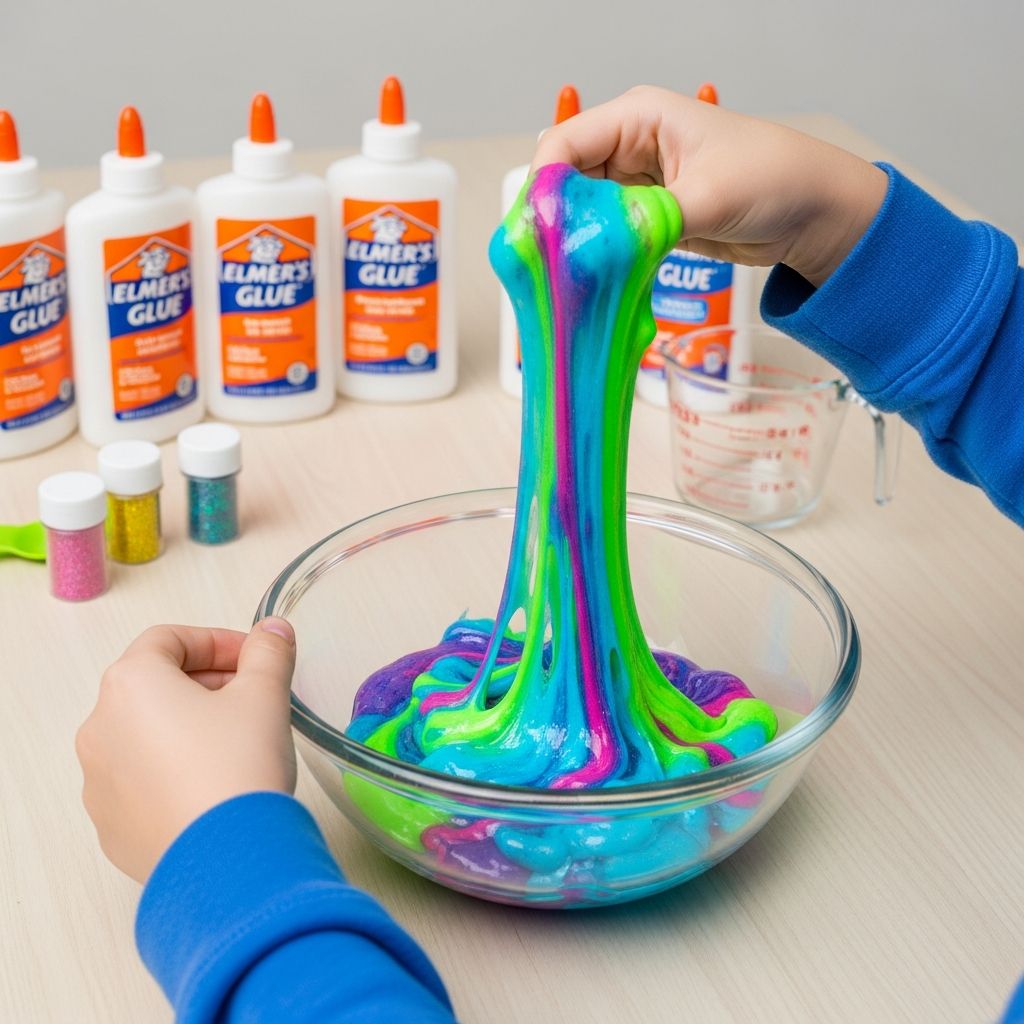
Why Slime Is a Great Activity for Kids
Slime has become a favorite pastime for children of all ages, and for good reason. It’s not just a gooey, stretchy toy—it’s also a powerful tool for learning and development. Playing with slime helps children build fine motor skills as they pinch, pull, and squish the material. It also supports sensory exploration, which is especially helpful for kids who benefit from tactile experiences.
When made at home with safe, everyday ingredients, slime can be a low-cost, high-reward activity. It keeps kids engaged for long stretches, giving parents a chance to cook, clean, or simply enjoy a quiet moment. Plus, making slime together turns into a mini science experiment, sparking curiosity about how ingredients change when mixed.
What You Need to Make Basic Elmer’s Glue Slime
The beauty of this slime recipe is that it uses items most households already have. You don’t need fancy supplies or hard-to-find chemicals. Here’s what you’ll gather for a simple, stretchy slime using Elmer’s white school glue:
- One 8-ounce bottle of Elmer’s white school glue
- 1 tablespoon baking soda
- 1½ to 2 tablespoons contact lens saline solution (must contain boric acid and sodium borate)
- Food coloring (optional, liquid or gel)
- Glitter, small beads, or other mix-ins (optional)
- A mixing bowl and spoon (plastic is easiest to clean)
- An airtight container or zip-top bag for storage
Choosing the Right Glue and Activator
Elmer’s white school glue is the most common choice because it’s non-toxic, widely available, and reacts well with common activators. Clear school glue can also be used for a transparent slime, though the texture may be slightly different. Avoid glue sticks or specialty glues, as they won’t form the right consistency.
The key to turning liquid glue into slime is the activator. In this recipe, contact lens saline solution acts as the activator. Not all saline solutions work, so it’s important to check the label. Look for solutions that list boric acid and sodium borate (or sodium borate alone) in the ingredients. These compounds help the glue polymers cross-link, creating that signature stretchy, slimy texture.
If you can’t find suitable saline solution, a common alternative is a premade slime activator, which is essentially a diluted borax solution. Borax itself can be used, but it requires careful measurement and handling, so it’s often better for older kids or adult-led projects.
Step-by-Step: Making Slime at Home
Follow these simple steps to make a smooth, stretchy slime that’s safe for kids to play with:
1. Prepare the Glue Base
Start by pouring the entire bottle of Elmer’s white glue into a mixing bowl. If you’re using food coloring, add a few drops now and stir until the color is evenly distributed. Gel food coloring tends to give more vibrant results without thinning the mixture too much.
2. Add Baking Soda
Next, stir in 1 tablespoon of baking soda. This ingredient helps the slime become more elastic and less sticky. Mix it thoroughly into the glue so there are no clumps.
3. Introduce the Saline Solution
Begin adding the contact lens saline solution, starting with 1½ tablespoons. Stir slowly as you pour. At first, the mixture will look lumpy and stringy. Keep stirring until it starts to come together into a cohesive mass.
If the slime is still very sticky, add more saline solution in ½-tablespoon increments. Be careful not to add too much at once, as extra activator can make the slime too stiff or rubbery. The ideal slime should be stretchy, slightly tacky, but not leave a sticky residue on clean hands.
4. Knead the Slime
Once the mixture pulls away from the bowl and can be gathered into a ball, it’s time to knead it by hand. At first, it may feel wet and sticky, but keep working it. As you knead, the slime will become smoother and less sticky.
Knead for several minutes until the texture is consistent. If it’s still too sticky, add a tiny bit more saline solution and continue kneading. If it becomes too firm, you can sometimes revive it by working in a small amount of lotion or hand sanitizer, but this should be done sparingly.
Tips for Success and Safety
To make the best slime and keep the experience safe and fun, keep these tips in mind:
- Always supervise young children when making and playing with slime.
- Wash hands before and after playing with slime to keep it clean and reduce the risk of transferring germs.
- Use a place mat or tray to contain the slime and make cleanup easier.
- Avoid getting slime in hair; if it does, gently work in a small amount of oil (like coconut or olive oil) and comb it out.
- Store slime in an airtight container or zip-top bag when not in use to keep it from drying out.
- Discard slime if it develops an odd smell, changes color, or becomes moldy.
Customizing Your Slime: Fun Variations
Once you’ve mastered the basic recipe, the fun really begins. Slime is incredibly customizable, and kids love helping choose colors, textures, and add-ins. Here are some popular variations to try:
Glitter Slime
Add a generous pinch of fine glitter to the glue before mixing in the saline solution. For extra sparkle, use multiple colors or mix in chunky glitter for a more dramatic effect.
Fluffy Slime
For a light, airy texture, replace about half of the glue with shaving cream. Mix the shaving cream into the glue and food coloring, then proceed with baking soda and saline solution as usual. Fluffy slime is softer and less dense than regular slime.
Butter Slime
Butter slime has a smooth, creamy texture that feels almost like play dough. To make it, add a small amount of lotion or baby oil to the basic slime after it’s formed. Knead it in until the slime becomes smooth and less stretchy.
Themed Slime
Create slime for holidays or special occasions. Use orange and black for Halloween, red and green for Christmas, or pastel colors for spring. Add themed mix-ins like tiny plastic spiders, foam balls, or confetti for extra fun.
How Slime Works: A Simple Science Explanation
Slime is a great way to introduce kids to basic chemistry concepts in a hands-on way. Glue is made of long chains of molecules called polymers. In liquid form, these chains slide past each other easily, which is why glue is runny.
When you add the saline solution (which contains boric acid and sodium borate), it causes the polymer chains to link together in a process called cross-linking. This turns the liquid glue into a semi-solid, stretchy material—slime.
Changing the amount of activator changes how tightly the chains are linked. More activator makes a firmer, less sticky slime; less activator makes a looser, gooier slime. This is why small adjustments can make a big difference in texture.
Storage and Shelf Life
Proper storage helps your homemade slime last longer and stay safe to play with. Here’s how to store it:
- Place the slime in an airtight container or a zip-top bag.
- Keep it at room temperature, away from direct sunlight and heat sources.
- Wash hands before handling to avoid introducing bacteria.
Well-made, properly stored slime can last for several weeks. Over time, it may dry out or become less stretchy. If this happens, you can sometimes revive it by kneading in a tiny bit of lotion or hand sanitizer, but if it smells bad or shows signs of mold, it’s time to throw it away.
Common Slime Problems and How to Fix Them
Even with a simple recipe, things don’t always go perfectly. Here’s how to troubleshoot common issues:
| Problem | Most Likely Cause | Solution |
|---|---|---|
| Slime is too sticky | Not enough activator | Add saline solution ½ tablespoon at a time and knead well |
| Slime is too stiff or rubbery | Too much activator | Try kneading in a tiny bit of lotion or hand sanitizer |
| Slime won’t come together | Wrong type of saline solution | Check that the saline contains boric acid/sodium borate; if not, try a different brand or use a premade activator |
| Slime dries out quickly | Not stored airtight | Store in a sealed container or bag and keep away from heat and sunlight |
Frequently Asked Questions
Can I make slime without contact lens solution?
Yes, but the alternative is usually a borax-based activator. Borax mixed with water can be used instead of saline solution, but it requires careful measurement and is best for older kids or adult-led projects. Always follow safety guidelines when using borax.
Is homemade slime safe for young children?
When made with non-toxic ingredients like Elmer’s glue and proper saline solution, slime is generally safe for supervised play. However, it should never be eaten, and very young children who tend to mouth objects should only play with slime under close supervision.
Why does my slime smell bad?
A foul odor usually means the slime has started to grow bacteria or mold. This can happen if it’s been exposed to dirty hands, left out too long, or stored improperly. If slime smells bad, it’s safest to throw it away and make a fresh batch.
Can I revive dried-out slime?
Sometimes. If the slime is just a bit dry but still pliable, kneading in a tiny amount of lotion or hand sanitizer may help. If it’s cracked, crumbly, or smells off, it’s best to discard it.
How can I remove slime from clothes or carpet?
Scrape off as much as possible, then treat the area with warm, soapy water. For stubborn residue, a small amount of rubbing alcohol or vinegar can help break it down. Always test cleaning solutions on a small, hidden area first.
Final Thoughts: Slime as Play and Learning
Homemade Elmer’s glue slime is more than just a fun craft—it’s a blend of play, creativity, and simple science. With just a few common ingredients, you can create hours of entertainment that also support your child’s development.
Whether you stick to the basic recipe or experiment with glitter, colors, and textures, slime offers a low-pressure, high-reward activity for families. It’s perfect for rainy days, school breaks, or as a special weekend project. With a little preparation and supervision, you can turn a simple bottle of glue into a world of stretchy, squishy fun.
References
- Elmer’s Glue: Product Information and Safety Data — Elmer’s Products, Inc. Accessed 2023. https://www.elmers.com
- Consumer Safety Guidance for Slime and Similar Products — U.S. Consumer Product Safety Commission (CPSC). 2022. https://www.cpsc.gov
- Guidance on Borax and Boric Acid in Consumer Products — European Chemicals Agency (ECHA). 2021. https://echa.europa.eu