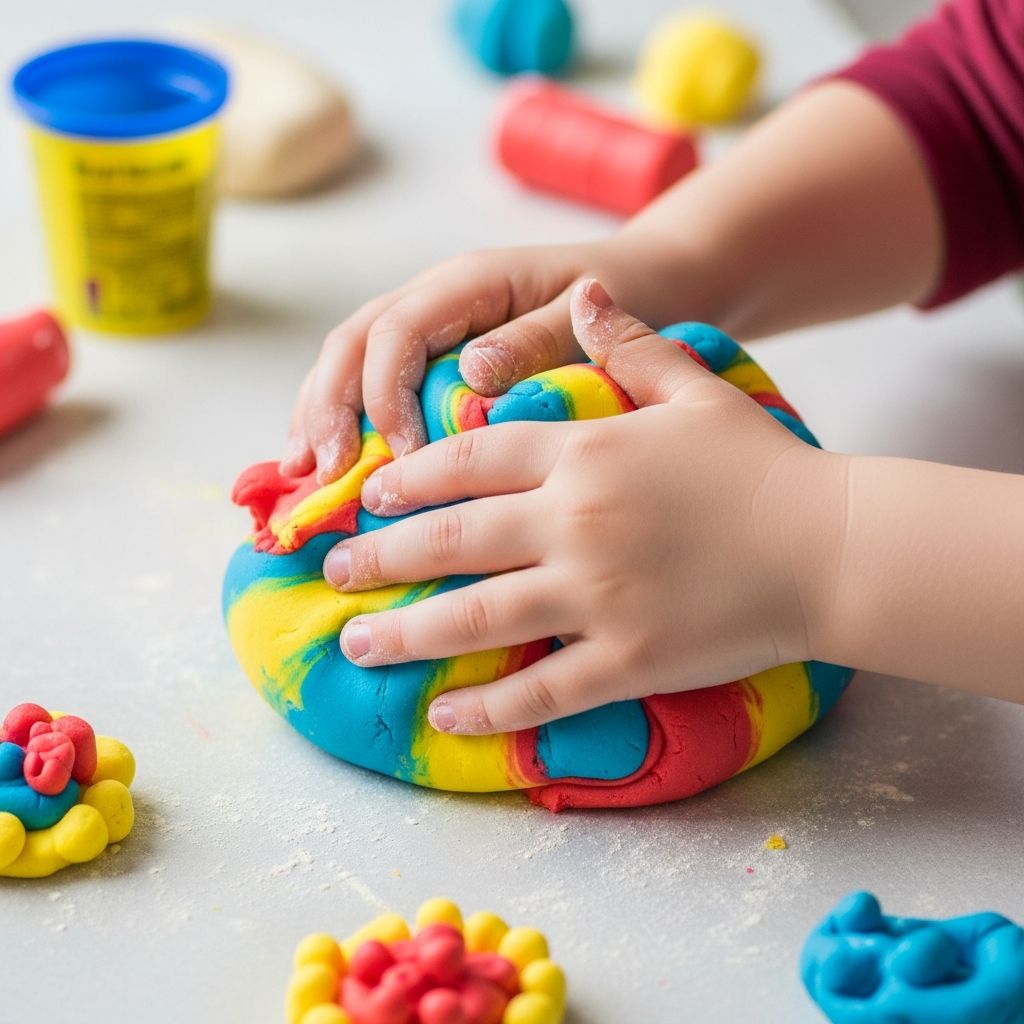
Crafting Playdough at Home: A Comprehensive Guide for Parents
Creating playdough from scratch offers parents an affordable, safe, and engaging way to provide their children with hours of tactile entertainment. Unlike commercially produced alternatives, homemade playdough allows you to control every ingredient, customize colors and scents, and transform an ordinary kitchen activity into a meaningful bonding experience with your child. This guide explores the fundamentals of playdough creation, the developmental advantages it provides, and numerous variations to keep playtime fresh and exciting.
Why Choose Homemade Playdough Over Store-Bought Options
The decision to make playdough at home versus purchasing pre-made versions comes down to several key considerations. Homemade playdough typically costs significantly less, using basic pantry staples that most households already stock. When you examine the ingredient lists of commercial playdough products, you often find preservatives, artificial dyes, and chemical additives that some parents prefer to avoid. Homemade versions allow complete transparency regarding what your child touches and potentially ingests if they put dough in their mouth.
Beyond cost and safety, the customization possibilities are virtually endless. You can adjust the texture to suit your child’s preferences, select natural food colorings, incorporate calming essential oils, add glitter for visual interest, or create scented variations that engage multiple senses simultaneously. The process itself becomes an educational opportunity where children learn measuring skills, following instructions, and understanding cause-and-effect relationships as ingredients transform into playdough.
However, it’s important to acknowledge the trade-offs. Homemade playdough requires dedicated time and effort to prepare. Without commercial preservatives, shelf life is shorter, typically lasting weeks rather than months if stored properly in airtight containers. The preparation process can be messy, creating additional cleanup responsibilities for parents. For families with limited time or those preferring minimal kitchen involvement, store-bought options remain convenient alternatives.
Essential Components of Playdough Success
Understanding the role each ingredient plays helps you create optimal playdough consistency. Flour serves as the primary structure-building component, providing bulk and helping the dough hold its shape. Salt acts as a preservative and adds texture. The liquid component—typically water—hydrates the flour and creates malleability. Oil contributes to a smoother, less sticky texture that’s easier for small hands to manipulate. Cream of tartar, while optional, significantly extends shelf life and improves texture quality. Food coloring adds visual appeal and can teach color-mixing concepts.
Five Essential Playdough Recipes
The Classic No-Cook Variation
This is the simplest approach for parents seeking quick preparation without stovetop involvement. Combine 2 cups of all-purpose flour with 1 cup of salt in a large mixing bowl. In a separate container, blend 1 cup of water with your chosen food coloring. Gradually incorporate the colored water into the flour mixture while stirring continuously. Transfer the dough to a clean surface and knead until the consistency reaches your desired firmness. If too sticky, add additional flour incrementally. This recipe works well when you need playdough quickly for spontaneous creative sessions.
The Enhanced Stovetop Method
For superior texture and longevity, this cooked version delivers excellent results. Mix 2 cups of all-purpose flour, 1 cup of salt, and 2 tablespoons of cream of tartar in a pot. In a separate vessel, combine 2 cups of water with food coloring and 2 tablespoons of vegetable oil. Pour the liquid mixture into the dry ingredients and stir over medium heat. Continue stirring as the mixture thickens, usually within 3-5 minutes. The dough will initially appear lumpy but will become cohesive as you continue cooking. Remove from heat when the dough pulls away from the pot sides, then cool on a clean surface before kneading. Store in airtight containers for extended freshness.
The Scent-Enhanced Version
Building on the classic recipe, you can infuse playdough with aromatic properties that enhance sensory engagement. Follow the no-cook or stovetop methods, then add 10-15 drops of food-grade essential oils such as lavender, peppermint, or vanilla during the mixing process. Essential oils provide calming properties and expand the sensory experience beyond visual and tactile elements. Many parents report that scented playdough encourages longer, more focused play sessions.
The Gluten-Free Alternative
For children with gluten sensitivities or celiac disease, this variation maintains the same beneficial properties while accommodating dietary restrictions. Combine 1 cup of rice flour with 1 cup of cornstarch, then follow standard playdough preparation methods using 1 cup of water, 1 tablespoon of vegetable oil, and food coloring. Some parents find gluten-free versions slightly more delicate, so storing them in particularly airtight containers helps maximize longevity.
The Edible Playdough Option
For very young children who frequently mouth objects, creating an edible version eliminates safety concerns about non-food consumption. Mix 1 cup of creamy peanut butter with 2 cups of powdered sugar and 2 tablespoons of honey. No cooking required—simply combine ingredients until you reach playdough consistency. While completely safe to eat, this version has a shorter shelf life due to lack of preservatives and should be refrigerated between play sessions.
Developmental Benefits of Playdough Engagement
Fine Motor Skill Development
Playdough manipulation provides one of the most significant developmental advantages for young children. Pinching, rolling, flattening, squishing, and molding the dough strengthens hand muscles and develops the precise finger coordination necessary for future writing skills. Occupational therapists regularly incorporate playdough into therapeutic interventions specifically because it builds the hand strength and dexterity that children need to hold pencils, manipulate utensils, and perform detailed tasks.
Sensory and Tactile Processing
The consistent texture of playdough provides a safe, controlled environment for children to explore tactile sensations. For sensory-seeking children who love texture, playdough offers satisfying engagement. For children with tactile sensitivity or sensory defensiveness, the predictable texture of playdough helps them gradually acclimate to various tactile experiences in a low-pressure setting. The deep pressure provided by manipulating playdough can produce calming, organizing effects on the nervous system.
Cognitive and Language Development
Playing with playdough naturally encourages vocabulary expansion as children describe their creations and textures using words like squishy, firm, bumpy, and smooth. When parents engage in playdough activities with their children, conversations naturally flow, supporting language development and concept formation. Following recipes introduces early mathematical thinking through measuring and counting.
Creativity and Imaginative Play
Playdough’s malleable nature encourages open-ended creative expression without prescribed outcomes. Children develop problem-solving skills as they figure out how to create specific shapes or structures. This type of unstructured, child-directed play builds confidence in creative thinking and reinforces the understanding that mistakes are simply opportunities to reshape and try again.
Social and Emotional Benefits
When multiple children play with playdough together, natural opportunities for social skill development emerge, including sharing, taking turns, and collaborative creation. Playdough play can also serve as an emotional regulation tool, providing a calming activity that reduces anxiety and supports self-soothing. Some educators use playdough mats paired with emotional vocabulary to help children process and express feelings constructively.
Creative Variations to Extend Play Interest
Once you’ve mastered basic playdough creation, numerous variations maintain novelty and engagement. Glitter-infused playdough adds sparkle and visual interest, transforming standard recipes by incorporating glitter into the finished dough. Chocolate-scented playdough appeals to children who enjoy food-themed play—add cocoa powder to your base recipe and adjust water slightly if needed to maintain proper consistency. Glow-in-the-dark playdough incorporates non-toxic glow paint, creating magical nighttime play experiences. Textured variations can include dried herbs, seeds, or small safe objects mixed into the dough to provide additional sensory stimulation.
Storage Solutions and Longevity Tips
Proper storage dramatically extends playdough usability. Transfer finished dough into airtight containers such as plastic storage containers or resealable bags, removing as much air as possible before sealing. Store in cool locations away from direct sunlight, which can fade colors over time. Homemade playdough typically maintains quality for 2-4 weeks when properly stored, with cooked versions lasting toward the longer end of this range. Some parents freeze playdough in portions, extending viability for several months when thawed before use.
If playdough begins drying out during play sessions, you can revive it by kneading in a few drops of water. If it becomes too soft or sticky, add small amounts of flour while kneading. Regular conditioning through play helps maintain ideal texture throughout the storage period.
Transforming Playdough Creation into Educational Activity
The preparation process itself offers rich learning opportunities that extend far beyond the finished product. When children participate in playdough creation, they engage in measuring—an early mathematics skill. Following recipe instructions develops sequential thinking and attention to directions. Gathering ingredients teaches planning and list-making. Mixing and pouring enhance hand-eye coordination while building confidence in kitchen skills and tool usage. This structured cooking play satisfies the educational objective of teaching children that they can create things independently, fostering self-efficacy and pride in accomplishment.
Safety Considerations and Ingredient Selection
While homemade playdough is generally considered safe for children, certain precautions merit attention. If your child frequently mouths objects, consider using the edible peanut butter variation or ensure close supervision during play. For children with salt sensitivities, reduce salt content or select salt-free recipes. Always use food-grade colorings, preferably natural varieties derived from vegetables or fruits, to minimize chemical exposure. If using essential oils for scent, verify they’re food-safe and use sparingly—a few drops suffice without overwhelming young sensory systems. Store playdough away from food items to prevent accidental ingestion of non-edible versions, and keep away from carpets and fabrics where colors might stain.
Common Questions About Homemade Playdough
How long does homemade playdough last?
Properly stored homemade playdough typically lasts 2-4 weeks in airtight containers. Recipes containing cream of tartar last longer than those without. Some versions can be frozen for several months and thawed when ready to use.
Can I make playdough without cooking it?
Yes, the no-cook recipe requires simply mixing flour, salt, water, oil, and food coloring without heat. However, cooked versions typically have superior texture and longer shelf life.
What’s the best age to introduce playdough?
Children as young as 2 years can play with playdough under supervision. The edible peanut butter version is safest for very young children who mouth objects frequently. Always supervise young children during playdough play.
Is homemade playdough safe for children with allergies?
You control all ingredients in homemade playdough, making it easy to avoid allergens. For severe allergies, communicate with your child’s teacher if playdough will be used in educational settings.
Can I make playdough with children?
Absolutely. In fact, involving children in playdough creation offers valuable educational benefits. Children can measure ingredients, pour and mix, and choose colors, developing numerous skills while creating something they’ll enjoy playing with afterward.
Why is my playdough sticky?
If playdough is too sticky, gradually add flour while kneading until reaching desired consistency. Conversely, if it’s too dry and crumbly, add small amounts of water while kneading.
What natural food colorings work best?
Gel food colorings provide vibrant hues with minimal added liquid. Liquid vegetable-based dyes work but require slightly more liquid adjustment. Spice-based colorings like turmeric create natural yellows and can provide additional sensory interest.
References
- Is Homemade Play-Doh Better than Store Bought? — For Littles. 2024. https://www.forlittles.com/blog/homemade-vs-store-bought-play-dough-which-is-best-for-your-child
- Homemade Playdough Offers a Ton of Learning Benefits — Port Jefferson Macaroni Kid. 2024. https://portjefferson.macaronikid.com/articles/5ae7e447b1d4250eb2b1a799/homemade-playdough-offers-a-ton-of-learning-benefits
- Benefits of Playdough in Child Development — Montessori Family School of Portland. 2024. https://www.mfspdx.org/whats-new-at-mfs/2024/5/24/playdough
- The Benefits Of Playing With Playdough And How To Make Your Own — Lil Rascals Academy. 2024. https://www.lilrascalsacademy.com/blog/the-benefits-of-playing-with-playdough-and-how-to-make-your-own/
- Playdough Power — National Association for the Education of Young Children (NAEYC). 2024. https://www.naeyc.org/our-work/families/playdough-power
- Benefits of play dough — The OT Toolbox. 2024. https://www.theottoolbox.com/benefits-of-play-dough/