Creating Your Own Bubble Solutions: A Complete Guide for Parents
There’s something magical about bubbles that captures the imagination of children and adults alike. Rather than purchasing expensive commercial bubble solutions, you can easily create your own at home using common kitchen ingredients. Homemade bubble solutions are not only more economical but often produce superior results compared to store-bought alternatives. This comprehensive guide explores various formulations, techniques, and tips to help you become an expert bubble maker.
Why Make Your Own Bubble Solution?
Creating bubble solutions at home offers numerous advantages beyond mere cost savings. Homemade formulations allow you to control the quality of ingredients, ensuring a safer product for young children who may accidentally ingest small amounts during play. Additionally, you can prepare large batches that store for extended periods, making this solution ideal for families, educators, and event planners who frequently engage in bubble activities. The flexibility of homemade recipes enables you to experiment with different ingredient combinations to achieve your desired bubble characteristics, whether you prefer large, robust bubbles or delicate, iridescent ones.
The process of making bubble solution is simple enough for children to participate in, turning ingredient preparation into an educational activity. Understanding the chemistry behind bubble formation helps young learners appreciate the science of surface tension and molecular interactions in an engaging, hands-on manner.
Essential Ingredients and Their Roles
Understanding what each ingredient contributes to your bubble solution helps you make informed decisions when adapting recipes or experimenting with variations.
Water: The Foundation
Water serves as the primary component of any bubble solution, comprising the majority of the mixture. Distilled water is preferable because it lacks minerals and impurities that can interfere with bubble formation, though tap water works adequately for casual play. The quality of water can subtly influence bubble longevity and stability, with distilled water generally producing slightly superior results.
Dish Soap: The Bubble Creator
Liquid dish soap is the critical ingredient that enables bubble formation. The soap molecules reduce surface tension in water, allowing thin films to form and trap air. Different dish soap brands contain varying formulations, with some producing better results than others. Mild, gentle formulas work effectively, though concentrated varieties designed for tough cleaning tasks may create excessively thick solutions.
Sweeteners: The Stabilizers
Sugar, corn syrup, or glycerine are added to improve bubble durability and prevent them from popping prematurely. These ingredients increase the viscosity of the solution, allowing bubbles to maintain their structural integrity longer. Sugar requires dissolution in warm water first, while corn syrup and glycerine can be added directly to the mixture. Each sweetener produces slightly different results, with some users reporting longer-lasting bubbles with glycerine compared to traditional sugar solutions.
Classic Three-Ingredient Formula
For those seeking ultimate simplicity, this basic recipe requires only water, dish soap, and sugar. Begin by creating a simple syrup by dissolving sugar in hot water, ensuring complete dissolution before cooling. Once cooled to room temperature, combine the syrup with room-temperature water and liquid dish soap. Mix gently to avoid creating excessive suds, which can interfere with bubble quality. This straightforward approach produces bubbles that are sticky enough to catch and maintain flight for impressive durations.
Preparation Steps:
- Heat water to dissolve sugar completely
- Allow the syrup to cool before combining with additional water
- Add dish soap gradually while stirring gently
- Let the solution rest for optimal results
Extended-Storage Recipe with Corn Syrup
If you’re preparing bubble solution for long-term storage or large-scale use, this recipe using corn syrup offers extended shelf life. Combine three cups of water (distilled preferred) with one-half cup of dish soap and one-half tablespoon of clear corn syrup. Mix all ingredients in a large bowl, stirring gently to combine without generating excessive foam. This solution improves with time; allowing it to rest for 24 hours before first use enhances bubble quality significantly.
The advantage of this recipe lies in its storage capacity. When maintained in an airtight container, this solution remains viable for up to one year, making it economical for families with regular bubble-play routines. The corn syrup provides excellent viscosity without requiring pre-dissolution, streamlining preparation.
Scaling for Large Batches:
| Batch Size | Water | Dish Soap | Corn Syrup |
|---|---|---|---|
| Standard | 3 cups | 1/2 cup | 1/2 tablespoon |
| Large | 1 gallon | 2 2/3 cups | 2 1/2 tablespoons |
| Extra Large | 2 gallons | 5 cups | 1/3 cup |
Premium Natural Formula with Castile Soap
For environmentally conscious families prioritizing non-toxic ingredients, this recipe incorporates castile soap, a plant-based cleansing agent. Combine two cups of water with one cup of liquid castile soap and one-half cup of glycerine, then add 15 drops of essential oils such as lavender, orange, or chamomile for pleasant aromatics.
The preparation process is straightforward: add water first, followed by glycerine, then soap, stirring gently to minimize suds. Essential oils should be added last and gently incorporated. This solution can be used immediately or allowed to rest overnight for enhanced bubble performance. The glycerine component creates particularly long-lasting, resilient bubbles compared to sugar-based alternatives.
If glycerine is unavailable, substitute two to three tablespoons of sugar or corn syrup, using warm water to ensure complete sugar dissolution.
Advanced Techniques for Competitive Bubble Making
Serious bubble enthusiasts who participate in competitions or create exceptionally large bubbles employ more sophisticated formulations incorporating specialty ingredients. These advanced recipes may include baking powder, J-Lube, Xanthan gum, or other polymers that enhance bubble elasticity and size capacity. While these ingredients are less accessible than standard kitchen staples, they produce bubbles of exceptional quality and duration, sometimes remaining intact for several minutes.
One advanced approach combines two cups of warm water with two cups of concentrated dish soap, seven grams of baking powder, and four grams of J-Lube powder. The precise preparation sequence matters significantly: baking powder is added to the water and soap mixture, followed immediately by J-Lube while stirring vigorously to prevent clumping. This technique requires practice and attention to detail but yields spectacular results.
Optimizing Your Bubble Solution
Resting Period
One of the most overlooked yet effective optimization techniques is allowing bubble solution to rest before use. Most recipes improve after sitting for 24 hours, with molecular components achieving better integration. This resting period permits air bubbles introduced during mixing to escape, resulting in cleaner, stronger bubble films.
Temperature Considerations
Bubble solution performs optimally at room temperature. Solutions prepared with warm ingredients should cool before extensive use, as elevated temperatures can compromise bubble formation and duration. When preparing solutions using sugar, always dissolve the sweetener in warm water first, allowing complete cooling before combining with soap and additional water.
Mixing Methodology
The manner in which ingredients are combined significantly impacts final solution quality. Gentle stirring prevents excess foam generation, which interferes with bubble formation. Harsh mixing introduces air into the solution, requiring additional resting time for these unwanted bubbles to escape. Using a large mixing bowl or bucket allows more surface area for foam dispersal.
Selecting Appropriate Bubble Wands
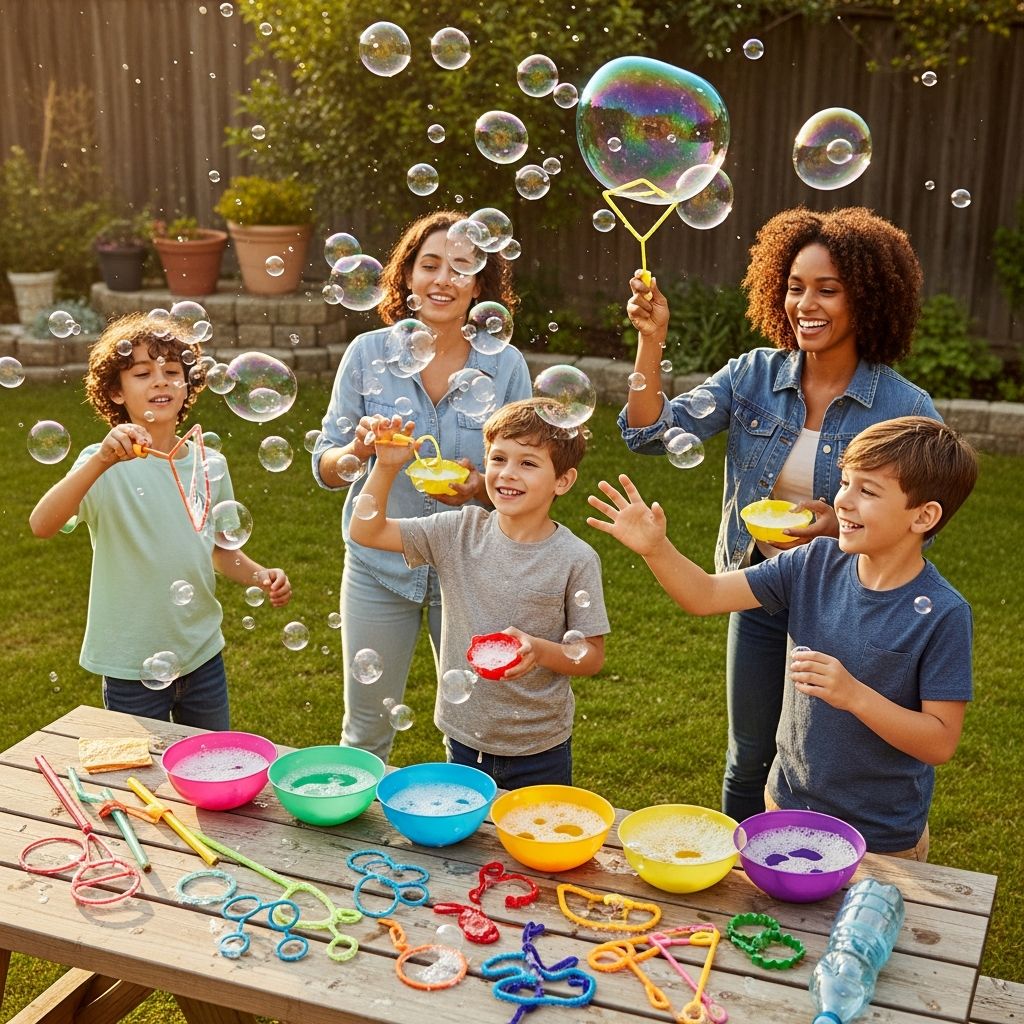
Bubble wands range from simple commercial plastic loops to elaborate handcrafted designs. Smaller wands generally produce better results than oversized versions, offering superior bubble formation and control. For creative families, pipe cleaners bent into circular or geometric shapes create effective homemade wands at minimal cost. Experimenting with various wand shapes and sizes helps identify optimal equipment for specific solution formulations.
Storage and Maintenance
Proper storage extends your bubble solution’s usable lifespan significantly. Airtight containers are essential, as exposure to air causes gradual evaporation and potential contamination. Glass jars provide excellent storage vessels, preventing chemical reactions that can occur with certain plastic containers. Stored solutions may develop a film or slight cloudiness, which is normal and doesn’t affect performance. If mold or unusual odors develop, discard the solution and prepare a fresh batch.
Troubleshooting Common Issues
Bubbles Pop Too Quickly
Rapid bubble failure typically indicates insufficient stabilizer content. Increase the amount of sugar, corn syrup, or glycerine in your recipe. Additionally, ensure the solution has rested for at least 24 hours, as aging improves longevity. Environmental factors such as low humidity and windy conditions naturally reduce bubble duration regardless of solution quality.
Excessive Foam Formation
Over-vigorous mixing causes foam accumulation. Stir solutions slowly and deliberately, allowing time for foam to dissipate between additions of ingredients. Allowing the mixture to rest for several hours before use permits remaining air bubbles to escape naturally.
Inadequate Bubble Formation
Poor bubble formation often results from using dish soap that’s too dilute or old. Verify that your liquid dish soap is concentrated, not a diluted hand-wash formula. Fresh ingredients consistently outperform aged ones, so consider replacing soap or other components if solutions fail to improve.
Budget-Friendly Considerations
Creating homemade bubble solutions represents substantial savings compared to commercial products, particularly when preparing large quantities. A single batch using basic ingredients costs only a fraction of store-bought alternatives while often producing superior results. Schools, camps, and event planners benefit significantly from preparing bulk solutions, reducing per-use costs dramatically. For families with multiple children or frequent outdoor activities, the investment in a few quality ingredients quickly pays dividends.
Frequently Asked Questions
Q: Can I use hand soap instead of dish soap?
A: Hand soap generally doesn’t work well for bubble solutions because it lacks the concentrated surfactants found in dish soap. Standard dish soap produces substantially superior results. If dish soap is unavailable, laundry detergent may serve as an alternative, though results are typically inferior.
Q: How long can I store homemade bubble solution?
A: When stored in airtight containers, properly prepared bubble solutions remain viable for up to one year. Cooler storage locations and glass containers extend shelf life further by minimizing evaporation and preventing chemical degradation.
Q: Is homemade bubble solution safe for young children?
A: Yes, homemade solutions using food-grade ingredients and non-toxic dish soap are safe for young children. Natural recipes incorporating castile soap and glycerine provide additional safety benefits. Supervise play to prevent intentional ingestion, though accidental contact poses minimal risk.
Q: What causes rainbow colors in bubbles?
A: Rainbow coloration results from light interference within the thin soap film. As light reflects off the bubble’s exterior and interior surfaces, wavelengths interact, creating the characteristic iridescent colors. This phenomenon occurs naturally with properly formulated solutions.
Q: Can I add food coloring to bubble solution?
A: Food coloring dissolves in water but doesn’t significantly affect bubbles’ appearance since they’re transparent. Specialized bubble dyes designed for this purpose work better, though basic solutions without additives produce equally impressive results.
Q: Why do some recipes use baking powder?
A: Baking powder acts as a stabilizing agent in advanced formulations, creating stronger bubble films that resist popping. This ingredient is optional for basic recipes but enhances performance in competition-grade solutions.
References
- 3-Ingredient Homemade Bubble Recipe — The Cinnamon Mom. Accessed 2026. https://thecinnamonmom.com/homemade-bubble-recipe/
- How To Make Homemade Bubble Solution — Babble Dabble Do. Accessed 2026. https://babbledabbledo.com/how-to-make-homemade-bubble-solution/
- Non-Toxic Homemade Bubble Solution — Grace-Filled Homemaking. Accessed 2026. https://gracefilledhomemaking.com/non-toxic-homemade-bubble-solution/
- Recipes — Soap Bubble Wiki. Accessed 2026. https://soapbubble.fandom.com/wiki/Recipes