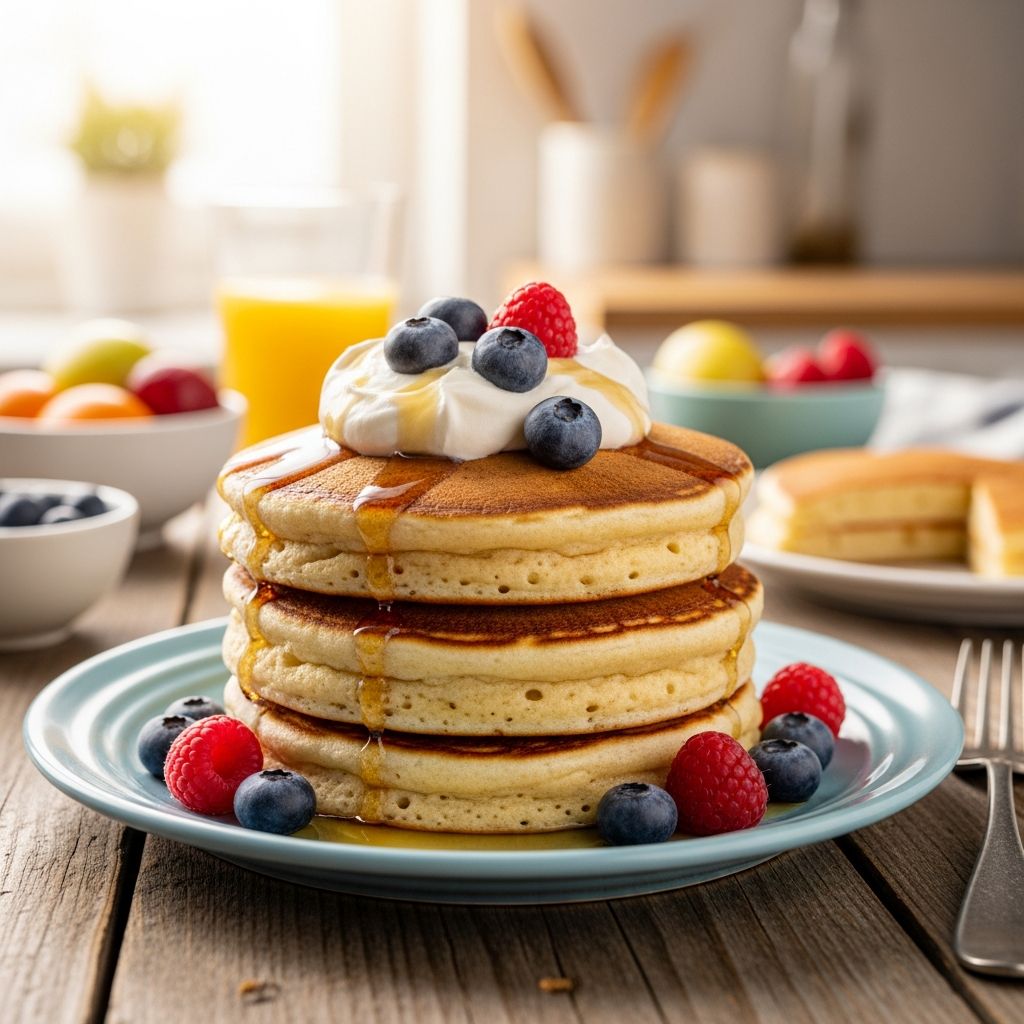
If you have ever flipped a pale, rubbery pancake and wondered what went wrong, you are not alone. Pancakes look simple, but the best ones — tall, tender, and golden — rely on a few key techniques and the right balance of ingredients. This guide walks you through how to make consistently fluffy pancakes at home, plus how to adapt the recipe for your family’s tastes.
Why Homemade Pancakes Beat the Box Mix
Boxed mixes are convenient, but making pancakes from scratch gives you control over flavor, texture, and nutrition.
- Better texture: The right ratio of flour, liquid, and leavening creates pancakes that are soft inside with lightly crisp edges.
- Custom flavor: You can adjust sweetness, add vanilla or spices, or fold in fruit and chocolate.
- Fewer additives: You avoid preservatives and can choose whole grains or reduced sugar if you prefer.
- Budget-friendly: Basic pantry ingredients usually cost less per batch than prepared mixes.
The Science Behind Fluffy Pancakes
Understanding what each ingredient does makes it easier to get reliable results and fix problems.
| Ingredient | Main Role | What Happens If It’s Off |
|---|---|---|
| Flour | Provides structure through gluten and starch. | Too much: dense, dry pancakes. Too little: thin, fragile pancakes. |
| Baking powder / baking soda | Releases gas that makes batter rise and become airy. | Too little: flat pancakes. Too much: bitter taste and uneven rise. |
| Sugar | Adds sweetness, helps browning, and slightly softens texture. | Too little: pale and bland. Too much: overly dark, sticky surface. |
| Salt | Balances sweetness and enhances overall flavor. | Without it: flat, one-note flavor. |
| Milk or buttermilk | Hydrates flour, dissolves sugar, activates leavening, and adds tenderness. | Too much: thin, crepe-like pancakes. Too little: thick, undercooked centers. |
| Egg | Helps bind ingredients and adds richness and color. | Without enough egg: fragile, crumbly pancakes. |
| Butter or oil | Adds flavor, moisture, and softens the crumb. | Too little: dry, tough texture. Too much: greasy pancakes. |
Classic pancakes rely on chemical leavening (baking powder or baking soda) to create air bubbles that expand in the heat of the pan. Gentle mixing helps keep these bubbles intact so the batter puffs instead of turning chewy.
Core Recipe: Everyday Fluffy Pancakes
This base recipe is designed for simplicity. It uses all-purpose flour, standard baking powder, and ingredients you likely already have.
Approximate Ingredient Ratios
- Flour: about 1 1/2 cups all-purpose flour
- Baking powder: around 2 1/2–3 teaspoons
- Salt: 1/2 teaspoon
- Sugar: 1–2 tablespoons, depending on how sweet you like them
- Milk: about 1 1/4 cups (whole or low-fat both work)
- Egg: 1 large egg
- Butter: 2–3 tablespoons melted, plus more for the pan
- Optional flavor: 1–2 teaspoons vanilla extract, pinch of cinnamon, or citrus zest
These amounts create a batter that is thick but pourable. If you like thinner pancakes, you can stir in a little more milk; for extra thick, add a spoonful of flour at a time.
Step-by-Step Method
- Combine the dry ingredients.
In a medium bowl, whisk flour, baking powder, salt, and sugar to distribute leavening evenly and break up any lumps. - Mix the wet ingredients.
In a separate bowl or large measuring jug, whisk the egg until blended. Add the milk, melted (and cooled) butter, and vanilla if using. Stir until smooth. - Bring the batter together gently.
Pour the wet mixture into the dry. Use a spatula or spoon to fold everything together just until you no longer see streaks of dry flour. A few small lumps are fine and actually help prevent toughness from overmixing. - Let the batter rest briefly.
Allow the bowl to sit at room temperature for about 5–10 minutes while you heat the pan. This rest lets the flour hydrate and gives baking powder time to start working, which can improve tenderness and height. - Preheat and grease your cooking surface.
Heat a non-stick skillet or griddle over medium to medium-high heat. When a few drops of water flicked onto the surface sizzle steadily, add a thin layer of butter or oil. - Portion the batter.
Use about 1/4 cup of batter for small pancakes or 1/3 cup for larger ones. Pour gently onto the pan, leaving space for spreading. - Flip at the right time.
Cook until you see bubbles forming across the surface and the edges start to look set and slightly dry. Slide a spatula underneath and flip in one confident motion. Cook the second side 1–2 minutes until golden. - Serve warm.
Keep finished pancakes on a warm plate or in a low oven while you finish the batch. Serve with butter, syrup, fruit, yogurt, or any toppings your family loves.
Smart Techniques for Consistently Great Pancakes
A few habits make the difference between decent pancakes and the kind everyone asks for again.
- Measure flour lightly: Spoon flour into the cup and level it off instead of scooping straight from the bag, which packs in more flour and leads to dense pancakes.
- Use fresh leavening: Baking powder and baking soda lose strength over time; most sources recommend replacing them about every 6–12 months for best rising power.
- Avoid overmixing: Stop stirring once the dry ingredients are mostly combined. Overmixing develops more gluten, which can make pancakes chewy instead of tender.
- Control the heat: Medium to medium-high heat helps pancakes cook through while browning evenly. If they brown before the centers set, lower the heat slightly.
- Use a non-stick or well-seasoned pan: This reduces sticking and lets you cook with less fat while still getting a nice crust.
Family-Friendly Flavor Variations
Once you are comfortable with the basic recipe, it is easy to customize the batter and toppings.
Mix-Ins to Fold into the Batter
- Fresh blueberries or raspberries: Gently fold into the batter right before cooking, or scatter onto each pancake immediately after pouring the batter on the pan.
- Chocolate chips: A small handful adds dessert-like richness — especially popular with kids.
- Grated apple or pear: Adds moisture and natural sweetness, especially with a pinch of cinnamon.
- Chopped nuts: Toasted pecans or walnuts give crunch and a nutty aroma.
Flavor Boosters in the Batter
- Vanilla extract: A teaspoon or two gives a bakery-style aroma.
- Spices: Cinnamon, nutmeg, or cardamom can make the pancakes feel cozy and seasonal.
- Citrus zest: Lemon or orange zest brightens flavor and pairs well with fresh berries.
Creative Topping Ideas
- Sliced fresh fruit with a spoonful of yogurt
- Warm berries lightly mashed with a bit of honey
- Nut butter and banana slices for added protein and staying power
- A drizzle of maple syrup or a dusting of powdered sugar for classic appeal
Make-Ahead and Freezer Tips for Busy Mornings
Homemade pancakes do not have to be limited to relaxed weekends. With a little planning, you can serve them on school days too.
Storing Batter
- Short rest: Letting batter stand 5–15 minutes before cooking can improve texture.
- Same-day storage: If you need to pause, many home cooks refrigerate batter for a few hours; stir gently and check consistency before cooking, adding a splash of milk if it thickened.
Freezing Cooked Pancakes
- Cool pancakes completely in a single layer.
- Freeze them on a baking sheet, then transfer to an airtight bag or container.
- Reheat in a toaster, toaster oven, or oven until warmed through and slightly crisp at the edges.
Freezing already-cooked pancakes is often more reliable than refrigerating batter because the leavening has already done its job, and you will not lose fluffiness.
Troubleshooting Common Pancake Problems
If your pancakes are not turning out the way you want, compare your results to the issues below.
| Problem | Likely Cause | How to Fix It |
|---|---|---|
| Flat, thin pancakes | Too little leavening, old baking powder, or very thin batter. | Check the freshness of your baking powder and slightly reduce the milk next time. |
| Tough or rubbery texture | Overmixing the batter developed excess gluten. | Stir just until combined and leave small lumps in the batter. |
| Very dark outside, raw inside | Heat set too high or pancakes too thick. | Lower the heat slightly and spread the batter more thinly. |
| Pancakes stick to the pan | Insufficient greasing or pan not fully heated. | Use a non-stick pan, preheat thoroughly, and add a thin film of butter or oil. |
| Bitter or metallic aftertaste | Too much baking powder or using baking powder with a noticeable metallic flavor. | Measure carefully and consider using aluminum-free baking powder. |
Health-Conscious Tweaks (Without Losing the Fluff)
You can make pancakes a bit more nutritious while keeping them enjoyable.
- Partial whole grain: Swap up to half of the all-purpose flour for whole wheat flour or oat flour. Whole grains add fiber and more sustained energy.
- Moderate sugar: Slightly reducing sugar in the batter still gives you wiggle room for syrup or fruit on top.
- Healthy fats: Use a neutral oil instead of butter in the batter if you want to lower saturated fat slightly.
- Protein boost: Serve pancakes with yogurt, eggs, or nut butter to help balance the meal.
Kid Involvement: Turning Pancakes into a Ritual
Pancakes are an ideal recipe for children to help with because most steps are simple and forgiving.
- Let kids measure flour, sugar, and milk (with supervision).
- Ask them to whisk the dry ingredients or the egg and milk together.
- Offer choices for mix-ins or toppings so they can create their own combinations.
- Older kids can learn to flip pancakes safely with guidance around hot surfaces.
Turning pancake day into a small weekly ritual can make breakfast feel special without a complicated recipe.
Frequently Asked Questions (FAQs)
Can I use water instead of milk in pancake batter?
You can, but milk contributes flavor, tenderness, and a bit of richness, so pancakes made with water tend to be less flavorful and slightly tougher.
What is the difference between using milk and buttermilk?
Buttermilk adds tangy flavor and reacts with baking soda or baking powder to create more lift, often yielding especially tender, fluffy pancakes.
How hot should the pan be?
Aim for medium to medium-high heat. If the surface smokes or pancakes brown before they set on top, the pan is too hot; if they take a long time to color, increase the heat slightly.
Why do some recipes call for both baking powder and baking soda?
Baking powder provides most of the rise, while baking soda reacts with acidic ingredients like buttermilk or yogurt to boost leavening and improve browning.
How do I keep pancakes warm while I cook the rest?
Place cooked pancakes in a single layer on a baking sheet in a low oven (around 90–100°C) to keep them warm without drying them out.
References
- Perfect Pancakes Recipe — The Pioneer Woman. 2023-02-01. https://www.thepioneerwoman.com/food-cooking/recipes/a11442/perfect-pancakes/
- Using Whole Grains in Baking — Harvard T.H. Chan School of Public Health. 2021-06-15. https://www.hsph.harvard.edu/nutritionsource/whole-grains/
- Fluffy Pancakes Recipe (Best on the Internet) — Laura Fuentes. 2022-05-10. https://www.laurafuentes.com/fluffy-pancakes-recipe/
- The Best Pancakes You’ll Ever Make | Epicurious 101 — Condé Nast / Epicurious. 2019-03-05. https://www.youtube.com/watch?v=vkcHmpKxFwg
- Best Pancake Recipe – Light, Fluffy & So Easy to Make — Once Upon a Chef. 2022-04-20. https://www.onceuponachef.com/recipes/best-pancake-recipe.html