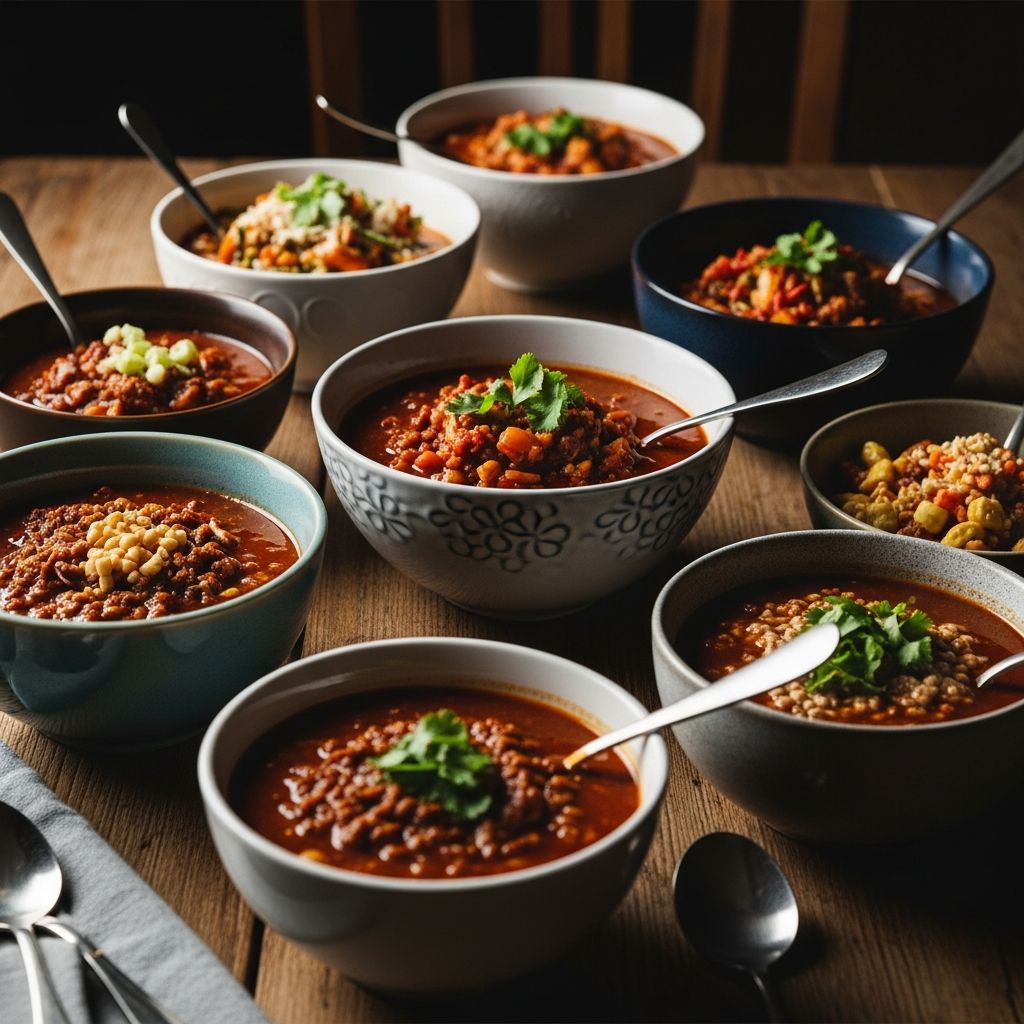
Chili is one of those rare meals that can be hearty, budget-friendly, customizable, and easy to make in a single pot. It works for busy weeknights, potlucks, game days, and cold-weather evenings when everyone wants something warm and comforting.
This guide walks through how to build a flavorful pot of chili, how to adapt it for different diets and heat levels, and how to turn one base recipe into multiple meals with smart serving ideas.
Why Chili Belongs in Your Weekly Rotation
Chili is more than just a bowl of meat and beans; it is a flexible framework you can adapt to your pantry and your family’s tastes. With a few core techniques, you can create countless variations, from classic beef to veggie-packed, slow cooker, or kid-friendly versions.
- It typically uses affordable staples like canned beans, tomatoes, and ground meat or lentils.
- One pot means easier cleanup and less time in the kitchen.
- Leftovers often taste even better the next day because flavors continue to develop.
The Core Components of Great Chili
Think of chili as a balance of four main elements: protein, base, flavor builders, and texture boosters. Mastering these elements helps you swap ingredients confidently while still getting a satisfying result.
| Element | Examples | What It Adds |
|---|---|---|
| Protein | Ground beef, turkey, chicken, pork, beans, lentils | Heft, satiety, and key flavor |
| Base | Crushed tomatoes, tomato sauce, broth, pureed chiles | Body, moisture, and acidity |
| Flavor builders | Onion, garlic, spices, peppers, herbs | Depth, aroma, and complexity |
| Texture boosters | Beans, vegetables, corn, grains | Variety in each bite and added nutrition |
Once you understand this framework, you can change one piece at a time—such as swapping ground beef for turkey or adding sweet potatoes—without losing the soul of the dish.
Building Flavor: Step-by-Step
Most successful chili recipes follow a similar method, regardless of the type of protein or beans used. The key is layering flavor slowly rather than dumping everything into the pot at once.
- Sauté aromatics: Start with oil, onion, and garlic until softened and fragrant.
- Brown the protein: Cook meat or lightly toast plant-based proteins to develop flavor.
- Bloom spices: Stir in chili powder, cumin, paprika, and other seasonings briefly in the hot fat.
- Deglaze and add base: Use tomatoes or broth to loosen browned bits from the bottom of the pot.
- Simmer gently: Add beans and vegetables and cook until flavors meld and the texture thickens.
Taking a few minutes at each of these stages makes the difference between a flat-tasting chili and one with real depth and character.
Choosing Your Chili Style
There is no single “correct” chili; there are many regional and personal styles that families enjoy. Some emphasize meat and chiles, others lean heavy on beans and vegetables, and some skip tomatoes entirely.
- Classic family chili: Ground meat, beans, and tomatoes with moderate spice.
- Bean-forward chili: Multiple bean varieties with a smaller amount of meat or all vegetarian.
- Chunky stew-style: Cubed beef or pork cooked low and slow until tender.
- White chili: Chicken or turkey with white beans and mild green chiles instead of red tomatoes.
Classic Weeknight Beef Chili Blueprint
This outline describes a straightforward pot of beef chili you can adjust to your family’s preferences. It is not a strict recipe but a flexible ratio you can follow with what you have on hand.
- 1 to 1.5 pounds ground beef (or a mix of beef and turkey)
- 1 large onion and 2 to 3 cloves of garlic, finely chopped
- 2 cans of beans (kidney, pinto, or black), rinsed and drained
- 1 to 2 cans of tomatoes or tomato sauce, plus a splash of broth as needed
- Chili powder, cumin, paprika, salt, and pepper
Simmer this mixture for at least 30 to 45 minutes so the flavors can mellow and deepen, adding more liquid if it becomes too thick for your liking.
Making Chili Kid-Friendly Without Losing Flavor
If you cook for children or spice-sensitive guests, it is easy to keep chili flavorful but gentle on the heat. The trick is to separate flavor from fire by using aromatics and mild spices generously while leaving hot ingredients optional at the table.
- Use mild chili powder and skip or reduce cayenne and jalapeños in the main pot.
- Serve sliced jalapeños, hot sauce, or crushed red pepper flakes on the side for adults.
- Add sweetness with carrots, bell peppers, or a small amount of corn to balance acidity.
Lean and Light: Poultry and Turkey Chili
Using ground turkey or chicken is an easy way to lighten chili without sacrificing comfort. These lean proteins absorb spices and aromatics very well, so seasoning thoroughly is important.
- Choose dark-meat turkey or a mixture of dark and white meat for more moisture.
- Brown poultry well to develop flavor before adding liquids.
- Pair with vegetables like zucchini, carrots, or bell peppers for color and texture.
Poultry-based chili often pairs nicely with toppings like avocado, lime, and cilantro for a fresher, lighter feel.
Plant-Powered and Vegetarian Chili Ideas
Vegetarian chili can be just as satisfying as meat-based versions when built around beans, lentils, hearty vegetables, and robust seasoning. Slow simmering helps plant-based ingredients absorb flavorful broth and spices.
- Combine multiple beans—such as black, kidney, and cannellini—for an interesting mix of textures.
- Use lentils or crumbled tempeh for a “meaty” feel without animal products.
- Highlight vegetables like sweet potatoes, corn, or mushrooms to add richness and body.
For extra depth, add a spoonful of tomato paste or a small amount of cocoa powder to the pot; both contribute complexity without making the chili taste like chocolate.
Chili by the Clock: Stove, Slow Cooker, and Instant Pot
Different cooking methods give you flexibility depending on your schedule. Longer cooks develop more flavor, but modern appliances can help when dinner needs to be quick.
| Method | Best For | Approximate Time |
|---|---|---|
| Stovetop | Monitoring texture and seasoning as it cooks | 45 to 90 minutes of simmering |
| Slow cooker | Hands-off cooking during the day | 4 to 8 hours on low, depending on recipe |
| Pressure cooker | Quicker cooking with developed flavor | About 10 to 20 minutes at pressure, plus release time |
Whichever method you choose, resist the urge to rush the simmering stage, as it is crucial for blending the flavors and thickening the sauce naturally.
Dialing In Heat and Seasoning
Heat level is deeply personal, so think of the spice mix as adjustable rather than fixed. Even within a single chili powder brand, intensity can vary, so taste regularly and adjust slowly.
- Start with a modest amount of chili powder and cumin, then add more once the chili has simmered for a bit.
- Balance intense heat with small amounts of sugar, honey, or naturally sweet vegetables like carrots.
- Finish with salt and acid (such as lime juice or a splash of vinegar) only after the chili has cooked; this keeps the flavors bright.
Toppings and Add-Ons That Transform a Bowl
One of the joys of chili is the topping bar. Keeping the base relatively straightforward allows everyone at the table to customize their bowl to their own taste using a mix of cool, crunchy, creamy, and spicy add-ons.
- Dairy: shredded cheese, sour cream, plain yogurt, queso fresco
- Fresh elements: chopped cilantro, green onions, diced tomatoes, avocado
- Crunch: tortilla chips, corn chips, sliced radishes, toasted pumpkin seeds
- Heat: jalapeño slices, hot sauce, chili flakes, spicy salsa
Setting these toppings out in small bowls turns a simple pot of chili into a build-your-own bar that feels fun and interactive, especially for gatherings.
Beyond the Bowl: Creative Ways to Serve Chili
Chili leftovers are rarely a problem because they can be reinvented into new meals with minimal effort. This makes chili a smart choice if you like to meal prep once and eat several different dishes throughout the week.
- Chili-topped potatoes: Spoon warm chili over baked russet or sweet potatoes and finish with cheese and green onions.
- Chili mac: Stir cooked pasta into hot chili and sprinkle with cheese for a comforting skillet dinner.
- Loaded nachos: Layer tortilla chips with chili, cheese, and your favorite toppings, then briefly bake until bubbly.
- Chili dogs or sliders: Serve over grilled sausages or mini burgers for parties and game days.
These variations help stretch a single batch across multiple meals so you spend less time cooking but still enjoy variety.
Storing, Freezing, and Reheating Chili Safely
Chili keeps well, which is one of its biggest advantages for busy households. Proper cooling and storage help maintain both quality and food safety.
- Cool chili in shallow containers before refrigerating so it passes quickly through the temperature “danger zone.”
- Store in airtight containers in the refrigerator for up to several days, depending on ingredients and handling.
- Freeze in labeled portions and reheat gently on the stove with a splash of water or broth if needed.
As it sits, chili may thicken; stir in a small amount of liquid while reheating to reach your preferred consistency.
Common Chili Pitfalls (and Easy Fixes)
Even experienced cooks encounter the occasional overly thin, overly thick, or too-spicy pot. Simple adjustments can usually rescue chili without starting over.
- Too thin: Simmer uncovered to let excess liquid evaporate, or stir in a small amount of mashed beans to thicken.
- Too thick: Add broth, water, or tomato sauce a little at a time until it loosens to your liking.
- Too spicy: Add more beans, tomato, or a mild starch like rice or potato, and serve with dairy-based toppings.
- Bland: Taste toward the end and add salt, a pinch of sugar, or a squeeze of lime to wake up the flavors.
Quick Comparison of Popular Chili Variations
Different chili types bring different flavors, textures, and ingredients to the table. Choosing the right style often depends on your time, dietary needs, and what sounds comforting that day.
| Chili Type | Main Protein | Beans? | Typical Heat Level | Best For |
|---|---|---|---|---|
| Classic family chili | Ground beef or turkey | Yes | Mild to medium | Weeknight dinners and potlucks |
| White chicken chili | Shredded or ground chicken | White beans | Mild with gentle green chile flavor | Those who prefer lighter, creamier bowls |
| Vegetarian bean chili | Beans and lentils | Yes, usually multiple types | Mild to bold, depending on seasoning | Plant-based eaters and mixed-diet households |
| Chunky beef chili | Cubed beef | Optional, often fewer beans | Medium to robust | Slow weekend cooking and special occasions |
FAQs About Making Chili at Home
Can chili be made ahead of time?
Yes, chili is an ideal make-ahead dish because the flavors continue to meld as it rests in the refrigerator. Many people find that it tastes even better the second day, making it perfect for prepping before a gathering or busy workweek.
Do I have to use beans?
No, beans are optional, and some traditional styles emphasize meat and chiles instead. If you skip beans, consider adding extra vegetables or slightly more meat to maintain the hearty texture.
How can I make chili gluten-free?
Most basic chili recipes are naturally gluten-free when thickened by simmering rather than flour, but always check labels on broth, seasoning blends, and canned ingredients. Serve with naturally gluten-free sides like rice, baked potatoes, or corn-based tortilla chips.
What is the best way to thicken chili without flour?
Mashing some of the beans against the side of the pot and stirring them back in is a simple way to add body without extra ingredients. Extended uncovered simmering or adding a small amount of tomato paste can also help create a richer, thicker consistency.
Can I freeze chili with beans?
Most chilis with beans freeze well, although the beans may soften slightly upon thawing. Cool completely, portion into containers, and freeze for convenient future meals that reheat easily on the stove or in the microwave.
Bringing It All Together
Chili thrives on flexibility: choose your protein, control the heat, and customize toppings so everyone at the table gets a bowl that feels tailored to them. By understanding the basic structure—protein, base, flavor builders, and texture boosters—you can confidently adapt any recipe to fit your pantry and preferences.
Whether you lean toward classic beef, light and bright chicken, or hearty plant-based versions, a good pot of chili offers comfort, nourishment, and an easy way to feed a crowd with minimal stress. With these ideas and techniques, you can turn chili night into a reliable favorite your family looks forward to all season long.