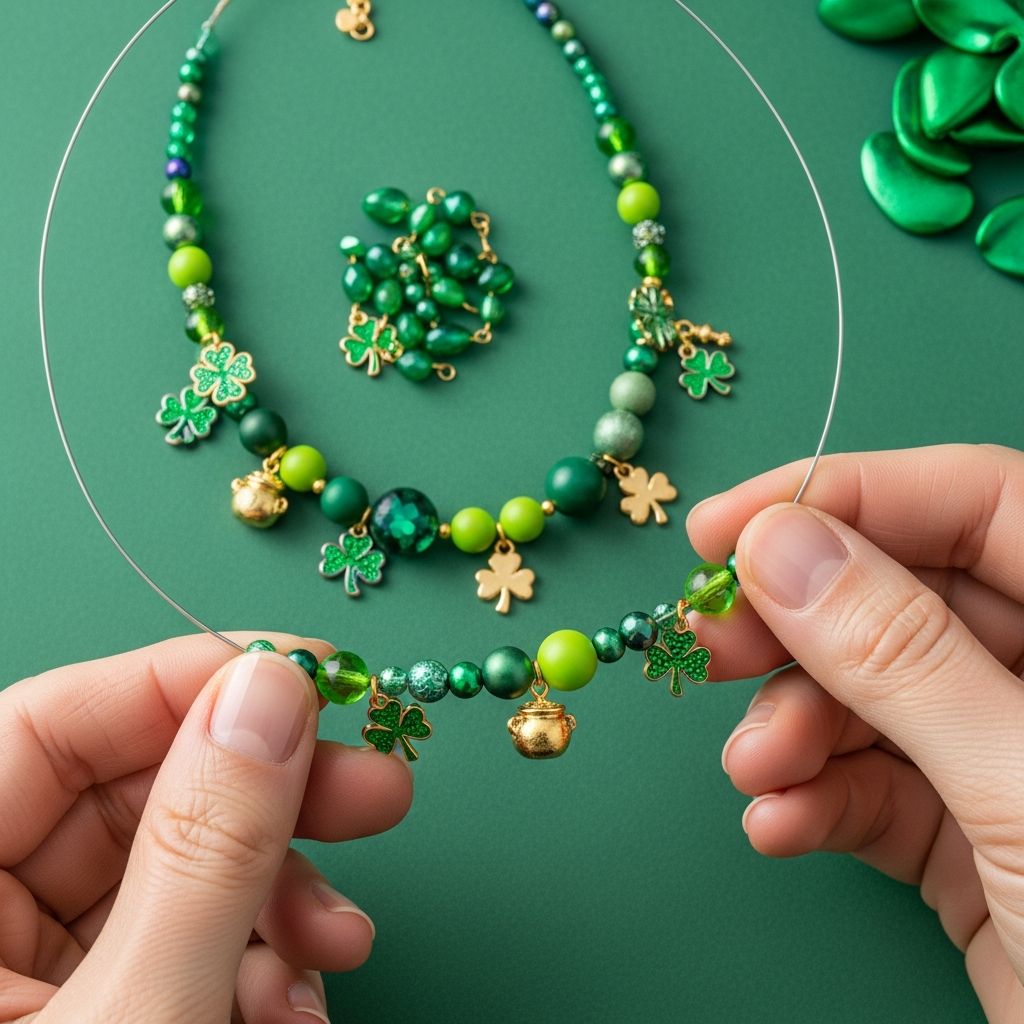
Why Make a St. Patrick’s Day Necklace?
St. Patrick’s Day is a vibrant celebration filled with green hues, shamrocks, and festive spirit. Crafting your own necklace is a wonderful way to add a personal touch to your holiday attire while engaging in a creative activity suitable for all ages. Whether you’re hosting a party, attending a parade, or simply want to feel festive, a handmade necklace can be a memorable keepsake and a conversation starter.
Materials You’ll Need
Creating a St. Patrick’s Day necklace is simple and affordable. Most supplies can be found at craft stores or repurposed from items around the house. Here’s a basic list to get started:
- Green beads (plastic, wood, or glass)
- Shamrock charms or pendants
- String, yarn, or elastic cord
- Jump rings and clasps (optional)
- Glitter, resin, or Mod Podge (for embellishment)
- Scissors
- Optional: Fruit Loops, Cheerios, or other cereal for edible necklaces
Step-by-Step Necklace Creation
Follow these easy steps to make your own St. Patrick’s Day necklace:
- Choose your base material. For a classic look, use green beads or string cereal for a playful, edible version.
- Thread beads or cereal onto your chosen string, alternating with shamrock charms for added flair.
- Secure the ends with a knot or clasp. For a more durable finish, use jump rings and a lobster clasp.
- Embellish with glitter or resin if desired. Apply a thin layer of Mod Podge or resin to charms and sprinkle with green glitter for a sparkling effect.
- Let dry completely before wearing.
Customization Ideas
Personalize your necklace to make it truly unique:
- Add gold or silver accents for a touch of luck.
- Incorporate other Irish symbols like harps or leprechaun hats.
- Use different shades of green to create a gradient effect.
- Include small bells or dangles for extra movement and sound.
- For kids, try making necklaces with colorful cereal or fruit loops for a fun, edible twist.
Benefits of DIY Holiday Crafts
Creating your own St. Patrick’s Day necklace offers several advantages:
- Cost-effective: Most materials are inexpensive and can be reused for other projects.
- Family-friendly: Crafting together fosters creativity and bonding.
- Customizable: You can tailor the design to match your style or event theme.
- Eco-friendly: Using recycled or repurposed materials reduces waste.
- Memorable: Handmade jewelry makes a thoughtful gift or keepsake.
FAQs
Can I make a necklace without beads?
Yes! You can use cereal, pasta, or even cut-out paper shapes strung together with yarn or twine.
How do I make my necklace sparkle?
Apply a thin layer of Mod Podge or clear resin to charms and sprinkle with green glitter. Allow to dry completely before wearing.
Are edible necklaces safe for young children?
Edible necklaces made from cereal or fruit loops are safe for children, but supervision is recommended to prevent choking hazards.
Can I use other colors besides green?
While green is traditional, you can incorporate gold, white, or other festive colors to match your outfit or theme.
How long does it take to make a St. Patrick’s Day necklace?
Most necklaces can be completed in under 30 minutes, making them perfect for last-minute party prep or quick craft sessions.
Table: Necklace Material Comparison
| Material | Pros | Cons |
|---|---|---|
| Green beads | Durable, reusable, wide variety | May require special tools |
| Cereal/Fruit Loops | Edible, fun for kids, inexpensive | Not long-lasting |
| Resin/Mod Podge | Customizable, sparkly finish | Requires drying time |
| Paper/cardboard | Easy to cut, customizable shapes | Less durable |
Final Tips for a Festive Finish
When your necklace is complete, consider adding a small tag or charm with a lucky message or Irish phrase. Display your creation proudly or gift it to a friend to spread the holiday cheer. With a little creativity and these simple steps, you can make a St. Patrick’s Day necklace that’s as unique as your celebration.