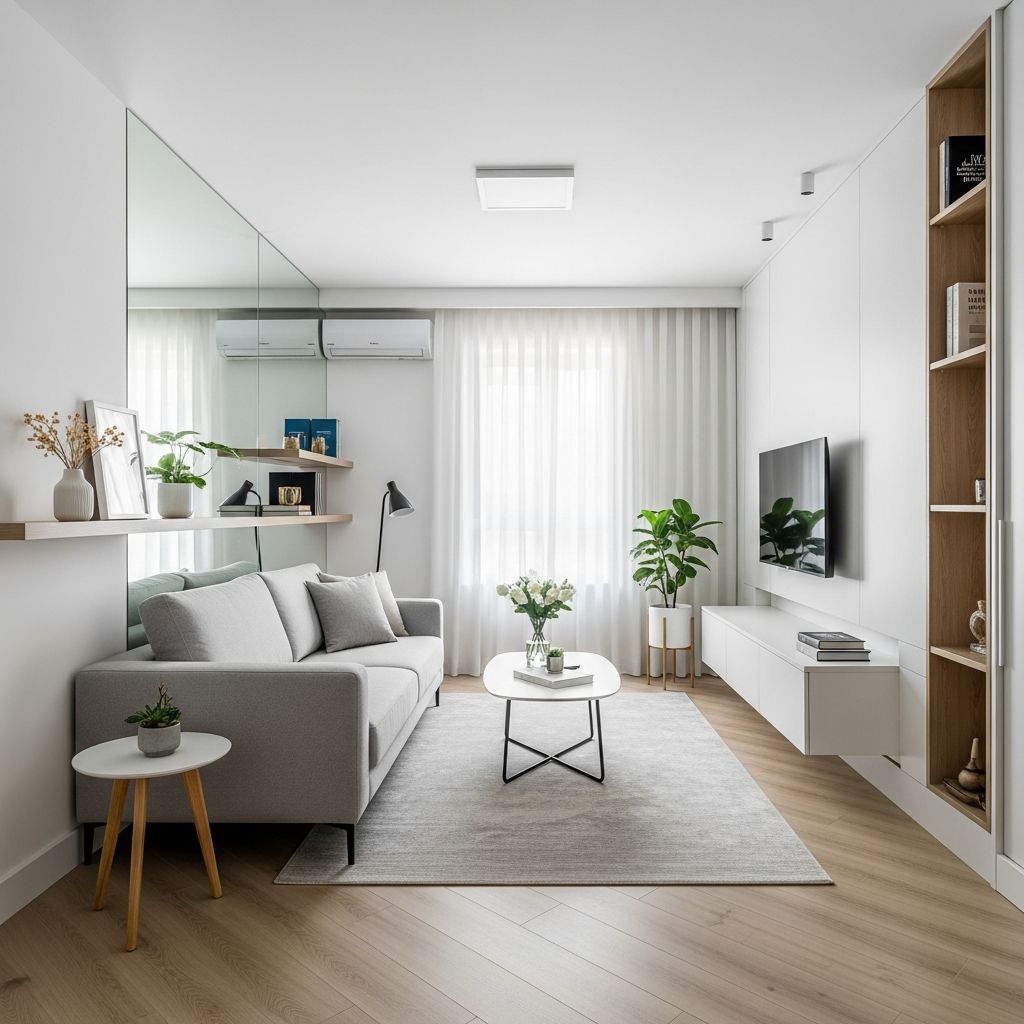
Living in compact homes or apartments presents unique challenges, but with thoughtful design choices, you can create the illusion of expansiveness. These strategies leverage optics, light, and minimalism to make tight quarters feel welcoming and vast. From color palettes to furniture placement, each tip builds on visual perception principles used by professional designers.
Harnessing Light for Airy Ambiance
Natural and artificial light are foundational to enlarging small areas. Bright spaces inherently feel more open because light reduces shadows and visual weight. Prioritize unobstructed windows by opting for sheer fabrics that filter rather than block sunlight. Layer lighting sources—recessed ceiling fixtures for even glow, table lamps for warmth, and under-cabinet strips for task areas—to mimic daylight throughout the day.
- Install dimmable LEDs to adjust brightness for different times, enhancing perceived depth.
- Use track lighting to direct beams toward walls, washing them in light and diminishing boundaries.
- Avoid overhead pendants that cast harsh shadows; instead, choose wall sconces to free floor space.
Reflective surfaces amplify this effect. Glossy tabletops, metallic accents, and glass shelves bounce illumination, tricking the eye into sensing more volume. In one study on spatial perception, rooms with high light reflectance scored 20% larger in subjective assessments.
Color Strategies to Push Boundaries
Light, neutral hues recede visually, making walls seem farther away. Whites, soft grays, and pale beiges reflect light effectively, creating seamless transitions between surfaces. For variety, introduce subtle gradients: paint opposite walls lighter to elongate the room or side walls paler for width illusion.
| Color Type | Effect on Space | Best Applications |
|---|---|---|
| Pastels & Neutrals | Expands boundaries | Walls, ceilings, trim |
| Bold Accents | Adds focal interest | Rugs, art, pillows |
| Dark Tones | Creates depth | Single accent wall |
Ceilings benefit from pale shades too; a soft blue or white overhead draws eyes upward, adding height. Pair with flooring in matching tones for continuity, as uninterrupted sightlines prevent compartmentalization.
Mirrors: The Ultimate Space Multiplier
Mirrors don’t just reflect images—they replicate light and vistas, doubling perceived dimensions. Position large panels opposite windows to capture and redistribute outdoor views, effectively extending the room outdoors. In narrow hallways, end-wall mirrors elongate paths visually.
- Full-height leaning mirrors in corners open up dead spaces.
- Frameless options blend seamlessly, avoiding frame bulk.
- Convex varieties widen views dramatically in entryways.
For kitchens, mirrored backsplashes brighten counters while easing cleaning routines. Designers note mirrors can increase a room’s felt size by up to 40% when strategically placed. Clean them weekly to maintain clarity, as smudges counteract the effect.
Furniture Choices for Open Flow
Opt for leggy, transparent, or multifunctional pieces that expose floor underneath. Sofas with raised frames, acrylic chairs, and wall-mounted desks let light filter through, reducing visual clutter. Scale matters: one substantial sectional outperforms scattered chairs by minimizing pathways.
Embrace multi-use items like ottomans with storage or beds with lift-up bases. In bedrooms, platform frames with built-in drawers maximize under-bed access without bulk. Pathways should remain at least 3 feet wide for easy navigation, preventing squeeze-through frustration.
Vertical Elements to Elevate Perception
Draw sightlines skyward with tall shelving, floor-to-ceiling artwork, or vertical stripes on rugs and walls. This stretches compact areas vertically, countering low ceilings. Hang curtains from ceiling tracks, extending 12 inches beyond window frames for grandeur.
- Tall plants or sculptures anchor corners while lifting the gaze.
- Ladders for storage access double as decor.
- Wallpaper with linear patterns simulates height.
Flooring laid diagonally—tiles or planks—exploits the brain’s diagonal distance bias, broadening square rooms.
Decluttering and Minimalism Mastery
Excess items shrink spaces psychologically. Adopt a ‘less is more’ ethos: curate essentials, using hidden storage like behind-door pockets or under-stair drawers. Wall-mounted hooks and floating shelves keep floors clear, emphasizing expanse.
Rotate seasonal decor to avoid permanence. Digital frames replace multiple photos, consolidating displays. Regular purges maintain openness; a clutter-free zone feels 30% larger per interior psychology research.
Window Treatments for Maximum Light
Roller shades or Roman blinds stack neatly, exposing full glass. Hang rods near ceilings, puddling lightly at floors for drama. Translucent cellular shades insulate while diffusing light softly.
Avoid valances that shorten visual height. In bathrooms, frosted films preserve privacy without darkening.
Pattern and Texture for Subtle Expansion
Small-scale patterns recede; avoid large prints that dominate. Horizontal stripes widen, verticals heighten. Textures like linen or grasscloth add depth without weight. Monochromatic schemes unify, blurring edges.
Art and Accessories with Impact
Oversized single artworks command walls without fragmentation. Gallery arrangements climb high, emphasizing verticality. Sculptural lamps or branching floor plants scale up modestly.
Group accessories in odd numbers (3 or 5) on trays for cohesion, preventing scatter.
Frequently Asked Questions (FAQs)
What is the cheapest way to make a room feel bigger?
Repaint walls in light neutrals and add a large mirror opposite a light source—both under $100 with dramatic results.
Can dark colors work in small spaces?
Yes, on one accent wall to create depth, balanced by light surroundings.
How high should curtains hang in a small room?
From 2/3 up the wall to the ceiling molding, stopping just above the floor.
Do plants help small spaces look larger?
Tall, slender varieties draw eyes up without crowding floors.
What’s better: many small rugs or one large?
One large rug anchors the room, unifying it visually.
Implementing these techniques holistically yields transformative results. Start with light and color, then layer furniture and accents. Test changes incrementally to suit your style, turning constraints into creative strengths.
References
- 13 Design Tricks to Instantly Make Small Spaces Look BIGGER — YouTube (Rlowell). 2023-05-15. https://www.youtube.com/watch?v=ODcMUUGJQ9g
- 10 Ways to Make a Small Room Look Larger — Lowe’s. 2024-08-20. https://www.lowes.com/n/how-to/make-small-room-look-larger
- 20 Ways to Make Your Small Space Feel Bigger — One Kings Lane Blog. 2023-11-10. https://blog.onekingslane.com/how-to-make-small-space-feel-bigger/
- 9 Tips To Make a Small Room Feel Bigger — Marissa Cal Home. 2024-02-14. https://marissacalhome.com/9-tips-to-make-a-small-room-feel-bigger/
- 10 WAYS TO MAKE YOUR SMALL SPACE LOOK BIGGER — YouTube (Kristen McGowan). 2023-07-22. https://www.youtube.com/watch?v=t3fALw0e3pI