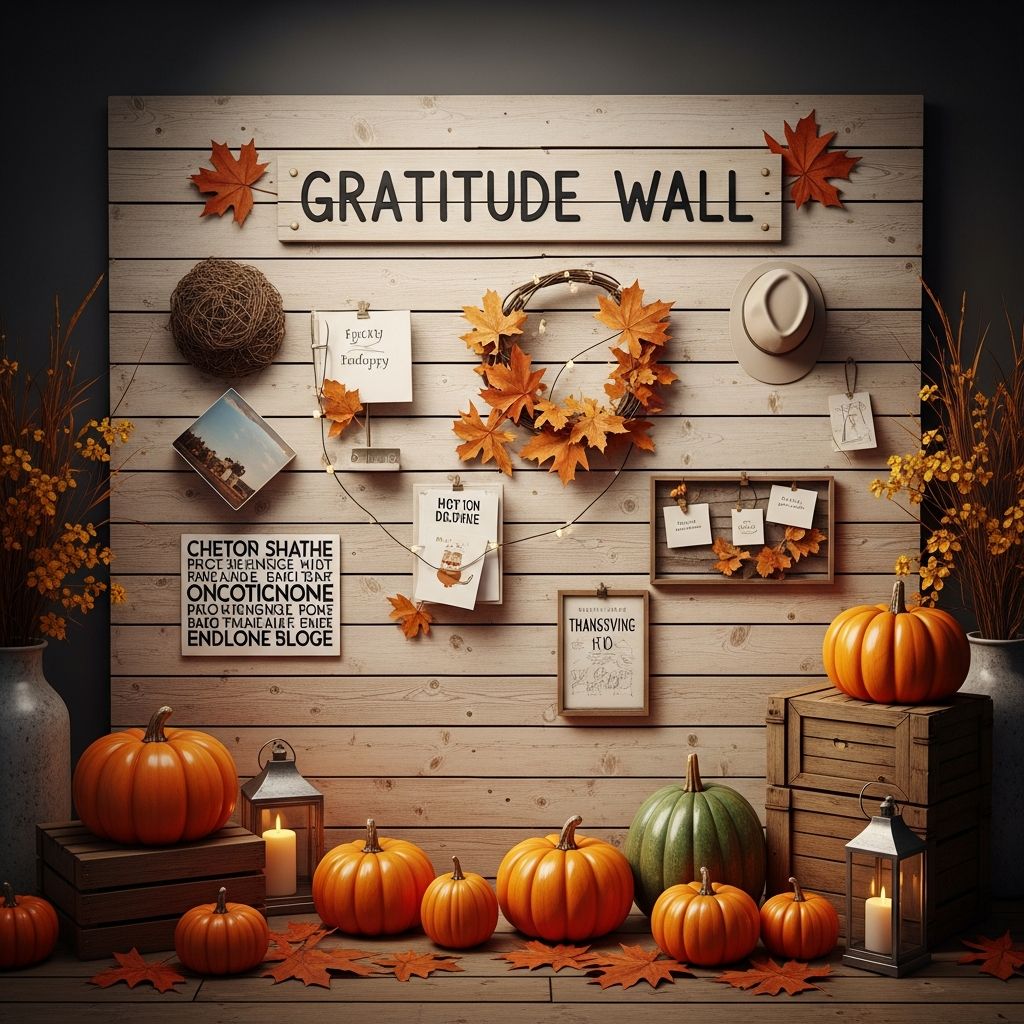
Thanksgiving is the perfect time to slow down and notice the people, moments, and small comforts that make life rich. A Family Gratitude Wall turns that idea into something you can see every day—a living, growing display of thankfulness that kids and adults help build together.
Why Create a Family Gratitude Wall?
A gratitude wall is a simple visual project where family members write or draw what they are thankful for and add it to a shared space, such as a wall, door, or large poster board. Over time, the display fills up, reminding everyone how much there is to appreciate.
- It gives kids a concrete way to practice saying “thank you” and noticing blessings.
- It provides a daily pause for reflection in a busy season.
- It becomes a meaningful part of your Thanksgiving decor and traditions.
Choosing the Right Spot
The best place for a gratitude wall is somewhere your family naturally passes every day. This keeps gratitude visible and easy to add to without feeling like a chore.
- Near the dining table so everyone can add to it before or after meals.
- In a hallway or entryway where notes are seen coming and going.
- On the back of a door (pantry, bedroom, or closet) for a cozier, semi-private option.
Supplies You Will Need
You can create a beautiful wall with simple materials you may already have. Feel free to customize colors and shapes to match your style and your children’s ages.
- Large sheet of paper, poster board, or kraft paper (for the background)
- Construction paper or cardstock (for individual gratitude notes or shapes)
- Markers, crayons, or colored pencils
- Tape, removable adhesive, or sticky tack
- Optional: stickers, washi tape, ribbon, and printed photos
Step-by-Step: How to Build Your Gratitude Wall
The process is flexible, but the steps below offer a simple place to start. Adapt them to your family’s schedule and children’s ages.
- Prepare the background.
Tape a large piece of paper, poster board, or kraft paper to the wall. This will serve as the base where all of the notes will be displayed. Leave enough space for many additions.
- Choose a theme or color palette.
Pick fall colors, neutrals, or even rainbow shades. Maintaining a few consistent colors can help the wall look intentional while still being kid-friendly and playful.
- Create gratitude shapes.
Cut construction paper into shapes that fit your family: leaves, hearts, stars, circles, or simple rectangles. Aim for a size that is big enough for a few words or a small drawing.
- Set up a “gratitude station”.
Place a basket or small box nearby with pre-cut shapes, pens or crayons, and tape. When everything is ready to grab, family members are more likely to participate regularly.
- Introduce the wall to your family.
Explain that throughout the weeks leading up to Thanksgiving, everyone will add notes to the wall about people, experiences, or simple joys they appreciate.
- Decide on a routine.
Agree on when to add gratitude notes: daily after dinner, every weekend, or whenever someone feels thankful in the moment. Routine helps build the habit.
Sample Gratitude Prompts for Kids
Some children know exactly what to write, while others freeze the moment a marker touches paper. Prompts make gratitude feel playful and achievable.
- “Name a person you are glad to have in your life and why.”
- “What is something at home that makes you feel safe or cozy?”
- “Describe a moment this week that made you smile.”
- “What is something in nature you are thankful for today?”
- “What is a skill, talent, or quality you are grateful to have?”
Types of Gratitude Notes
Not every note has to be a sentence. Varying the format makes the wall visually interesting and more inclusive of different ages and personalities.
| Type of Note | Best For | Example Use |
|---|---|---|
| Single words | Young kids, busy days | Write one word like “friends” or “sunshine” on a small shape. |
| Short sentences | School-aged children | Explain briefly what they are thankful for and why it matters. |
| Drawings | Pre-readers and visual thinkers | Draw a pet, favorite meal, or special place. |
| Mini stories | Older kids and adults | Describe a small event that sparked gratitude this week. |
Adapting the Wall for Different Ages
The same gratitude wall can work for toddlers, teens, and grandparents if you adjust how each person contributes. The goal is to meet each family member where they are.
- Toddlers: Invite them to choose a color, place stickers, or dictate what they are thankful for while an adult writes it down.
- Elementary-aged kids: Encourage them to write one or two complete sentences, or draw plus label their notes.
- Teens and adults: Suggest more reflective entries about relationships, growth, or challenges that turned into lessons.
Making Gratitude a Daily Ritual
Consistency turns a one-time craft into a meaningful tradition. Choose a rhythm that feels realistic; small, regular moments are more powerful than a single long session.
- Add one note per person during dinner each night in November.
- Have a weekly “gratitude night” with hot cocoa and calm music while everyone contributes.
- Place a reminder on the fridge or calendar so it doesn’t slip your mind during busy weeks.
Conversation Starters Around the Wall
Use the wall as a jumping-off point for meaningful conversations, especially with kids who might not naturally share in depth. Ask open questions, not just yes-or-no ones.
- “I noticed you wrote about your friend. What makes them special to you?”
- “You drew your favorite game. How does it make you feel when we play it together?”
- “I wrote about our quiet walk yesterday. What was your favorite part of that day?”
Creative Variations on the Gratitude Wall
Once the basic idea is in place, you can customize it to fit your family’s style. Here are several twists that keep the tradition fresh from year to year.
- Photo-integrated wall: Attach printed photos next to written notes that relate to them, such as a picture of a family outing labeled with memories from that day.
- Shape themes: Use different shapes each week (stars, circles, leaves) and assign each shape a different focus like people, nature, or acts of kindness.
- Gratitude path: Arrange the notes in a loose spiral, wave, or winding path to show gratitude growing over time.
Involving Guests and Extended Family
If you host Thanksgiving or other fall gatherings, invite guests to add their own gratitude notes. This brings more voices and perspectives to the display.
- Keep blank shapes and pens ready at the entrance for visitors to fill out when they arrive.
- Ask distant relatives to text or email something they are thankful for and write it on the wall for them.
- Let kids interview grandparents about memories they appreciate and add those stories as special notes.
Using the Wall on Thanksgiving Day
When Thanksgiving finally arrives, your wall becomes both decoration and conversation piece. Use it to anchor your celebrations in gratitude rather than stress.
- Invite everyone to choose one favorite note from the wall to read aloud during the meal.
- Walk along the wall together, noticing patterns, such as recurring names or shared blessings.
- Take a photo of the full display as a keepsake before you take it down.
Turning the Wall into a Keepsake
Instead of throwing away the notes, consider saving them in a simple, organized way. Over time, you will create a record of your family’s life and growth.
- Glue the notes into a scrapbook or slip them into plastic sleeves in a binder labeled by year.
- Bundle each year’s notes with ribbon and store them in a “Thanksgiving memories” box.
- Have older kids select three or four favorite notes and write a short reflection about how life has changed since then.
Benefits of a Gratitude Practice for Kids
Beyond the craft aspect, a gratitude wall nurtures emotional and social skills in children. It encourages them to notice kindness, comfort, and support rather than taking them for granted.
- Helps children put words to their feelings and experiences.
- Supports empathy as they read what others in the family are thankful for.
- Builds a habit of looking for the good even on ordinary or hard days.
Keeping Gratitude Going After Thanksgiving
Once the Thanksgiving season ends, you do not have to abandon the habit. You can shift the display or simplify it so gratitude stays woven into everyday life.
- Move a smaller gratitude board to the kitchen or family room for year-round use.
- Switch to a monthly theme like “People Who Help Us” or “Things Nature Gives Us” and add just a few notes each week.
- Encourage kids to keep gratitude journals where they record a few lines about their day.
SEO-Friendly FAQs
How do you explain a gratitude wall to kids?
Explain that a gratitude wall is a special place where the family collects thank-you notes for all the good things in life. Kids can write words, short sentences, or draw pictures of what makes them happy or grateful, and then add them to the wall so everyone can see and celebrate those blessings.
How often should we add to our Thanksgiving gratitude wall?
Many families like to add to their wall daily throughout November, such as after dinner or before bedtime. If daily feels overwhelming, pick a weekly rhythm, like “Thankful Thursday,” so it stays consistent but manageable.
What if my child says they have nothing to be thankful for?
Start with simple, concrete ideas like a favorite toy, a comfortable bed, or a meal they enjoy. You can also use prompts, share your own gratitude out loud, and gently remind them that even tiny moments—like a joke that made them laugh—are worth noticing.
Can a gratitude wall work in small spaces?
Yes, a gratitude wall can be scaled down to fit virtually any home. Use the back of a door, a cabinet, a refrigerator, or a single poster board to create a compact version that offers the same meaningful impact.
What do we do with our gratitude notes when the season is over?
You can recycle the notes, save them in an envelope labeled with the year, or turn them into a simple scrapbook page. Reviewing them later becomes a powerful reminder of how your family has grown and what mattered most during different seasons of life.