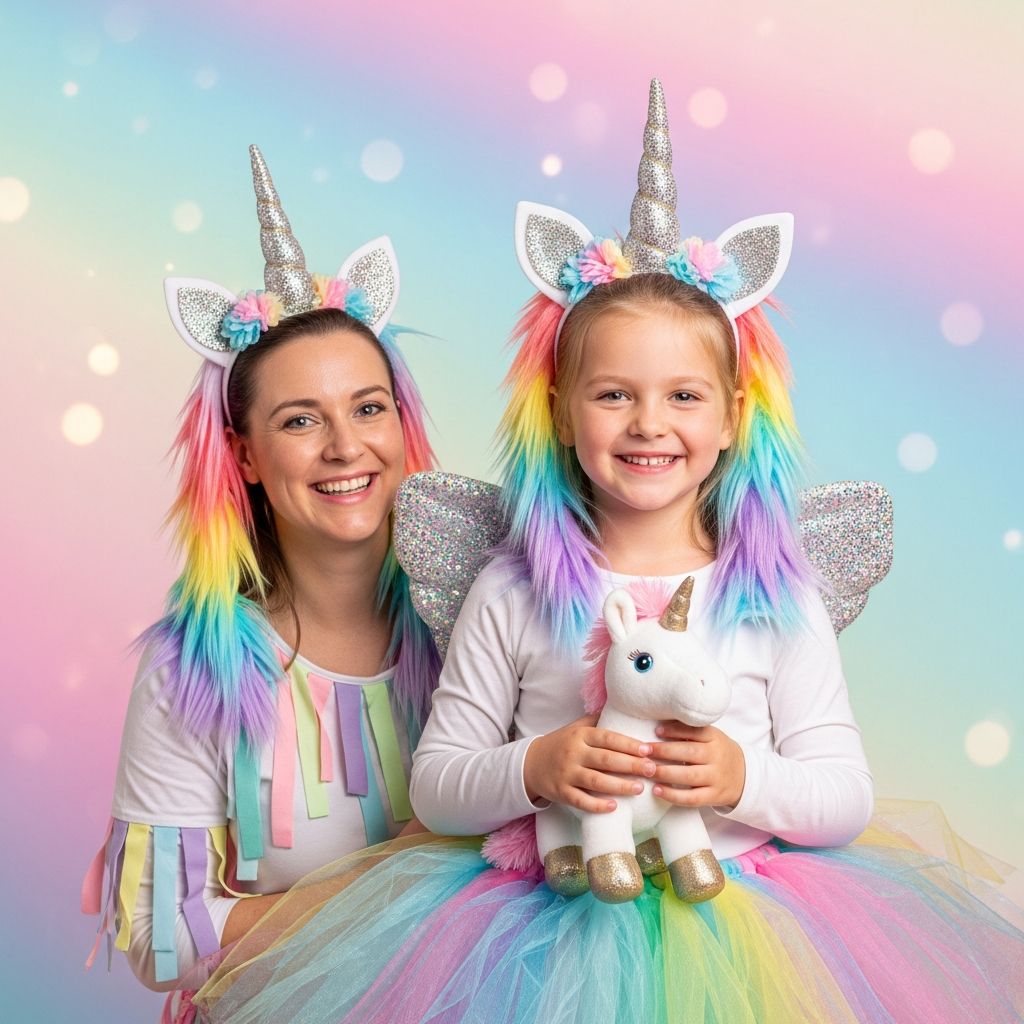
Transform everyday clothes into a unicorn costume with a few affordable craft supplies, a little imagination, and very little sewing (or none at all). This guide walks you through creating a horn, ears, mane, and tail, plus ideas for accessories, makeup, and making the costume comfortable for kids and adults.
Planning Your Unicorn Look
Before you start cutting felt or unrolling tulle, decide what kind of unicorn you want to create. This will help you choose colors, base clothing, and accessories.
Choose Your Unicorn Style
- Classic white unicorn: White hoodie and leggings with pastel mane and gold horn.
- Rainbow unicorn: Neutral base clothes with a mane and tail in every color of the rainbow.
- Galaxy unicorn: Dark leggings, starry shirt, iridescent or metallic horn and accents.
- Baby or toddler unicorn: One-piece pajamas or romper with soft, short mane and a tiny horn.
- Low-key unicorn: Just a horn headband and small tail, worn with regular clothes.
Pick a Comfortable Base Outfit
Comfort matters, especially for kids who will wear the costume at school, parties, or trick-or-treating. Dressing in layers also helps regulate temperature during outdoor events in cooler climates.
- Hoodie or sweatshirt (white or pastel works well).
- Leggings, joggers, or a simple skirt.
- Soft T-shirt or long-sleeve top under the hoodie for layering.
- Comfortable sneakers or flat shoes that your child can run in.
Essential Supplies and Simple Substitutes
You can assemble most of this costume using items you may already have at home, plus a few standard craft materials.
| Item | Used For | Possible Substitutes |
|---|---|---|
| Plain headband | Base for horn and ears | Ribbon tied around head, elastic band |
| Felt sheets (white + colors) | Horn cover, ears, flowers | Craft foam, sturdy fabric scraps |
| Stuffing or scrap fabric | Filling the horn | Rolled paper, tissue, cotton balls |
| Tulle or yarn | Mane and tail | Ribbon strips, fabric strips |
| Hot glue gun or fabric glue | Attaching horn, ears, decorations | Needle and thread, strong double-sided tape (temporary) |
| Gold ribbon, thread, or tape | Horn spiral detail | Metallic cord, thin glittery washi tape |
How to Make a Sturdy Unicorn Horn
The horn is the centerpiece of your costume, so it needs to look magical and stay upright even when kids are running and playing.
Step 1: Create the Cone Shape
- Cut a large triangle or wedge from felt or craft foam. The taller the triangle, the taller the horn.
- Roll it into a tight cone, overlapping the edges until you like the width of the base.
- Secure the edge with hot glue or strong fabric glue and let it cool or dry.
Step 2: Fill and Close the Horn
- Stuff the cone with fiberfill, scrap fabric, or crumpled paper until firm.
- Gather the open base slightly by folding the edges inward.
- Glue or stitch across the base to hold the stuffing inside.
Step 3: Add the Signature Spiral
- Starting at the tip, wrap gold ribbon, metallic thread, or narrow tape in a spiral down the horn.
- Secure the start and end of the spiral with a dot of hot glue.
- Optional: Brush on a light layer of clear-drying glue and sprinkle with glitter for extra sparkle. Use cosmetic-grade glitter around children to reduce eye and skin irritation risk.
Step 4: Attach the Horn to the Headband or Hoodie
- For a headband: Glue the closed base of the horn to the center of the headband. For extra strength, glue a felt circle over the base, sandwiching the headband in between.
- For a hoodie: Glue or sew the horn to the top of the hood, slightly forward of center so it stands upright when worn.
- Allow all glue to cool and fully set before trying on the horn to avoid burns or shifting.
Crafting Cute Unicorn Ears
Unicorn ears help define the character and balance the horn visually.
Fast Ear Template
- Cut two large ear shapes from white felt or foam.
- Cut two slightly smaller inner ear shapes from pink felt or another light color.
- Glue the inner ear onto each outer ear.
- Pinch the base of each ear to create a slight curve and glue the pinch in place. This gives the ear a 3D look.
Positioning the Ears
- Place ears on either side of the horn on the headband or hood.
- Angle them slightly outward to mimic horse ears.
- Secure firmly with glue or a few hand stitches if you expect a lot of movement.
Building a Colorful Mane and Tail
The mane and tail bring movement and color to the costume. Using soft, flexible materials like yarn and tulle prevents discomfort and keeps the costume lightweight.
Option 1: Tulle Mane and Tail
- Cut long strips of tulle (about 24–30 inches) in your chosen colors.
- For a mane, tie or loop strips along a narrow strip of felt or ribbon.
- Glue or sew that felt strip down the center of the hood or attach it to the headband behind the horn.
- For the tail, gather a handful of strips, fold in half, and tie near the fold with ribbon.
- Attach the tied section to the waistband of leggings or skirt with a safety pin or small stitches.
Option 2: Yarn Mane and Tail
- Wrap yarn around your hand or a piece of cardboard 10–20 times to form loops.
- Slide the loops off and tie them together at one end with a short piece of yarn.
- Cut through the opposite end of the loops to create long strands.
- Repeat in various colors to create multiple tassels.
- Attach tassels along the hood seam for the mane, and bundle several together for the tail.
Keeping the Mane and Tail Safe
- Check that long strands do not drag on the ground to reduce tripping risk.
- Avoid tying anything tightly around the neck; instead, anchor pieces to clothing seams, waistbands, or hoods.
- Use soft, non-scratchy materials near the skin to prevent irritation, especially for younger children.
Decorating the Outfit: Sparkles, Stars, and More
Once the main unicorn elements are attached, you can add simple decorations to elevate the costume.
- Stars and hearts: Cut from felt or foam and glue to the hoodie or leggings.
- Glitter details: Use fabric paint with glitter to draw small stars, swirls, or clouds.
- Flower crown effect: Glue felt or fake flowers around the base of the horn.
- Hoof-inspired cuffs: Add bands of metallic fabric at wrists and ankles.
Simple Unicorn Makeup and Hair Ideas
You can keep the face very simple or go full fantasy, depending on the event and the wearer’s age.
Kid-Friendly Makeup
- Use hypoallergenic face paints designed for children to reduce risk of skin reactions.
- Draw a small star or heart on one cheek.
- Add a sweep of pastel or shimmery eyeshadow (for older kids with parental approval).
- Finish with a little glitter gel on the temples or along the cheekbones, avoiding the eye area.
Hair Styling Options
- Quick style: Pull hair into a high ponytail or bun to help the horn sit neatly.
- Color accents: Use temporary colored hair spray or hair chalk in streaks that match the mane.
- For long hair: Braid sections with thin ribbons in pastel or metallic shades.
Adapting the Costume by Age
Unicorn costumes work for every age; you just adjust materials and complexity.
Babies and Toddlers
- Use a one-piece outfit or pajamas as the base.
- Keep the horn small and light; consider attaching it to the hood instead of a headband.
- Avoid small detachable pieces, beads, or sequins that could become choking hazards.
- Skip face paint for infants; many pediatric sources recommend avoiding cosmetics on very young babies’ skin.
School-Age Kids
- Choose durable attachment methods (stitching in a few spots) so the costume survives recess.
- Ensure the hood and horn do not block vision or fall over the eyes.
- Use sneakers or flat boots instead of costume heels for safe playground movement.
Teens and Adults
- Experiment with more dramatic makeup and high-contrast mane colors.
- Add layered skirts, iridescent fabric, or light-up accessories.
- Coordinate with friends or family for a whole unicorn herd or fantasy-themed group.
Time-Saving Tips for Busy Parents
If you are assembling the costume last minute, prioritize the items that give the most visual impact with the least effort.
- Focus on three essentials: horn, ears, and tail. These alone clearly signal “unicorn.”
- Use a solid-color hoodie and leggings you already own to avoid sewing.
- Let kids help choose colors and hand you materials; involvement often increases their excitement and willingness to wear the costume.
- Set up a protected work area for hot glue, keeping cords and tools out of children’s reach.
Frequently Asked Questions (FAQs)
How long does it take to make a DIY unicorn costume?
If you keep it simple (horn headband, basic mane, and tail), you can finish in about 1–2 hours. Adding more detailed decorations, face paint, and layered skirts can stretch it to an afternoon project.
Do I have to sew anything for this costume?
No. The horn, ears, mane, and tail can all be attached using hot glue or fabric glue. Sewing a few anchor stitches in high-stress points is helpful but not required.
What if my child won’t keep a headband on?
Attach the horn and ears directly to a hooded sweatshirt instead of a separate headband. When the hood is up, the unicorn features are visible, and when it is down, your child can take a break without losing pieces.
Can I wash the costume after Halloween?
Most base clothes (hoodies, leggings) can be washed according to their regular care labels. Remove any detachable horn, tail, or heavy decorations first. Hand wash or spot clean felt, foam, and glittered pieces to prevent damage.
Is glitter safe to use on kids’ costumes?
Loose craft glitter can irritate eyes and skin and is easily inhaled. Many experts recommend using cosmetic-grade glitter or glitter gels labeled for skin instead, and keeping all glitter away from the eye area, especially in children.
References
- Trick-or-Treating Safety Tips — American Academy of Pediatrics. 2023-09-12. https://www.healthychildren.org/English/safety-prevention/on-the-go/Pages/Halloween-Safety-Tips.aspx
- Eye Safety During Halloween — American Academy of Ophthalmology. 2021-10-18. https://www.aao.org/eye-health/tips-prevention/halloween-safety
- Textiles and Skin Health — U.S. Centers for Disease Control and Prevention (CDC). 2020-06-15. https://www.cdc.gov/niosh/docs/2020-112/pdfs/2020-112.pdf
- Choosing Safe Cosmetics for Kids — U.S. Food and Drug Administration (FDA). 2022-10-31. https://www.fda.gov/consumers/consumer-updates/halloween-face-paint-makeup-what-know
- Choking Hazards — U.S. Consumer Product Safety Commission. 2023-03-01. https://www.cpsc.gov/Safety-Education/Safety-Education-Centers/cribs/choking-hazards
- Burns from Hot Glue Guns — MedlinePlus, U.S. National Library of Medicine. 2020-07-14. https://medlineplus.gov/ency/patientinstructions/000713.htm