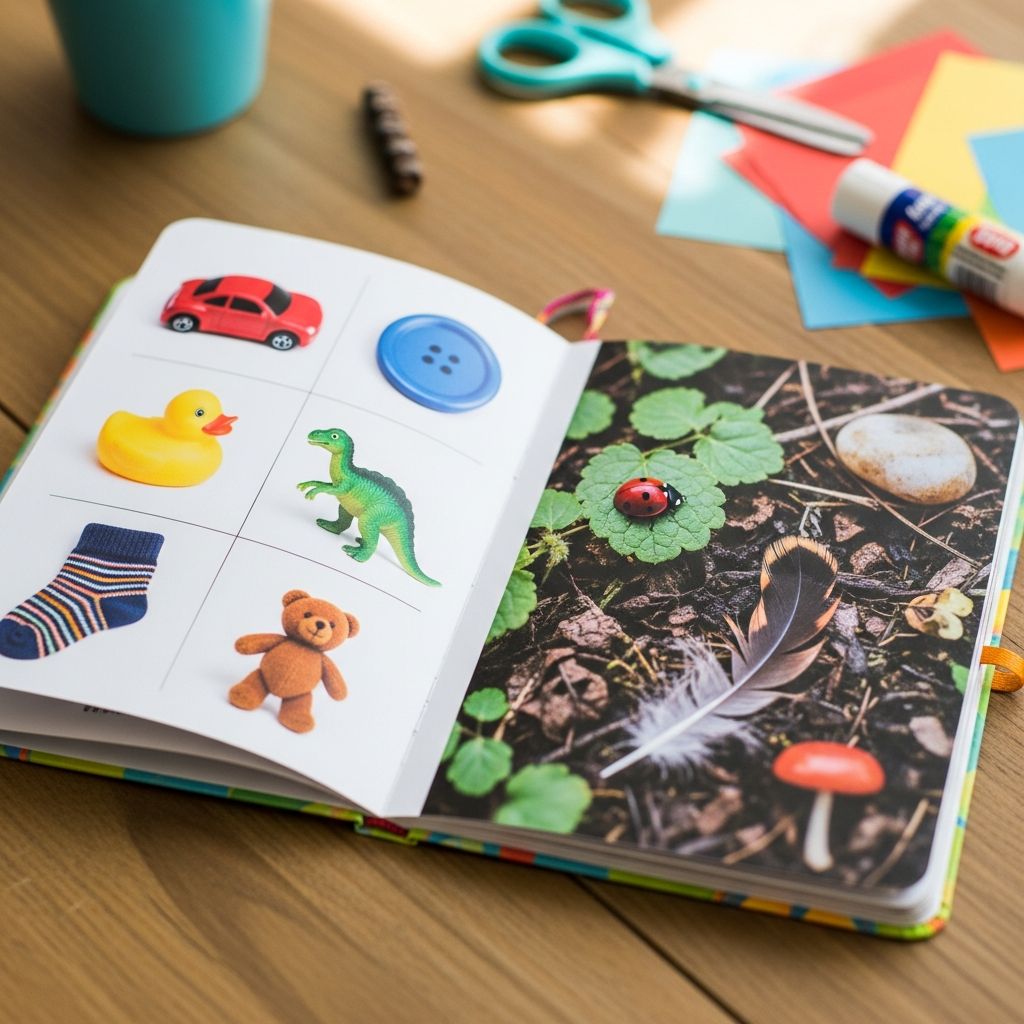
Custom I Spy books are a simple way to turn the things already in your home into a game that kids can return to again and again. Beyond the fun of searching, these homemade books support language development, attention, and problem-solving in a playful, low-pressure way.
Why a Homemade I Spy Book Is Worth the Effort
A DIY I Spy book does more than entertain. It lets you personalize the pictures with familiar rooms, favorite toys, and even family members, turning everyday life into a puzzle. Kids feel proud when they help design the pages, and adults get an easy, screen-free activity that can be reused at home, on trips, or in the classroom.
- Personalized content: Use your child’s toys, bedroom, and interests as the focus of each page.
- Reusable activity: Unlike a one-time craft, the finished book can be enjoyed for months or years.
- Scalable difficulty: You can make the pages simple for toddlers or more complex for older kids.
- Portable and durable: Once printed and bound, the book is easy to toss into a bag for restaurants or travel.
Learning Benefits Hidden Inside the Game
From the outside, an I Spy book looks like pure fun. Underneath the surface, children are practicing important cognitive and language skills in a way that feels like a game rather than a lesson.
Cognitive and Thinking Skills
Searching for hidden objects requires kids to scan, compare, and reason about what they see. They must hold clues in mind, ignore distractions, and adjust their strategy as they look more closely. Research on early childhood play has shown that such visually rich, open-ended activities can support attention, working memory, and flexible thinking.
- Visual discrimination: Telling apart similar shapes, colors, and sizes in a busy picture.
- Attention and focus: Sustaining concentration long enough to find all of the items.
- Working memory: Remembering the list of things they are searching for while scanning the scene.
- Logical reasoning: Using clues such as “round and shiny” or “something you use to write” to narrow down possibilities.
Language and Early Literacy
Talking about pictures is a powerful way to build vocabulary and narrative skills. When adults name objects, describe features, and ask open-ended questions, children encounter words in meaningful contexts, something that research consistently links to later reading success.
- Vocabulary growth: Labeling items (marble, magnifying glass, stapler) and attributes (striped, transparent, metal).
- Descriptive language: Using complete clues such as “I spy something tiny, blue, and hiding under the chair.”
- Comprehension: Following multi-step directions like “Find the red car, then the smallest coin.”
- Print awareness: Reading simple written clues under each picture, which helps kids notice that print carries meaning.
| Skill Area | Example in an I Spy Book |
|---|---|
| Visual Skills | Spotting three tiny buttons in a pile of similar objects |
| Language | Describing a hidden object using size, color, and function |
| Math & Sorting | Counting items or grouping them by shape or color |
| Executive Function | Staying on task until all items are found, even when it is challenging |
Planning Your I Spy Book: Themes and Concepts
Before you take any photos, spend a few minutes planning what you want the finished book to feel like. Choosing themes in advance will make it easier to gather objects and keep your pages balanced between fun and challenging.
Theme Ideas to Get You Started
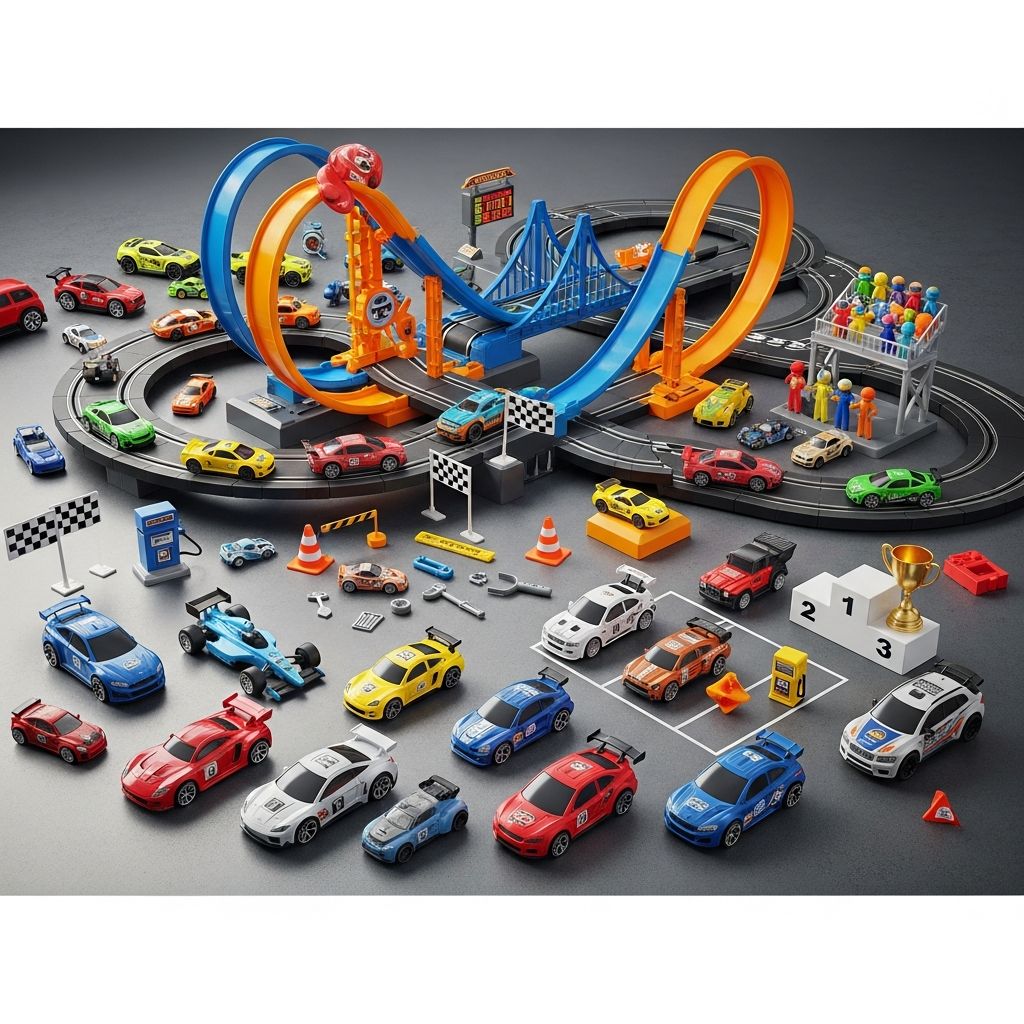
- Favorite toys: Blocks, action figures, stuffed animals, dolls, or cars.
- Nature treasures: Leaves, rocks, shells, seed pods, and flowers collected from outside.
- School supplies: Pencils, glue sticks, scissors, paper clips, and erasers.
- Kitchen items: Measuring spoons, cookie cutters, utensils, and spice containers.
- Color challenges: A page filled with mostly one color, where kids search for a contrasting item.
- Numbers and shapes: Items arranged to highlight circles, squares, or a specific quantity.
Matching Difficulty to Age
Adjusting the complexity makes the book usable for multiple ages, or reusable as your child grows.
- Toddlers and preschoolers: Large objects, simple backgrounds, and only 2–3 items to find per page.
- Early elementary: More items per page, partially hidden objects, and descriptive verbal clues.
- Older kids: Crowded scenes, rhyming riddles, or pages with time or counting challenges.
Gathering Materials and Setting Up Photos
Most supplies can be found around your home or classroom. The main requirement is a way to take clear pictures, which can be as simple as a phone camera or a basic digital camera.
Basic Materials List
- Camera or smartphone with camera
- Selection of small objects based on your themes
- Plain backgrounds (poster board, a sheet, or tabletop)
- Good light source (near a window or a bright lamp)
- Computer or app for basic photo layout (optional but helpful)
- Printer and cardstock or photo paper, or a photo-printing service
- Binding supplies: stapler, hole punch and binder rings, or a small binder
- Laminating sheets or clear contact paper for durability (optional)
Tips for Setting Up Eye-Catching Scenes
Clear, high-contrast images make the search enjoyable rather than frustrating. A few simple photography choices will dramatically improve the results.
- Use a neutral background: A plain table, white poster board, or solid blanket helps objects stand out.
- Work in good light: Natural light from a window reduces harsh shadows and makes colors pop.
- Vary object placement: Mix clearly visible items with a few that are partially hidden behind or under others.
- Fill the frame: Move closer so the objects take up most of the photo, avoiding unnecessary empty space.
- Keep the camera steady: Rest it on a stack of books or use a simple tripod to avoid blur.
Designing Each Page Step by Step
Once you have your pictures, you can design the pages. You might assemble everything digitally before printing, or you might print photos first and then glue them onto sturdy paper with handwritten clues.
Core Steps for a Simple Layout
- Choose 1–3 clear photos that will serve as your I Spy scenes.
- Select 3–8 items per photo to highlight as the “targets.” Adjust this based on your child’s age.
- Write a short list of items or a brief riddle for each page.
- Place the large scene photo on the main portion of the page.
- Add a text box or handwritten area at the bottom that starts with “I spy…” followed by your clues.
- Print onto cardstock or photo paper for durability.
Riddle and Clue Ideas
Vary the style of clues to keep the book interesting. Even young children enjoy hearing more descriptive or playful language, which researchers note can support language development when adults talk about what children are seeing in pictures.
- Descriptive lists: “I spy a red car, a striped ball, and a tiny yellow star.”
- Function-based clues: “I spy something you can write with and something that measures time.”
- Rhyming riddles: “I spy something bright that helps you write.”
- Counting tasks: “I spy 4 coins and 2 objects that are bigger than your hand.”
Printing, Binding, and Protecting the Book
Once your pages are ready, turning them into a finished book is straightforward. Aim for a format that is easy for kids to hold and turn on their own.
Printing Options
- Home printing: Print on heavy paper or cardstock to avoid flimsy pages.
- Photo lab or copy shop: For sharper images and richer colors, send your files to a local printer or photo lab.
- Standard size: 5×7 or 8×10 pages offer a good balance between visibility and portability.
Binding Methods
- Stapled spine: Stack pages, align edges, and staple along the left side.
- Binder rings: Punch a hole or two on one side of each page and connect with metal rings for easy expansion.
- Small binder: Insert each page into a plastic sleeve and snap them into a half-size binder for a wipeable, ultra-durable option.
Making the Book Last Longer
Children are not always gentle with beloved books. A few extra steps can help your homemade I Spy survive repeated use in homes or classrooms.
- Laminate each page before binding, or use self-adhesive laminating sheets.
- Round the corners with scissors to avoid sharp edges.
- Consider making two copies if you have multiple children who may want to use it at the same time.
Adapting the Book for Different Settings
Your DIY I Spy book can be tailored for home use, school activities, or therapy sessions. Educators and therapists sometimes use visual search games as part of broader programs to improve attention and visual processing, areas that are important for learning in general.
Ideas for Home
- Include family photos or pets hidden in each spread.
- Use pictures of specific rooms and challenge children to find household safety items or daily routines.
- Create a travel-sized version to keep in the car for long drives.
Ideas for Classrooms
- Feature classroom supplies and learning centers so children become familiar with their environment.
- Collaborate on one page per student, then combine them into a class-created book.
- Use the book in a literacy or writing center to inspire children to write their own clues.
Ideas for Therapists and Specialists
- Occupational therapists may use I Spy pages to support visual scanning and fine motor planning.
- Speech-language pathologists can focus on naming objects, building sentences, and practicing descriptive vocabulary.
- School psychologists or learning specialists might include the book as a low-pressure way to practice sustained attention.
Fun Variations and Extensions
Once you have a basic book, it is easy to add twists that keep kids engaged. Try refreshing a few pages each season or inviting children to design their own challenges.
- Seasonal editions: Make a winter, spring, summer, and fall set of pages featuring seasonal objects.
- Travel version: Use photos from a trip—airports, parks, museums—to create a memory and search book in one.
- Alphabet I Spy: One page per letter, with children searching for items that start with that letter.
- Number I Spy: Each spread focuses on a different number, asking kids to find that many items.
- Story-based I Spy: Write a simple story and include I Spy scenes that match each part of the narrative.
Frequently Asked Questions (FAQs)
What age is a homemade I Spy book best for?
Most children from about 3 years and up can enjoy I Spy books, with younger kids focusing on simple pictures and older ones enjoying more crowded, complex scenes.
Do I need a fancy camera to make the book?
No. A smartphone or basic digital camera is usually enough, as long as you use good lighting and keep the camera steady so the images are clear.
How many pages should I include?
For younger children, 6–8 pages is often plenty to start. You can always add more later if you use a binder ring or sleeve system.
Can children help create the book?
Yes. Kids can choose objects, arrange scenes, help take photos with guidance, and even dictate or write their own clues, which adds to their sense of ownership.
How does an I Spy book compare to store-bought versions?
Commercial books often have very detailed artwork, while homemade versions are more personal and flexible. Both support visual and language skills; the main difference is that your DIY version can feature your child’s real world and changing interests.
References
- Learning to Read and Write: Developmentally Appropriate Practices for Young Children — International Reading Association & National Association for the Education of Young Children. 1998-01-01. https://www.naeyc.org/resources/position-statements/learning-to-read-and-write
- Make Your Own I Spy Book — Frugal Fun for Boys and Girls. 2014-07-10. https://frugalfun4boys.com/make-your-own-i-spy-book/
- The Power of Play: A Research Summary on Play and Learning — Minnesota Children’s Museum. 2012-01-01. https://www.mcm.org/wp-content/uploads/2015/09/Power-of-Play-Research-Summary.pdf
- Early Childhood Literacy: The National Early Literacy Panel Report — National Institute for Literacy. 2008-01-01. https://lincs.ed.gov/publications/pdf/NELPReport09.pdf
- Visual Scanning and Reading Ability in Children — Paolo Federici et al., Frontiers in Human Neuroscience. 2015-06-09. https://www.frontiersin.org/articles/10.3389/fnhum.2015.00311