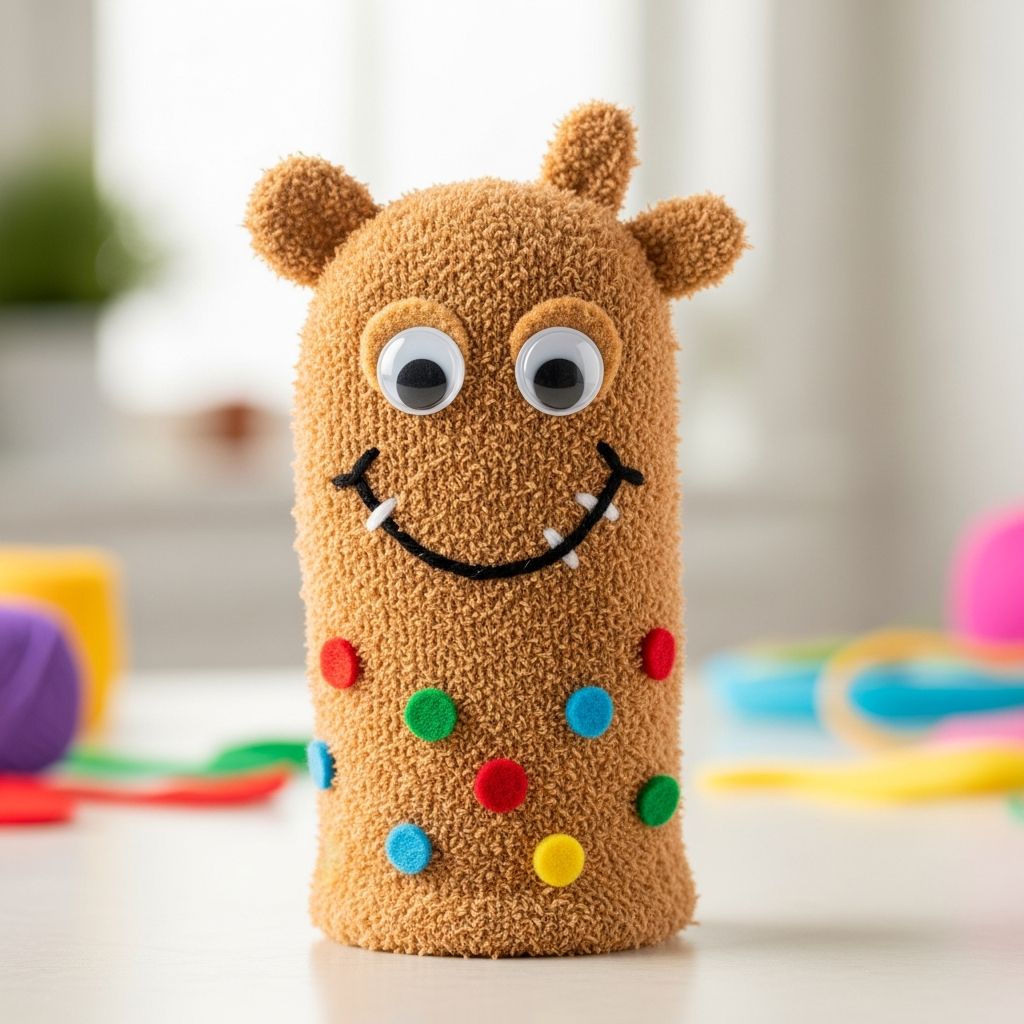
If there is a lonely blue sock hiding in the back of a drawer, it is secretly waiting to become a silly, snack-obsessed puppet friend.
Why Sock Puppets Are Perfect for Families
A sock puppet is one of the simplest ways to turn everyday household items into imagination fuel. Instead of buying a new toy, you transform something you already own into a character that can talk, sing, and tell stories with your child.
- Encourages pretend play and language skills.
- Gives old socks and fabric scraps a second life.
- Offers a quick, low-mess project for a rainy afternoon or holiday break.
This guide walks you through making a fuzzy blue puppet that loves cookies, but you can easily customize the design for any favorite snack or character.
Project Snapshot
| Feature | Details |
|---|---|
| Difficulty | Beginner-friendly; great for kids with adult help |
| Time Required | 30–60 minutes, depending on details |
| Tools Needed | Scissors, glue, marker (no sewing machine necessary) |
| Best For | Family craft nights, classroom activities, playdates, holiday projects |
Materials and Tools
Gather everything before you start so your young crafter can stay focused on creating and playing.
Core Supplies
- 1 blue sock (adult size works best for small hands).
- 2 large white circles for eyes (felt, craft foam, or cardstock).
- 2 smaller black circles or buttons for pupils.
- 1 piece of stiff cardboard (for the mouth plate).
- 1 piece of felt in a mouth color (red, pink, or dark brown).
- Fabric glue or hot glue (adult use only).
- Scissors suitable for fabric and paper.
- Black marker or pen.
Optional Embellishments
- Googly eyes instead of felt eyes.
- Blue yarn, fur trim, or fuzzy fabric for extra fluff.
- Brown felt or craft foam circles for pretend cookies.
- Markers or fabric paint for extra details like eyebrows or freckles.
Safety Reminders
- Adults should handle any hot glue and sharp cutting.
- Small parts like buttons and googly eyes are choking hazards for young children; swap them for sewn-on or larger felt shapes for toddlers.
- Protect your work surface with scrap cardboard or a craft mat.
Step-By-Step: Build the Puppet Mouth
The moving mouth is what transforms an ordinary sock into a chatty character. This version uses a simple cardboard plate inside the sock so the mouth can open and close when the hand moves.
1. Fit the Sock on Your Hand
- Slide your hand into the sock with fingers in the toe and your thumb under the heel.
- Open and close your hand like a talking mouth to see where the hinge naturally forms.
- Use a marker to lightly mark the top and bottom of that hinge spot on the outside of the sock.
These marks will guide where the cardboard mouth plate will sit inside the sock.
2. Cut the Cardboard Mouth Plate
- Place your hand flat on a piece of cardboard and trace an oval that covers your fingers and part of your palm.
- Cut out the oval shape with scissors.
- Fold the oval in half so it looks like a clamshell – this fold becomes the mouth hinge.
Check the size by putting the folded cardboard into the sock at the marked spot and trying the puppet motion again. Trim if it feels too large or stiff.
3. Wrap the Plate in Felt
- Place the cardboard oval on your felt and trace around it.
- Cut the felt slightly larger than the cardboard so it can wrap over the edges.
- Glue the felt to one side of the cardboard, wrap the excess around the edges, and secure it on the back.
- Refold the mouth along the original crease and let it dry.
Covering the cardboard makes the inside of the mouth soft, colorful, and less likely to bend out of shape over time.
4. Install the Mouth in the Sock
- Turn the sock inside out and locate the marks you made.
- Place the folded mouth plate inside the sock so the fold lines up with those marks.
- Glue the top half of the plate to the inside top of the sock and the bottom half to the inside bottom of the sock.
- Press firmly and let the glue set completely.
When the glue dries, turn the sock right side out and slide your hand in. Opening and closing your hand should now create a clear talking mouth.
Give Your Puppet Big, Goofy Eyes
A cookie-loving character looks extra silly with comically large eyes. Over-sized eyeballs also make the puppet easier for children to animate, because the facial direction is more obvious.
5. Build the Eyes
- Cut two large white circles from felt, foam, or cardstock.
- Cut two smaller black circles for pupils, or choose buttons or small felt ovals.
- Glue one pupil onto each white circle slightly off-center to give the puppet a playful, curious look.
6. Attach the Eyes to the Sock
- Put your hand back inside the sock puppet so you can see where the top of the head naturally forms.
- Lightly mark two spots for the eyes at the top front of the puppet’s head.
- Remove your hand and glue the completed eyes onto those marks, close together for extra silliness.
For added character, angle the eyes slightly inward or outward so your puppet looks surprised, sleepy, or mischievous.
Make It Fluffy and Cookie-Obsessed
The personality of this design comes from its wild blue fuzz and its serious love of cookies. Use whatever textured materials you have on hand to create a shaggy look.
7. Add Fuzzy Texture
- Cut strips of blue yarn or small rectangles of fuzzy fabric.
- Glue them around the head and upper body of the sock puppet in layers to imitate thick fur.
- For a quicker option, wrap a short piece of feathery trim around the top of the head and glue it in place like shaggy hair.
Varying the direction and length of the yarn pieces creates a more playful, scruffy effect.
8. Create Pretend Cookies
- Cut small circles from brown felt or foam to represent cookies.
- Add “chocolate chips” using black or dark brown marker dots, tiny felt pieces, or beads (for older kids).
- Glue one cookie halfway inside the puppet’s mouth so it looks like it is permanently mid-snack.
You can also glue a cookie to the back of the puppet’s hand area so it appears to be holding a treat when you perform.
9. Extra Personality Details
- Glue a strip of darker blue felt along the brow to imitate fuzzy eyebrows.
- Add a tiny felt tongue in the mouth for more expression.
- Draw light freckles or smile lines with fabric markers.
These little additions help kids feel like they have truly invented their own one-of-a-kind character rather than copying a toy from a store shelf.
Try Fun Character Variations
Once the basic blue cookie-lover is finished, the same method can be used to create an entire cast of sock friends. This keeps the project fresh and reusable for many craft sessions.
Theme Ideas for New Puppets
- Veggie Fan: Use a green sock, make felt peas and carrots, and tuck a little carrot into the mouth.
- Dessert Lover: Swap cookies for felt cupcakes, ice cream cones, or doughnuts.
- Bookworm: Give the puppet tiny cardboard glasses and a miniature felt book.
- Sleepy Monster: Angle the pupils downward and add a felt nightcap for bedtime stories.
Quick Comparison of Character Tweaks
| Feature | Cookie Lover | Veggie Fan | Sleepy Monster |
|---|---|---|---|
| Sock Color | Bright blue | Green | Soft pastel or dark navy |
| Snack Prop | Brown felt cookies | Felt carrots, peas, broccoli | Felt pillow or blanket |
| Eye Style | Large, round, wide open | Curious, slightly tilted | Half-closed, relaxed |
| Extra Details | Crumbs near the mouth | Leafy felt hair | Nightcap and stars |
Turn Craft Time into Play Time
The real magic begins after the glue has dried. A single sock puppet can spark entire storylines, mini plays, and at-home performances.
Puppet Play Ideas
- Stage a “cookie hunt” where the puppet looks for felt cookies hidden around the living room.
- Use a cardboard box as a simple puppet theater and let children put on short shows for family members.
- Encourage kids to interview the puppet about its favorite snacks, friends, and adventures.
These simple games encourage speech, confidence, and creativity without any screens or batteries required.
Cleanup, Storage, and Care Tips
A little care helps the puppet last through many performances and playdates. Because this project uses glue and cardboard, it is not designed for machine washing, but gentle spot care works well.
Keep Your Puppet in Good Shape
- Store the puppet upright in a small basket or cup so the eyes and mouth do not get crushed.
- Wipe gently with a barely damp cloth if it gets dusty; avoid soaking the cardboard mouth.
- Keep it away from pets who might mistake the fuzzy texture for a chew toy.
If anything comes loose over time, an adult can refresh the glue or swap in new felt pieces as a mini repair project.
Frequently Asked Questions
Can this puppet be made without hot glue?
Yes. A strong fabric glue works well for most parts of the project, especially the eyes and felt details. The only place that really benefits from a firmer bond is the mouth plate, so allow extra drying time and press firmly if you skip hot glue.
What age is this craft best for?
School-age children can help with most steps, but they will still need an adult to handle cutting cardboard, managing glue, and supervising small pieces. Toddlers can participate by choosing colors, sticking on large felt shapes, and of course naming the puppet once it is done.
How can a classroom or group use this idea?
For groups, prepare mouth plates and basic eye shapes in advance so children can jump right into decorating. Encourage each child to pick a different favorite food or theme for their puppet, then host a short puppet show circle where every character introduces itself.
Can the design be adapted for left-handed kids?
Absolutely. The same sock can be worn on either hand, but when you first fit the mouth plate, insert it with the child’s preferred hand and mark the hinge position from that angle. Once glued, the puppet will still work on both sides, but it will feel most natural on the hand it was fitted to.
What if we do not have a blue sock?
Any color sock can be transformed into a lovable snack-fan with the same basic steps. A brightly colored sock might become a candy lover, while a brown sock with yellow spots could be a banana bread monster. Let the sock’s color inspire the type of treats your new character prefers.
With one old sock, a few scraps, and some imagination, your household can gain a new, permanently hungry, blue puppet friend ready for endless stories and cookie-themed adventures.