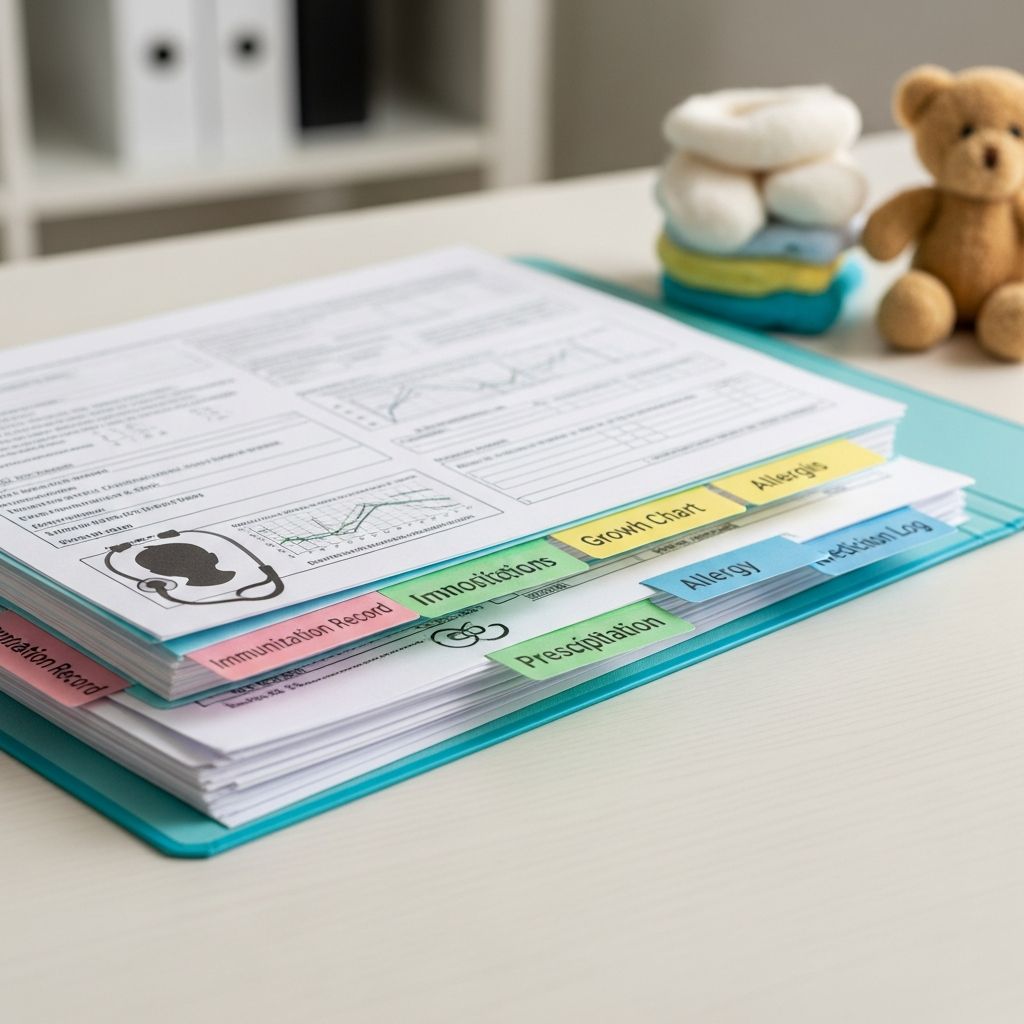
Keeping detailed records of your child’s health is a cornerstone of effective pediatric care. These records encompass everything from birth details to ongoing treatments, enabling healthcare providers to deliver personalized and safe medical attention.
Understanding Pediatric Health Documentation
A child’s health documentation serves as a comprehensive chronicle of their medical journey. It includes personal experiences with illnesses, immunizations, growth milestones, and developmental checks, alongside familial patterns that may signal genetic risks. According to the National Cancer Institute, such records capture all health-related information, from allergies to test outcomes, forming the basis for informed clinical choices. This foundation helps clinicians spot trends early, like recurring infections or growth delays, which might otherwise go unnoticed.
In pediatric settings, these documents are vital because children cannot always articulate symptoms. Parents bridge this gap by providing accurate histories, which reveal diagnosed conditions, past events, and future vulnerabilities. The NCBI highlights that medical histories aid in differential diagnoses and risk assessment, particularly in wellness visits where a full review is standard. For young patients, this means tailored screenings, such as earlier checks for conditions linked to family history.
Key Components to Track for Your Child
Building a robust health file requires noting specific elements. Start with basic identifiers like birth date, weight at birth, and any neonatal complications. Then, layer in ongoing data.
- Immunization Schedule: Record every vaccine dose, date administered, and any reactions. This prevents gaps that could lead to preventable diseases.
- Allergies and Sensitivities: Detail reactions to medications, foods, or environmental factors, including severity and management strategies.
- Chronic Conditions: Note asthma, eczema, or diabetes, including onset age, triggers, and control methods.
- Hospitalizations and Surgeries: List dates, reasons, procedures, and recovery notes.
- Family Medical Patterns: Document relatives’ conditions like heart disease or diabetes to assess hereditary risks.
- Developmental Milestones: Track when your child first walked, spoke, or met other benchmarks.
- Medications and Treatments: Include current and past prescriptions, dosages, and responses.
Unitek College emphasizes that these elements create a unique health fingerprint, aiding providers in connecting past events to current concerns. For instance, a history of frequent ear infections might prompt ENT referrals.
Why Comprehensive Records Transform Pediatric Care
Accurate documentation empowers doctors to make precise decisions. It identifies patterns, such as seasonal allergies exacerbating asthma, allowing proactive interventions. Family history integration is crucial; if diabetes runs in the family, providers might recommend early glucose monitoring to avert prediabetes.
During transitions—like switching pediatricians or emergency visits—records prevent errors. Solace Health notes that without them, providers operate blindly, risking adverse reactions from unknown allergies or interactions. In urgent scenarios, a focused history on recent changes suffices, but full records ensure nothing critical is missed.
Preventive benefits are profound. Providers use histories to customize wellness plans, scheduling screenings for at-risk children. WebMD points out that familial heart disease knowledge prompts earlier cardiac focus, potentially saving lives. Overall, these records foster continuity, reducing redundant tests and enhancing outcomes.
Practical Steps to Build and Maintain Records
Start early, ideally at birth. Use digital apps, paper folders, or patient portals for organization.
- Gather Initial Data: Collect hospital discharge summaries, newborn screens, and first checkup notes.
- Update After Every Visit: Note diagnoses, prescriptions, lab results, and advice immediately.
- Review Annually: During well-child visits, verify completeness with your pediatrician.
- Include Lifestyle Factors: Track diet, exercise, sleep, and screen time, as they influence health.
- Secure Digital Backups: Use encrypted apps compliant with health standards for access anywhere.
For families, designate one keeper of records, but share copies. Medical Associates stresses that complete histories improve care quality by revealing overlooked risks.
Navigating Different Care Scenarios
| Scenario | History Focus | Example Details |
|---|---|---|
| Well-Child Visit | Comprehensive | Full past illnesses, growth charts, family risks |
| Emergency | Focused | Allergies, current meds, recent symptoms |
| Specialist Referral | Tailored | Relevant symptoms, prior tests, family patterns |
| School or Camp Forms | Summary | Immunizations, allergies, major conditions |
This table illustrates adapting records to contexts. In emergencies, quick access to allergies can be lifesaving. Specialists appreciate targeted histories for efficiency.
Family History: Unlocking Genetic Insights
Extend records to relatives. Chart a three-generation pedigree noting ages, diseases, and causes of death. This reveals risks like hereditary cancers or hypertension. Providers use it to stratify care; for example, early mammograms if breast cancer prevails in the family. Women’s Health Group Chicago underscores its role in predictive and preventive strategies.
Encourage relatives to share; genetic counseling may follow for high-risk patterns.
Digital Tools and Legal Considerations
Leverage patient portals from practices or apps like MyChart for real-time updates. Ensure HIPAA compliance for privacy. Print summaries for non-digital scenarios.
Legally, records support insurance claims, school requirements, and custody matters. Always request copies post-visits.
Common Hurdles and Solutions
- Forgetting Details: Use voice notes or photos of prescriptions immediately.
- Multiple Providers: Centralize in one app, share permissions.
- Adoption/Foster Care: Request all prior records; build from available data.
- Language Barriers: Use translation apps or bilingual summaries.
Frequently Asked Questions
What should I do if I lose my child’s records?
Request copies from previous providers, hospitals, or immunization registries. Reconstruct using photos, receipts, and family input.
How often should I update the records?
After every medical interaction, including over-the-counter treatments or home remedies.
Can schools access full medical histories?
No, provide only necessary summaries like immunizations; full access requires consent.
Is family history relevant for newborns?
Yes, it guides initial screenings and long-term monitoring plans.
What if my child has no major health issues?
Still track vaccines, growth, and minor illnesses—patterns emerge over time.
Empowering Parents for Lifelong Health
Maintaining your child’s health records is an active investment in their future. It equips providers with the full picture, minimizes risks, and promotes prevention. Start today: review your files, organize digitally, and discuss with your pediatrician. This habit ensures your child receives the best possible care at every stage.
References
- What Is a Medical History? — Medical Associates of Northwest Arkansas. 2023. https://mana.md/what-is-a-medical-history/
- Medical History – StatPearls — NCBI Bookshelf. 2023-10-01. https://www.ncbi.nlm.nih.gov/books/NBK534249/
- Step-by-Step Guide to Taking Medical Histories — Unitek College. 2024. https://www.unitekcollege.edu/blog/a-step-by-step-guide-to-taking-medical-histories/
- The Importance Of Understanding Your Health History — Women’s Health Group Chicago. 2023. https://whgchicago.com/the-importance-of-understanding-your-health-history/
- What Is My Medical History? — WebMD. 2024-01-15. https://www.webmd.com/a-to-z-guides/what-is-my-medical-history
- A Complete Guide to Your Medical History — Solace Health. 2023-11-20. https://www.solace.health/articles/a-guide-to-your-medical-history