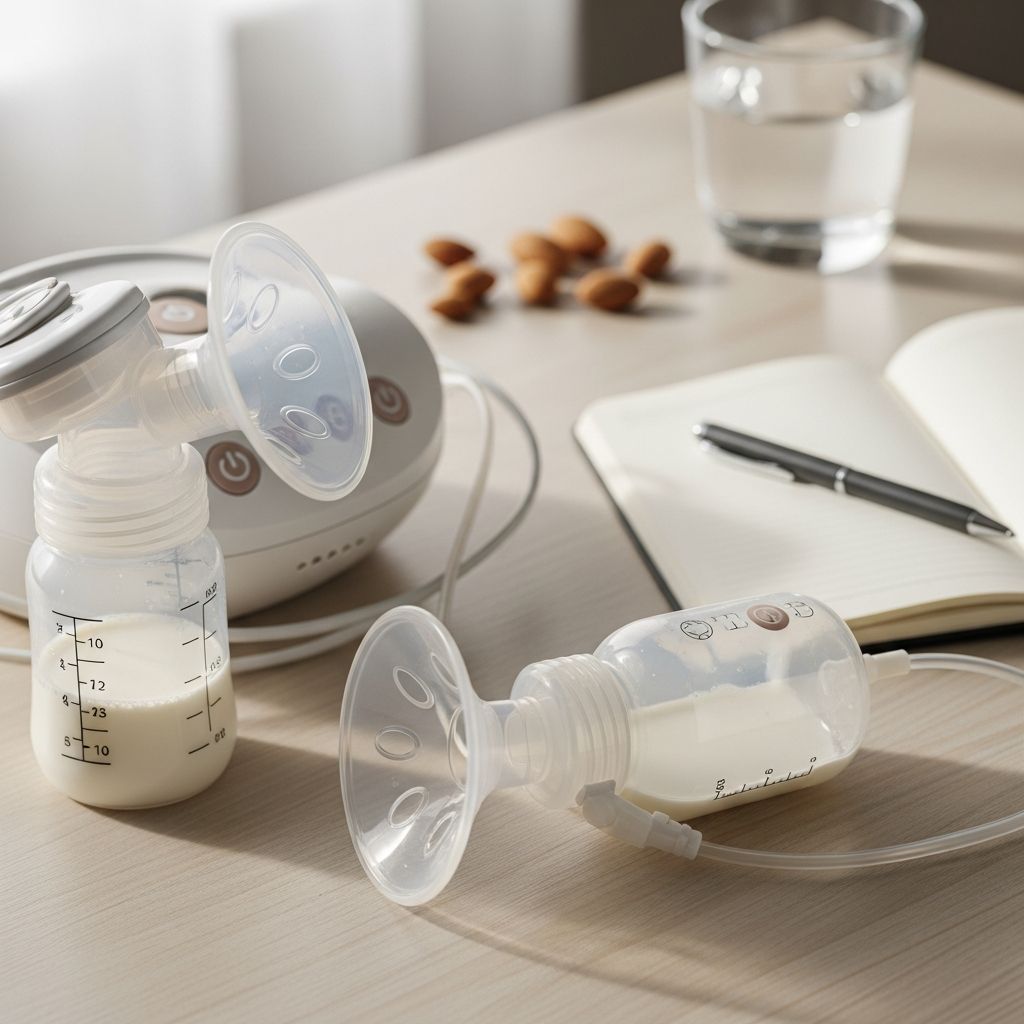
Many breastfeeding parents face challenges with milk production when relying on pumping, but targeted strategies can significantly enhance output. This guide draws from established lactation practices to help you optimize your routine, ensuring your baby receives ample nourishment even when you’re apart.
Understanding Milk Supply Dynamics
Breast milk production operates on a demand-and-supply principle: the more frequently milk is removed, the more your body produces. Pumping mimics a baby’s nursing to signal your breasts to generate additional milk. Factors like pumping frequency, technique, hydration, and stress levels all influence yield.
Initially, supply builds through colostrum production in the first days postpartum, transitioning to mature milk around day 3-5. Consistent removal—aiming for 8-12 sessions daily—establishes a robust baseline. Nighttime pumps are particularly effective due to elevated prolactin levels, the primary milk-making hormone.
Optimizing Your Pumping Schedule
A structured schedule is foundational. Pump every 2-3 hours during the day and every 3-4 hours at night, totaling 8-12 sessions. This frequency empties breasts thoroughly, prompting replenishment.
- Pump both breasts simultaneously: Double pumping saves time and boosts prolactin release compared to single-side sessions.
- Extend sessions slightly: Continue pumping 2 minutes after flow stops to signal ongoing demand.
- Incorporate nighttime pumps: Prolactin peaks align with these, maximizing production.
Power Pumping: Mimicking Cluster Feeding
Power pumping simulates a baby’s cluster feeding bouts, tricking your body into overproducing. Perform once daily for 4-5 days: pump 10-20 minutes, rest 10 minutes, repeat for a total of 60 minutes. Afternoon sessions work best when natural supply dips.
Expect minimal yield initially, but consistency yields results. Combine with breast massage and warm compresses beforehand for enhanced let-down.
Mastering Hands-On Pumping Techniques
Combining pump use with manual methods increases output by up to 48%. This ‘hands-on pumping’ ensures complete drainage.
- Pre-pump massage: Use circular motions from outer breast toward nipple for 1-2 minutes to stimulate ducts.
- During pumping: Compress breast tissue rhythmically with thumb and fingers while flanges are attached, targeting areas of slower flow.
- Post-pump expression: Hand-express remaining drops into the flange or a container.
A 25-30 minute session with these steps drains breasts more effectively than pumping alone.
Equipment Essentials for Maximum Yield
Invest in a hospital-grade double electric pump for efficiency. Avoid manual pumps for exclusive use, as they limit output.
| Factor | Recommendation | Benefit |
|---|---|---|
| Flange Size | Match nipple diameter (no rubbing) | Prevents damage, improves seal |
| Suction Level | Comfortable, not maximum | Avoids nipple trauma |
| Pump Type | Double electric | Faster, higher volume |
Experiment with cycle speeds; faster let-down modes trigger release.
Nutrition and Hydration for Lactation Support
Adequate fluids and calories fuel production—aim for 13 cups of water daily plus nutrient-dense meals. Protein-rich foods and galactagogues like oats, brewer’s yeast, and almonds may aid supply.
- Oatmeal: Beta-glucan promotes prolactin.
- Fenugreek or fennel: Herbal options, consult a provider.
- Balanced diet: Include leafy greens, nuts, and garlic.
Avoid excessive caffeine or alcohol, which can inhibit let-down.
Relaxation and Environmental Cues
Stress hinders oxytocin release for let-down. Create a serene setup: dim lights, baby photo, or recorded coos.
Skin-to-skin contact, even briefly, boosts hormones. Guided relaxations increase output significantly per studies.
Breast Massage and Warmth
Apply warm compresses pre-pump and massage during to clear ducts and enhance flow.
Tips for Exclusive Pumping and Working Parents
For exclusive pumpers, pump 8-12 times daily, storing milk properly. Working moms: Align pumps with baby’s feed times, using a dedicated kit.
Reduce formula top-ups to heighten demand; offer pumped milk instead.
Monitoring Progress and When to Seek Help
Track output: 25-30 oz daily by week 2 is average. If low persists after 48-72 hours of intensified pumping, consult an IBCLC.
Rule out issues like tongue-tie or improper latch via baby feeding observations.
Frequently Asked Questions
Can pumping alone sustain supply long-term?
Yes, with 8-12 daily sessions and proper technique, exclusive pumping supports full-term feeding.
How long until I see supply improvements?
Typically 2-3 days of frequent pumping; power pumping shows gains in 4-5 days.
Does higher suction mean more milk?
No—comfortable levels prevent damage and sustain supply.
Should I pump right after feeding?
Yes, 1 hour post-feed signals more production.
What if my supply drops suddenly?
Increase frequency, check equipment, and consult a lactation expert.
These strategies empower you to build and maintain a strong milk supply. Consistency and patience are key—your efforts directly benefit your baby’s nutrition.
References
- Tips to Increase Milk Supply When Pumping — Children’s Health. 2023. https://www.childrens.com/health-wellness/how-to-increase-milk-supply-when-pumping
- Increasing your supply — Australian Breastfeeding Association. Accessed 2026. https://www.breastfeeding.asn.au/resources/increasing-supply
- 14 Ways to Hack Your Pumping Routine — Breastfeeding USA. Accessed 2026. https://breastfeedingusa.org/14-ways-to-hack-your-pumping-routine/
- Too little breast milk? How to increase low milk supply — Medela. Accessed 2026. https://www.medela.com/en/breastfeeding-pumping/articles/breastfeeding-challenges/too-little-breast-milk-how-to-increase-low-milk-supply
- Power Pumping for Low Supply — Tripler Army Medical Center. Accessed 2026. https://tripler.tricare.mil/Portals/138/powerpumping_for_lowsupply.pdf
- How to Increase Breast Milk Supply — Cincinnati Children’s Hospital. 2023-02. https://www.cincinnatichildrens.org/health/b/breast-milk-increase-supply