Many parents are surprised to learn that the hardest part of the tween years is not homework or hormones, but friendship drama. When your child’s “best friend forever” suddenly becomes critical, controlling, or cruel, it can leave everyone in the family feeling confused and helpless. This guide offers practical, research-informed ways to support your tween while also protecting their sense of self.
Why Tween Friendships Can Turn Mean So Quickly
The transition from childhood to adolescence brings big emotional and social changes. Tweens are figuring out who they are, where they fit, and how much power they have with peers. That search for identity can fuel cliques, exclusion, and “mean girl” behavior.
Developmental psychologists note that early adolescence is a time of intense sensitivity to social acceptance and rejection, which can amplify everyday conflicts into major crises. Research also shows that girls in particular may cope with conflict through relational aggression — using friendship, gossip, or exclusion as a weapon rather than physical aggression.
| Healthy Friendship | Mean / Toxic Friendship |
|---|---|
| Disagreements are handled with respect. | Conflicts turn into insults, gossip, or silent treatment. |
| Both friends feel safe and accepted. | One friend feels nervous, criticized, or on edge. |
| Time together usually leaves your child upbeat. | Your child often comes home upset or drained. |
| Boundaries are respected. | There is pressure, control, or manipulation. |
Common Signs Your Tween’s BFF Is Becoming a “Mean Friend”
No friendship is perfect, but patterns of unkindness are a red flag. Look for:
- Frequent put-downs disguised as “jokes” or “teasing.”
- On-and-off loyalty: warm one day, cold the next, with no clear reason.
- Exclusion and triangling: inviting everyone but your child, or saying, “We were talking about you” in front of her.
- Controlling behavior: telling your child who she can sit with, text, or be friends with.
- Social media cruelty: subtweets, blocking/unblocking, leaving her out of online group chats.
- Blaming and shaming: your child is “too sensitive” any time she speaks up.
It is normal and healthy for tweens to experience some conflict as they learn social skills, but repeated relational aggression is not “just drama” — it can predict later emotional difficulties if it is ongoing and unsupported.
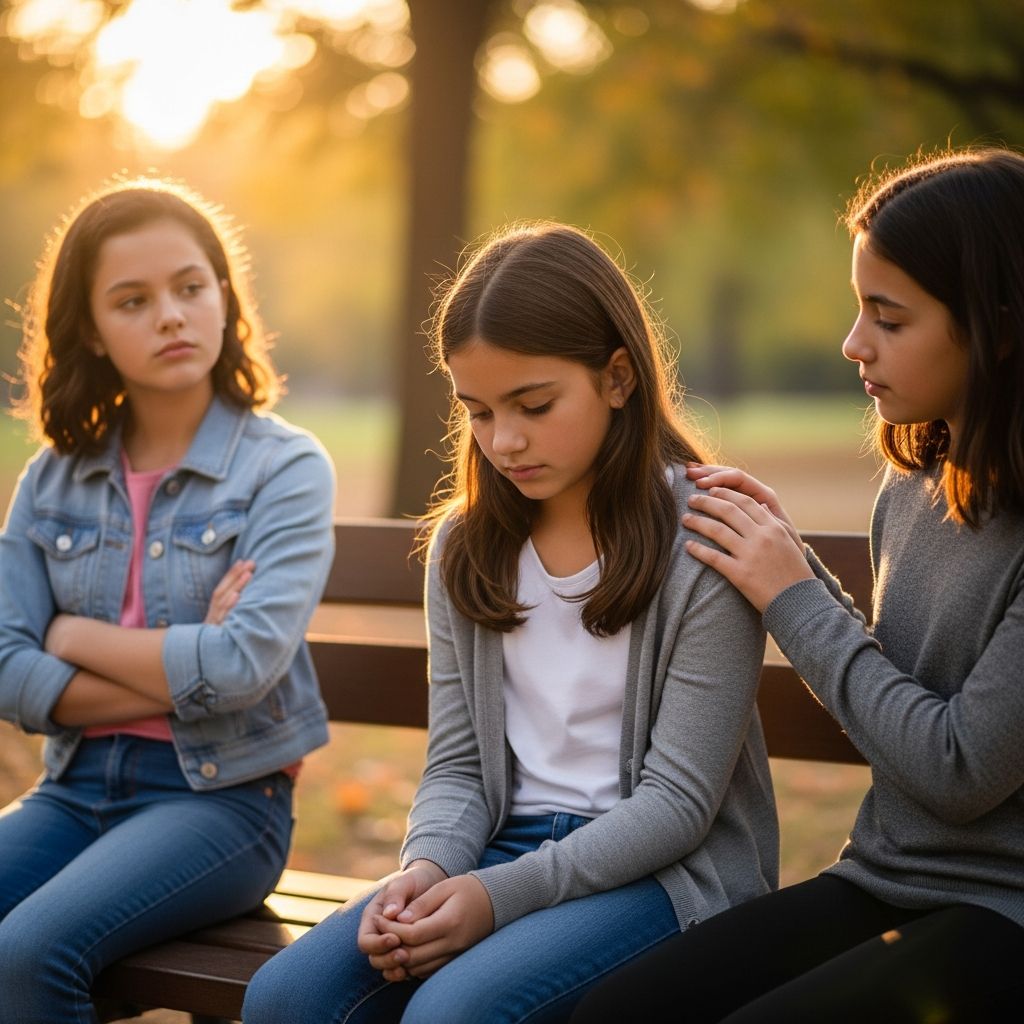
Step One: Become Your Child’s Safe Landing Place
Parents often feel an urgent need to fix the problem right away. Yet research and clinical experience both highlight that feeling heard is the first, most protective step for a hurting tween.
When your child opens up:
- Listen more than you talk. Let them tell the whole story without interruption.
- Validate their feelings. Simple phrases like “That sounds really painful” or “I can see why you’re upset” help them calm down.
- Avoid instant criticism of the friend. If they reconcile the next day, they may pull away from you instead.
- Ask what they need right now. Do they want advice, help brainstorming, or just a hug and someone to listen?
Experts who work with adolescent girls emphasize that having at least one emotionally available adult dramatically lowers the risk of unhealthy coping such as self-harm or disordered eating. Being a calm, steady presence matters more than the “perfect” advice.
Step Two: Help Your Tween Understand What Friendship Should Feel Like
Many tweens assume that “more drama” equals “more real” friendship. Parents can gently challenge that idea by talking about what positive relationships look and feel like.
Try exploring questions such as:
- How do you usually feel after spending time with this friend?
- When you need support, does this friend show up or disappear?
- What are the qualities of a good friend in your eyes?
- Does this friendship make it easier or harder for you to be yourself?
Psychologists who study adolescent relationships note that learning to define healthy friendship is a key skill that supports later romantic and work relationships as well. You are not just solving today’s lunch-table problem; you are building lifelong relationship literacy.
Step Three: Map Out Your Child’s Choices (Without Pushing)
Tweens are more likely to follow guidance when they feel involved in the decisions. Instead of telling your child what to do, help them see options and likely outcomes.
You might say, “Let’s list all the things you could do, even the ones that seem silly. Then you can decide which feel right to you.”
Possible options include:
- Staying in the friendship but setting limits (for example, avoiding group chats where most of the drama happens).
- Having a calm, direct conversation with the friend about what is hurtful.
- Taking a break and spending more time with other peers.
- Ending the friendship as kindly and quietly as possible.
Giving your tween structured choices helps build their sense of control, which is associated with better mental health and resilience across adolescence.
Step Four: Practice What to Say Before Conflict Happens
Even confident tweens can freeze up in the moment. Role-playing at home gives them language and courage to respond to meanness without becoming mean themselves. Social-emotional learning programs recommend specific, rehearsed scripts to make assertiveness feel more natural.
Teach your child to:
- Use “I” statements: “I feel left out when you make inside jokes about me in front of others.”
- Stay brief and clear: long explanations can invite more arguing.
- Speak in a steady, neutral voice, not a whisper or a shout.
- Walk away if the other person becomes mocking or threatening.
You might practice several possible reactions from the friend — apologizing, denying, laughing, or turning others against your child — and brainstorm what your tween can do in each case.
Step Five: Support Healthy Boundaries and, If Needed, an Exit
Not every friendship can or should be saved. According to clinicians who work with teens, encouraging kids to stay loyal to someone who repeatedly hurts them can undermine their ability to set boundaries later in life.
Explain that your child is allowed to:
- Spend less time with people who make them feel small or scared.
- Stop sharing secrets with someone who uses information against them.
- Say no to plans that make them uncomfortable, even if “everyone else” is going.
- Leave a friendship that is consistently hurtful, even if the other person insists they are “just joking.”
For many tweens, “exiting” does not mean a dramatic speech. It can look like gradually sitting elsewhere, not initiating texts, and investing more in kinder peers. Parents can help their child plan this shift so it feels purposeful rather than purely reactive.
Helping Your Tween Build a Wider Friendship Circle
Relying on a single best friend makes a tween especially vulnerable if that relationship turns mean. Psychologists and parenting educators often encourage cultivating a broad network of acquaintances and friends.
You can support this by:
- Encouraging participation in clubs, sports, music, or faith communities.
- Inviting different classmates over in low-pressure ways (movie night, board games).
- Affirming your child’s strengths and interests beyond popularity or looks.
- Reminding them that it is okay to have school friends, team friends, and online friends rather than one all-consuming BFF.
A broader social base helps tweens feel less trapped when one friendship becomes unhealthy and has been linked to better emotional adjustment.
When and How Parents Should Step In More Directly
Most of the time, your role is coach, not referee. However, there are situations where adults need to be more active in protecting a child.
Consider more direct involvement if:
- There are repeated, targeted attacks (online or offline) that continue after your child tries to address them.
- You notice signs of significant distress: sleep problems, loss of appetite, school avoidance, self-harm talk, or major mood changes.
- The behavior crosses into bullying as defined by your school or local policies: power imbalance, repeated aggression, and intent to harm.
In those cases, possible steps include:
- Consulting with a school counselor, teacher, or administrator about patterns you are seeing.
- Documenting texts, posts, and messages in case the school or, in extreme cases, law enforcement needs evidence.
- Seeking help from a licensed mental health professional experienced with adolescents if your child’s functioning is affected.
Many school systems now have clear protocols for addressing bullying and relational aggression; using these processes can reduce the burden on your child to handle everything alone.
Modeling the Kind of Friend You Want Your Child to Be
Children learn as much from what we do as from what we say. When parents gossip, exclude other adults, or stay in their own toxic relationships, tweens receive a powerful lesson about what is “normal.”
Consider how you:
- Talk about your own friends, neighbors, and coworkers when they are not present.
- Handle conflict in your relationships — with silence, sarcasm, or honest conversation.
- Respond when someone treats you badly: do you set boundaries or simply complain?
Showing your child that adults can choose respectful friends, leave harmful dynamics, and still be kind helps them imagine doing the same.
Taking Care of Yourself While You Support Your Tween
Watching your child struggle socially can be triggering, especially if you had painful friendship experiences yourself. Parents sometimes find old hurts resurfacing when their tween faces similar patterns.
To stay grounded:
- Notice when your reactions are fueled by your past rather than your child’s current needs.
- Talk with a trusted friend, partner, or therapist so your child does not have to hold your emotions along with their own.
- Remember that your role is to guide, not to rewrite your own history through your tween.
When parents care for their own emotional health, they can offer steadier, less reactive support to their children.
Frequently Asked Questions
Should I tell my tween to just ignore the mean friend?
Ignoring can sometimes de-escalate small annoyances, but ongoing meanness usually requires more than silence. Experts recommend coaching tweens in assertive communication and boundary-setting rather than teaching them to tolerate repeated disrespect.
Is it better to call the other child’s parents?
In mild situations, starting with your child and, if needed, the school is often more effective. Directly calling the other parents can sometimes inflame tensions, especially if they feel defensive. If safety or severe bullying is involved, coordination with the school and, when appropriate, other adults may be necessary.
How do I know if this is “normal drama” or real bullying?
Conflict is part of normal development; bullying involves a pattern of targeted, repeated harm with a power imbalance. If your child feels afraid, cannot escape the behavior, or it is significantly affecting their wellbeing or school life, treat it as more than ordinary drama and seek adult support.
My child keeps going back to the mean friend. What can I do?
This is common, especially when social circles are small. Focus on strengthening your child’s self-worth, expanding their circle of friends, and calmly revisiting what healthy friendship looks like, rather than shaming them for staying connected.
When should I consider counseling for my tween?
Seek professional help if you notice ongoing sadness, anxiety, withdrawal, school refusal, self-harm talk, major changes in sleep or appetite, or if your child feels hopeless about friendships. Early support can prevent more serious mental health issues and help your tween build stronger coping skills.
References
- Relational Aggression in Childhood and Adolescence — Niobe Way & Nikki R. Crick, in The Journal of Early Adolescence. 1999-08-01. https://doi.org/10.1177/0272431699019002003
- Helping Your Teen Deal with Relational Aggression — American Academy of Pediatrics (HealthyChildren.org). 2021-09-20. https://www.healthychildren.org/English/ages-stages/teen/Pages/Relational-Aggression.aspx
- Friendship Problems: Advice for Parents and Carers — Child Mind Institute. 2022-03-15. https://childmind.org/article/how-to-help-kids-navigate-friendships/
- Friendships, Peer Influence, and Peer Pressure During the Teen Years — U.S. Department of Health and Human Services, Office of Adolescent Health. 2018-05-01. https://opa.hhs.gov/adolescent-health/positive-mental-health/friendships-peer-influence-and-peer-pressure-during-teen-years
- Preventing Bullying — Centers for Disease Control and Prevention. 2021-11-10. https://www.cdc.gov/violenceprevention/youthviolence/bullyingresearch/fastfact.html
- Bullying and Cyberbullying — American Psychological Association. 2022-01-12. https://www.apa.org/topics/bullying