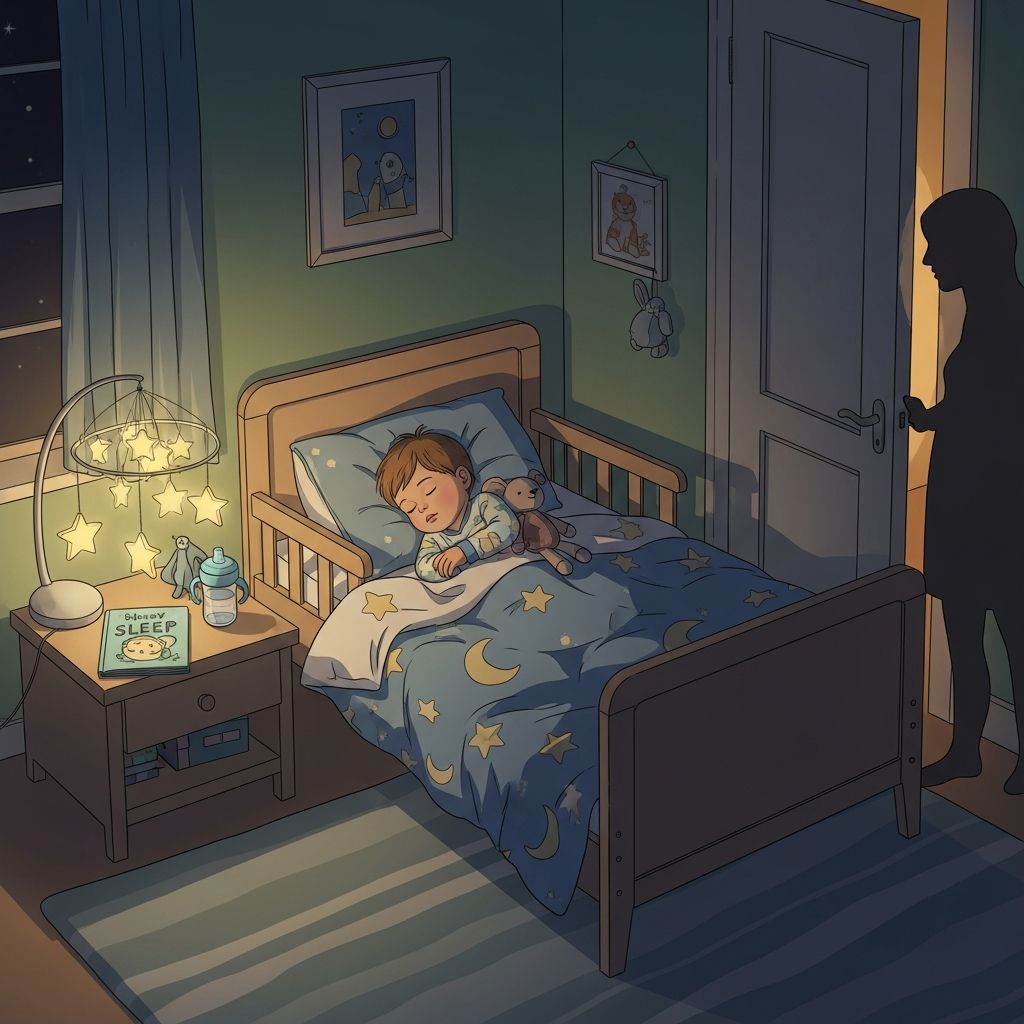
Moving from a crib to a big kid bed is a milestone that can feel exciting one minute and exhausting the next. Many parents discover that once the crib rail disappears, bedtime suddenly involves endless wandering, requests, and hallway negotiations. This guide explains how to help your toddler stay in bed calmly and consistently—without bribes, yelling, or power struggles.
Why Toddlers Keep Getting Out of Bed
Toddlers rarely leave their beds just to be “difficult.” They are curious, newly mobile, and still learning emotional regulation. Understanding the reasons behind the behavior makes it easier to respond with empathy and firmness at the same time.
- New freedom feels thrilling: After being confined to a crib, your child suddenly discovers they can get up whenever they want.
- Separation anxiety: Being alone in a bigger, more open bed can feel less secure, especially if bedtime has always involved a lot of parental presence.
- Overtired or overstimulated: When children are wired, their brains have a harder time settling, which shows up as “bouncing out of bed.”
- Testing limits: Toddlers naturally experiment with boundaries: “What happens if I come out again? And again?”
- Unmet needs: Sometimes, leaving the bed signals a genuine need—bathroom, thirst, fear, or discomfort.
Deciding If Your Child Is Ready
The transition to a big kid bed is easier when your toddler has a basic ability to understand simple rules and follow routines. Age matters less than readiness. Before switching, consider how your child does with boundaries in other areas of life.
- Signs of readiness: Can follow simple instructions, shows interest in a big kid bed, or is consistently climbing out of the crib in an unsafe way.
- Reasons to wait: Major life changes (new sibling, big move, starting school) or intense bedtime struggles that are already exhausting everyone.
| Situation | Crib Might Still Work | Bed Might Be Better |
|---|---|---|
| Child’s behavior at bedtime | Mostly stays put, occasional protests | Climbs out repeatedly or is too tall for crib |
| Family life events | Routine is stable | Need crib for baby and toddler seems broadly ready |
| Emotional readiness | Panics without crib rails, very clingy at night | Asks for big bed, enjoys “helping” with the change |
Setting Up a Sleep-Supportive Room
Once your toddler can freely roam, the entire bedroom becomes their new “sleep space.” The goal is to make the room safe, predictable, and visually calm so there are fewer reasons to get up in the first place.
- Safety first: Secure furniture to walls, cover outlets, keep cords out of reach, and remove small choking hazards from the floor and low surfaces.
- Bed placement: Position the bed away from windows, heaters, and dangling cords, and consider guardrails or a low-to-the-ground frame to prevent falls.
- Calm environment: Use soft lighting, minimal wall clutter, and limit the number of toys visible from the bed to reduce distractions.
- Contain curiosity: A baby gate at the doorway or a door alarm can keep your toddler safe while still allowing you to respond quickly if needed.
Building a Predictable, Calming Routine
A consistent bedtime routine acts like a gentle ramp down for your toddler’s nervous system. Repeating the same simple steps each night signals that sleep is coming and reduces the urge to keep popping out of bed.
Example of a 30–45 Minute Bedtime Flow
- Transition time (10–15 minutes): Turn off bright lights and screens; offer quiet play, puzzles, or books.
- Body care (10–15 minutes): Bath or warm washcloth, pajamas, tooth brushing, bathroom.
- Connection time (10–15 minutes): Stories, snuggles, songs, or a brief chat about the day.
- Settle into bed (5 minutes): Lights dim, final hug or kiss ritual, brief reminder of the bedtime rule.
Routines work best when parents move calmly and predictably. The goal is not perfection; it is to repeat the same basic order night after night so your child feels secure.
Explaining the New Bedtime Rules
Toddlers cooperate more willingly when they understand what is expected. Before the first night in the new bed, talk through the plan during the day when everyone is calm, rather than explaining rules at 9 PM when feelings are big.
- Keep rules simple: One or two clear expectations work better than long lectures. For example, “After stories, you stay in your bed until morning.”
- Practice with play: Use a stuffed animal to act out going to bed, lying down, and staying put, then “walking back” to bed if they get up.
- Agree on exceptions: Explain what counts as a real need (bathroom, sickness, nightmare) and show your child how to ask for help in those situations.
Creating Comfort and Security in the Bed
Many toddlers leave their beds because they feel lonely or unsure, not because they dislike sleep. Increasing comfort and a sense of safety can dramatically reduce “pop-outs.”
- Familiar objects: Reuse the crib blanket, special stuffed animal, or pillow you already associate with sleep.
- Consistent sensory cues: Use the same white noise, room-darkening curtains, or night-light every night to make the environment predictable.
- Goodbye rituals: A simple repeated phrase, special handshake, or three kisses in the same order can help your child feel connected even after you leave the room.
What To Do When Your Toddler Gets Up
Even with the best preparation, most toddlers will test the new limits. The key is to choose a response you can repeat dozens of times if needed, without escalating or getting pulled into negotiation marathons.
The “Calm Return” Method
- Stay neutral: Keep your face and tone calm. Avoid lectures, bargaining, or big reactions.
- Use a brief reminder: Say a short, consistent phrase such as, “It’s bedtime; back to bed.”
- Guide physically if needed: Gently hold their hand or guide their shoulders back toward the bed.
- Minimal attention: Once they are in bed, tuck them in quickly and leave again.
The first few nights may involve many returns. Over time, the pattern becomes predictable, and your toddler learns that getting up does not lead to extra stories, snacks, or extended attention.
Balancing Firm Limits and Emotional Support
Keeping a child in bed is not just about rules; it is also about feelings. Toddlers need to know that parents can handle their big emotions without changing the boundary every time they cry or protest.
- Validate feelings, keep the limit: “You really wish I could stay longer. It’s hard to say goodnight. I love you, and it’s still sleep time.”
- Expect big reactions: Tears and complaints are normal when limits tighten. Staying kind but steady teaches your child that feelings are welcome, but the rule remains.
- Watch your own state: When you feel yourself boiling over, step away briefly to reset if another adult can step in, or take a few deep breaths at the door before you re-enter.
Using Positive Reinforcement Wisely
Encouragement can help toddlers feel proud of staying in bed, but the goal is to build internal motivation rather than create an endless reward ladder. Focus on simple acknowledgement and progress, not perfection.
- Notice small wins: Praise specific behaviors like “You came back to bed when I asked,” or “You stayed in bed after stories tonight.”
- Visual charts: Some children enjoy placing a sticker on a chart for each night they try to follow the bedtime rule, working toward a low-key privilege like choosing breakfast or a weekend activity.
- Avoid bribes at midnight: Promising big rewards in the heat of frustration (“If you stay in bed, I’ll buy you a toy”) tends to backfire and creates pressure for everyone.
Common Challenges and Gentle Solutions
Staying in bed is a new skill, and setbacks are normal. Instead of seeing every difficult night as a failure, treat it as information about what your child needs adjusted—routine, expectations, or emotional support.
| Challenge | What It Might Mean | Helpful Adjustment |
|---|---|---|
| Multiple excuses (water, one more story, etc.) | Boundary testing; seeking more connection | Build connection earlier, then set a firm limit on number of requests |
| Sudden fear of the dark | Growing imagination, new anxieties | Add a soft night-light, name the fear, and offer a consistent comfort ritual |
| Wakes early and leaves room | Unclear signal about when morning starts | Use a toddler clock or clear rule (e.g., may leave room when light is on) |
| Sleeps on the floor instead of bed | Exploring novelty or control | Keep the floor safe; calmly invite them back to bed without pressure |
Taking Care of Yourself During the Transition
The shift to a big kid bed can temporarily reduce everyone’s sleep. Supporting a toddler through this change is easier when caregivers have realistic expectations and some backup strategies for their own rest.
- Share the load: If possible, alternate nights or early mornings with another adult so no one reaches total exhaustion.
- Adjust bedtime temporarily: Consider a slightly earlier bedtime for a few weeks while your child learns the new pattern and may need extra time to wind down.
- Reset when needed: If things spiral, pick one or two key strategies (like the calm return and a clear routine) and focus only on those for several nights rather than trying everything at once.
Frequently Asked Questions
How long does it usually take for a toddler to stay in bed consistently?
Every child is different, but many families see real progress within one to three weeks of consistent routines and responses. The first few nights are often the hardest; what matters most is that you respond the same way each time your child gets out of bed.
Should I ever sit in the room until my child falls asleep?
Sitting nearby can be helpful for anxious or recently transitioned toddlers, especially in the first nights with a new bed. If you choose this, create a step-down plan—such as moving from sitting next to the bed, to a chair across the room, to brief check-ins—so your presence does not become the only way your child can fall asleep.
Is it okay to lock the bedroom door?
Some parents consider locking the door as a safety measure, but it can also feel frightening or confusing to young children. A safer, more connection-focused approach is to keep the door accessible while using gates, alarms, or childproofing to maintain safety and then respond calmly if your child leaves the room.
What if my toddler screams or has a meltdown when I leave?
Intense protests can be upsetting, but they do not automatically mean the approach is wrong. You can briefly return to reassure, offer soothing words, and remind your child of the bedtime rule while still following through with the limit of staying in bed.
When should I seek additional help?
If your child’s sleep struggles persist for months, involve extreme distress, or significantly disrupt daytime behavior and family functioning, speaking with a pediatrician or pediatric sleep specialist can provide tailored guidance. Persistent snoring, breathing pauses, or frequent night wakings accompanied by discomfort also deserve medical attention.
Helping a toddler stay in a big kid bed is less about forcing compliance and more about creating a secure, predictable environment where bedtime makes sense. With consistent routines, clear expectations, and a strong foundation of connection, most children learn this new skill—and everyone eventually returns to more restful nights.